
Working with vintage bagpipes is as much a hobby as a business for me. I enjoy the process of turning up old pipes and making sure they will be played for years to come. I think it is a good thing for piping. As such, I take great care in purchasing, examining and restoring old pipes.

My refurbisher is J. Dunbar Bagpipe Maker in St. Catharines, Ontario. Not only do they do masterful restorations, they have eagle eyes for examining 150-year-old wood and discovering replacement pieces and flaws that should be addressed before you play the pipes. If a set of pipes has a replacement or repaired piece, you will know about it before you buy.
You should know from the get-go that pretty much every bagpipe made before 1930 has required or will require repairs of some sort, especially if they are ebony. Ebony and cocuswood are superb woods from which to make bagpipes but they are less resilient than African blackwood. I suspect there is hardly an ebony bagpipe in the world made before 1920 that hasn’t experienced at least one crack.
Photos and descriptions of all instruments featured since October 2010
-
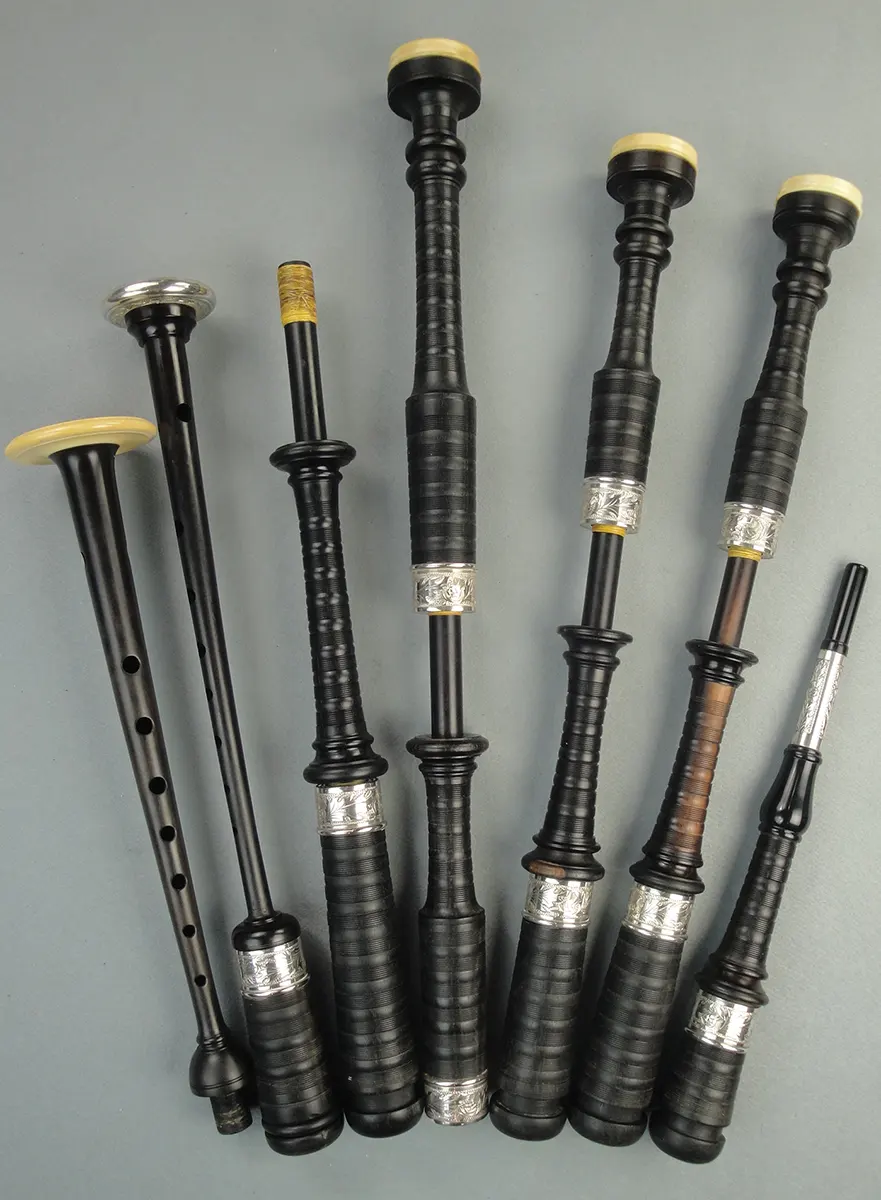
Henderson, Circa 1910, Ebony, Modern Silver
SOLD – This Henderson set is ebony and probably dates to around 1910. The caps are ivory, and the ferrules are thistle-engraved silver that was added to the set sometime in the last 20 years. Sapwood shows in several places.
The pipes are in fantastic shape, and this was one of the rare occasions that I’ve acquired an ebony pipe that didn’t require repair work. While one can’t be sure, the ivory match from the old ivory-soled chanter to the drone caps suggest the chanter may be original to the bagpipe. The pipes also come with a pristine Kron blackwood chanter with a silver sole matching the drone ferrules. Neither chanter has been carved. The Henderson chanter would not play well with today’s reeds, but it’s nice to have the complete bagpipe.
The set played brilliantly — full and steady, with a refined richness typical of ebony.
-
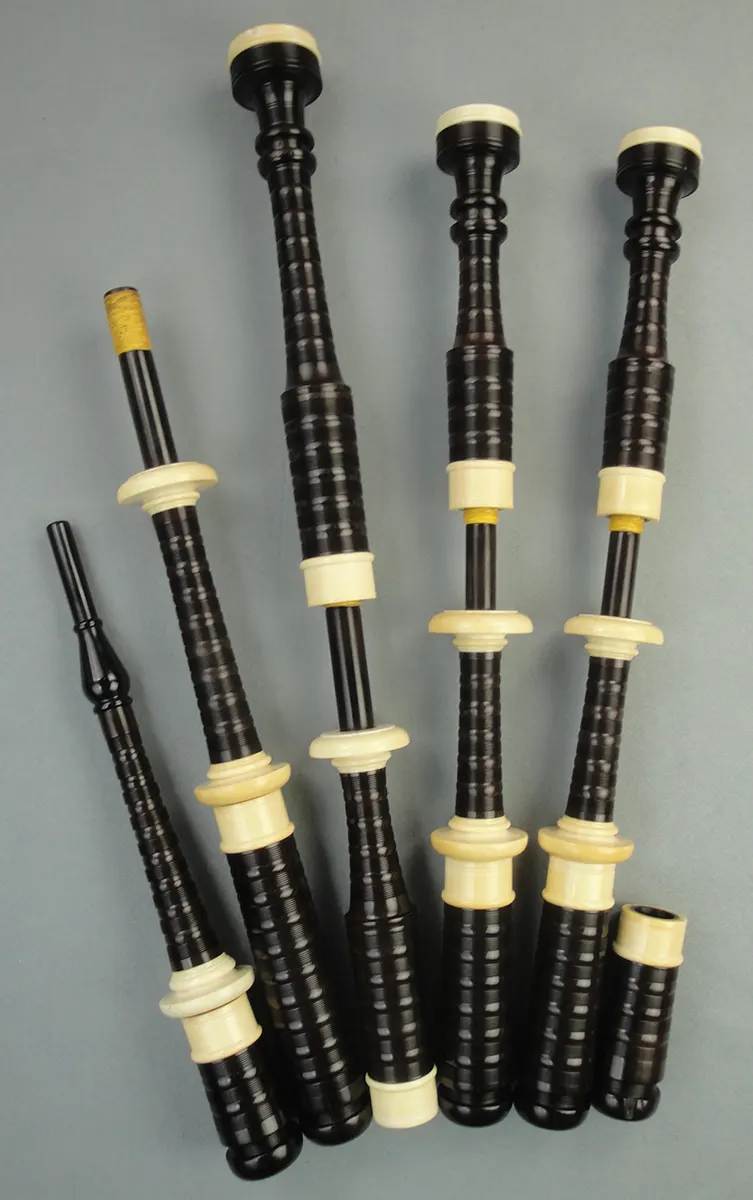
Henderson, Circa WWI, Full Ivory
SOLD – This set came to me as an old Lawrie, but clearly had ‘P Henderson Ltd.’ stamped in each cord guide. The pipes were stripped and refinished. No cracks were found during this process. There are a couple of tiny dings on the rings, fairly normal for a pipe of this age. The wide projecting mounts suggest a manufacture date somewhere around the Great War. The blowstick may not be original.
This Henderson set played wonderfully with my Canning reeds. Robust, great harmonics, and steady as a rock. Play these on any stage at any level.
-
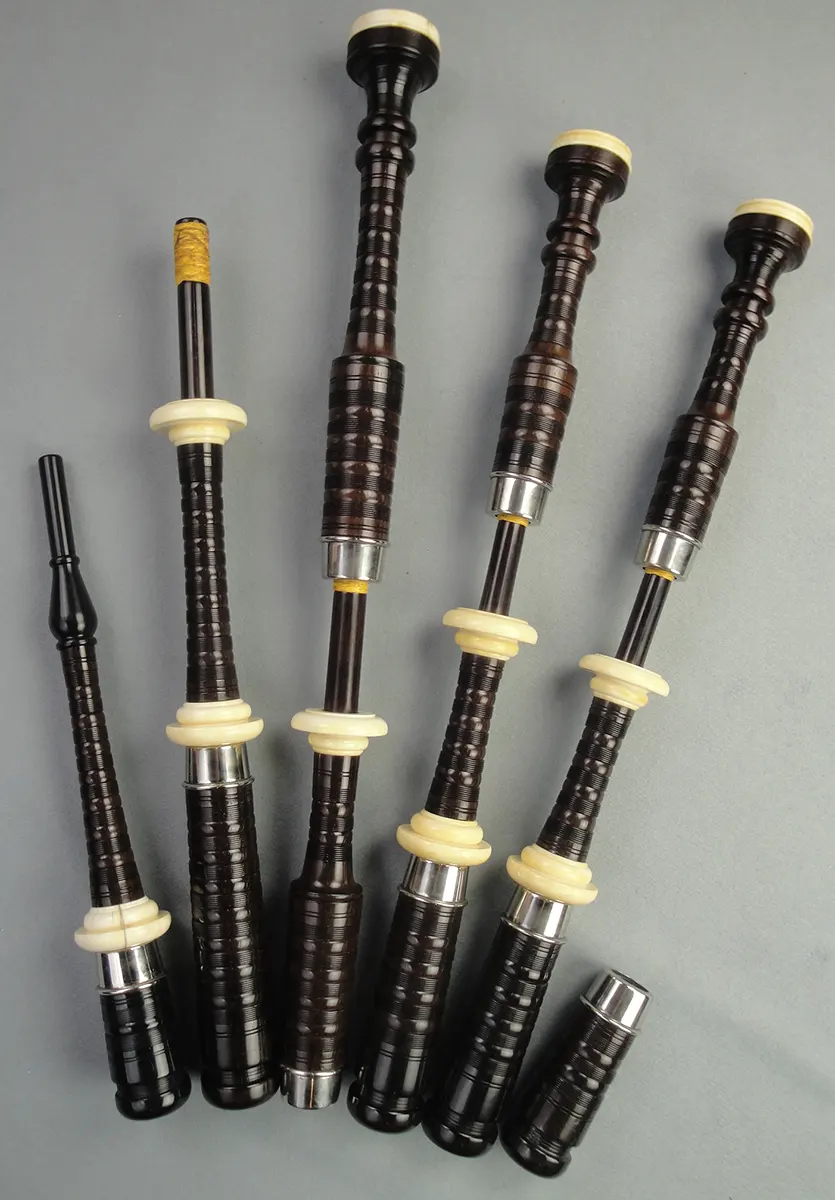
Lawries, Circa 1930, Nickel and Ivory
SOLD – This is a classic late 1920s-1930 Lawrie set distinguished by large beads on the ivory projecting mounts.
The set was in very good condition, and a complete strip revealed no cracks. The set was refinished, and fissures in the ivory bass ring and the blowstick projecting mount were filled and stabilized. The blowpipe stock is a poly replica with the original mount. The tapered nickel mounts are in mint condition.
The set played with a rich, steady sound that locked nicely. The tenors tune a touch low.
-
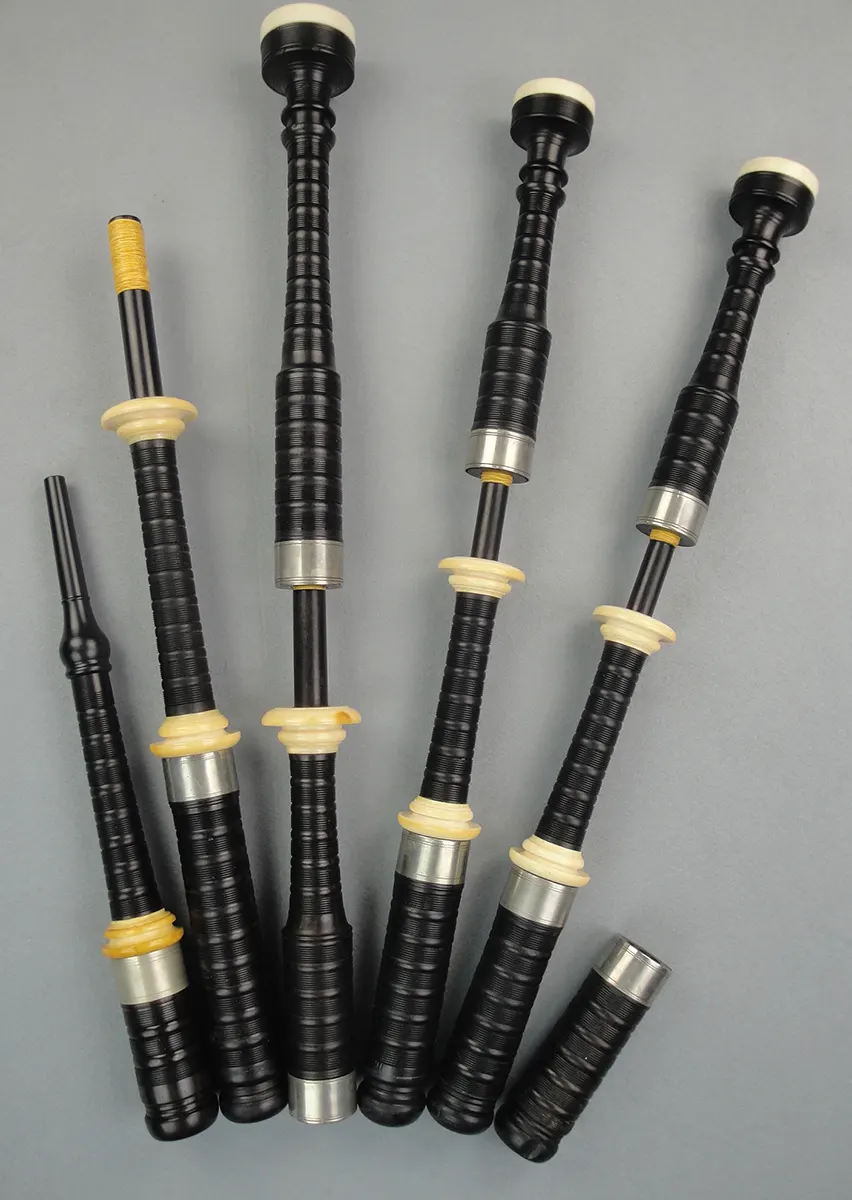
Center, Circa 1900, Blackwood, Ivory, Nickel
SOLD – This set came to me as a John Center set. The styling and workmanship are superb; this pipe was made by an experienced maker.
A crack in the bass top has been invisibly whipped. The set came with no blowstick stock, so a replica was made and a matching ferrule found. The blowstick has also been invisible whipped to seal a crack.
The pipes displayed a very ‘mellow’ tone — rich, subdued, much in the Edinburgh tradition. They locked nicely and maintained a gentle but resonant sound with my Canning drone reeds. There is lots of character here and an elegant looking instrument with refined tone.
-
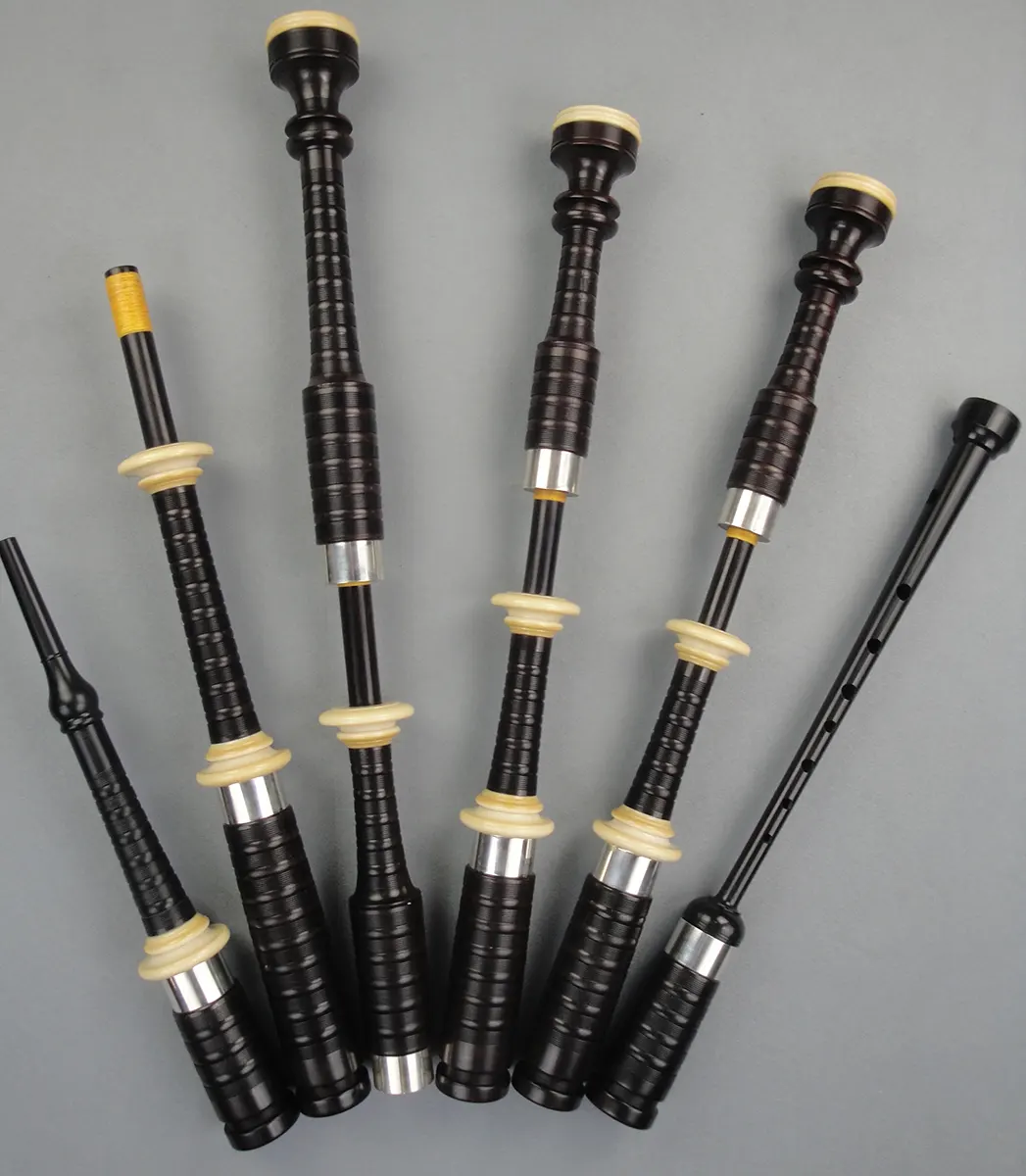
Kron, Heritage Bores, Silver and Aged Imitation Ivory
SOLD – This set was made by Dave Atherton at C. E. Kron in 2003. The bores are Kron’s ‘Heritage,’ copied from a 1912 silver and ivory Henderson. The profiles are not Heritage, and seem to more closely resemble the Kron standard set. The pipes are unique in one way: the previous owner sent them the the David Naill company in England to have their aged imitation ivory mounts replace the originals. The effect is quite stunning.
The pipes were in immaculate shape when I received them. They come with a Kron blackwood pipe chanter.
I played the pipes for about 30 minutes with my Canning reeds and they locked in very steadily with a full, bright tone.
-
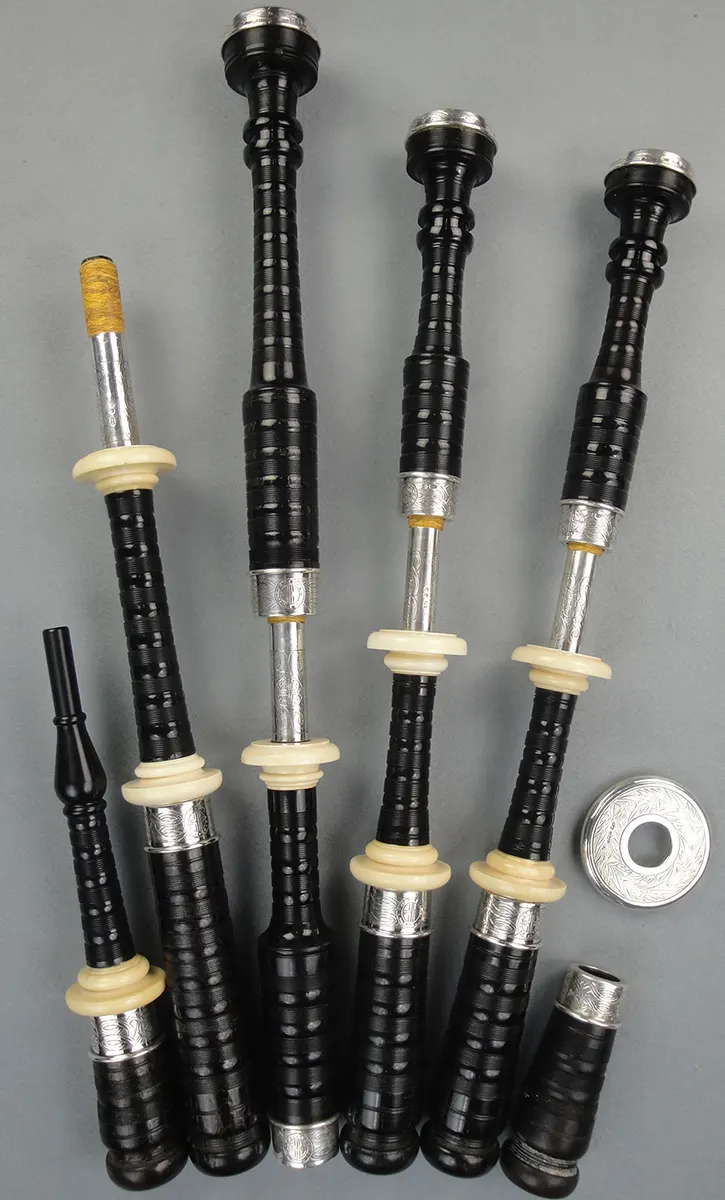
Lawries, Silver and Ivory, Hallmarked 1951-52
SOLD – This set of Lawries arrived in excellent condition. It needed no work, and still has its original finish as well as the original chanter sole. The silver is hallmarked RGL 1951-52. Though the pipes made by the Lawrie company tailed off in quality in the late 1950s and 1960s, pipes made by the firm right up to the mid-1950s are revered for their tone and steadiness.
As I played two piobaireachds on this set it displayed the robust, seamless tone I’ve come to expect from a vintage Lawrie.
-
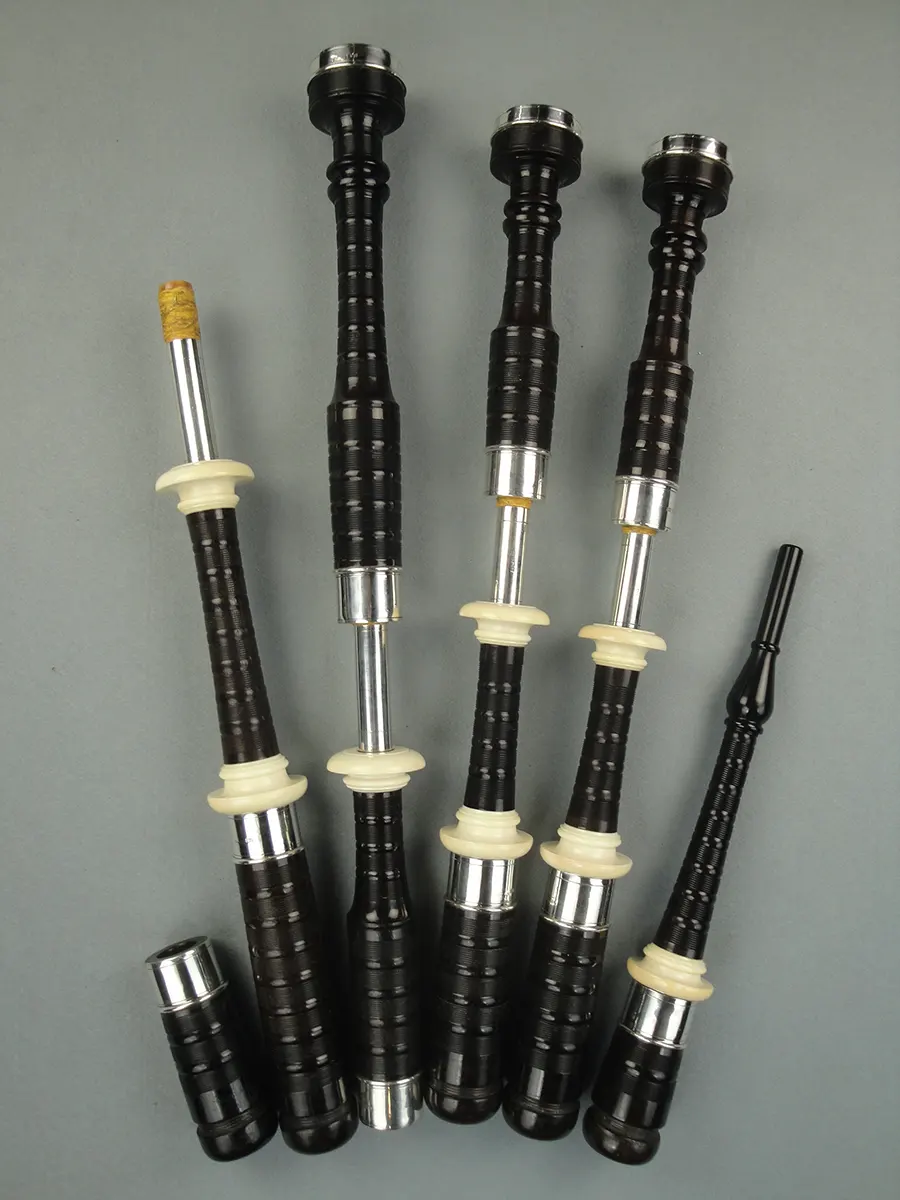
Sinclair, Silver and Ivory, 1942, Hallmarked 1946-47
SOLD – This gorgeous Sinclair set had only one owner, and that was Keith MacDonald, “The Church Piper” and publisher of “Heavenly Harmonies.” Keith passed away earlier this year.
Each plain silver piece is hallmarked 1946-47, and the ivory is in immaculate condition. Keith clearly took care of his pipes, and some buyer will benefit from that! The pipes were originally purchased through McHardy’s in Vancouver back in the day. Keith’s notes on the pipe say he bought it in 1942. It’s possible that he had the silver added in the year it was hallmarked.
The set had no cracks and required only a clean and polish on the lathe. Sinclair drones are full and bright and this set reminded me of the Sinclairs I played to win the Gold Medal at Inverness in 1985. Great blend and steadiness.
-
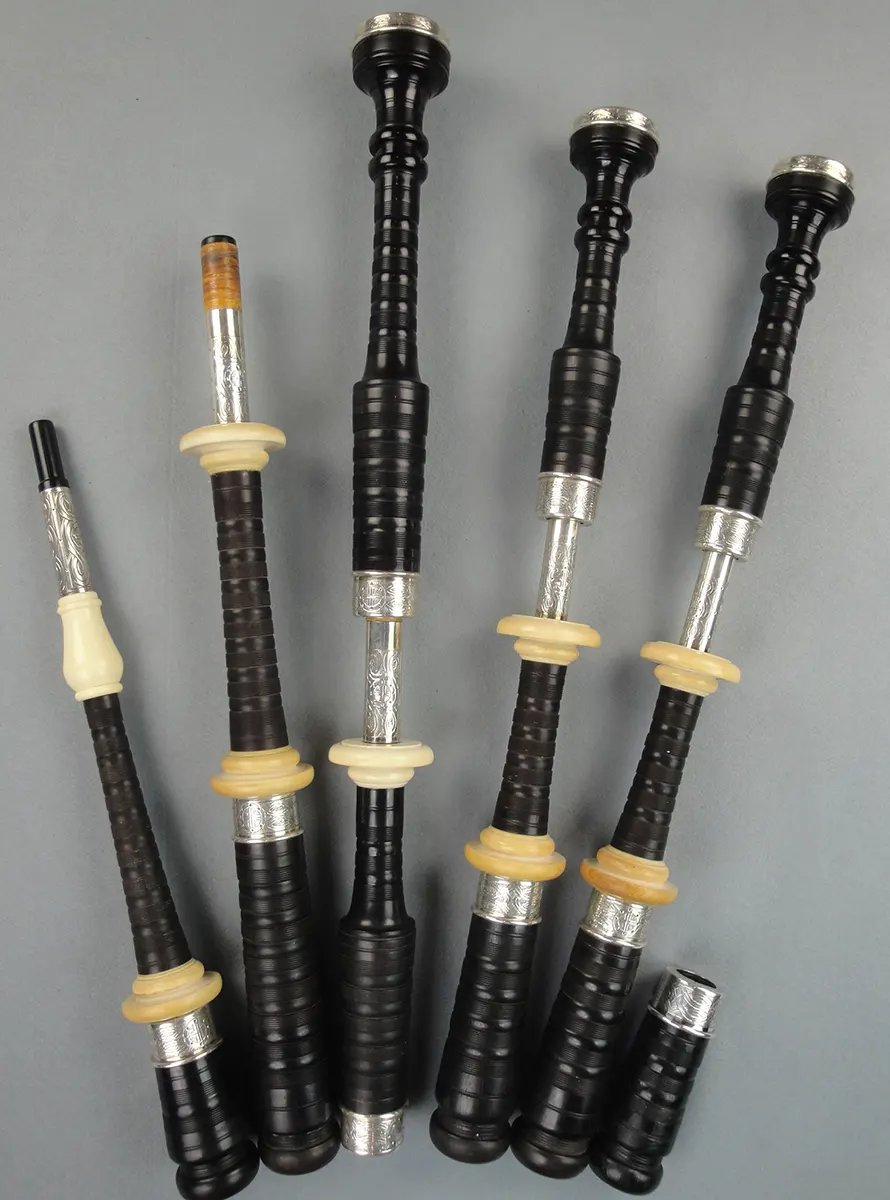
Lawries, Silver and Ivory, Hallmarked 1952-53
SOLD – This Lawrie set came to me in excellent condition, needing only some of its stylish tapered ferrules reaffixed. The silver is hallmarked 1952-53. Though the pipes made by the Lawrie company tailed off in quality in the late 1950s and 1960s, pipes made by the company right up to the mid-1950s are revered for their tone and steadiness.
The pipes still have their original finish. The blowpipe stock is a poly-lined, blackwood replica with the original mount. The mouthpiece sleeve is non-hallmarked silver in the same pattern.
The set displayed the robust, steady tone Lawries are known for and locked in seamlessly from the first tuning.
-
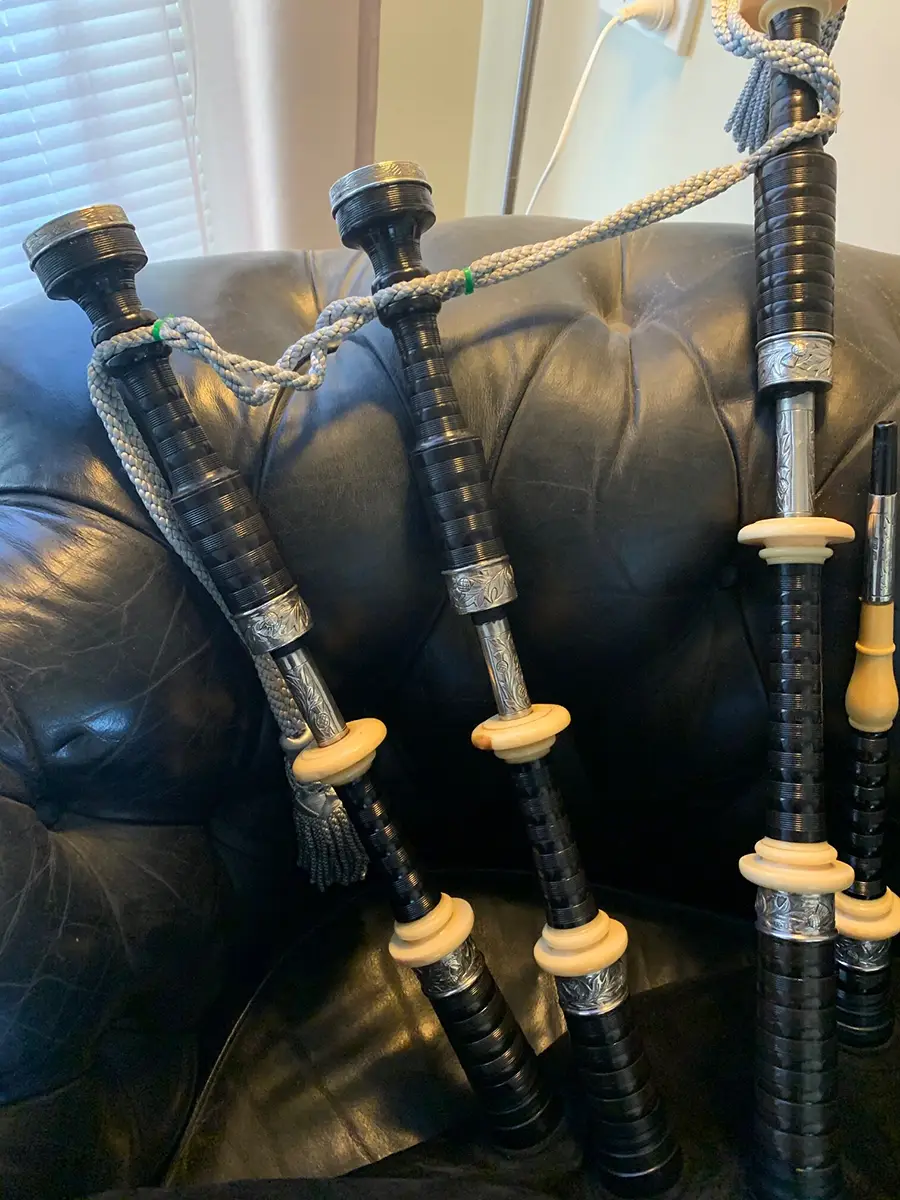
Henderson, Hallmarked 1907-08, Silver and Ivory
SOLD – This spectacular Henderson bagpipe is currently in Australia. It will be shipped to a buyer from there. The set is hallmarked 1907-8 and it is extraordinary. African blackwood with beautifully aged ivory mounts, this is the pinnacle of Hendersons. All parts are original but for the chanter, which is a 1969 Hardie with appropriately hallmarked silver sole. The mouthpiece bulb is ivory and the sleeve is hallmarked 1913. All hallmarks contain the “PH” maker stamp. The bagpipe is in mint condition with original finish.
The tone of this instrument is reported to be as magnificent as its appearance. The best Hendersons are known for their power, their seamless bass/tenor blend, and their legendary steadiness. This instrument has it all.
-
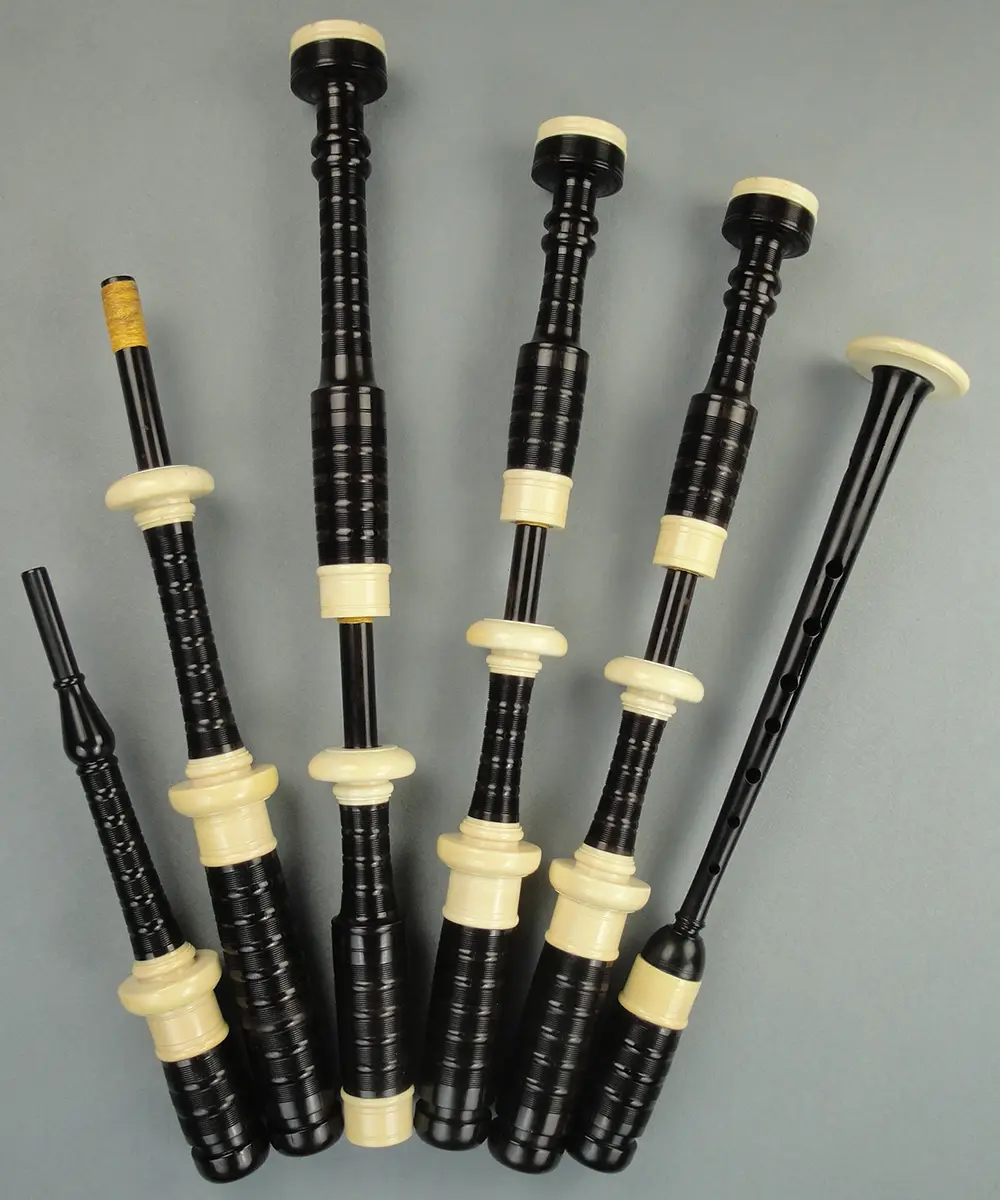
Robertsons, Full Ivory, Circa 1950s
SOLD – This brilliant Robertson set came to me in excellent condition. We gave it what Rick Pettigrew at Dunbar Bagpipes now calls the “full McGillivray refurb”: basically a strip and refinish with a check for cracks after the strip. Any loose mounts are reaffixed and the tuning chambers are gently reamed to even up the tuning action.
She cleaned up nicely: this may be one of the nicest full ivory Robertsons we’ve had on the site. It was made during what vintage expert Ron Bowen calls some of the best years of the Robertson company; the ivory patina is lovely, showing just the slightest aging. And the bagpipe played like a dream: full, steady, seamless. This set comes with what appears to be its original chanter, not really playable with modern reeds, but nice to have.
The stocks have tapered bores, a practice adopted by the company in the 1950s and thought to improve air flow to the drone reeds.
James Robertson made pipes in Edinburgh from around 1908 until his death in 1948. The company continued with quality unabated until it ceased operations in the mid-1960s.
-
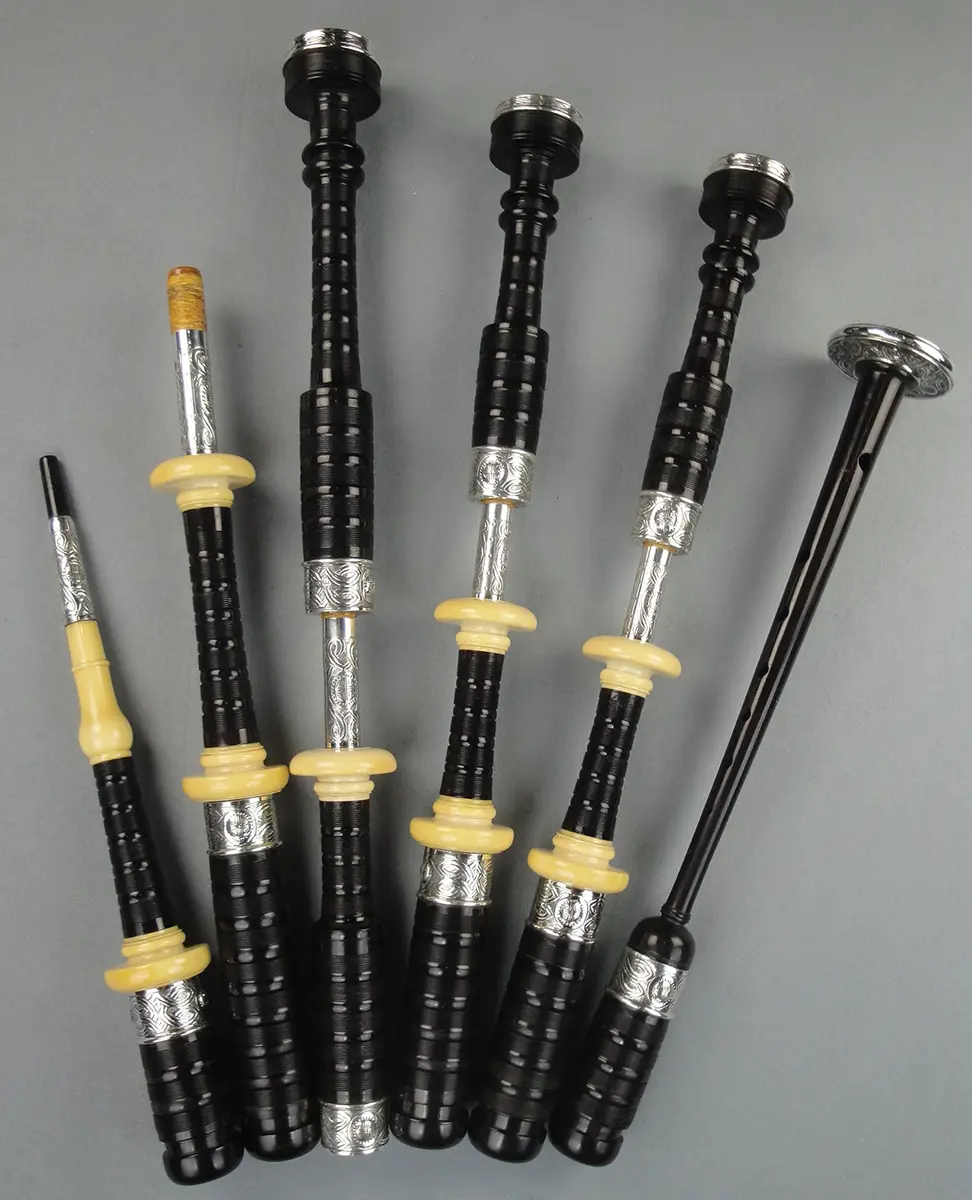
Robertsons, Silver and Ivory, Hallmarked 1933-34
SOLD – This complete Robertson set came to me in superb condition, requiring only a clean and polish on the lathe. The tuning chambers were gently reamed to recalibrate the tuning action, and the massive blowpipe was shortened by two inches.
The 1933-34 hallmarks make it the oldest hallmarked Robertson set on this site, though we’ve had non-silver sets that were older.
The set played as all Robertsons do: robust, seamless, and as steady as you might like.
James Robertson made pipes in Edinburgh from around 1908 until his death in 1948. The company continued with quality unabated until it ceased operations in the mid-1960s.
-
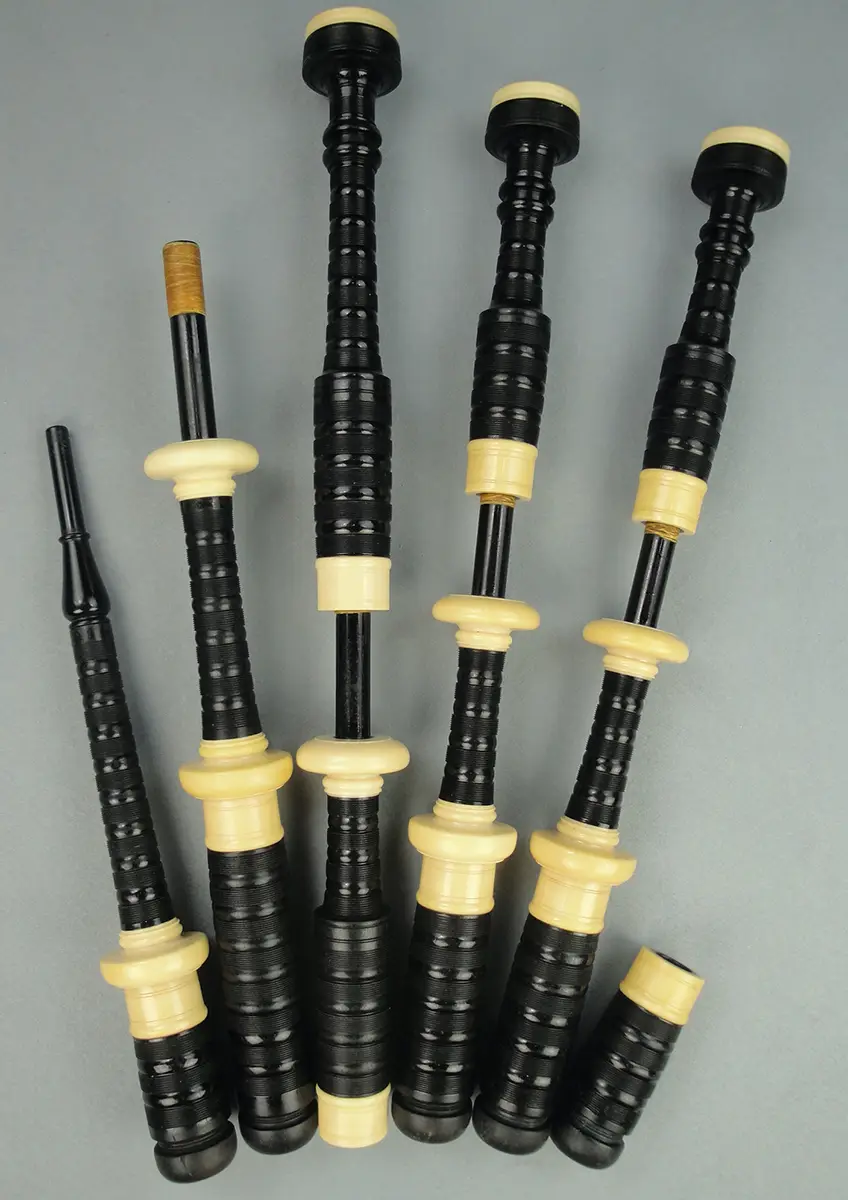
Robertson, Post-1950, Full Ivory
SOLD – James Robertson’s company made pipes from around 1908 until the mid-1960s with never a drop in production values or tonal quality. Even after Robertson’s death in 1948, not only did the company maintain its quality but the pipes produced in the 1950s and ’60s were arguably the best the company ever made.
This set is in excellent condition, still sporting its original finish. It’s difficult to date ivory Robertsons specifically, but this set is certainly from the 1950s-60s period. The set had no cracks and needed no repairs. The stocks, as visible in the photos, have tapered bores — a common trait in Robertsons from this period. This was said to ease air flow and reduce turbulence in the stocks.
Like virtually all Robertsons I’ve ever played, these drones were robust, rich and steady with my Canning drone reeds. Robertsons are always a pleasure to play.