
Working with vintage bagpipes is as much a hobby as a business for me. I enjoy the process of turning up old pipes and making sure they will be played for years to come. I think it is a good thing for piping. As such, I take great care in purchasing, examining and restoring old pipes.

My refurbisher is J. Dunbar Bagpipe Maker in St. Catharines, Ontario. Not only do they do masterful restorations, they have eagle eyes for examining 150-year-old wood and discovering replacement pieces and flaws that should be addressed before you play the pipes. If a set of pipes has a replacement or repaired piece, you will know about it before you buy.
You should know from the get-go that pretty much every bagpipe made before 1930 has required or will require repairs of some sort, especially if they are ebony. Ebony and cocuswood are superb woods from which to make bagpipes but they are less resilient than African blackwood. I suspect there is hardly an ebony bagpipe in the world made before 1920 that hasn’t experienced at least one crack.
Photos and descriptions of all instruments featured since October 2010
-

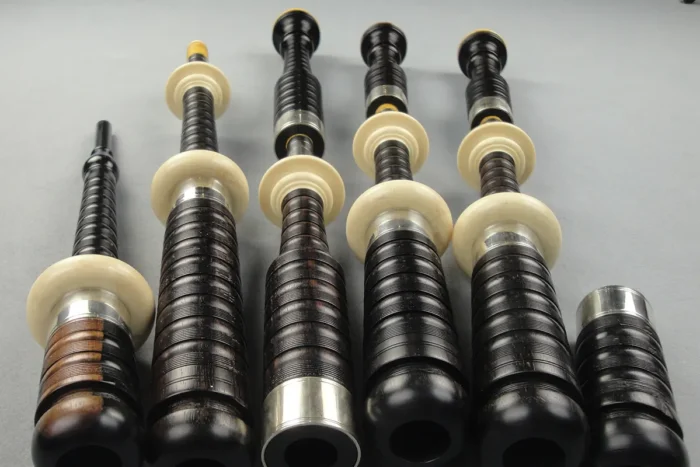
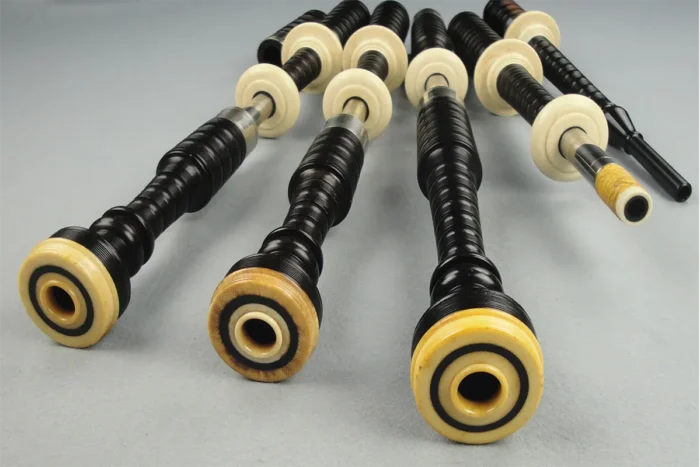
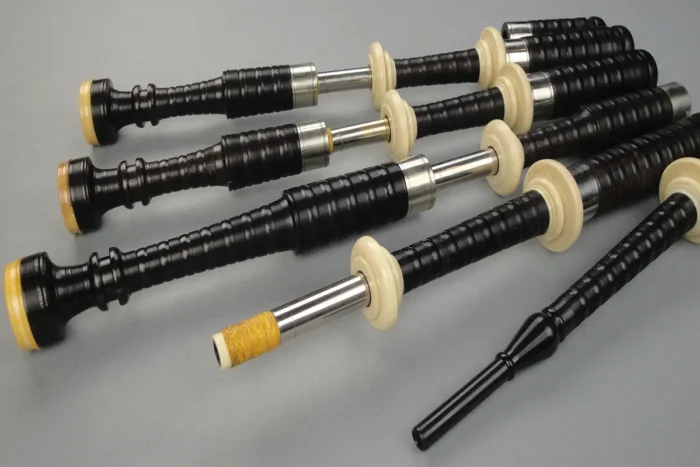
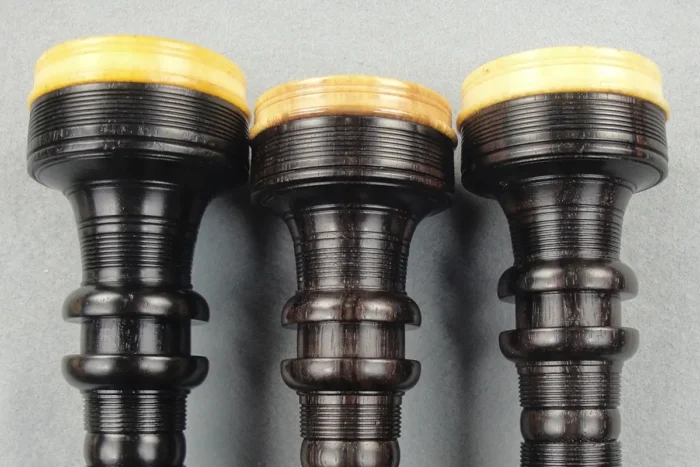
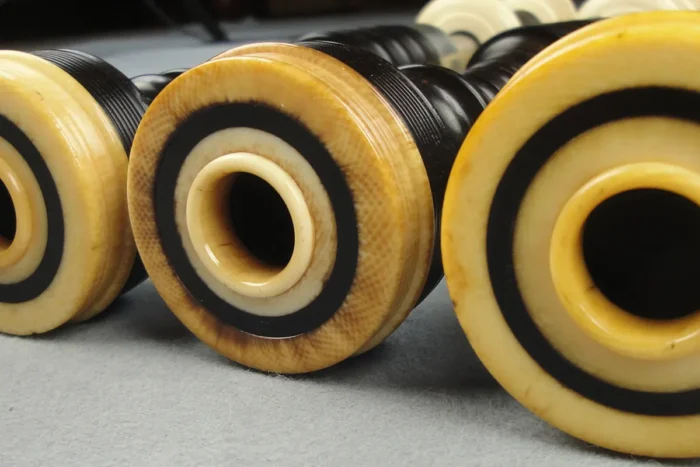
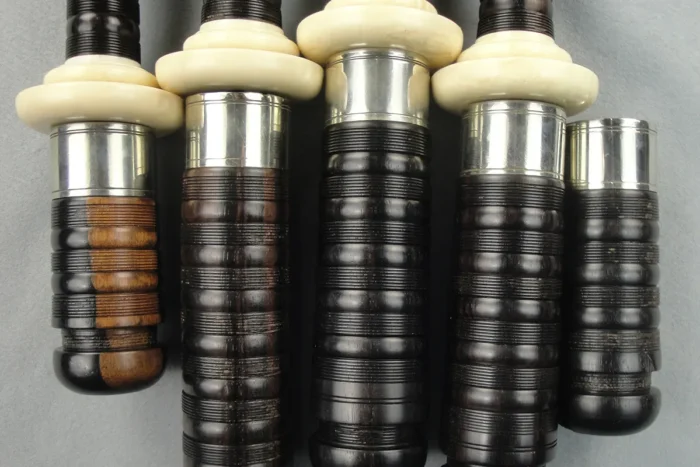
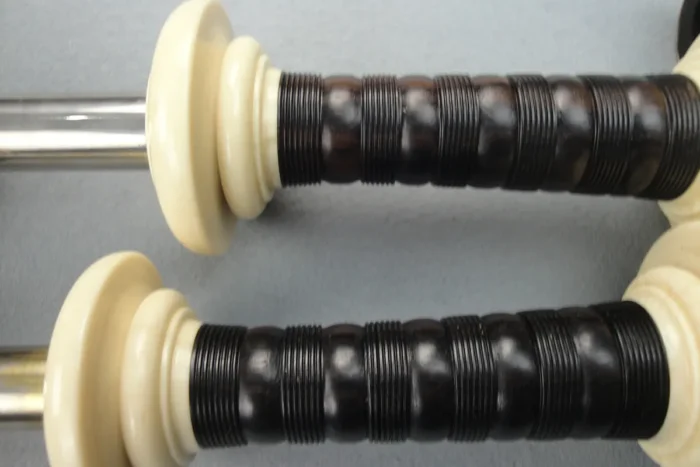
Henderson, Circa 1930s, Imitation Ivory, Nickel
SOLD -This Henderson set seems to be attracting no interest, though it is tonally one of the best sets on the site.
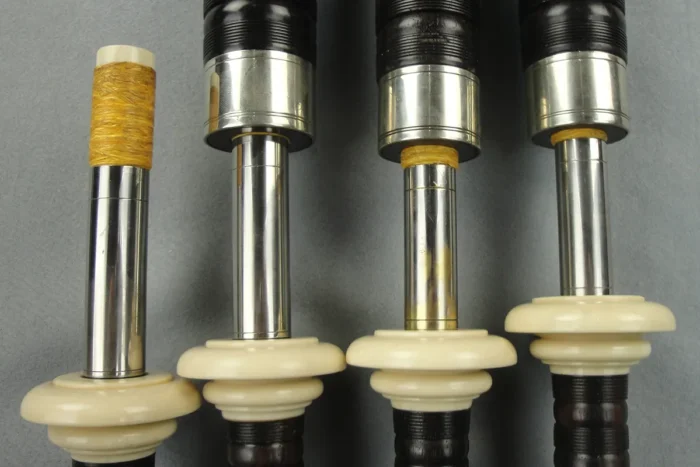
It would be a confusing bagpipe to come across because it was remounted at some point with non-replica mounts. After considerable study, the pipes were determined to have probably been made in the 1930s.
At some point the pipes were remounted by the David Naill company, who used their own projecting mount design. The ring caps were not touched, and are ivory. Hemp stops were added during the remount. Overall, the pipes are in excellent condition. All pieces appear to be original.
Like several other sets on the site right now, this set was full, classic Henderson: rich, steady and enveloping.
-
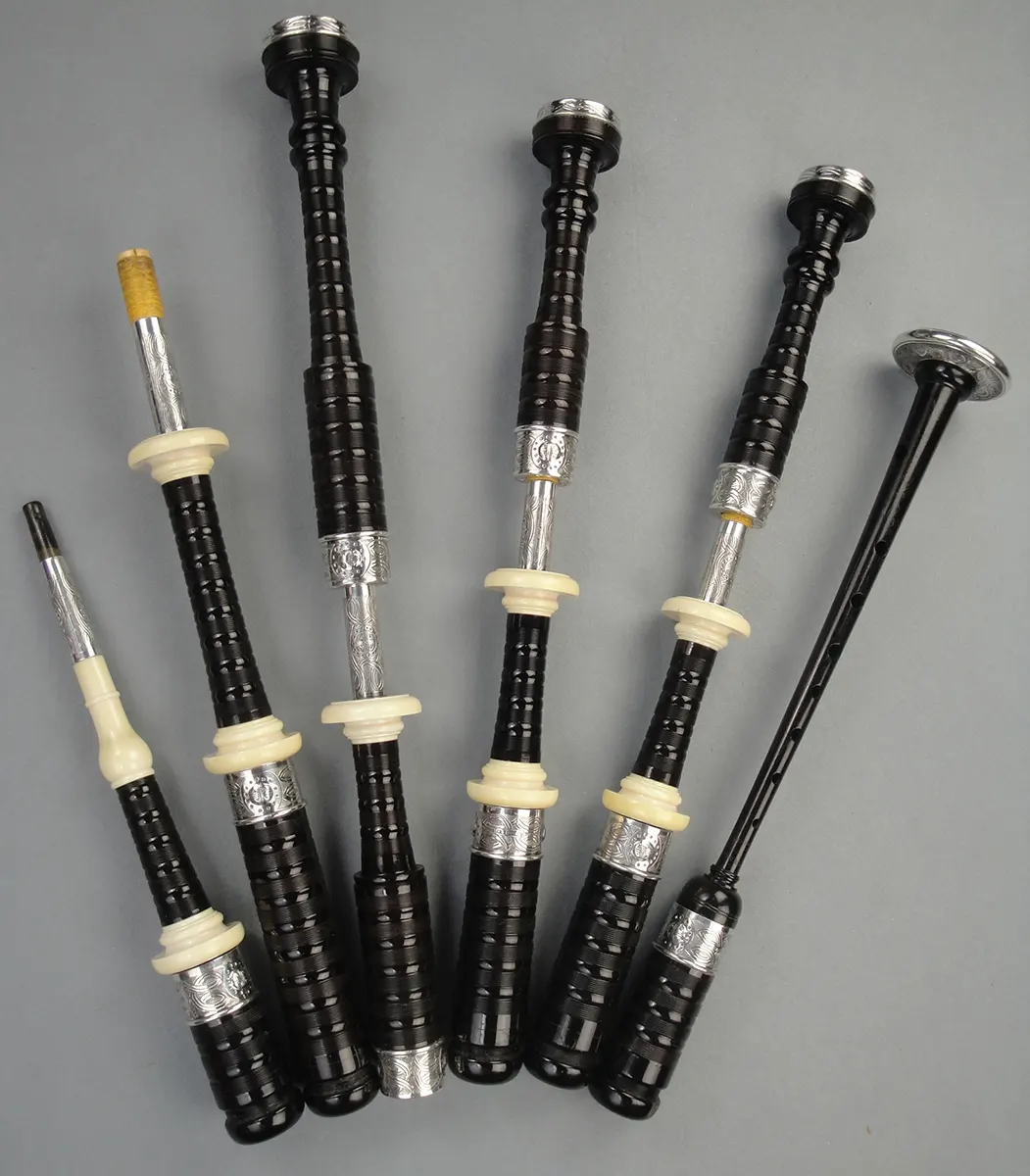
R. G. Hardie, Silver and Ivory, Hallmarked 1954-65
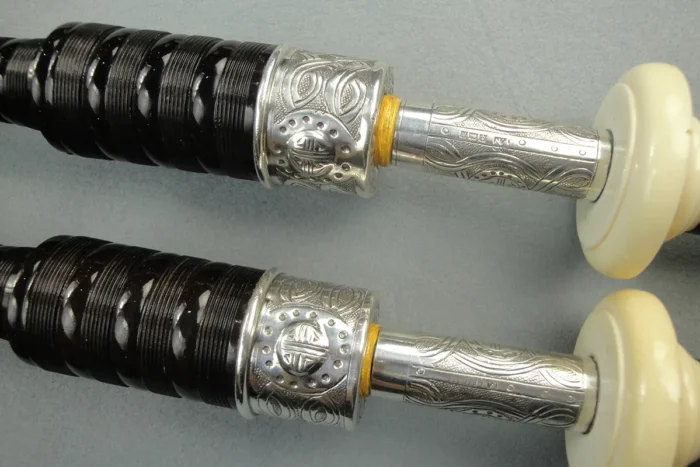
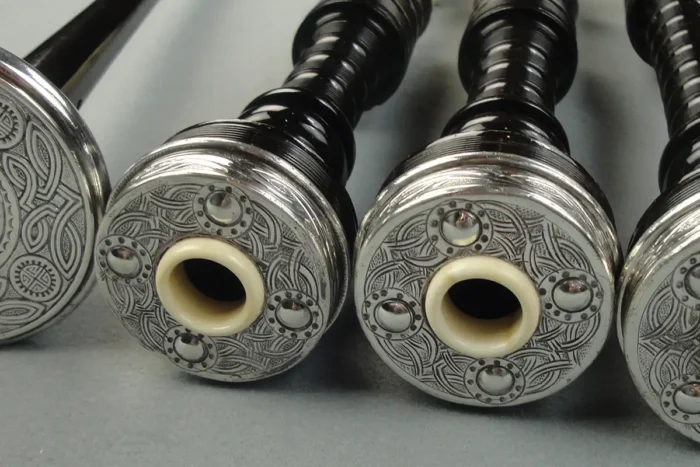
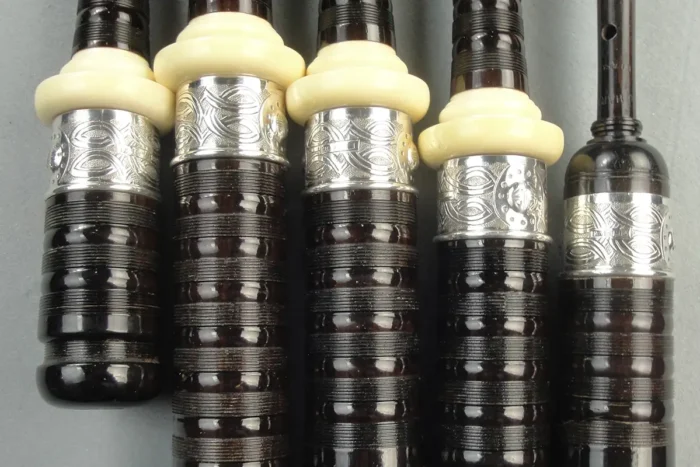
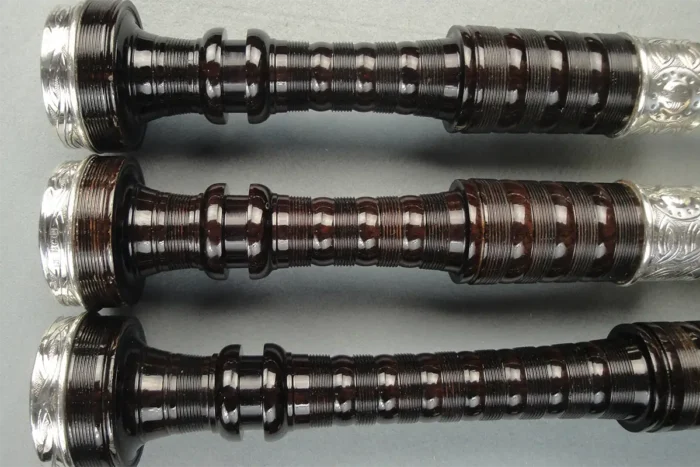
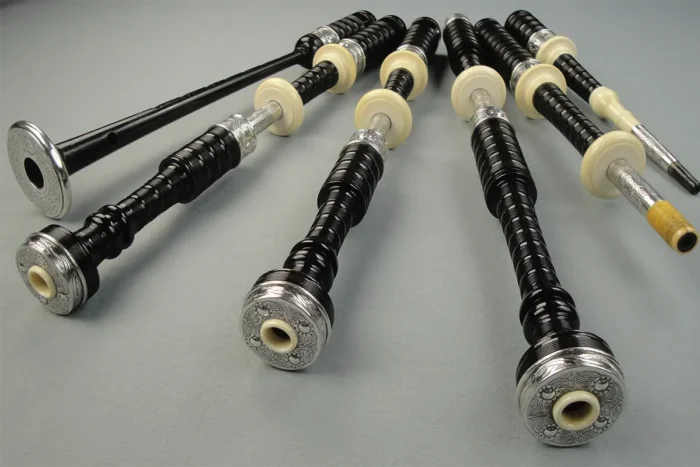
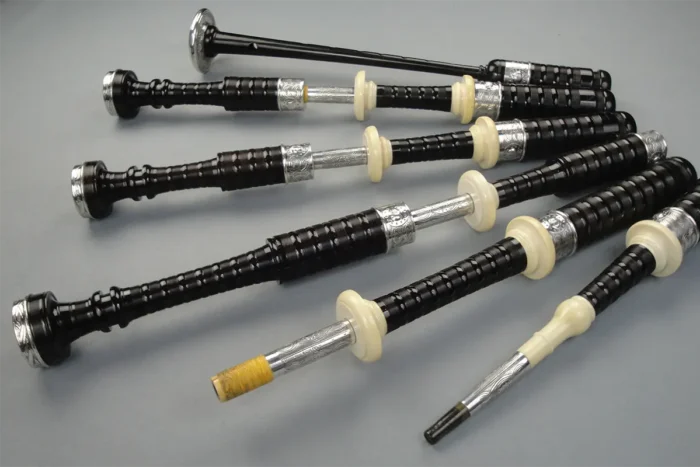
SOLD – This is a gorgeous Hardie set with every single piece original, accounted for, and in superb condition. The pipes were made in Glasgow during Bob Hardie’s company’s prime years.
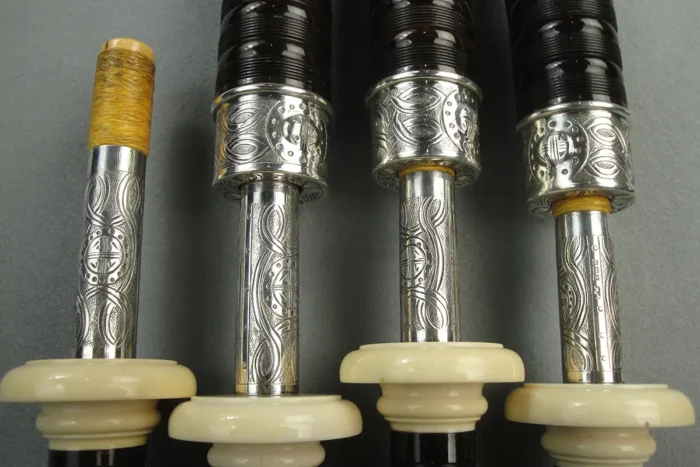
The raised silver work is unusual for a Hardie set and each piece is hallmarked 1964-65. The pipes were bought new in 1966 and have had two owners, one of whom never played them.
Bob Hardie used the best wood in the business. Like this set, tuning chambers need minimal touch-up for even tuning. The ivory is pristine, as is the original ivory mouthpiece bulb, silver sleeve, chanter and chanter sole — a rarity. I don’t believe the previous owner actually used the original blowstick.
The pipes played in classic Hardie fashion: not a booming Henderson sound, nor a mellow David Glen sound, but somewhere in the middle, very smooth, very steady, and easy to reed.

-
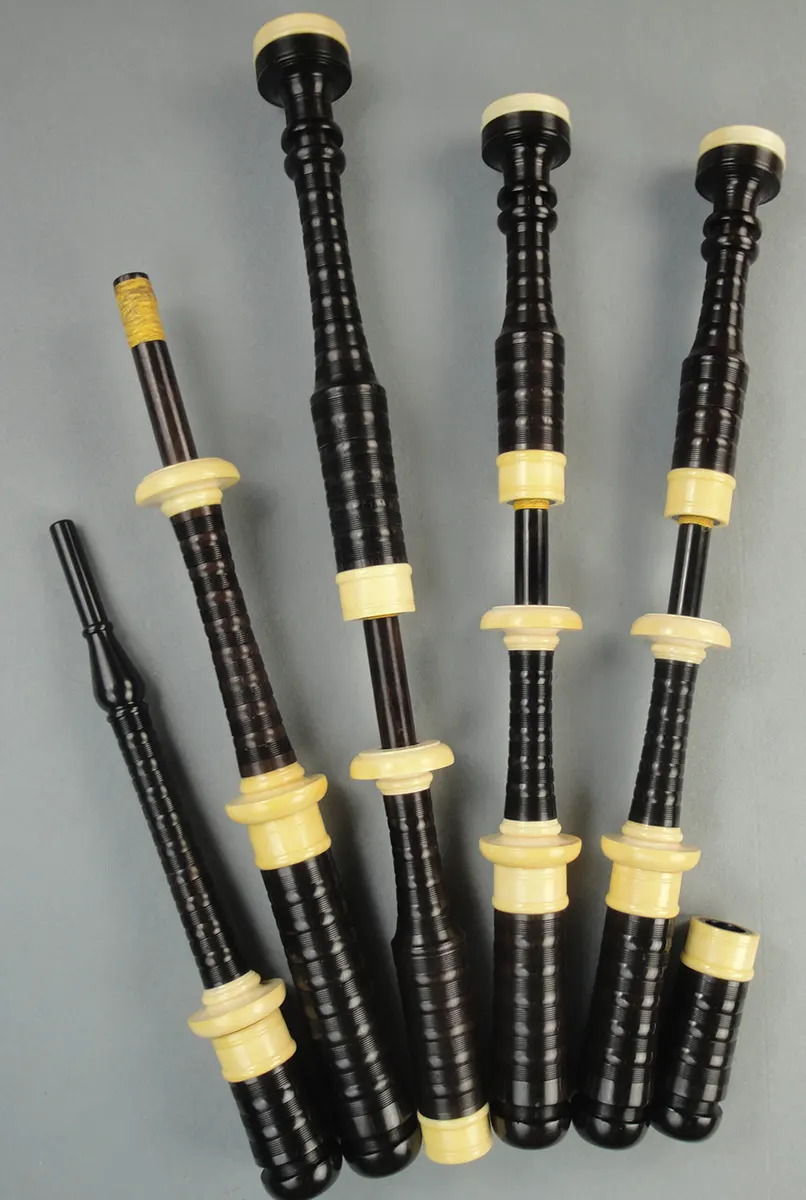
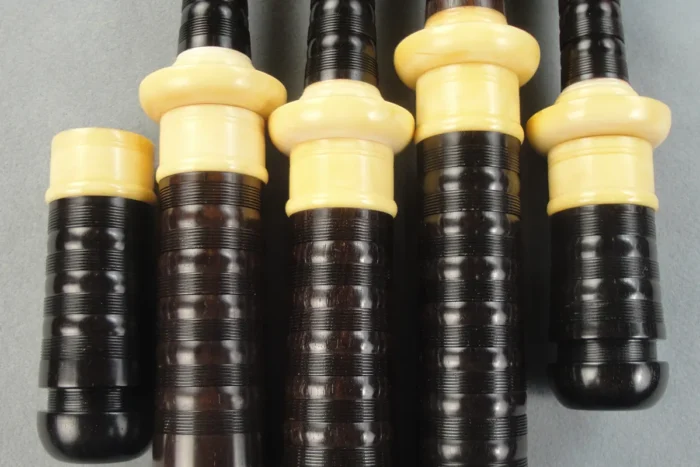
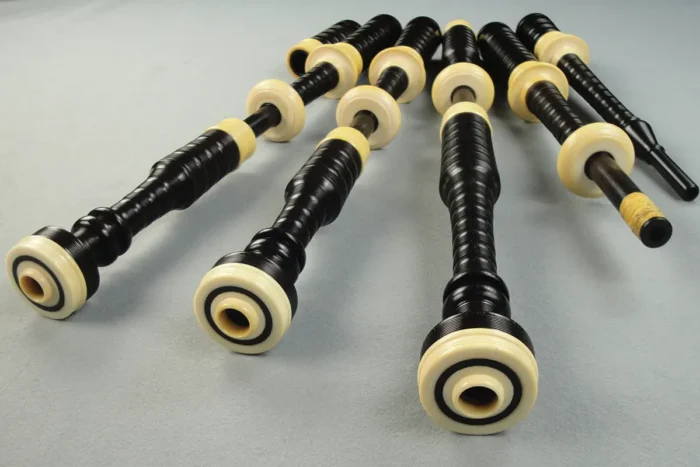
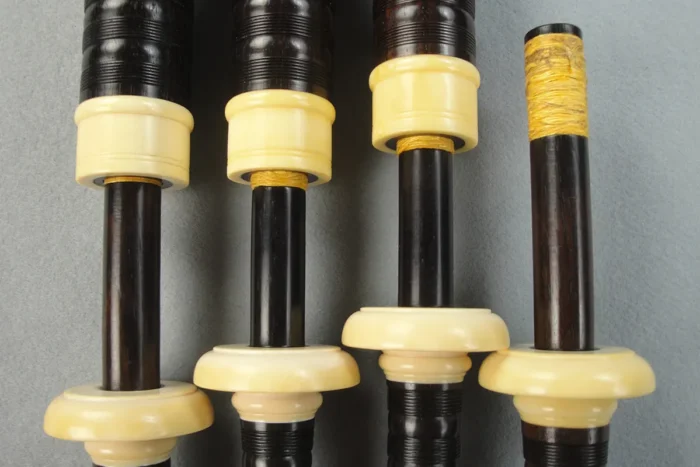
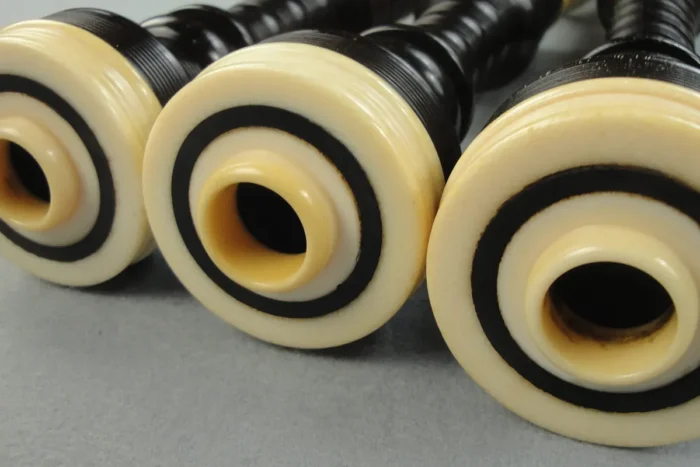
Hardie-Hendersons, Circa 1973, Full Ivory
SOLD – This set came to me from the widow of an old piping acquaintance, for whom I’d agreed to sell the pipes. The piper in question played these as a set of Hendersons for much of his life, and indeed they do have a great tone. But the thought among me and my vintage colleagues is that this may be a ‘Hardie-Henderson’: made by the R. G. Hardie shop after they purchased the Henderson name when that company closed in 1973. This could be off base and the pipe could be a bona fide Henderson set from the 1950s or 1960s.
The set was in excellent shape on acquisition. A crack in the blowpipe required invisible whipping. The pipes have been stripped and refinished, tuning chambers evened out, all newly hemped and tested.
The pipes played in lovely fashion: tuned in the classic Henderson tradition (tenors high, bass low), and exhibited a full and rich tone that locked in nicely.
The price takes into account the very reasonable price paid to acquire the set, plus the slight uncertainty in identification.
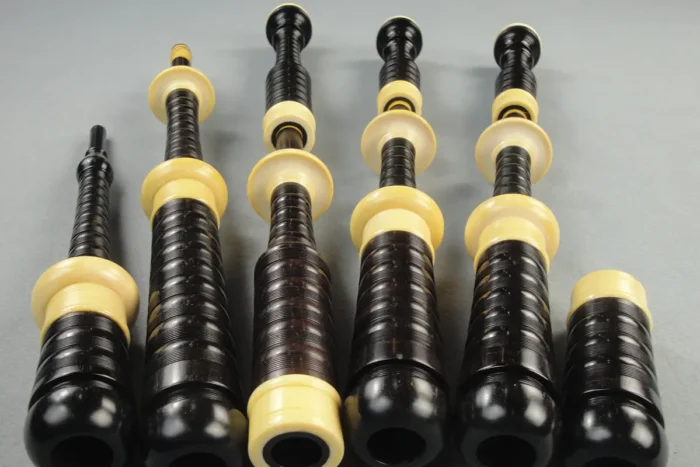
-
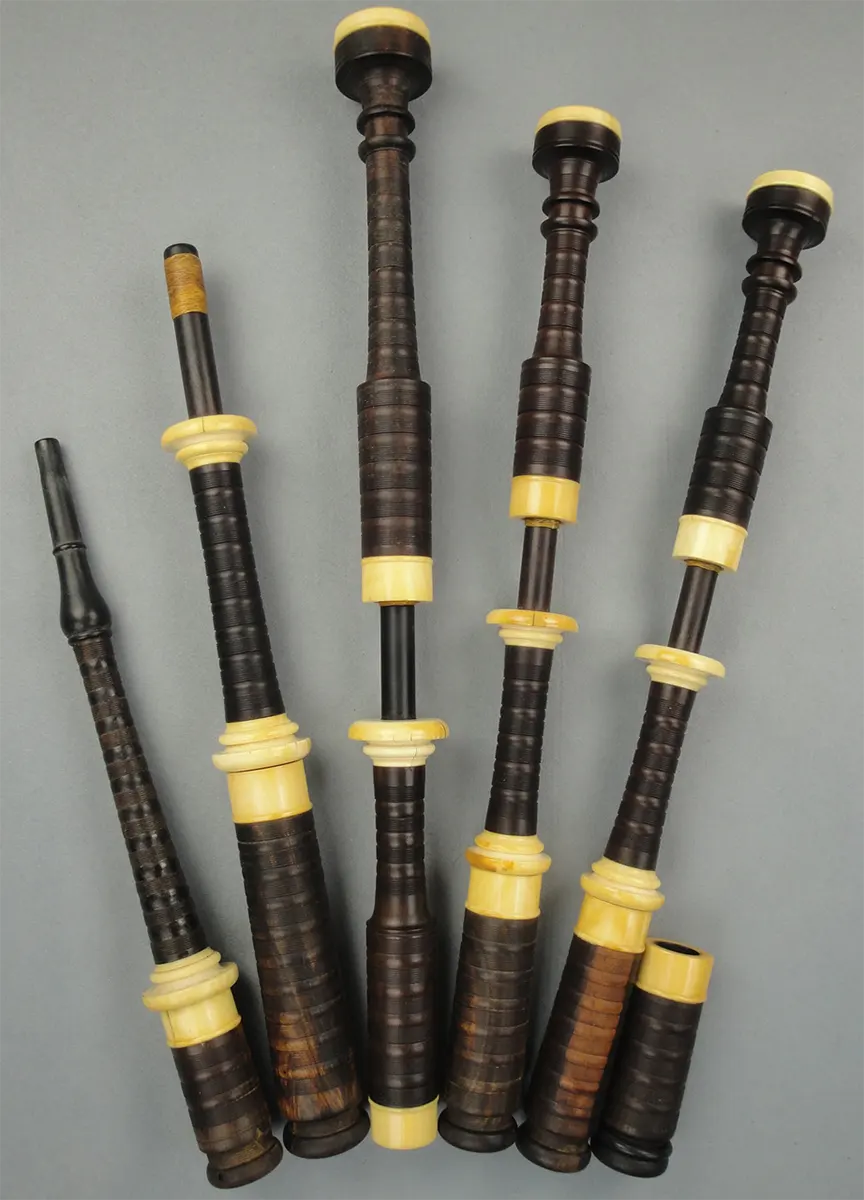
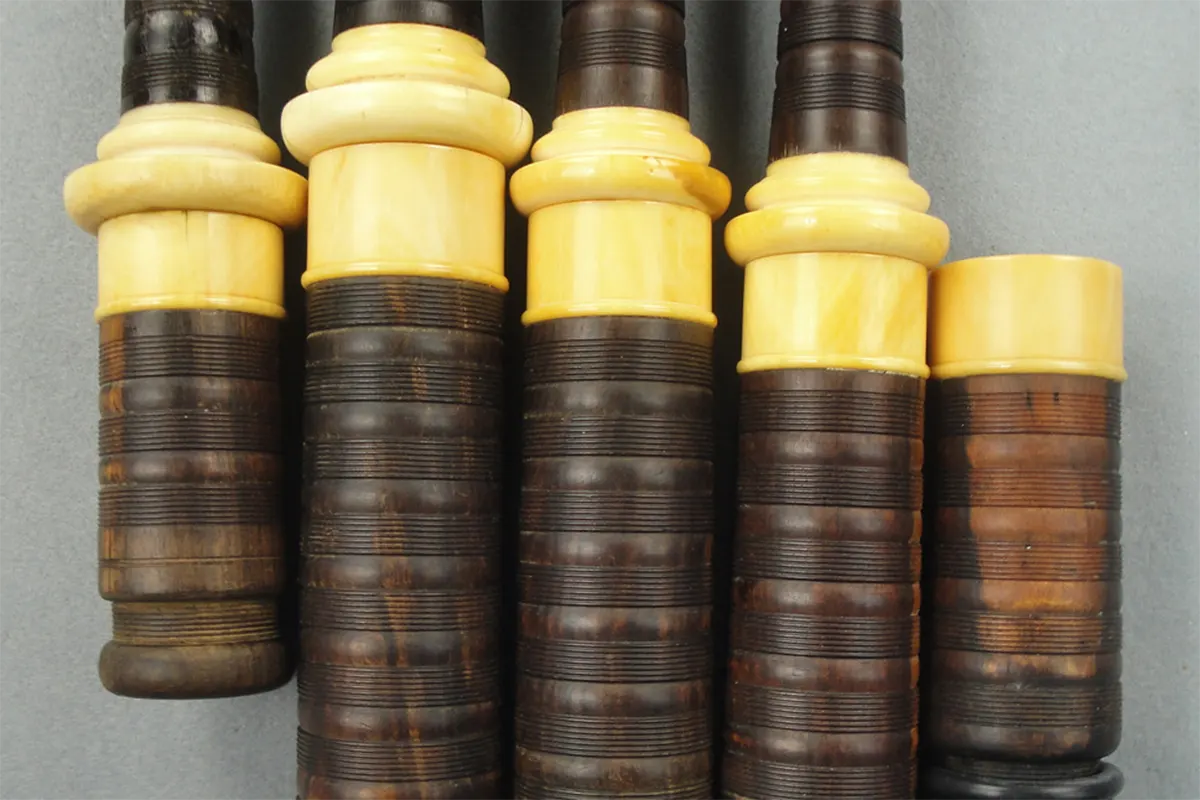
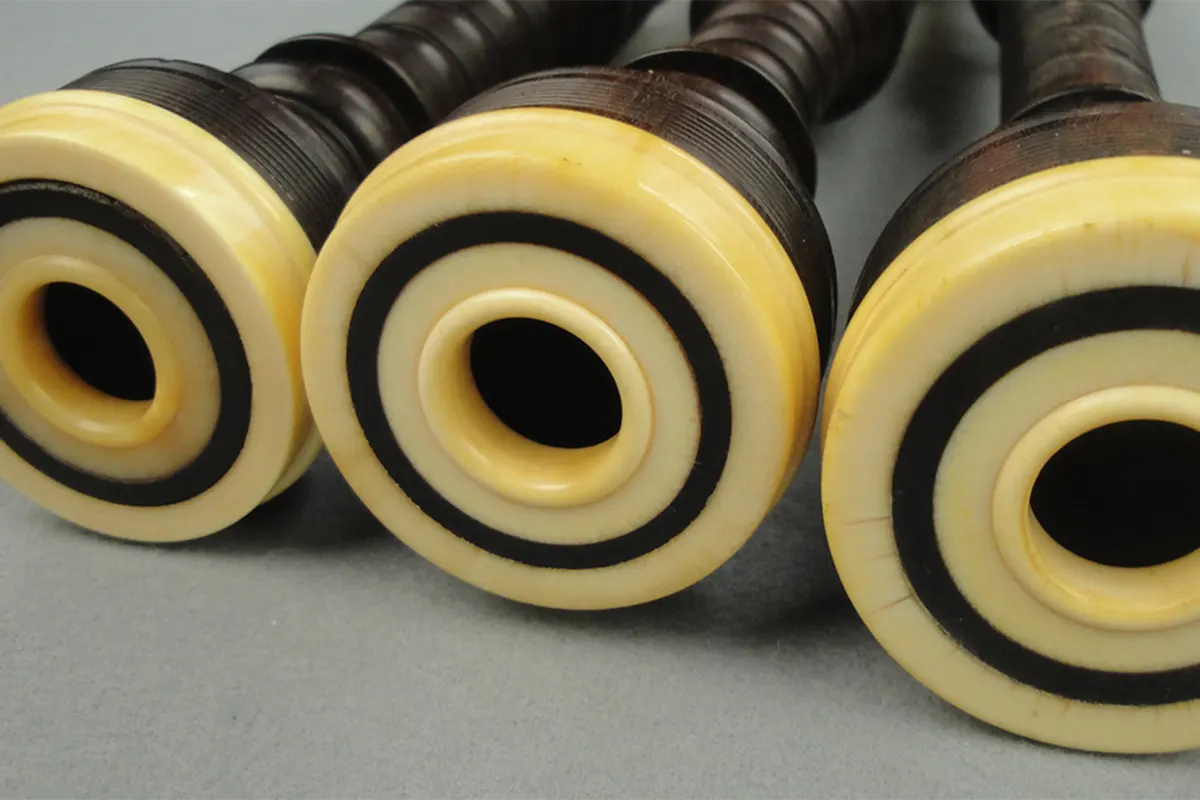
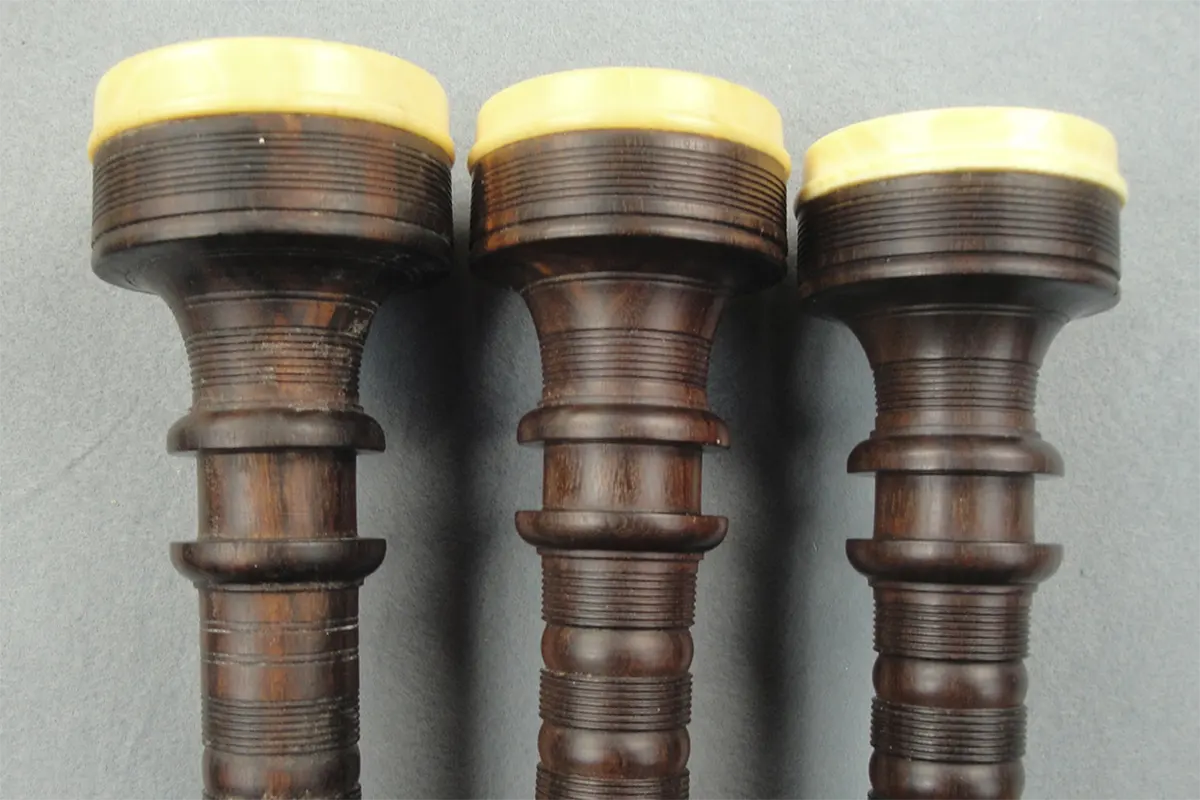
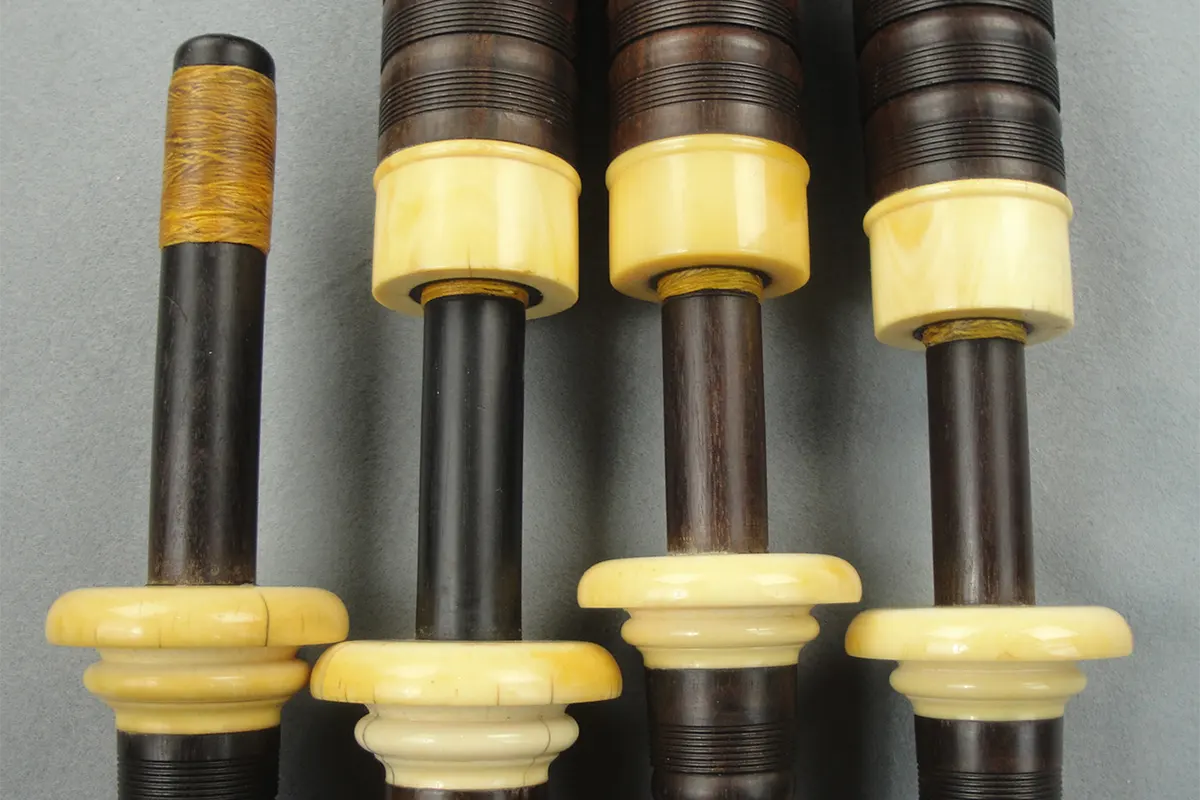
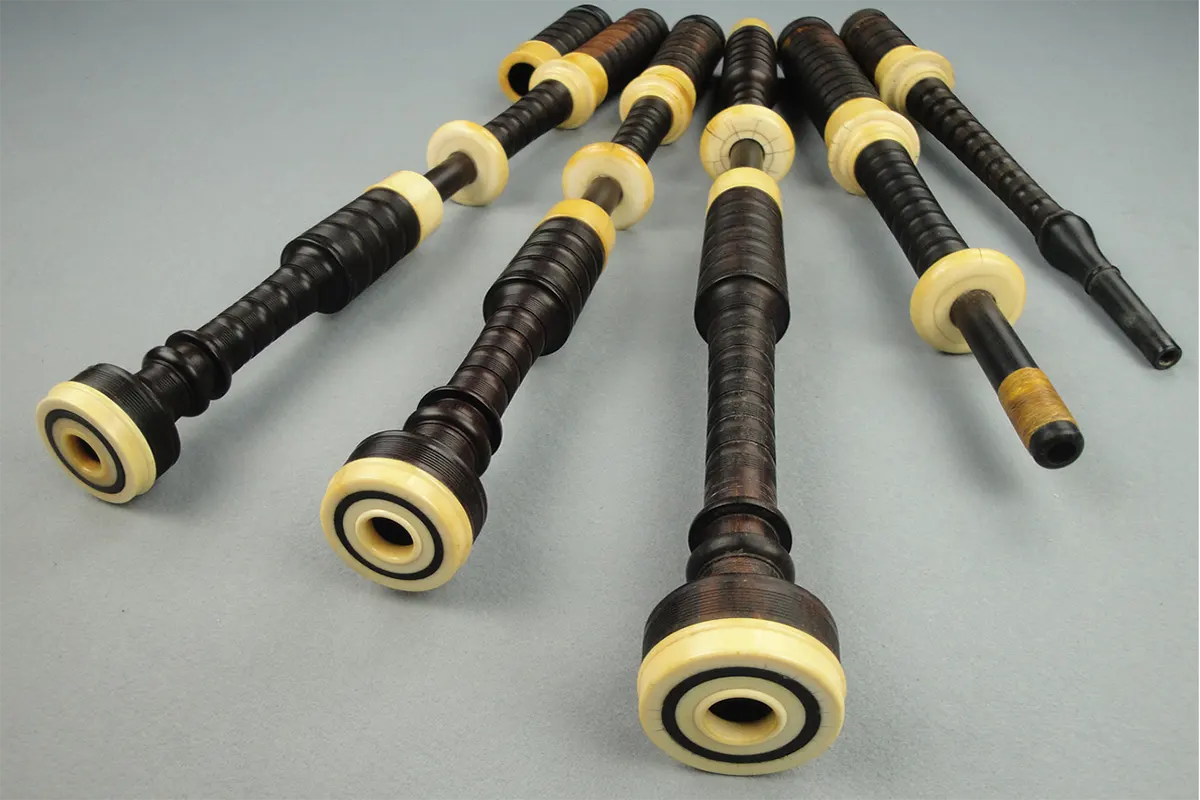
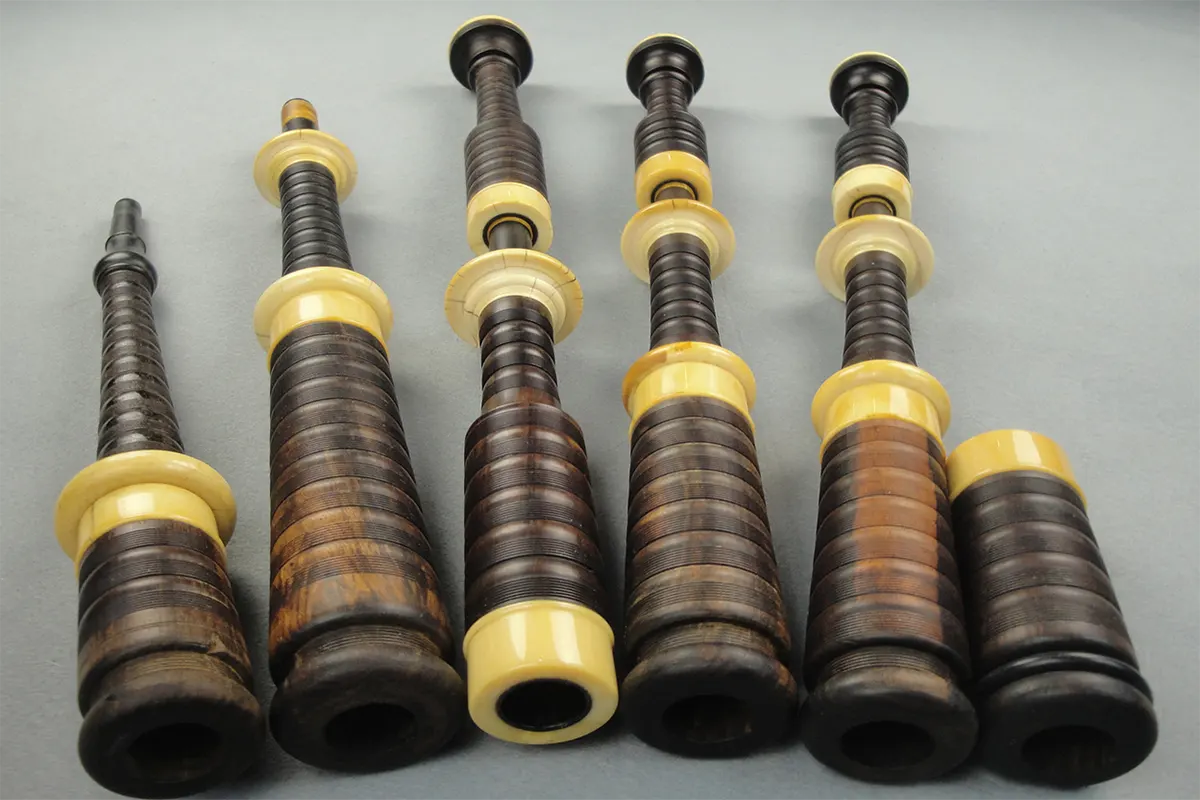
Duncan MacDougall, Circa 1890s, Cocuswood, Ivory
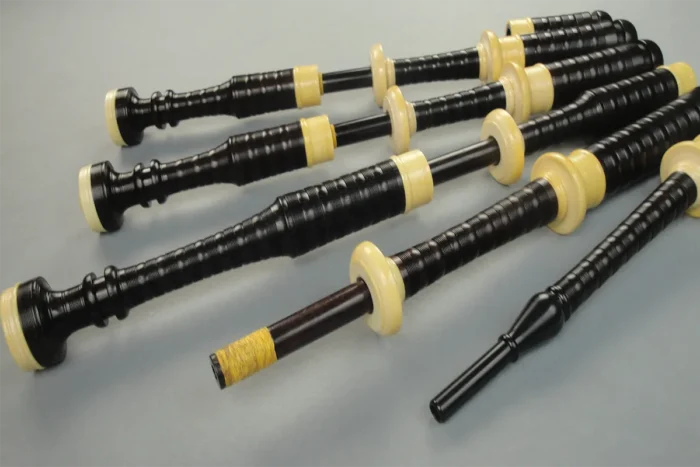
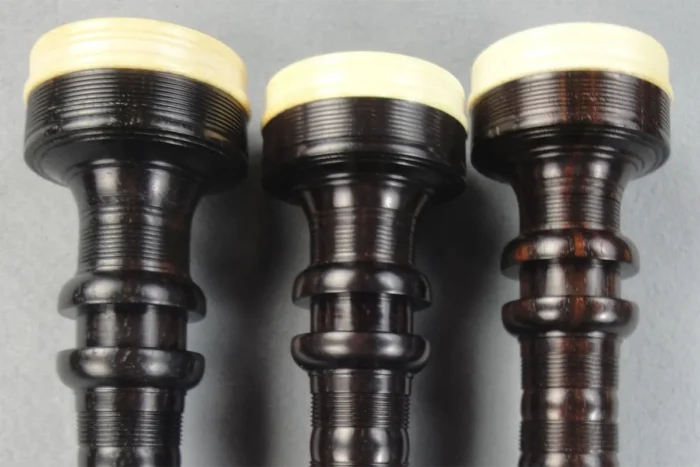
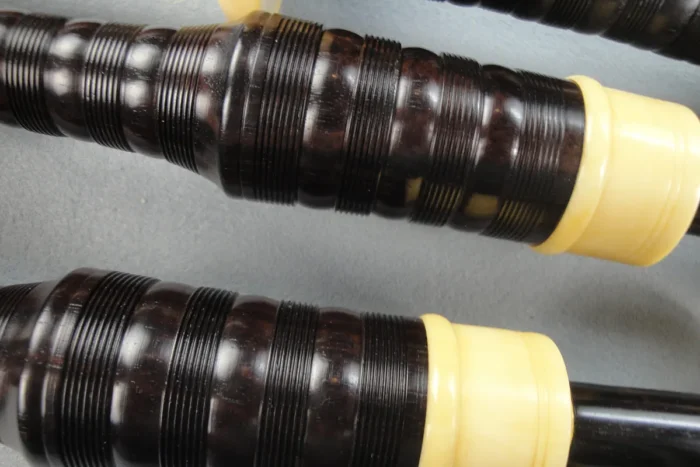
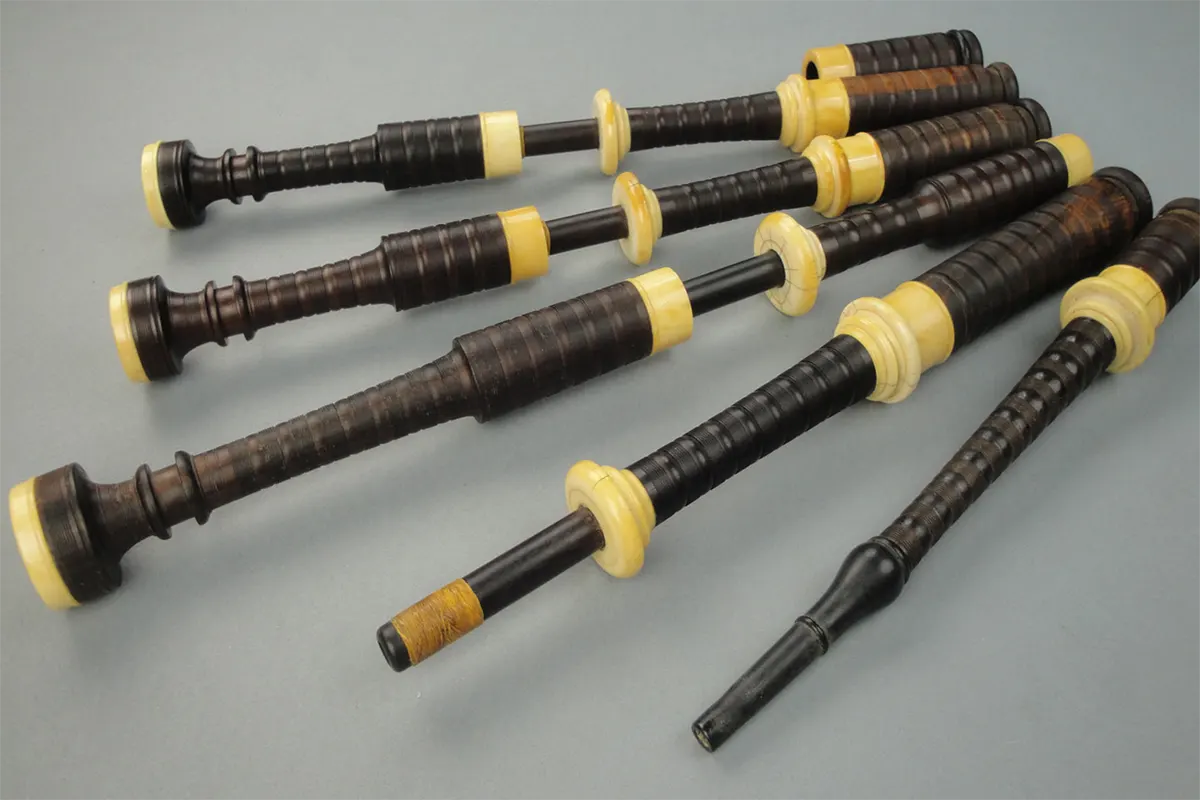
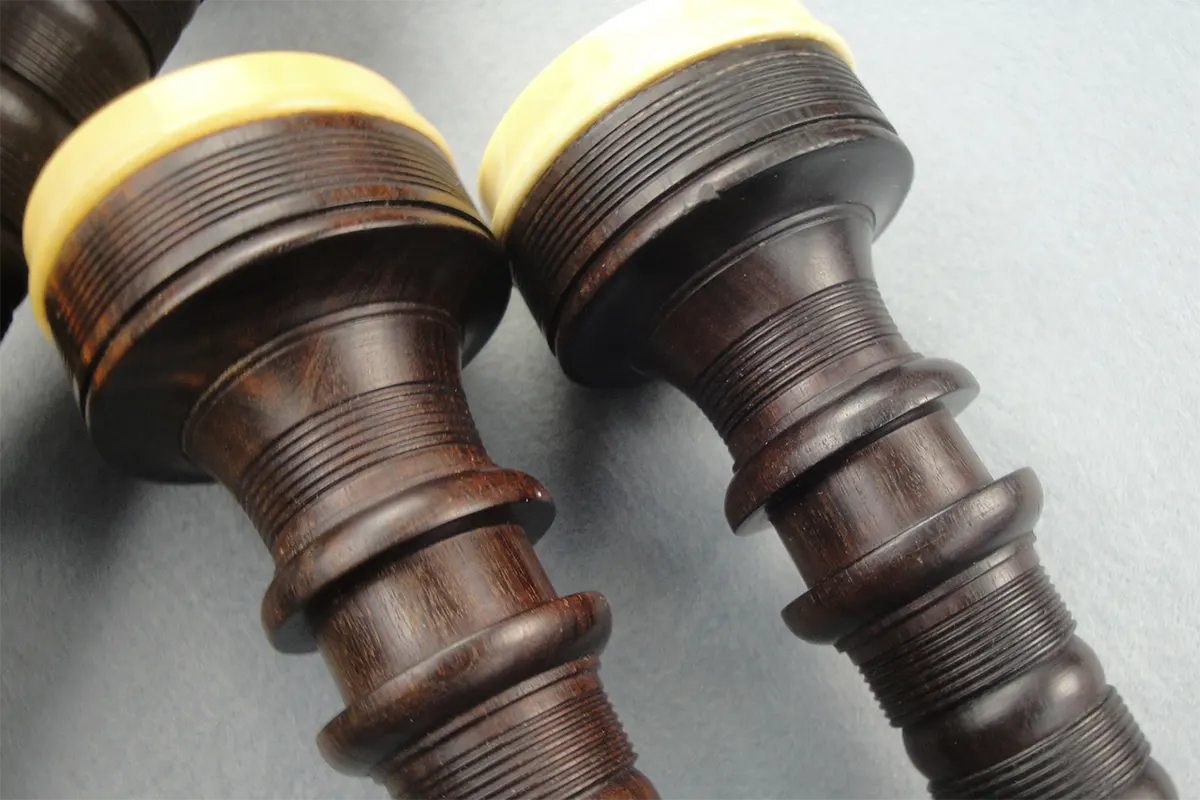
SOLD – This Duncan MacDougall set came to me needing no work at all, but for a cracked blowstick. Since these photos were taken that blowstick has been replaced by a poly-lined replica with the original mount.
There were no cracks and the finish has been left entirely alone.
The set played beautifully, as you might expect. MacDougalls are quite magical with their seamless, steady drone sound. The bass harmonics seem to come in surround-sound.
As MacDougalls go, it’s hard to do better than this cocuswood beauty!
-
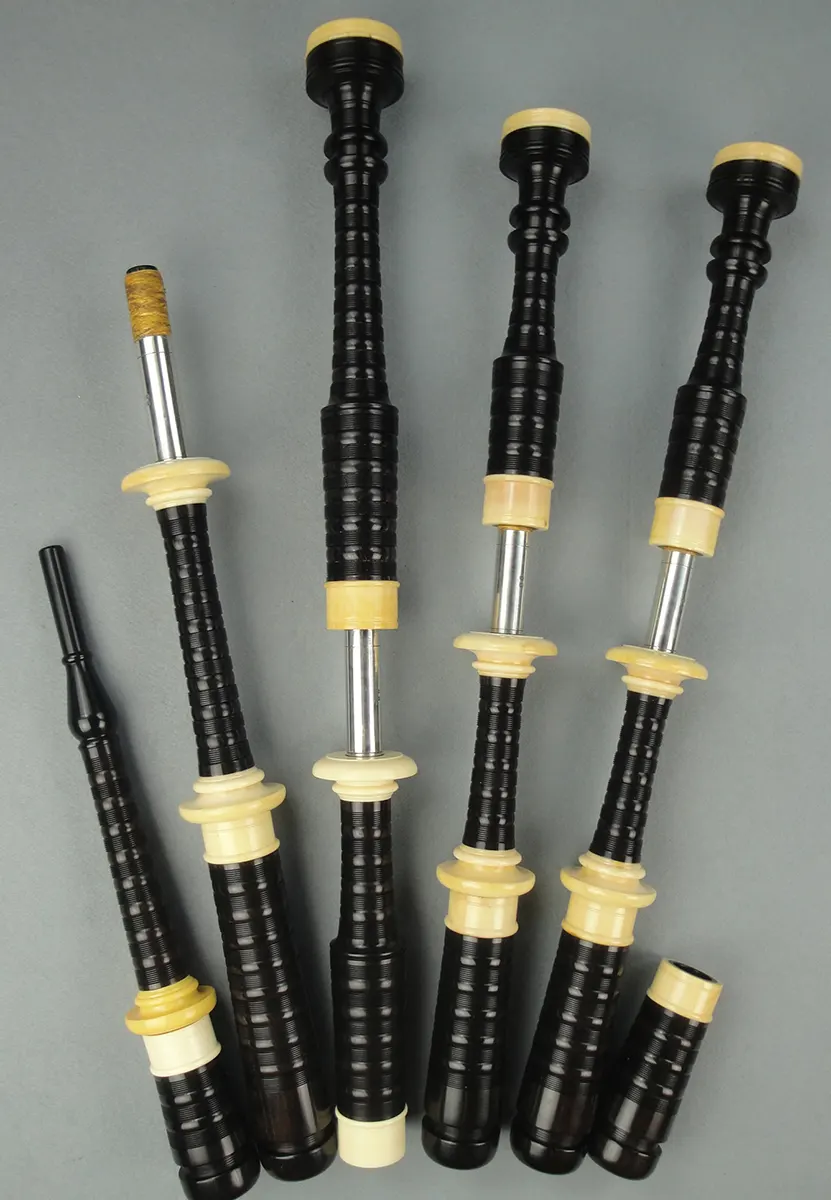
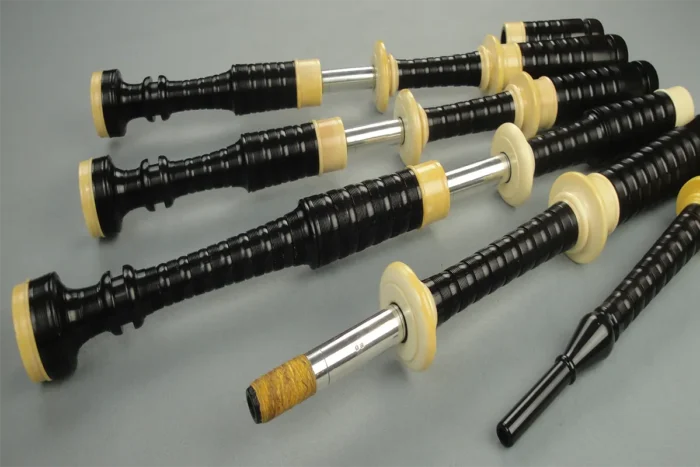
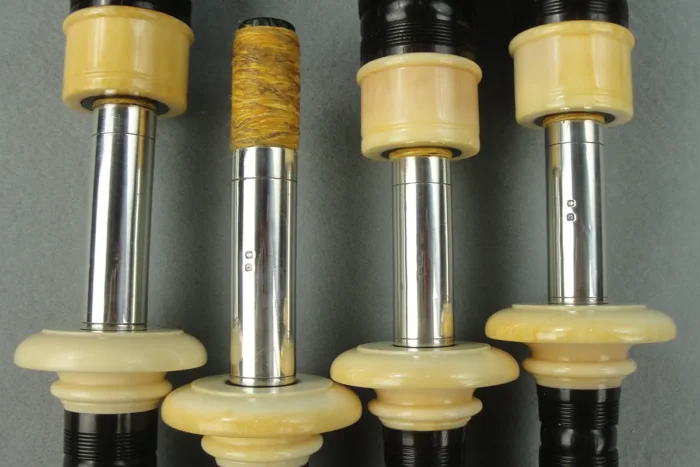
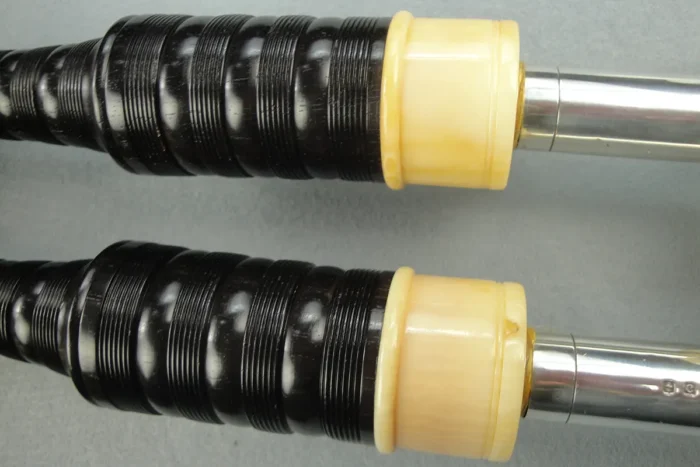
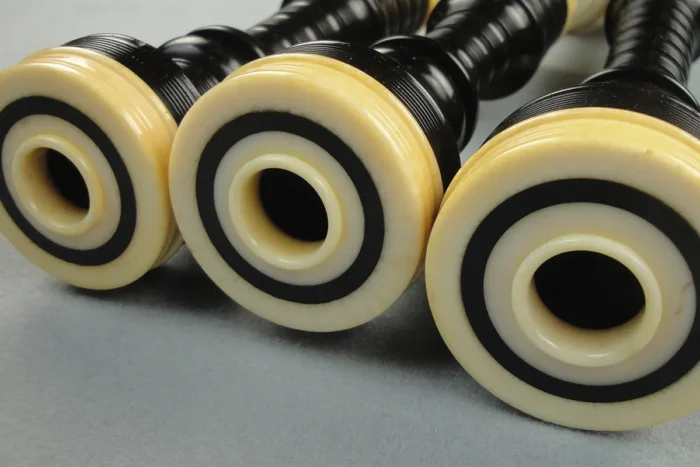
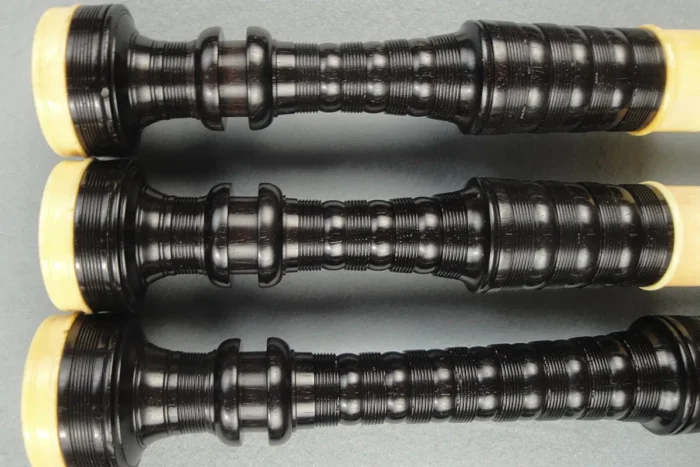
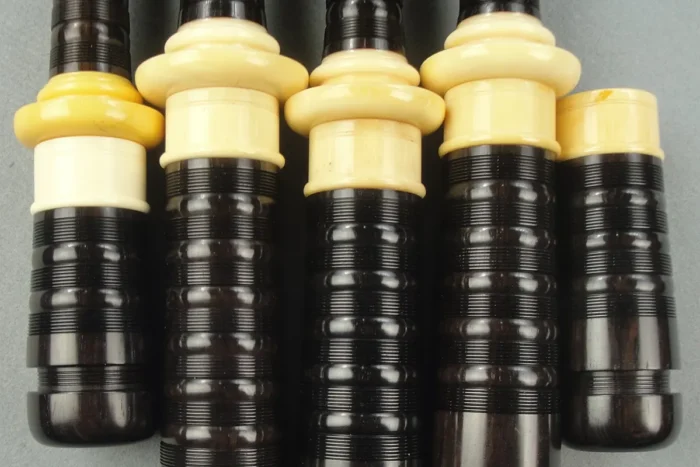
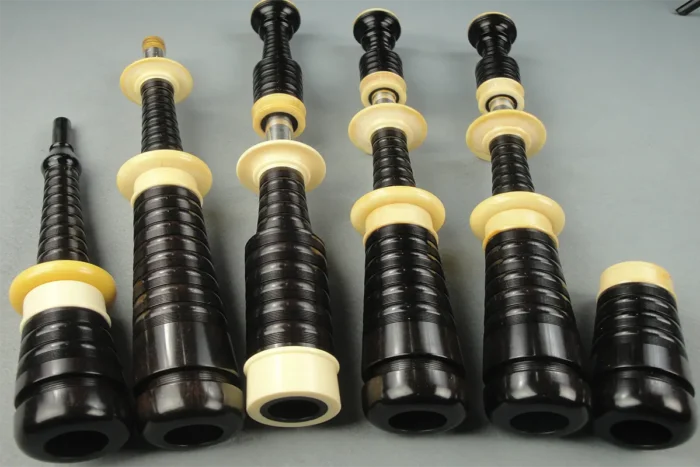
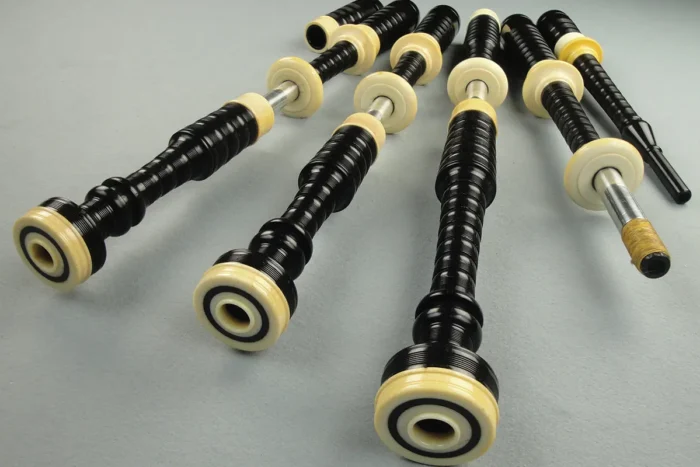
Henderson, Circa 1935, Full Ivory, Plain Silver Slides
SOLD – This Henderson set came to me with fantastic tone despite a couple of compromises. The bass mid-joint and blowpipe were Starck. The stocks were east Indian, but the ferrules were ivory. New stocks and a new bass piece were made by Dunbar Bagpipes (whose expertise is in Henderson bagpipes). Existing mounts were used, though an imitation ivory ferrule is on the new, poly-lined blackwood blowpipe stock. The Starck projecting mount was moved to the bass piece. A poly-lined blackwood blowpipe was made using the Starck projecting mount.
The bagpipe was stripped, refinished and hemped. There were no cracks.
A previous owner added a touch of elegance with plain silver slides hallmarked 1994.
The set played beautifully from the moment I tuned them. Full, rich, seamless and steady, they are as good as any Henderson set I’ve had on the site.
-
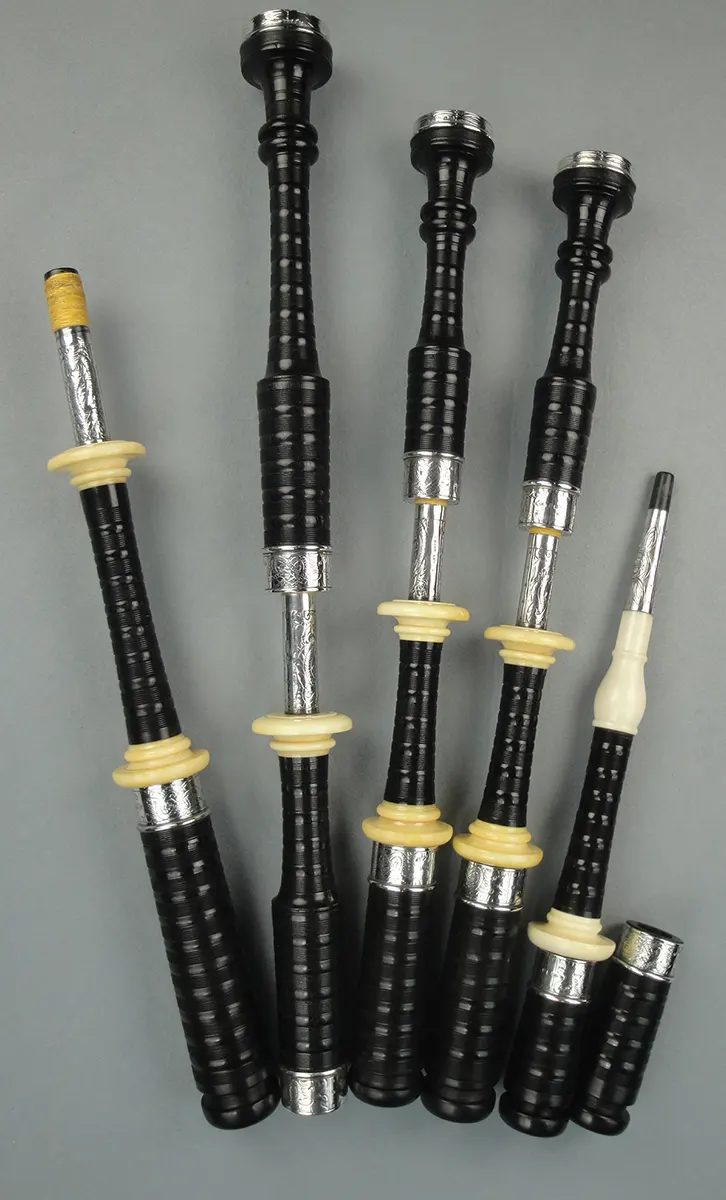
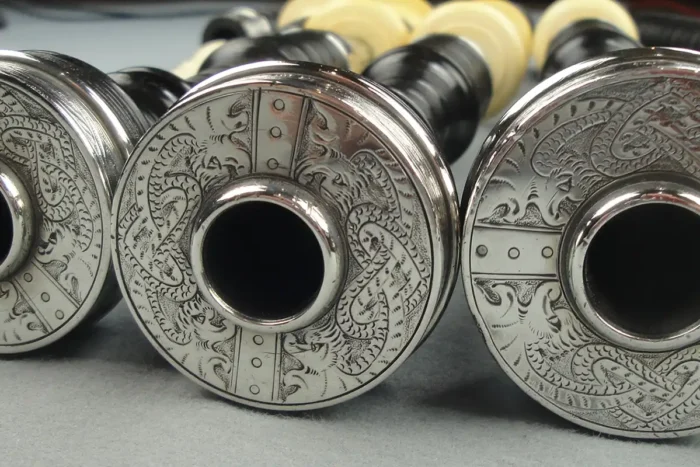
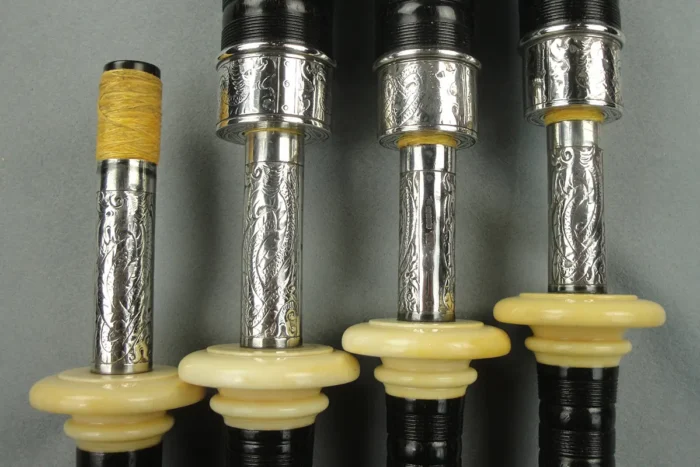
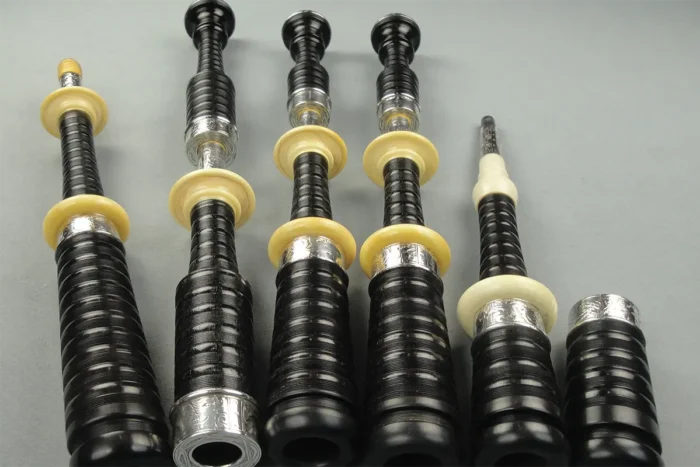
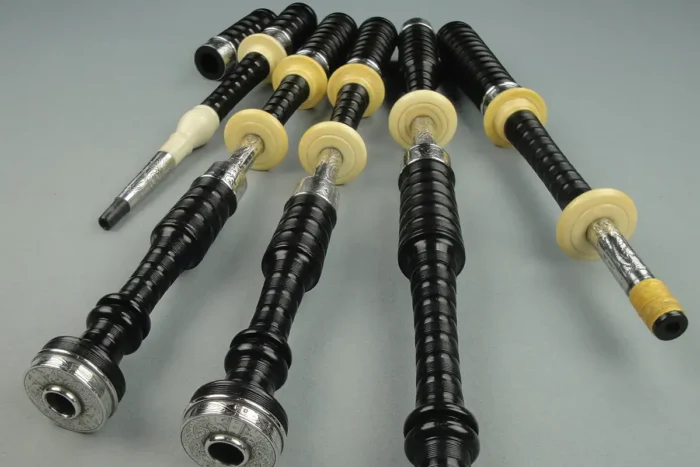
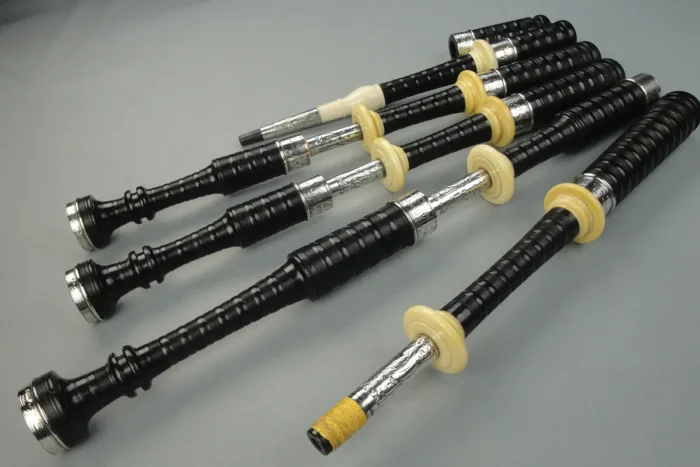
Lawries, Circa 1910, Hallmarked Silver and Ivory
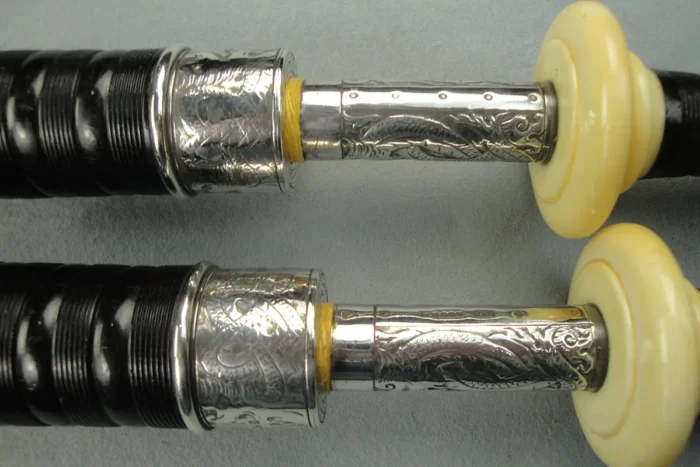
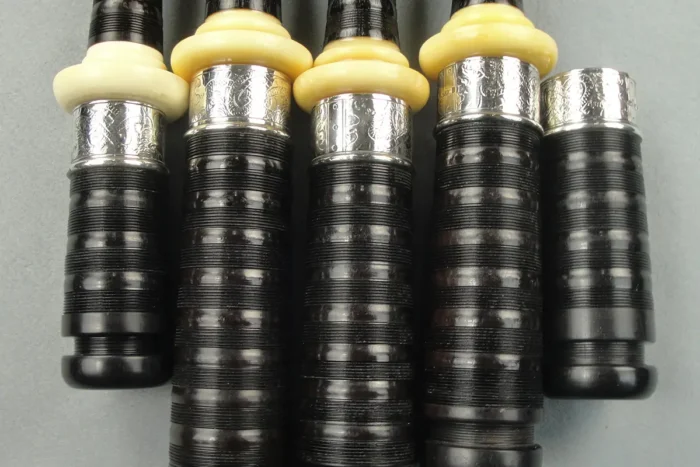
SOLD – This spectacular set has a story behind it. The first recorded owner was George Duncan, an Edinburgh man who emigrated to the Detroit area in the 1930s and was almost certainly the top player on the continent through the 30s and 40s. The pipes were originally full ivory. In 1932, George took them to the Peter Henderson shop in Glasgow and had silver put on them. The silver maker’s mark is PH (for Peter Henderson) and the date is 1931-32. When George passed in 1965 the pipes went to Gord Tuck, a renown Ontario player and pipe major who took many professional prizes in the 1960s in Ontario and who ran the St. Thomas Police grade 1 band for many years.
Whether from the very first or whether it was the addition of the silver, but Gord always knew the pipes as Hendersons, and of course the silver maker’s mark would confirm that.
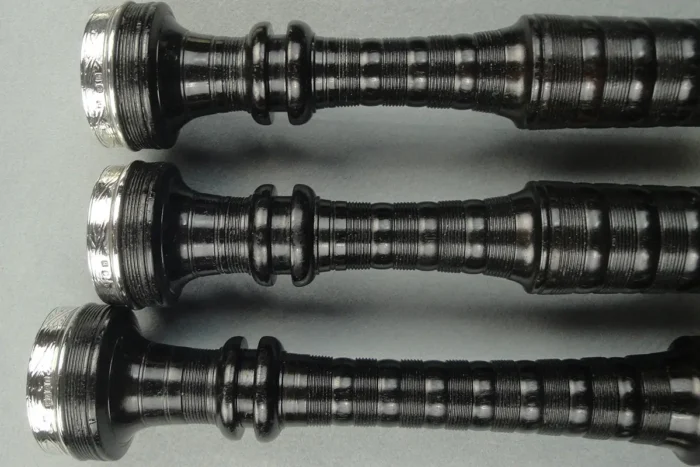
But the pipes aren’t Hendersons. They are Lawries. The elongated, sweeping fountain below the bell and the slightly smaller, less squarish bells confirm this. What else might make one think these were Hendersons? The tone. Through the first two or so decades of the 1900s, Lawrie and Henderson were making almost identical bagpipes, both tonally and visually. They can easily be mistaken for one another.
So the fact that these are Lawries rather than the expected Hendersons is merely a detail of nomenclature. The tone of the pipes is immaculate: full, seamless and rich with harmonics. Earlier in the month Matt MacIsaac and I did a pipetunes video on this set as it is both an iconic set and an excellent example of how pipes can be misidentified.
All parts are original except the blowstick, which appears to be a replacement, including the mount, which is a decent match. The mouthpiece bulb is new, and the engraved silver sleeve is not a match for the set. The silver on the set is gorgeous.
-
Broadley’s Bagpipes ‘Legacy’ Poly Pipe Chanter
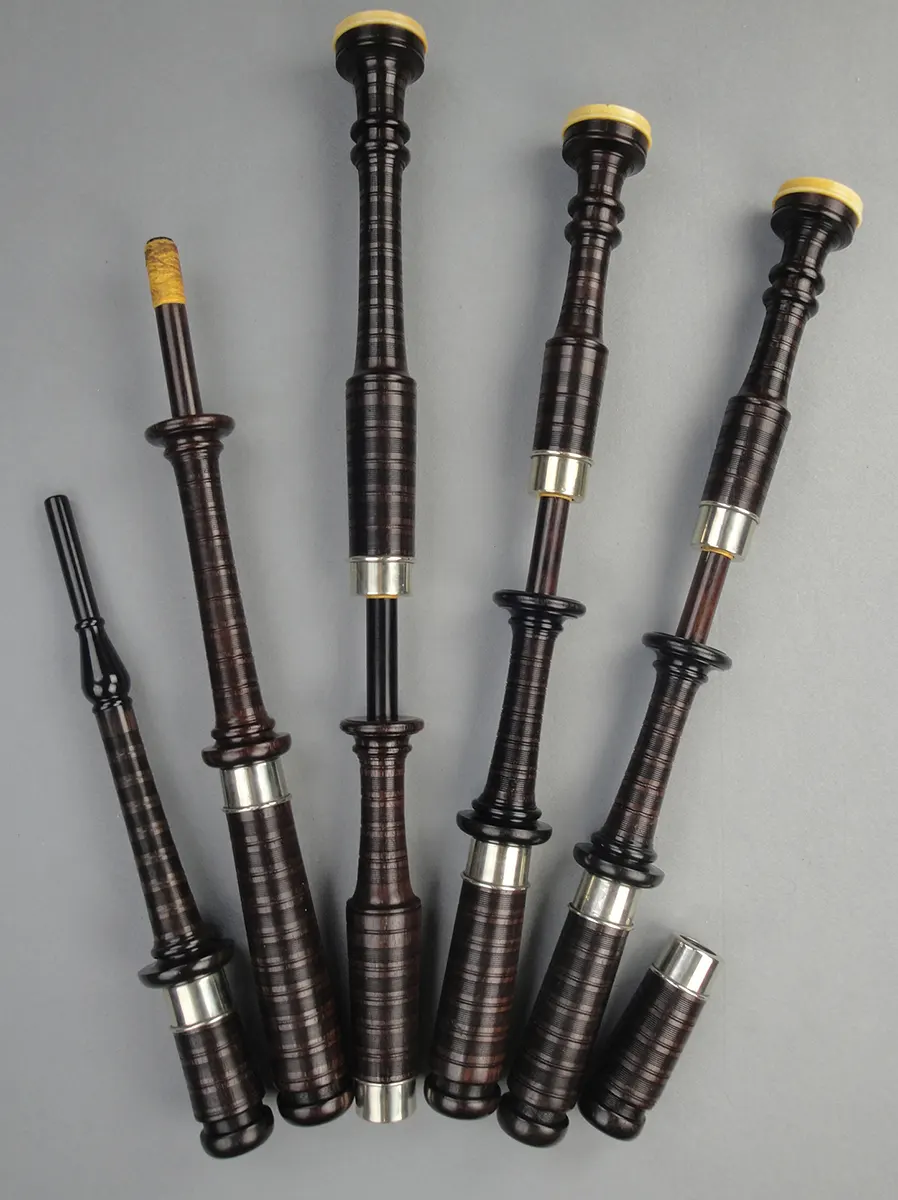
SOLD – This lovely little Lawrie set comes from the estate of Bill Livingstone, who passed away in March. It’s not known if Bill played this bagpipe much, but it was found among his piping possessions.
The set is unusual in that it is as light as a feather. I’ve run the set past my vintage colleagues, and while we aren’t certain of the wood, we believe it may be Brazilian Kingwood, which is seen not infrequently from makers during this time. The pipes sit on your shoulder like a feather.
The tone of this set surprised me by its robustness. It was booming and steady and really impressed me.
All pieces are original, except for the blowpipe, which is a blackwood replica. The set has been stripped and refinished.
-
John Center, Circa 1900, Ebony, Ivory
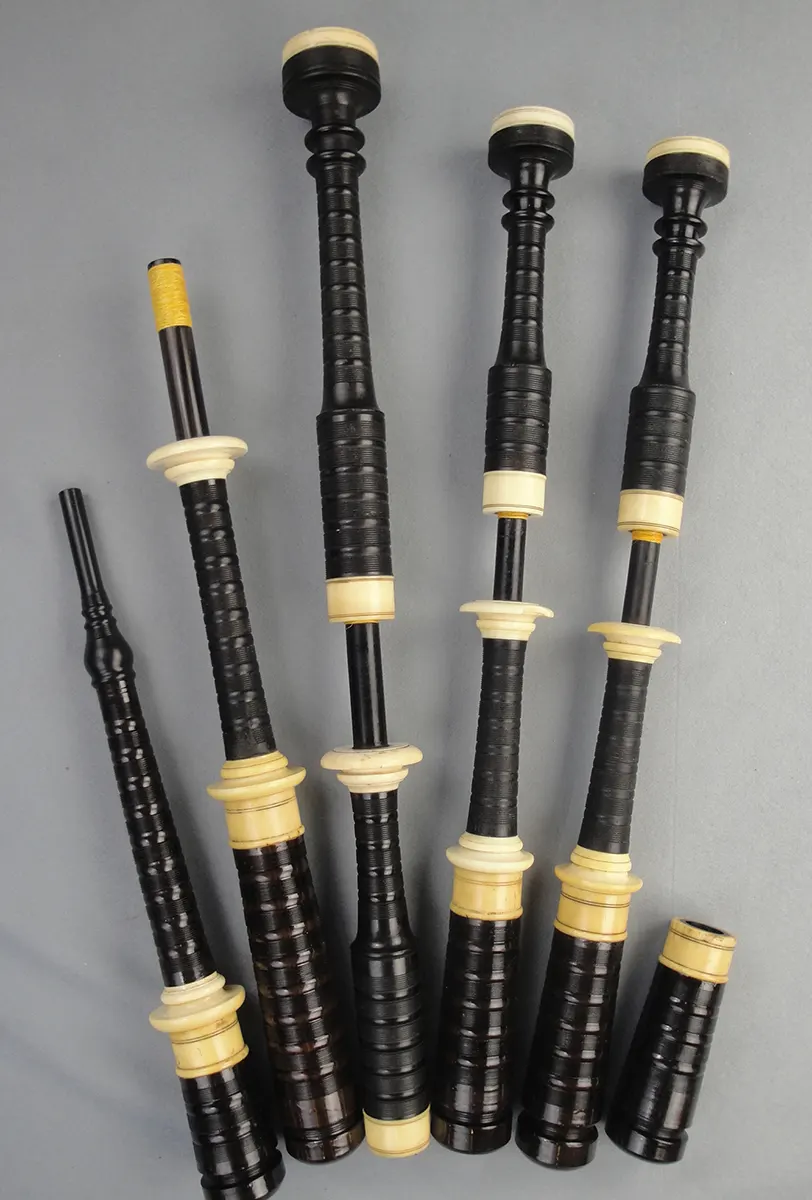
SOLD – This is one of several Center sets we’ve had in the shop over the years. This set was probably made in the years around 1900. It appears to be African blackwood, though it may be ebony.
The stocks are replacements in African blackwood, using the original mounts. One tenor drone projecting mount had a small chunk broken out of it, and it is visible in the pictures. However, this has since been filled. There is a small but stable split in one tenor drone ring.
These pipes displayed a subdued, mellow sound. They are quiet, they tune a bit low, and they are very steady.
-
R. G. Hardie, Hallmarked 1969, Silver and Ivory
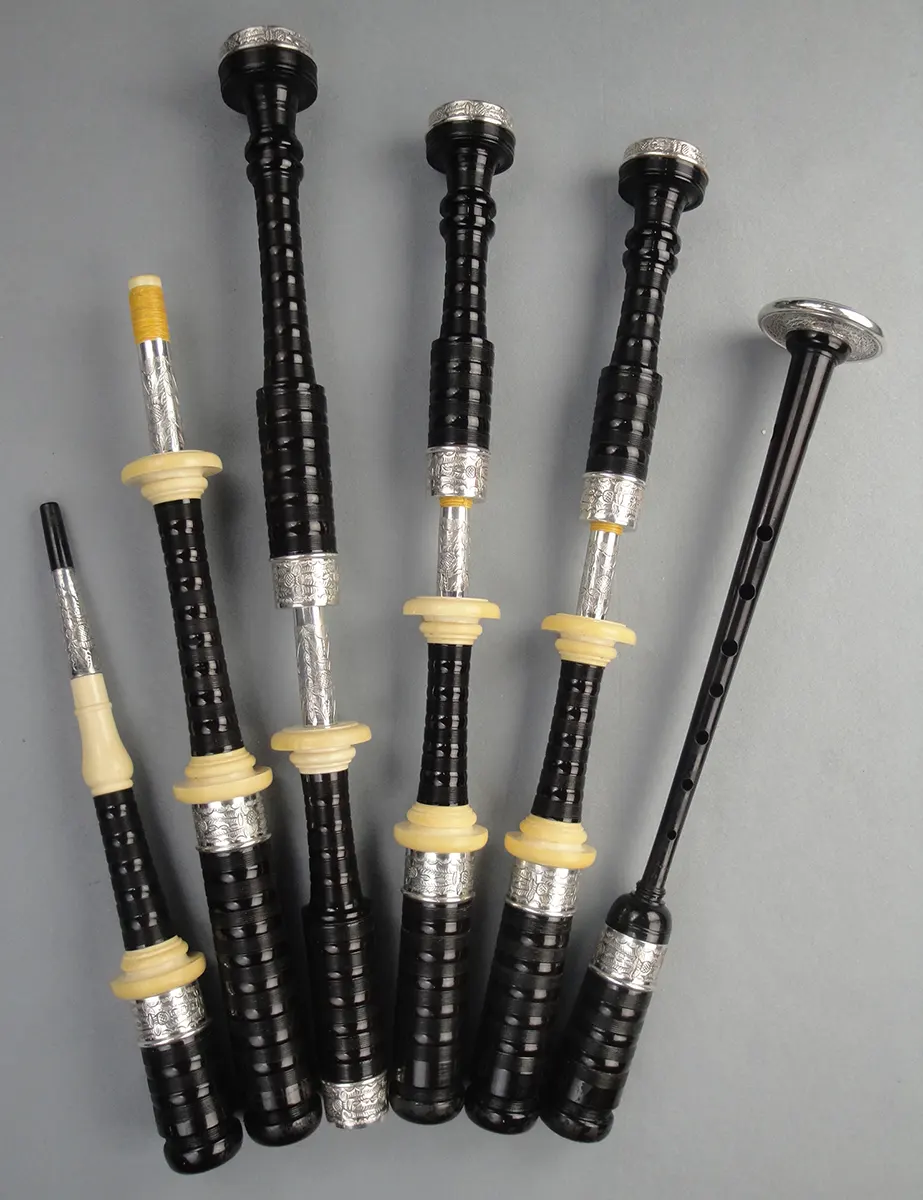
SOLD – This Hardie set was made during the company’s heyday in the 1960s and it has been kept in marvelous condition. It needed no work except for a rehemping.
This is a rare set that has keep all of its original bells and whistles: ivory hemp stops, ivory mouthpiece bulb and sleeve, and the original Hardie chanter and sole.
Bob Hardie’s sets were well made with good wood. The tone is slightly quieter than a full-bodied Henderson, but the pipes are steady, reliable and easy to reed.
This would be a great pipe for someone looking for a little bling on a reliable and well priced silver and ivory instrument.
-
Lawrie, Circa 1930s, Ivory, Engraved Silver Slides
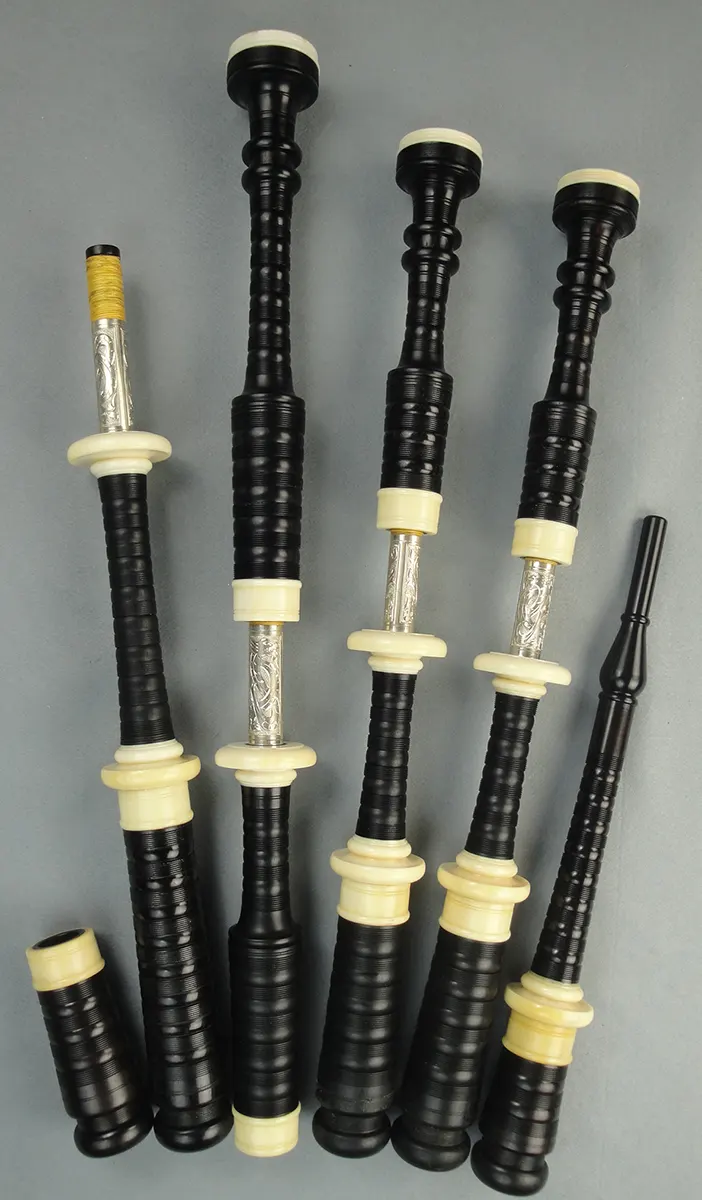
SOLD – This lovely Lawrie set is in excellent condition and plays extremely well.
The set is blackwood with ivory mounts. The slides are engraved Sterling silver, not hallmarked, and clearly a later addition to the pipes.
Cracks in the two tenor tops have been invisible whipped and will give no further problems.
These drones played with a very bold tone, steady, with lots of harmonics: a first-class instrument all-round!
-
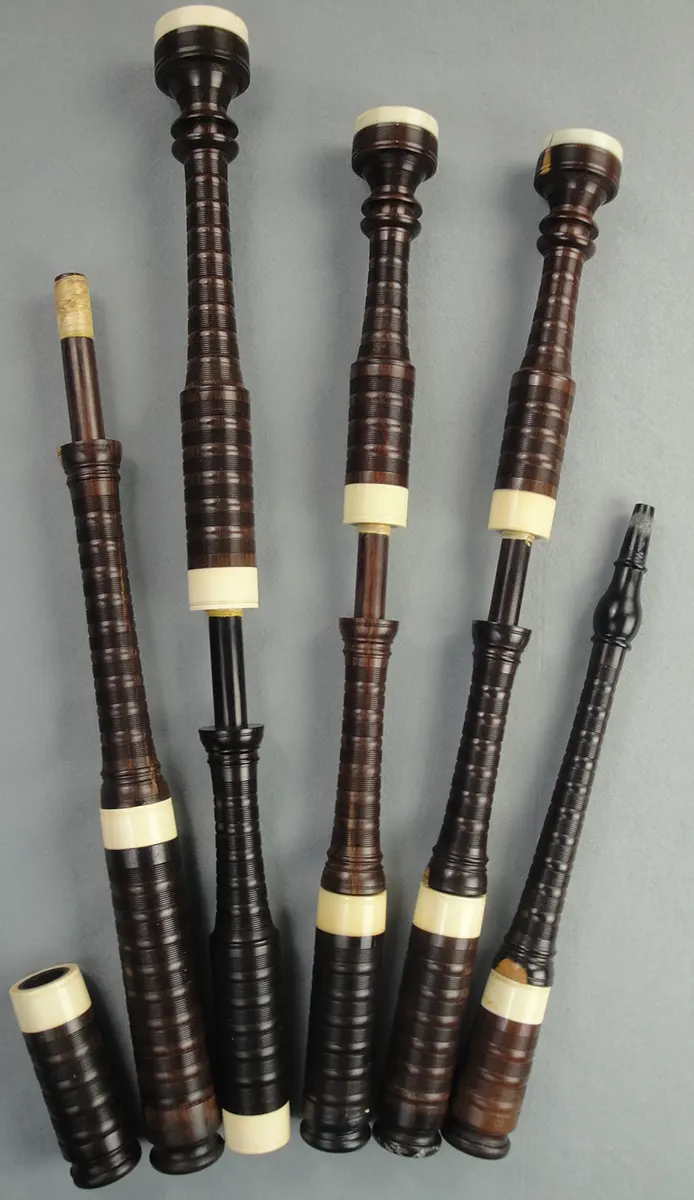
David Glen, Circa 1900, Cocuswood, Ivory
SOLD – David Glen made bagpipes in Edinburgh from 1873 when his father Alexander died until his own passing in 1916. This is a classic David Glen button-mount bagpipe in Caribbean cocsuwood, with lovely ivory ferrules and rings. It is stamped on the top of the bass drone stock, “DAVID GLEN EDINBURGH”.
The set has been refinished at some time and is quite pristine. One ivory stock ferrule has a hairline crack that is quite stable.
These pipes sat on my shoulder light as a feather and hummed away in the usual, mellow Glen fashion: slightly subdued, but rich and steady. A lovely bagpipe.
-
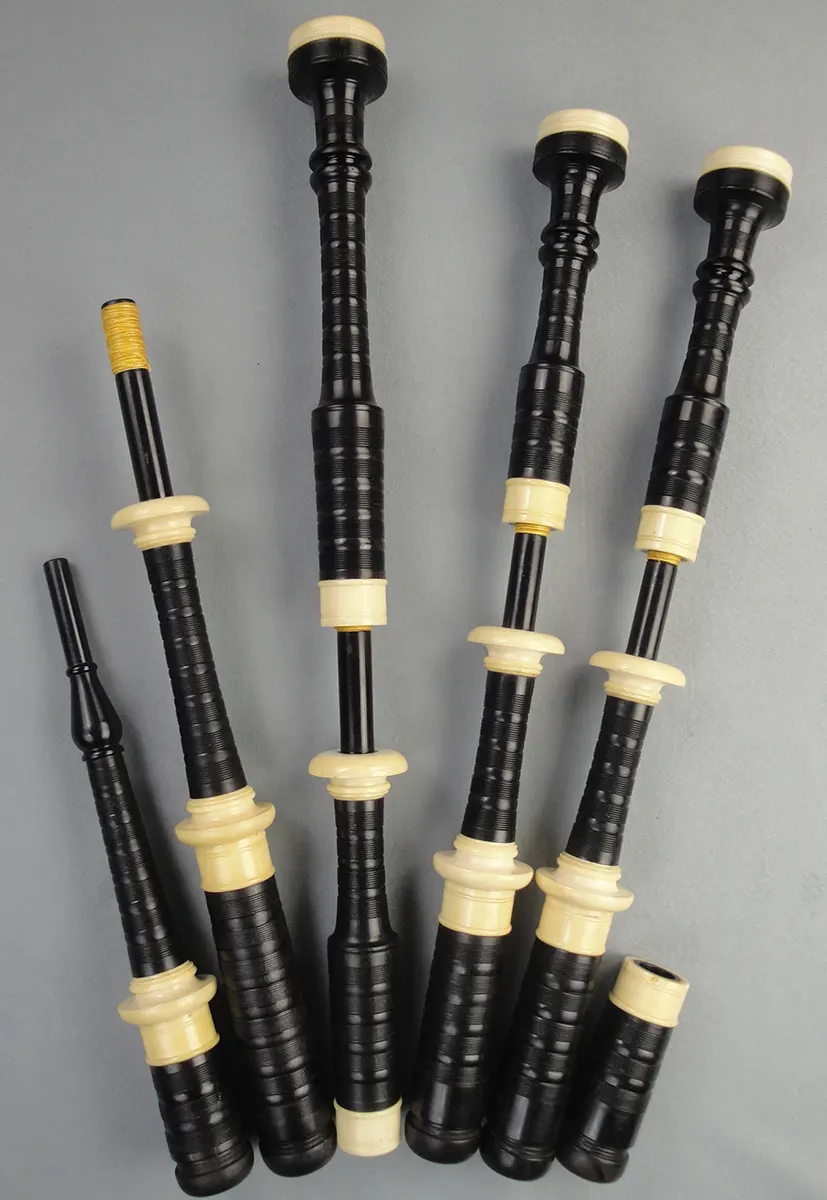
William Sinclair & Sons, Circa 1960s, Full Ivory
SOLD – William Sinclair set a high standard for modern-day pipemaking, beginning in the 1930s, and continuing today.
This set has been on the site before and remains in excellent condition. The finish is excellent, and the pipe was free of cracks. The set sports the full ivory caps seen only on Sinclair and MacPherson pipes.
Sinclair tone does not disappoint. It is full, steady and bright. This set played beautifully for me.