
Working with vintage bagpipes is as much a hobby as a business for me. I enjoy the process of turning up old pipes and making sure they will be played for years to come. I think it is a good thing for piping. As such, I take great care in purchasing, examining and restoring old pipes.

My refurbisher is J. Dunbar Bagpipe Maker in St. Catharines, Ontario. Not only do they do masterful restorations, they have eagle eyes for examining 150-year-old wood and discovering replacement pieces and flaws that should be addressed before you play the pipes. If a set of pipes has a replacement or repaired piece, you will know about it before you buy.
You should know from the get-go that pretty much every bagpipe made before 1930 has required or will require repairs of some sort, especially if they are ebony. Ebony and cocuswood are superb woods from which to make bagpipes but they are less resilient than African blackwood. I suspect there is hardly an ebony bagpipe in the world made before 1920 that hasn’t experienced at least one crack.
Photos and descriptions of all instruments featured since October 2010
-
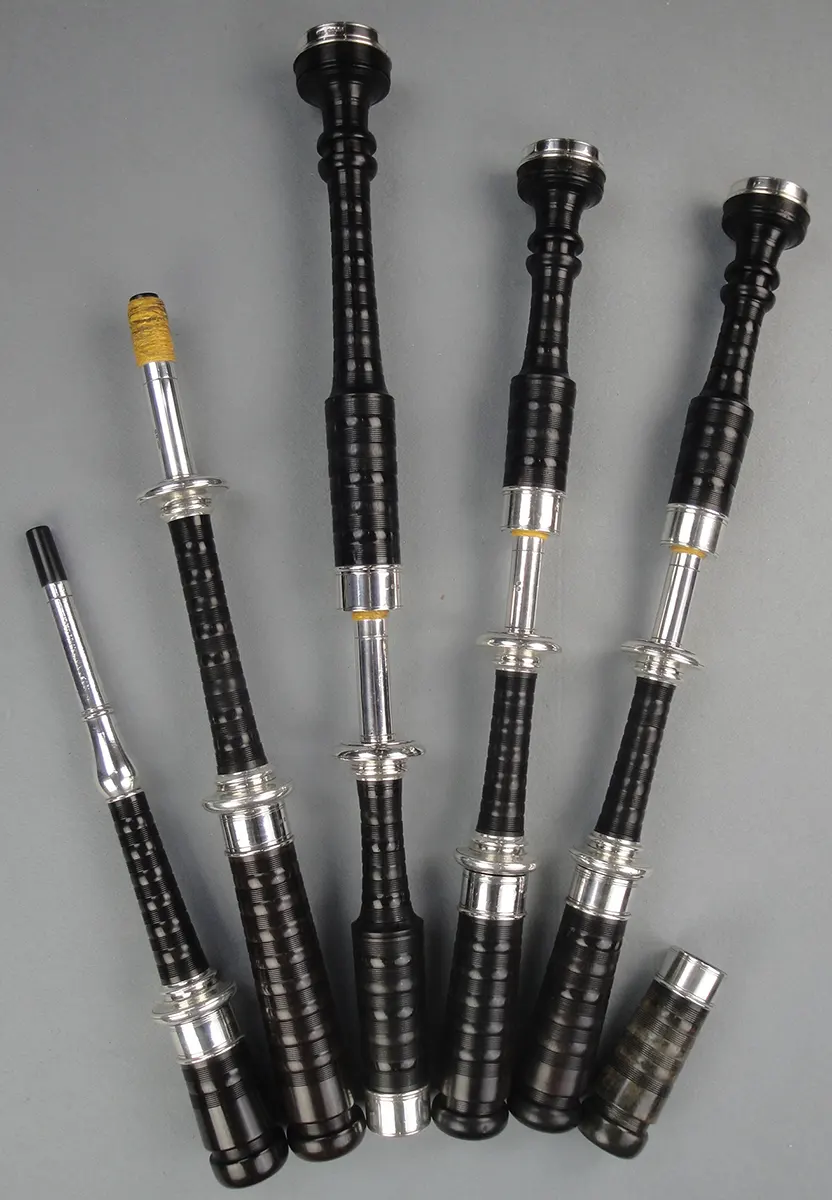
Henderson, Ebony, Full Silver, Hallmarked 1918-19
SOLD – This magnificent full plain silver Henderson comes with some history. Up until 1998 it was owned by famed Australian piper Greg Wilson who won with it two Braemar Gold Medals, the Dunvegan Medal at Skye, and the Northern Meeting Gold Medal at Inverness. Each piece is hallmarked PH 1918-19
It is one of the more voluminous pipes I’ve ever played — a real kick. They were steady, and seamless and had a great chanter blend. They are a prize-winning set.
The caveat is, being they are ebony, they have had cracks, and more cracks than most ebony pipes I’ve encountered. All the of drone tops have had portions, or their whole length invisible whipped. The whipping prevents recurrences. One crack in the middle bass piece had been secured closed by a wide silver band that went back before Greg’s days with the pipes. This has now been removed and the piece properly fixed.
This is a lovely set that suffered some neglect and required TLC. But it brings with it a classic Henderson sound.
-
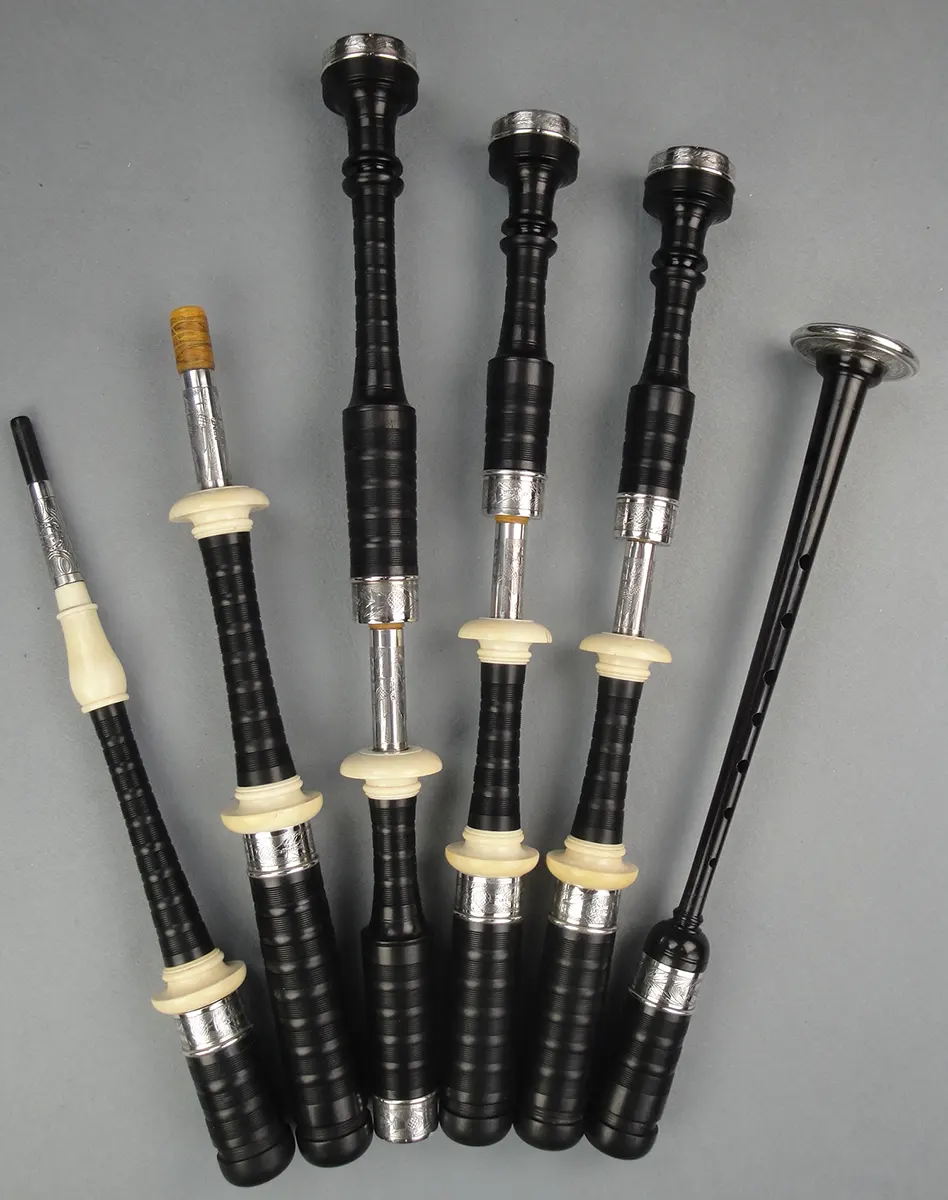
William Sinclair, Silver and Ivory, Hallmarked 1957-58
SOLD – This Sinclair set came to me in superb condition. The only work needed was to even out the four tuning chambers. There is one small chip on on projecting mount, visible in one of the photos below.
The set displays a thistle pattern and every piece but one is hallmarked 1957-58, including the chanter sole. The exception is the silver mouthpiece sleeve, whihc is a different pattern and hallmarked 1963-64. The ivory mouthpiece bulb probably came with the sleeve. The silver sole now resides on a very old Hardie chanter which, along with the second-place Sinclair, was the chanter of the day when this bagpipe was made.
I played a set of 1949 silver and ivory Sinclairs through the 1980s, winning with them the Gold Medal at Oban and the MSR at the Glenfiddich championship. There were bold, bright and beautiful — quite cheery — and this set is just like them. Great tone, steadiness, and high manufacturing quality.
-
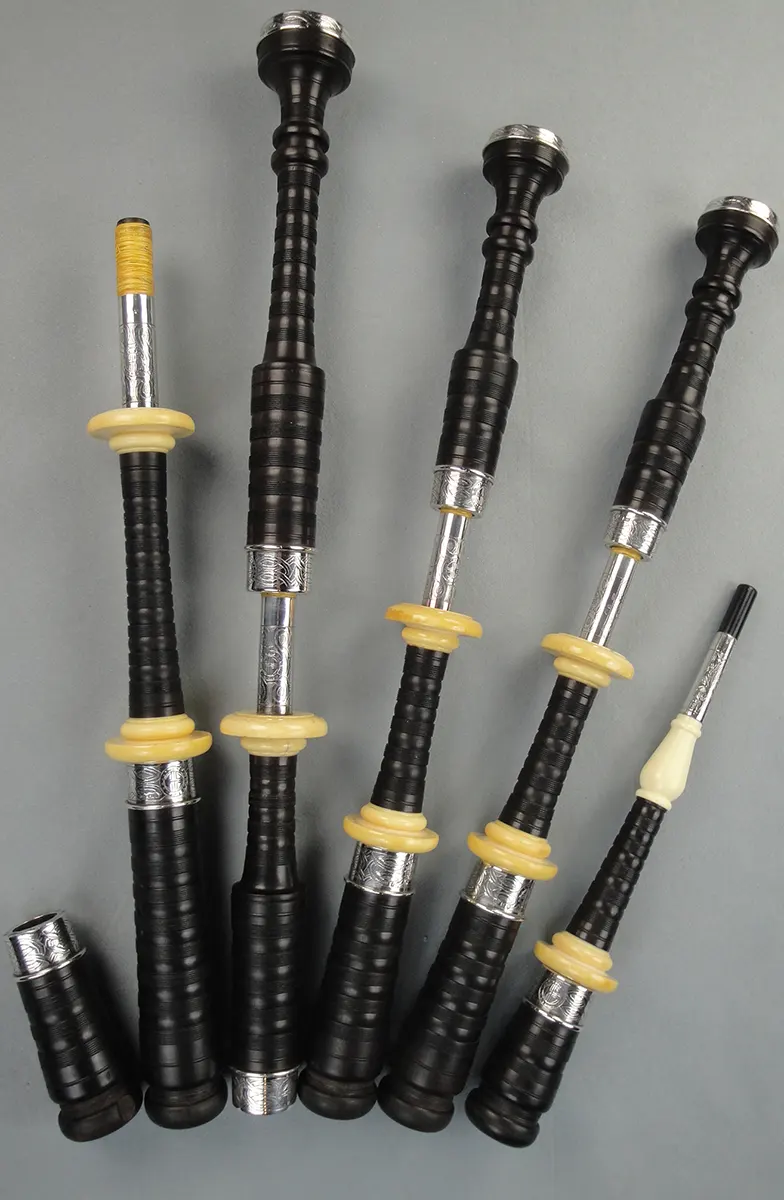
Lawries, Hallmarked 1951-52, Silver and Ivory
SOLD – This lovely Lawrie set was made in 1952 and has the hallmarks to prove it.
The pipes came to me blemish-free, requiring only a polish and a rehemp.
All pieces are original except for the mouthpiece bulb and silver sleeve. The bulb is imitation ivory and was made about a month ago. The silver sleeve came with the pipes, but the engraving pattern is not a match — not noticeable unless you look!
The tone of this set was bold, resonant and steady. I played a piobaireachd on them and they were lovely.
-
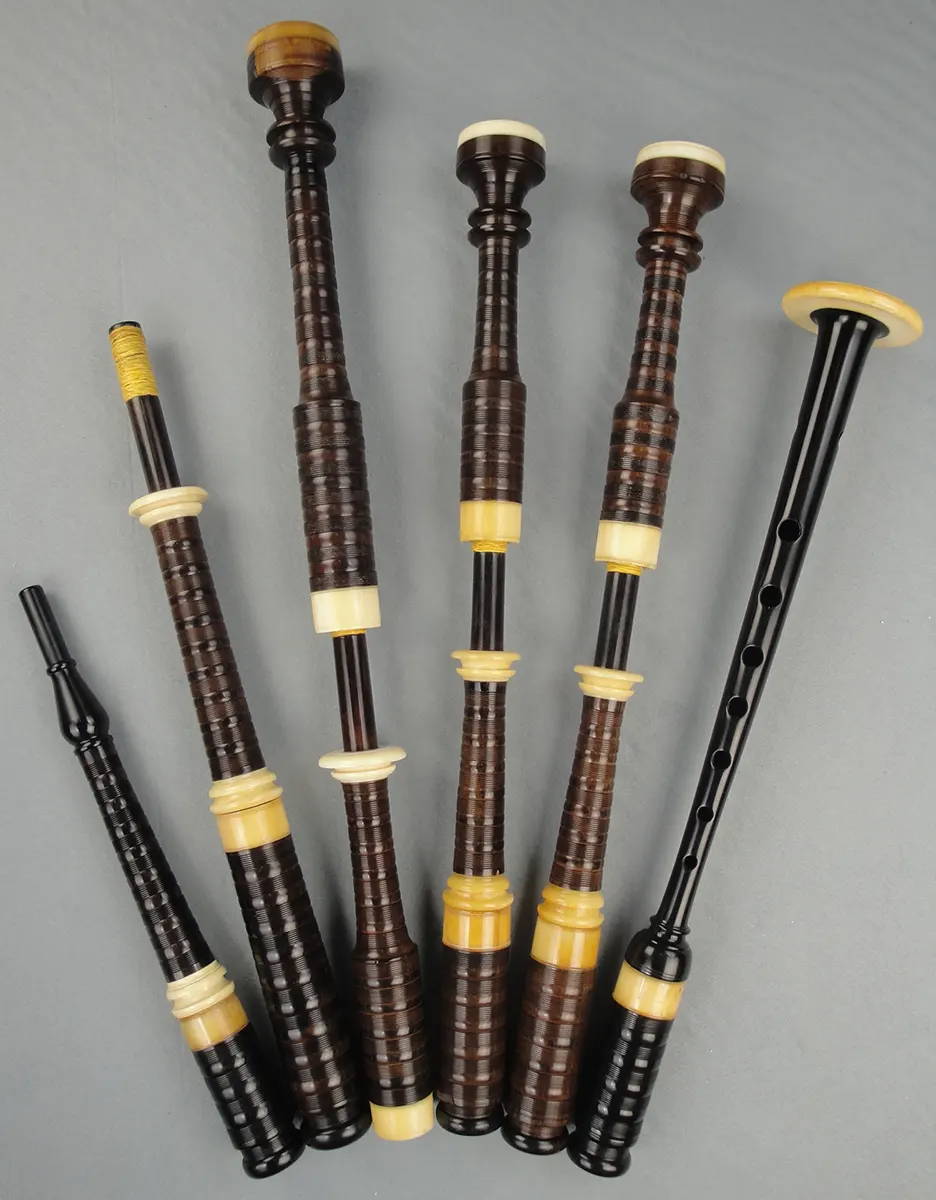
Donald Macdonald, Circa 1830s, Cocuswood, Marine Ivory
SOLD – This is the oldest and one of the most significant sets we’ve had on the site. Donald MacDonald made pipes from approximately 1800 until 1840 and his influences are still apparent today.
This set was owned for many years by a piper in Victoria, British Columbia, who purchased them as a set of MacDougalls. Though the set was not stamped, the visuals checked out with known MacDonald sets, convincing at least three vintage bagpipe experts that these are indeed Donald MacDonald pipes.
As might be expected of an instrument that is nearly 200 years old, there have been some repairs. Invisible whipping has been done on the bass top, one tenor top, and the lower portion of the bass middle.
All pieces appear to be original except for the blowpipe, which is a poly-lined replica with a nicely matching holly mount. The tenor rings appear to be elephant ivory, as does one bass projecting mount, and these are likely replacements.
The tenor bottoms have at some point had brass sleeves installed, almost certainly to make the drones tune higher.
Tonally, the drones are marvellous: quite robust, rich and steady.
To see a video on this instrument and to hear it played in studio conditions, please click here.
-
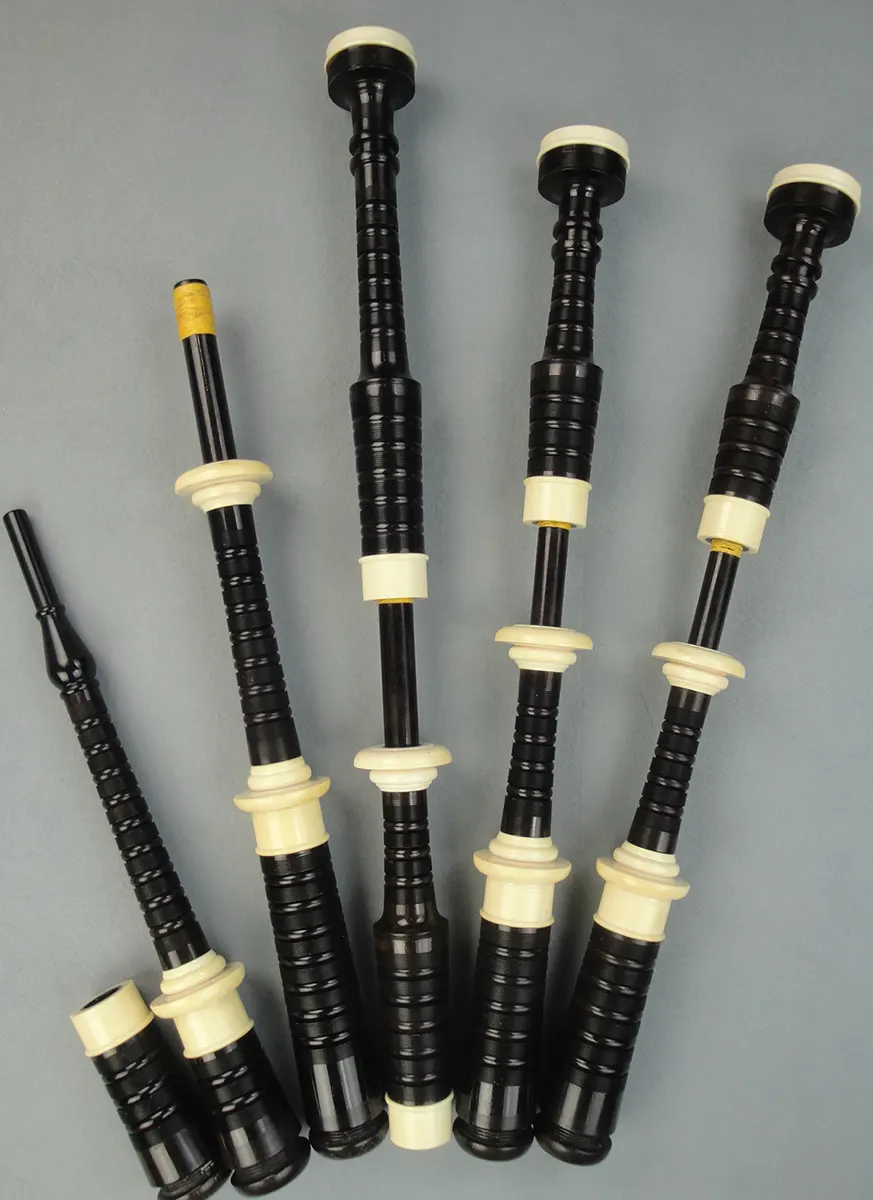
Henry Starck, Circa 1940, African Blackwood, Full Ivory
SOLD – Henry Starck was born to a German woodwind maker who immigrated to London around 1810. In the 1880s, the Queen’s Piper, William Ross, asked Henry Starck to make bagpipes for him. Starck did so, and then carried on its own pipemaking company, which lasted until 1962. Les Cowell, founder of David Naill and Company, trained and worked there for some years.
This set was likely made in the early 1940s, beautifully turned in the distinctive beading style the company maintained through much of its time. At some point there was a small crack in the bass top that was poorly repaired, but this has been properly fixed and is not at all visible. The original Starck, ivory-soled chanter comes with the pipes, but is not pictured.
The ivory is pristine save for one pepper-grain size nick in one drone stock ferrule.
Tonally this set was booming: voluminous and rich with my Canning reeds. This set is a visual and tonal treat.
-
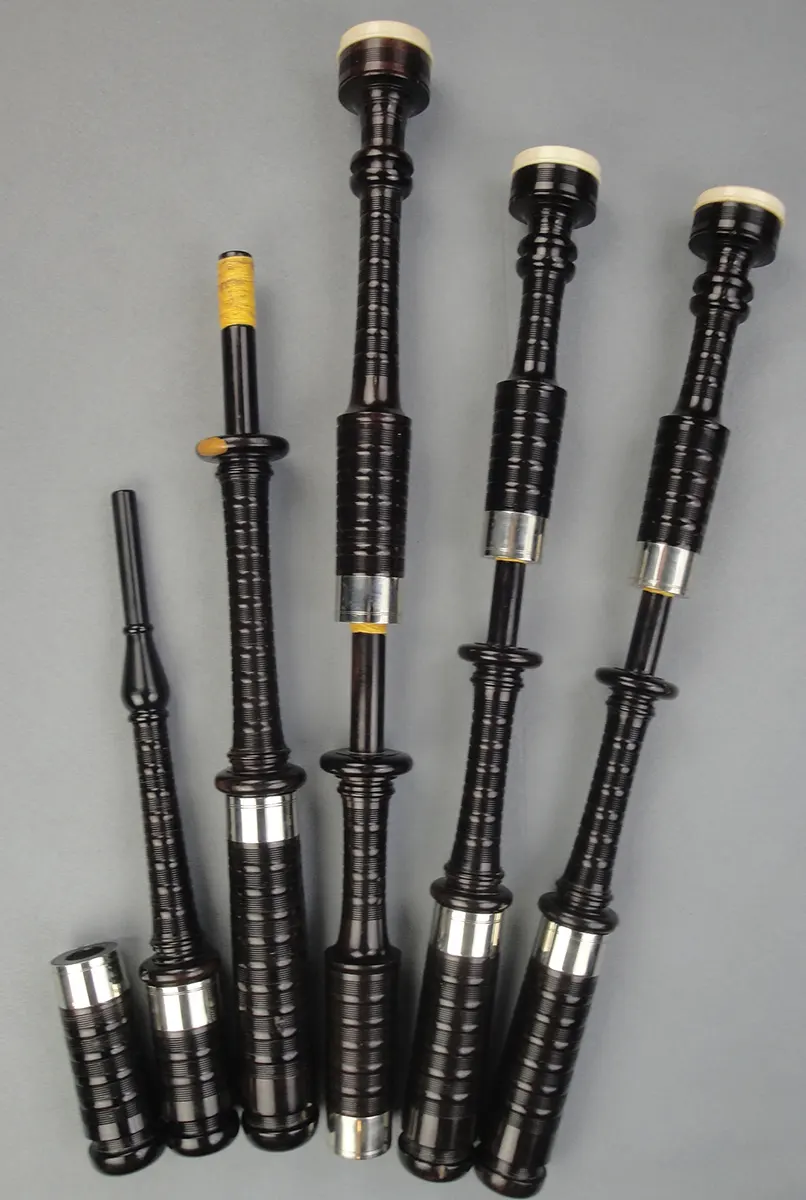
Chisholm (Robertson), Circa 1940, African Blackwood, Nickel, Imitation Ivory
SOLD – The company “Chisholm and Hunters” or just plain “John Chisholm” was listed as a bagpipe maker from 1901 until 1949, according to Jeannie Campbell’s expert book “Highland Bagpipe Makers.” The company carried sundry non-piping-related items as well, and quite likely bought pipes from other makers. Vintage expert Ringo Bowen believes, on the strength of a former Robertson employee, that many of the early Chisholm sets were made by Lawrie, and later sets by the James Robertson company. This set falls into the latter category, and is in fact one of the sets pictured on Ringo’s Bagpipe Museum “John Chisholm” page.
Likely made by either James Robertson himself or James Martin — perhaps Robertson’s best turner — the set displays some differences from Robertson sets, but the wood projecting mounts, the stocks and the tapered tuning chamber externals display a distinctly Robertson flavour. The instrument is beautifully turned.
Any doubts about the make evaporated when I played the drones with my own Canning reeds. They were robust, seamless and steady very much like scores of Robertson’s I’ve played.
The pipes are in great shape. The ferrules are nickel and the caps are what appears to be imitation ivory. The imitation ivory may not be original. The blowstick stock had a small crack that was been repaired. There is one rice-grain sized chip on the bead on the plastic bass ring cap.
-
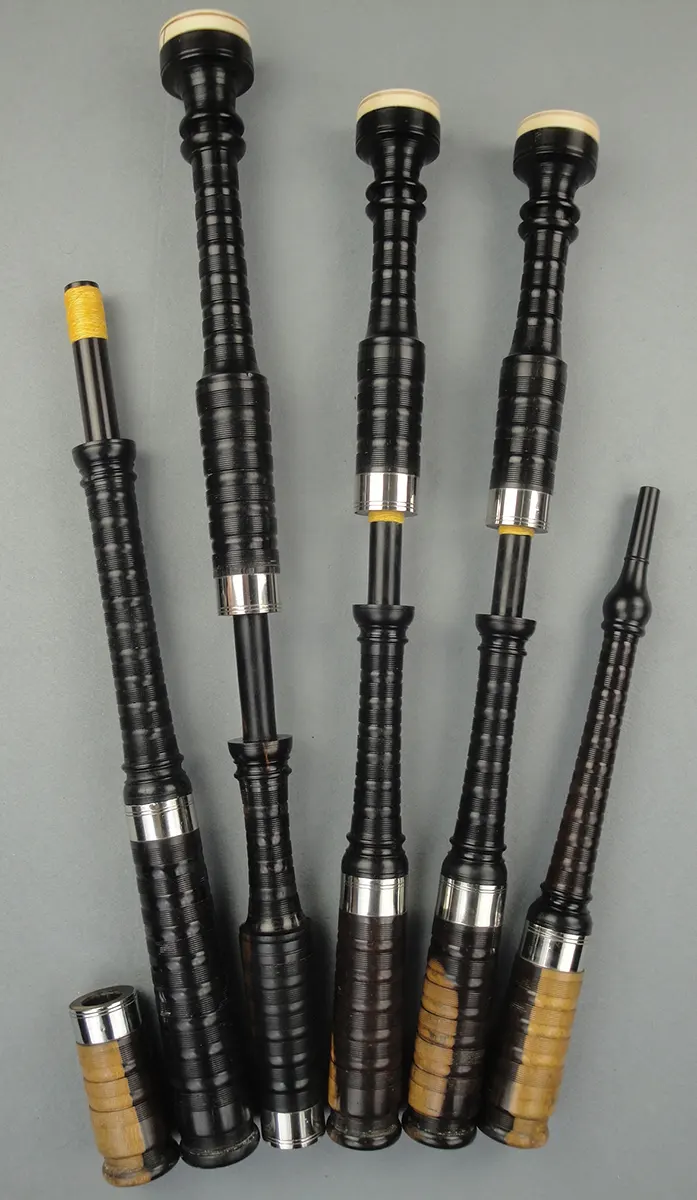
David Glen, Circa 1895, Ebony & Cocuswood, Nickel, Ivory Caps
SOLD – David Glen worked in the pipemaking business with his father Alexander beginning in his teens. Alexander was the brother of Thomas MacBean Glen, whose mid-19th-century pipemaking firm would eventually become J&R Glen. Alexander’s shop became David Glen in 1873 when Alex died and David took over at the age of 23. Those were the two Glen firms operating in Edinburgh in the latter part of the century.
David’s firm would produce a remarkable body of work before his death in 1916. David Glen would also become the most prolific publisher of pipe music in the history of the instrument.
This is is a typical low-end David Glen offering: button mounts, nickel ferrules and stylized ivory caps in a mix of cocuswood and ebony. The set was in excellent shape on acquisition. A short crack in the bass mid-joint needed invisible whipping. There are a couple of small dings in the wood, but nothing obvious. The finish is excellent.
David Glen’s pipes play with a rich, steady, relatively quiet sound. The are a great piobaireachd pipe and great for anyone not wishing an overpowering drone sound.
-
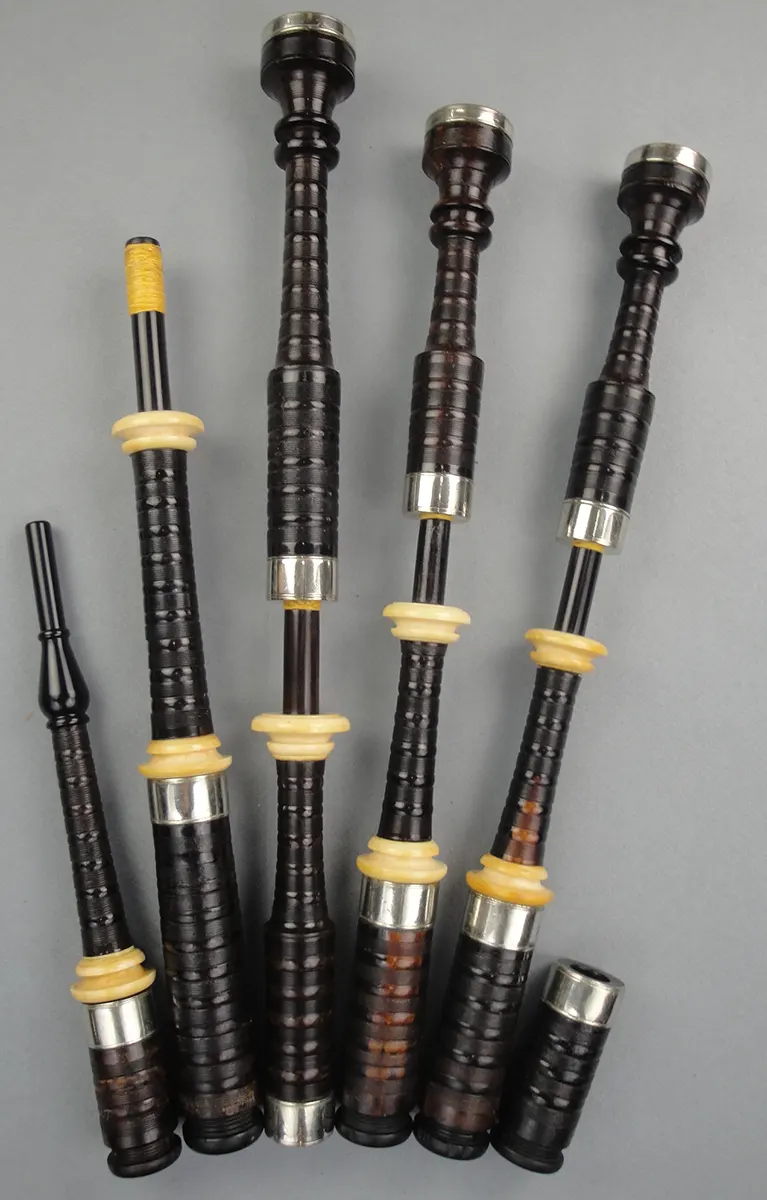
David Glen, Circa 1890, Ebony/Cocuswood, Ivory, German Silver
SOLD – I love the look of this set. It was likely made in the years around 1890 or a bit earlier, and it looks it. The ivory is in great shape, and the metal mounts are classic German silver with almost a chrome-like appearance.
The wood is a mix of ebony and cocuswood. These are two great musical woods, and mixing them was quite common in the day.
The tuning chambers are lined with brass, another period trait, lending more credence to the idea that makers other than MacDougall used them.
Typical of ebony, there were a couple of cracks. The blowstick stock and the bass mid-joint have both been invisible whipped their entire length. Those pieces will not crack again.
Any doubt that these were other than David Glen were dispelled when I played them. It’s an extremely rich and steady drone sound, but slightly quieter than most sets of pipes. This is typical David.
Not sure I’ve had a set of pipes on the site that looked more like an ‘antique’ than this set.
-
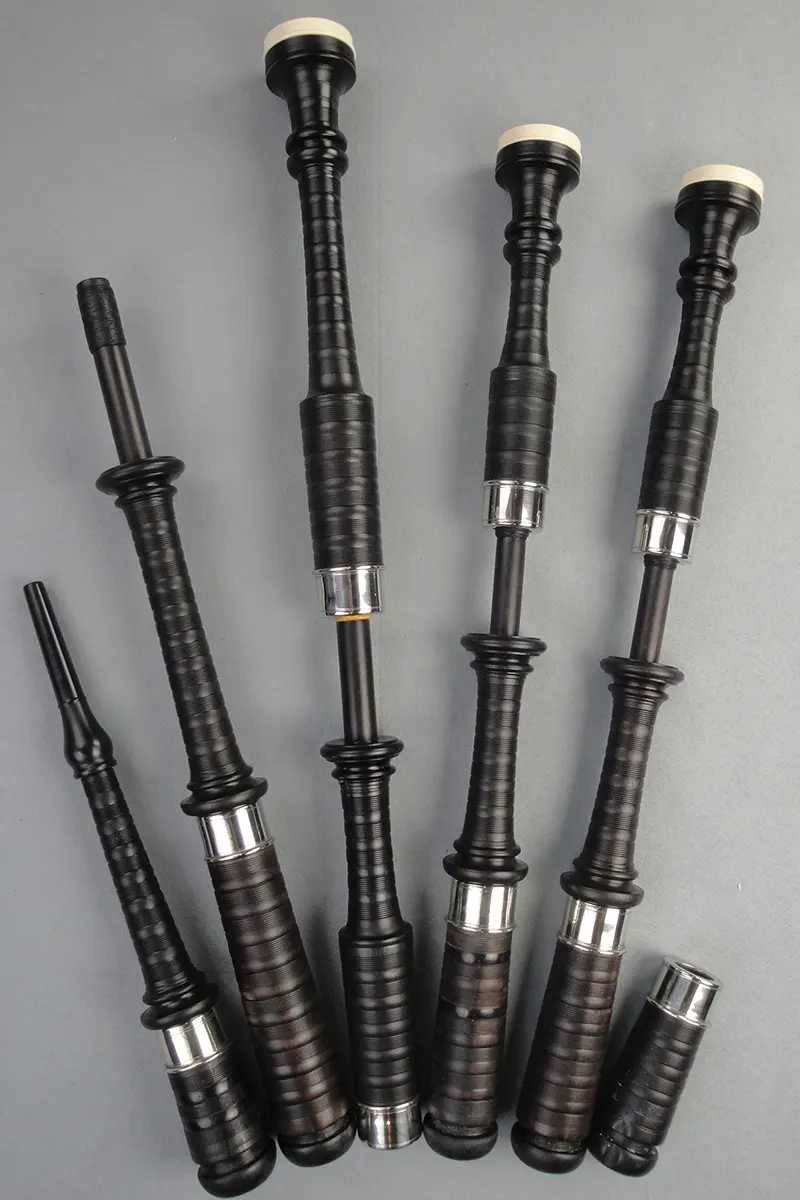
Lawries, Circa WWI, Ebony, Nickel, Modern Imitation Ivory Caps
SOLD – This set is thought to date to just before 1912, before Lawrie adopted their trademark tapered ferrules. The set is ebony, the ferrules nickel, and the caps are just about the best imitation ivory you’ll ever see. The set is ivory-free. Projecting mounts are ebony.
Being ebony, the pipes came with repaired cracks in two stocks: invisible whipping on the blowstick stock, and not-so-invisible whipping on one tenor stock. The wood overall in this set is lovely.
The tone of this set blew me away: big and bold as you’ll hear, but steady and with lots of chanter blend.
-
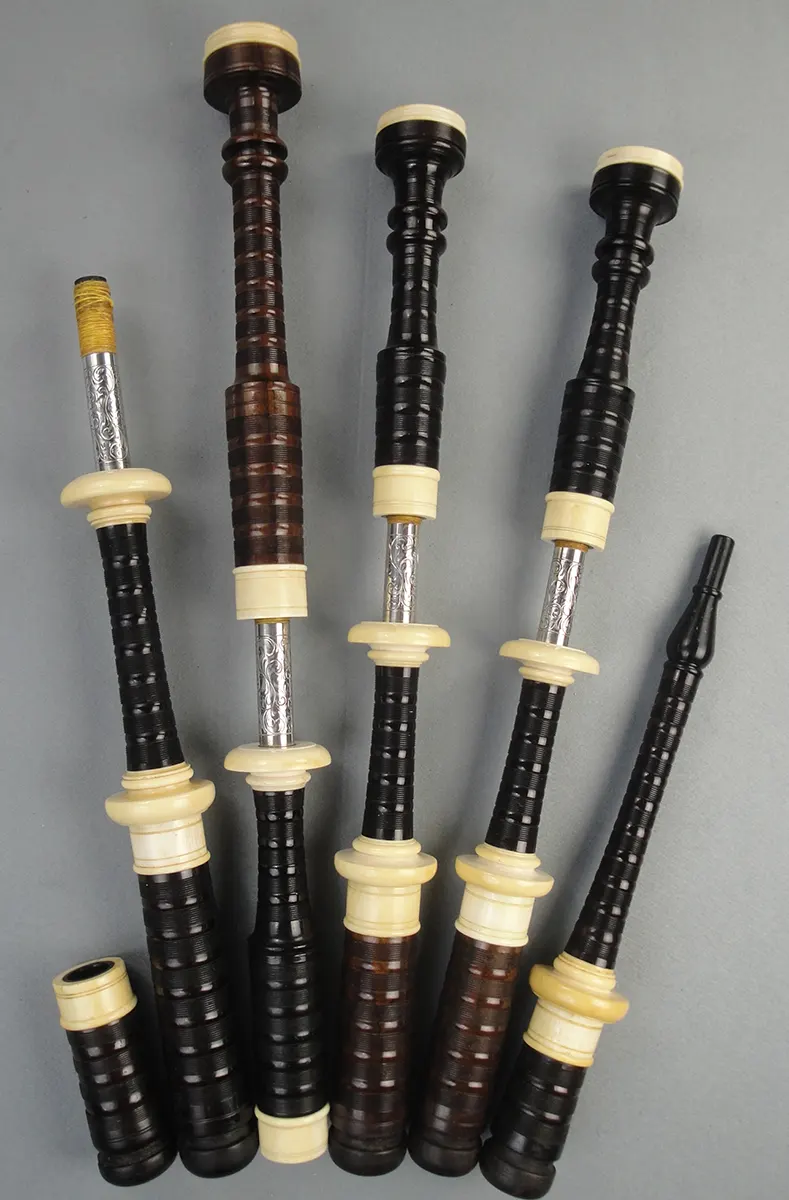
Henderson, Lawrie, Robertson Frankenpipe, Blackwood, Cocus, Ivory, Engraved Nickel
SOLD – “Frankenpipe” is a term we use to describe a bagpipe that has been cobbled together from spare parts. It can be derogatory. This frankenpipe is an unusual example.
It came from the estate of the late Bill Burnett, founder of Burnett’s & Struth Scottish Regalia in Barrie, Ontario, and this means something. Bill dealt in pipes and vintage pipes and he knew pipes well. (I purchased from Bill the 1912 silver and ivory Hendersons I played through the 1990s.) Bill did not cobble together any old spare parts here. These were from premier makers. Here is the ‘item list’ as far as I can determine:
Bass: Robertson, except for mid-joint, which appears to be an old Lawrie
Tenor 1: Lawrie
Tenor 2: Henderson
Stocks: Robertson, except chanter stock which is Lawrie or Henderson
Blowstick: RobertsonThe Robertson bass top appears to be cocuswood or Brazilwood and has a rare “J. Robertson Edinburgh” stamp on two lines. One tenor top has a distinctive cocuswood appearance as well.
The appearance and profiles of the pieces suggest most, if not all, were made in the years around 1930.
As you might expect (or might not!) the set played beautifully. It locked into tune with a bold harmonious blend and filled the room nicely.
This is not your standard frankenpipe.
-
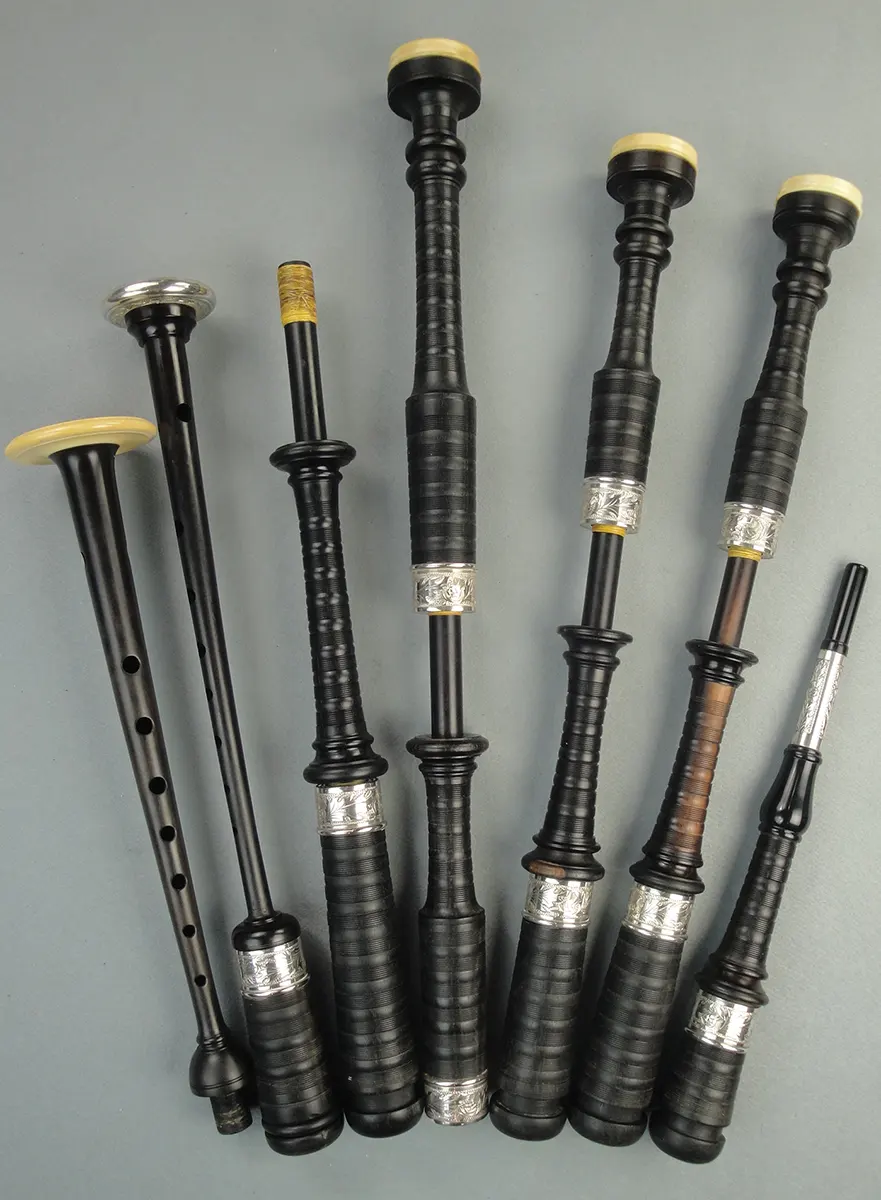
Henderson, Circa 1910, Ebony, Modern Silver
SOLD – This Henderson set is ebony and probably dates to around 1910. The caps are ivory, and the ferrules are thistle-engraved silver that was added to the set sometime in the last 20 years. Sapwood shows in several places.
The pipes are in fantastic shape, and this was one of the rare occasions that I’ve acquired an ebony pipe that didn’t require repair work. While one can’t be sure, the ivory match from the old ivory-soled chanter to the drone caps suggest the chanter may be original to the bagpipe. The pipes also come with a pristine Kron blackwood chanter with a silver sole matching the drone ferrules. Neither chanter has been carved. The Henderson chanter would not play well with today’s reeds, but it’s nice to have the complete bagpipe.
The set played brilliantly — full and steady, with a refined richness typical of ebony.
-
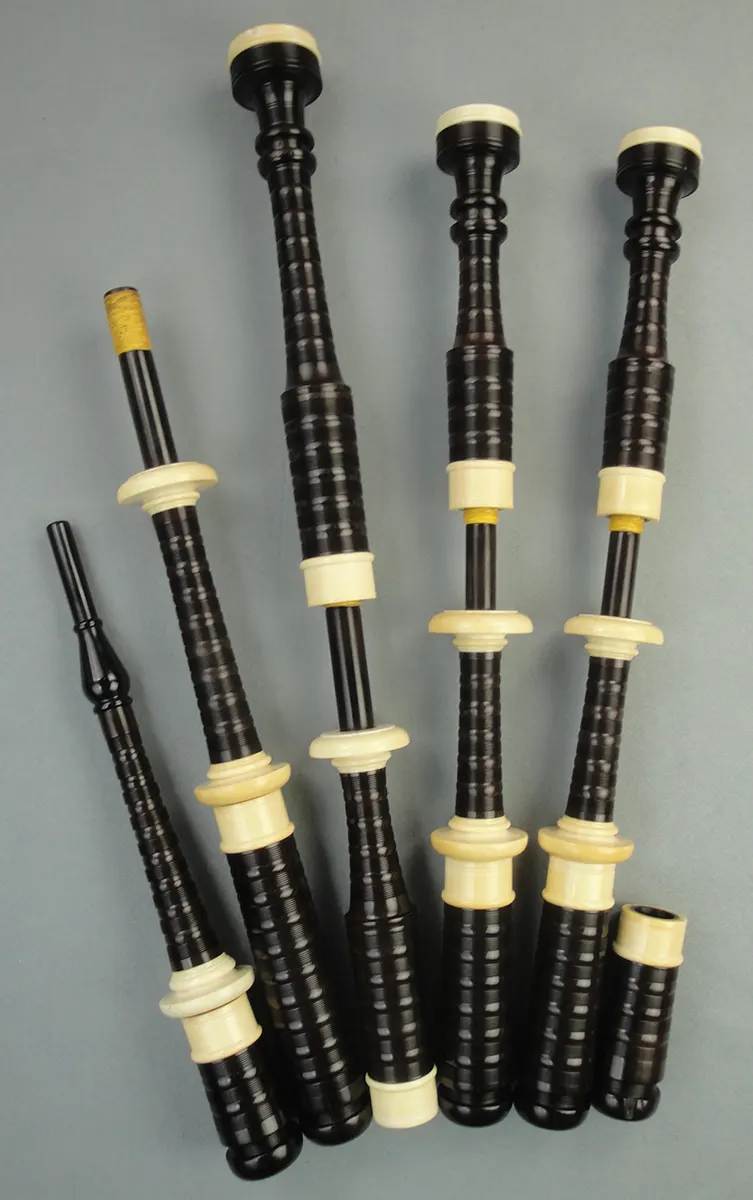
Henderson, Circa WWI, Full Ivory
SOLD – This set came to me as an old Lawrie, but clearly had ‘P Henderson Ltd.’ stamped in each cord guide. The pipes were stripped and refinished. No cracks were found during this process. There are a couple of tiny dings on the rings, fairly normal for a pipe of this age. The wide projecting mounts suggest a manufacture date somewhere around the Great War. The blowstick may not be original.
This Henderson set played wonderfully with my Canning reeds. Robust, great harmonics, and steady as a rock. Play these on any stage at any level.