
Working with vintage bagpipes is as much a hobby as a business for me. I enjoy the process of turning up old pipes and making sure they will be played for years to come. I think it is a good thing for piping. As such, I take great care in purchasing, examining and restoring old pipes.

My refurbisher is J. Dunbar Bagpipe Maker in St. Catharines, Ontario. Not only do they do masterful restorations, they have eagle eyes for examining 150-year-old wood and discovering replacement pieces and flaws that should be addressed before you play the pipes. If a set of pipes has a replacement or repaired piece, you will know about it before you buy.
You should know from the get-go that pretty much every bagpipe made before 1930 has required or will require repairs of some sort, especially if they are ebony. Ebony and cocuswood are superb woods from which to make bagpipes but they are less resilient than African blackwood. I suspect there is hardly an ebony bagpipe in the world made before 1920 that hasn’t experienced at least one crack.
Photos and descriptions of all instruments featured since October 2010
-
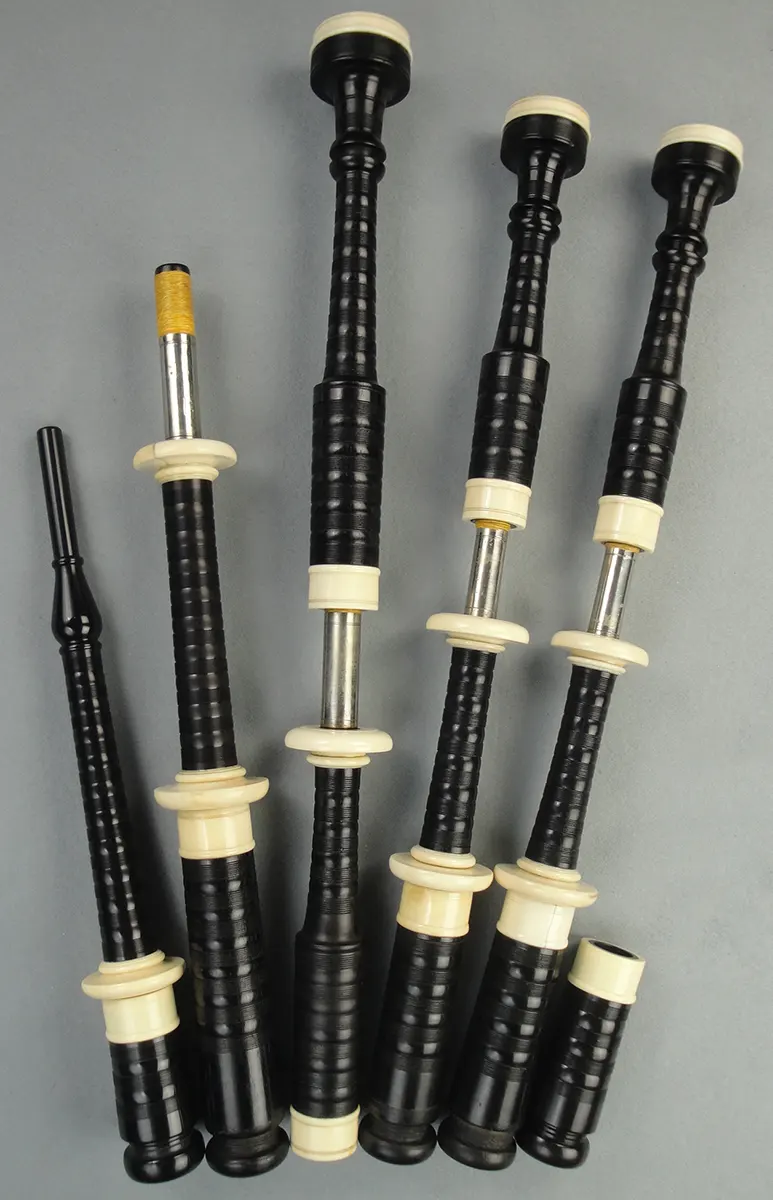
Robert Mackinnon, Circa 1930s, Full Ivory
SOLD – Robert McKinnon was a leading piper in the 1870s and 80s. He published a book of music in a time when this was a rare thing, and he made bagpipes from 1875 to 1902.
This ebony set probably dates from the 1890s. The set was stripped and refinished. The badly split bass bottom was replaced with an ebony replica, keeping the original mounts. The blowpipe is also a replica: poly-lined blackwood with a matching imitation ivory mount. The blowstick stock is a poly replica.
Cracks were fixed in the tenor tuning pins and hemp stops were added to the drones.
Though MacKinnon was a Glasgow maker, these pipes displayed more of an Edinburgh tone: subdued, steady. The tenors tune quite low on the tuning pins, and as such it would be a particularly good bagpipe to play in Bb.
-
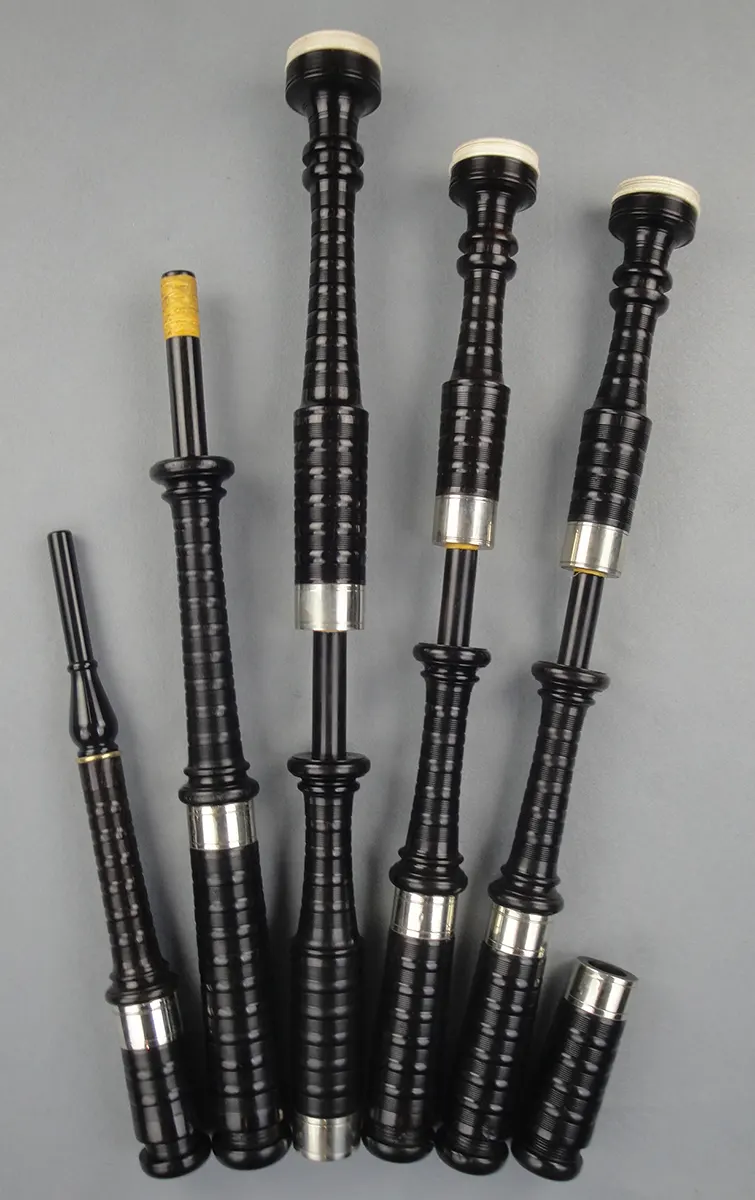
Henderson, Circa 1915, Ebony, Nickel, Casein
SOLD – We have a few great Hendersons on the site right now, and this is another. Likely made before 1920, it is ebony with wood projecting mounts, nickel ferrules and casein ring caps. This means the bagpipe is free of ivory: rare for an old Henderson.
The blowpipe and blowpipe stock have both been fitted with brass linings, though there is not a hint of a crack in either piece. The cord guides are stamped ‘P. Henderson, Glasgow’.
The set is in really excellent shape. Played like an ebony Henderson: full but not booming, rich and steady with a nice, full bass.
-
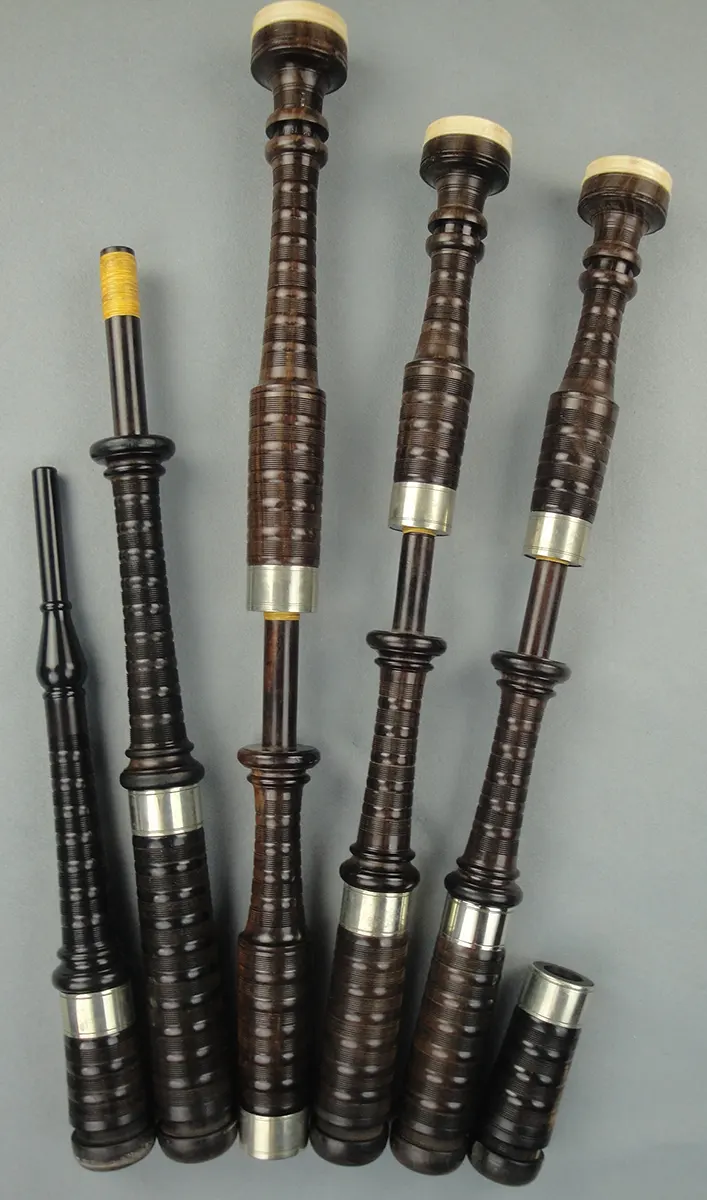
Henderson, Circa 1920s, Cocuswood or Brazillian Kingwood, Nickel, Ivory
SOLD – This set was purchased used in Pembroke, Ontario in the 1930s and has been in the same family ever since. One owner took them to Korea during the Korean war in the 1950s and played them in ceremonial events.
The wood looks like cocuswood, but its lighter, streaked hue also suggests Brazillian kingwood, also used by pipemakers in the first half of the 20th century. The projecting mounts are wood, the ferrules are nickel, and the ring caps are ivory. The blowpipe is a polypenco-lined blackwood replica. All other pieces are original.
This is one of the most voluminous Henderson pipes I have played. In all respects this is a classic Henderson in volume, seamless tone and steadiness. Though not all Hendersons are stamped in the cord guides, this set is.
-
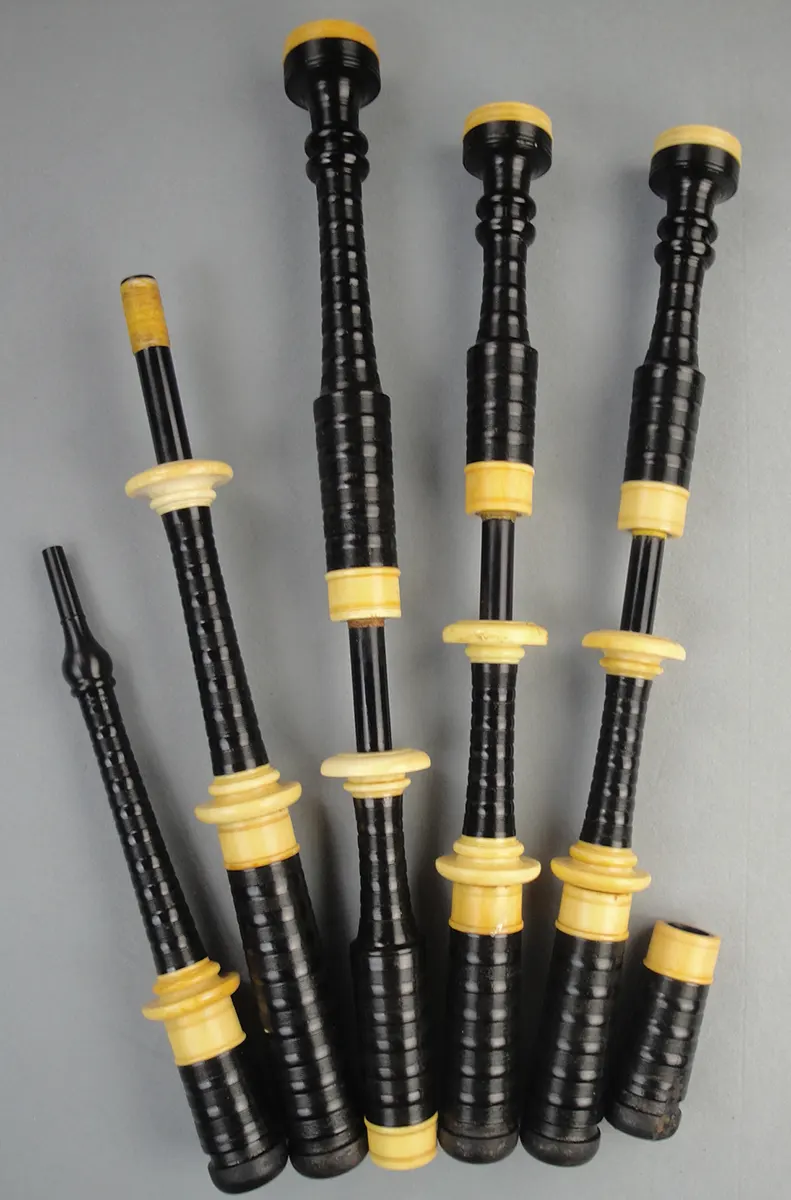
Henderson, Circa 1910, Full Ivory
SOLD – This set came to me from a gentleman who played them in the great City of Toronto Pipe Band in the 1960s. They were a dominant force in grade 1 in Ontario for many years, and placed 5th at the World Championship in 1966.
The set is blackwood, mounted in full ivory. It appears to have been refinished in the not-too-distant past. When I received the pipes, one upper tenor projecting mount was broken half off, and the upper bass bottom projecting mount was also broken. I’ve had these replaced with period mounts. As the drone slides picture show, the bass mount matches almost perfectly. The tenor mount is a little different, but blends in well unless you’re looking closely.
This set played in booming Henderson fashion — a great, seamless blend that stayed nicely in tune for the 10 minutes I played it. This is an exceptional bagpipe.
-
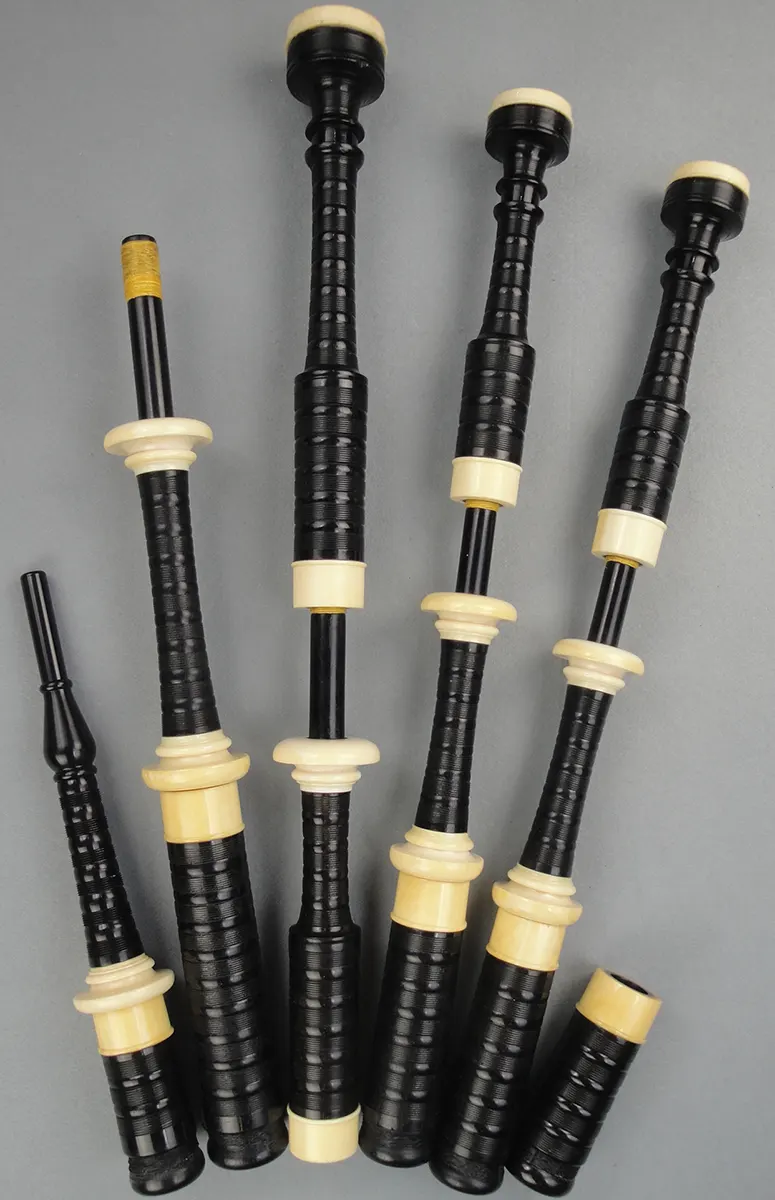
Duncan Macdougall, Circa 1890
SOLD -This Duncan MacDougall set came to me from New Zealand, where it had been played over the past 40 years by prominent NZ piper Murray Mansfield and his father Ian. New Zealand was a popular destination for MacDougalls in the latter part of the 19th century.
The pipes are ebony, mounted in ivory, some of which may be marine ivory, likely walrus. The pipes were stripped, revealing no cracks. All pieces appear to be original except for the blowpipe, which is a replica mounted in premium imitation ivory.
Duncan MacDougall was of course a near-mythical pipemaker who made pipes from 1857 until his death in 1898. This set almost certainly comes from his Aberfeldy period.
With my Canning reeds the pipes were immediately steady. They displayed a full, rich sound with a particularly fulsome bass.
-
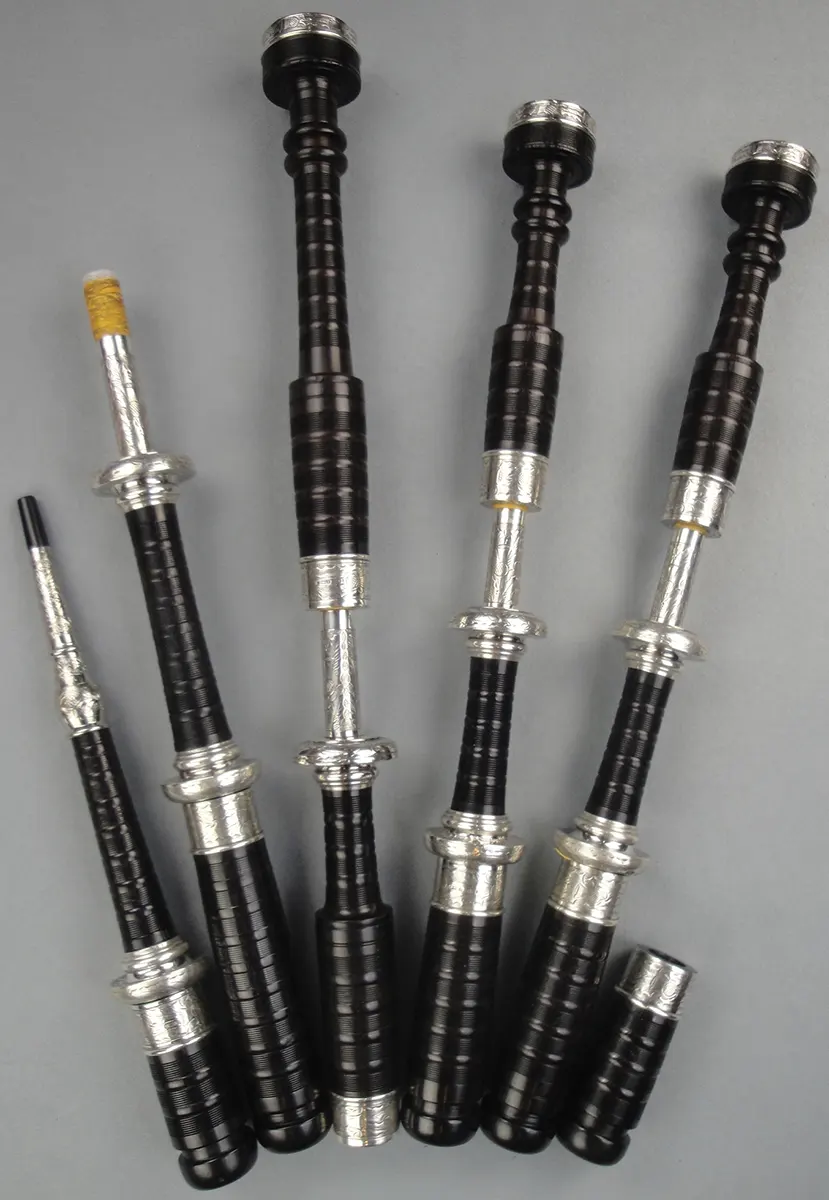
Robertson, Full Silver, Hallmarked 1952
SOLD – James Robertson made pipes in Edinburgh from around 1908 until his death in 1948. The company continued until 1964, producing pipes of equal or superior quality as when their founder ran the show. The manufacturing and tonal consistency of their pipes through more than 50 years of operation was remarkable.
This spectacular set was made and hallmarked in 1952. It came to me crack-free needing only a strip and refinish. All pieces are original except for the mouthpiece, which is modern nickel.
The pipe was robust and steady on my shoulder: the usual exceptional Robertson sound.
Full silver Robertsons are rare and this is a superb example of some of the company’s best work.
-
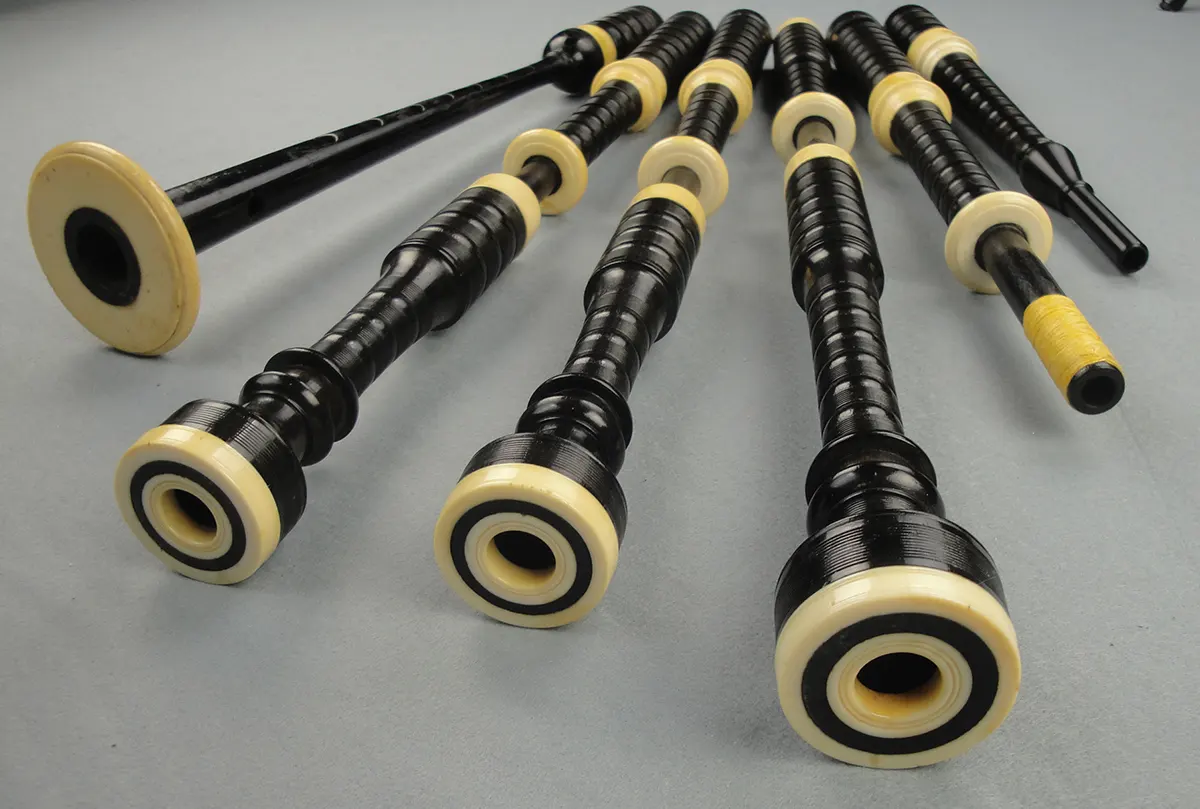
Center, Circa 1880, Ebony, Ivory
SOLD – This set came to me as an Alex Glen, but has since been identified as John Center in Edinburgh, likely made in the 10 years around 1880. It is made of ebony, with ivory mounts.
The set was in excellent condition, requiring only a cleaning on the lathe, and invisible whipping a crack in the blowpipe stock. The blowpipe is a replica with a holly mount. The chanter shown in the photo does not match the pipes, though it came with them. It is an old Henderson chanter.
The pipes played with a rich, mellow steadiness. They are not a robust pipe, but a sweet one with lots of character.
You can hear Matt MacIsaac playing these pipes in studio conditions by clicking here.
-
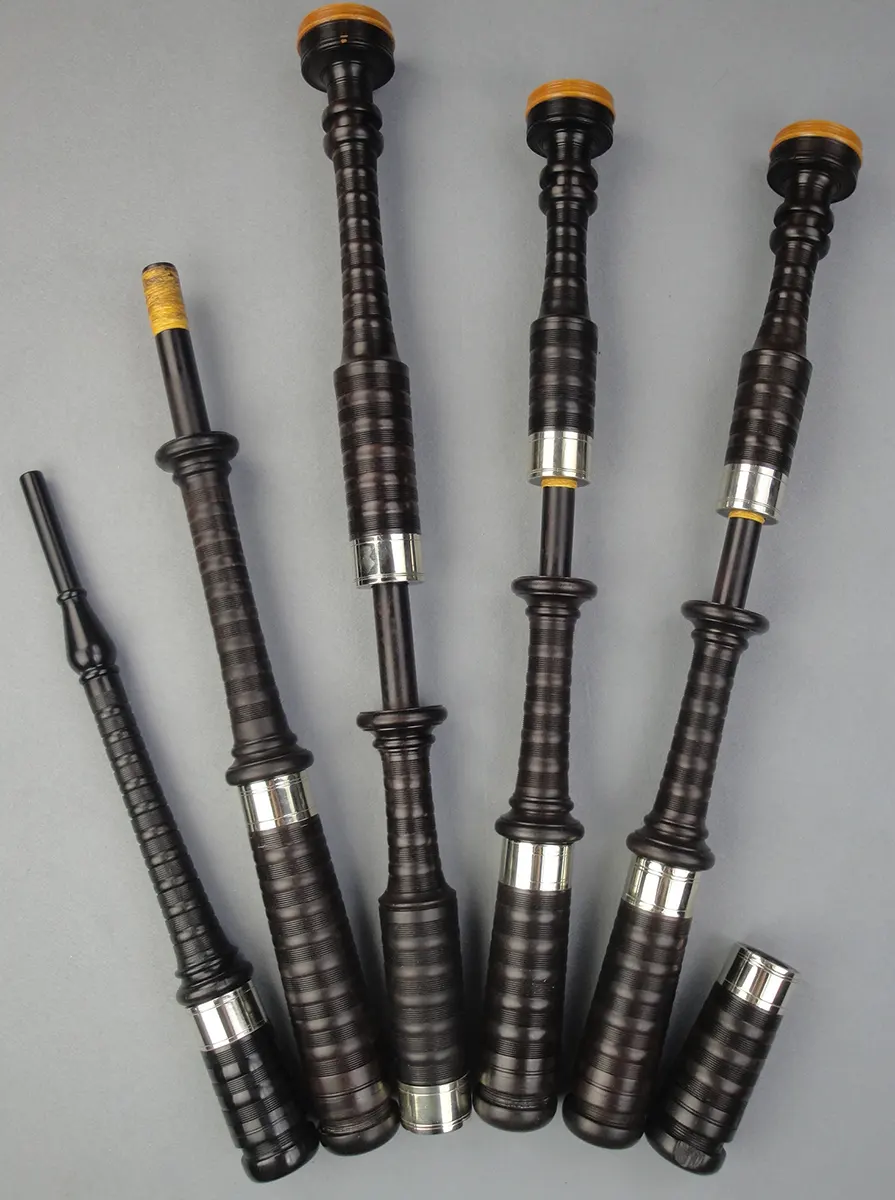
Henderson, Circa 1930s, Blackwood, Bakelite, Casein, Nickel
SOLD – This is a primo, ivory-free Henderson set with an unusual configuration. Likely dates from the years around 1935. It has wood projecting mounts, nickel ferrules, bakelite ring caps and casein bushes. It’s possible that the nickel ferrules are not original.
This set was completely refurbed: stripped and refinished, repairing a cracked bass stock and one cracked tuning pin. Both repairs are invisible and will not return. The set came with a replica polypenco blowpipe — slightly shorter than the original, though the original is in fine shape — and blowpipe stock.
Tonally, I thought this was a special bagpipe: very robust with a great chanter blend and she locked into tune quickly and surely.
-
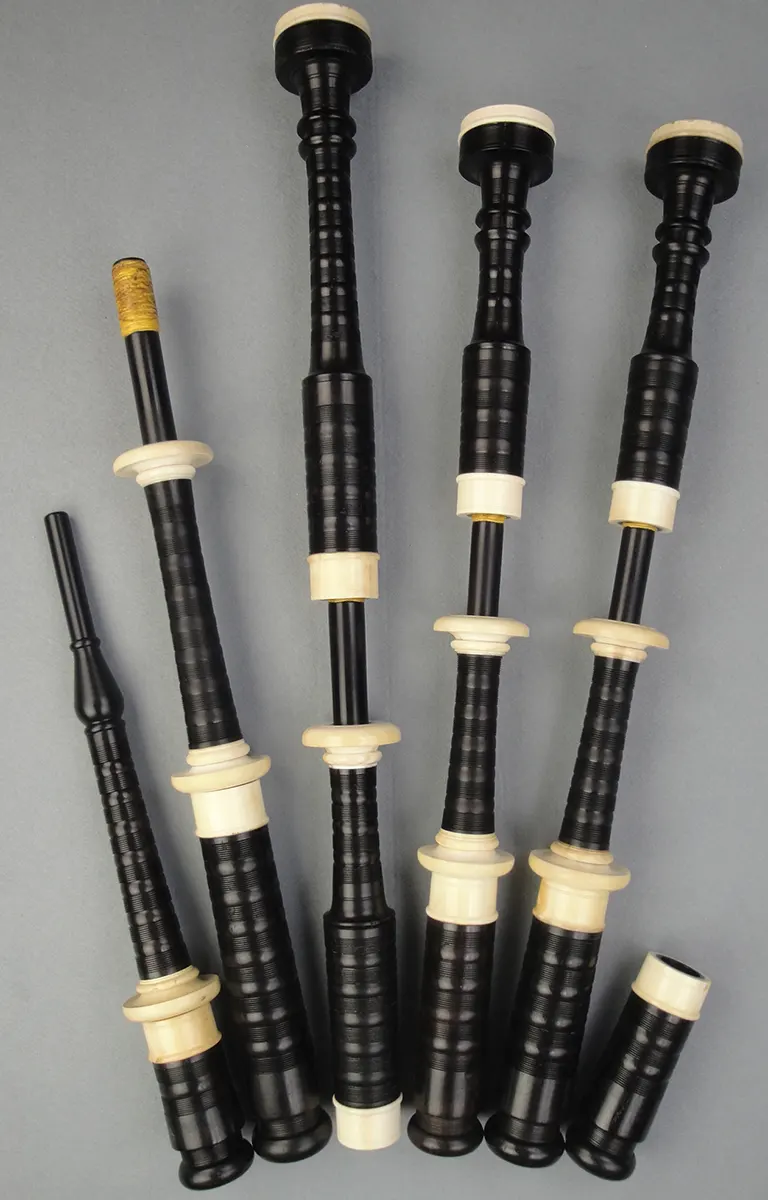
Center, Circa 1900, Ebony, Ivory
SOLD – This set likely dates from around 1900 or a little later. It is made in ebony and full mounted in ivory. It was purchased as a Duncan MacDougall, but since that time has been identified being John Center.
At some point fairly recently the set was stripped and refinished by Dunbar Bagpipes. One of the tenor tops had been broken and subsequently lost, so a replica piece was made in African blackwood, with premium imitation ivory mounts that match the set extremely well. The blowpipe had also been lost. A replica has been made with a nicely matching holly mount. The set is priced accordingly.
The pipes played with a seamless and steady tone, with an excellent chanter blend.
-
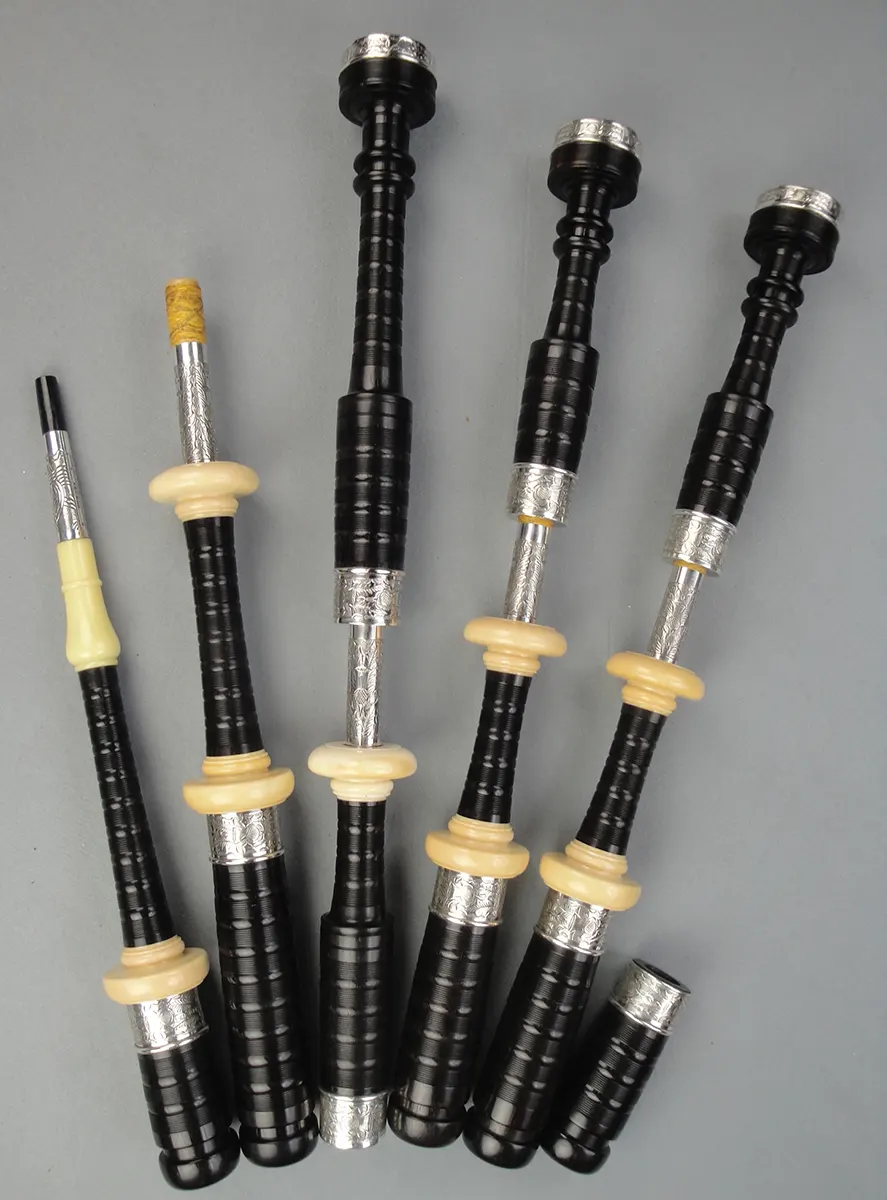
Robertson, Silver and Ivory, Hallmarked 1955
SOLD – This Robertson set was made the year I was born, but it’s in much better shape. It’s hallmarked 1955, made in the last dozen years of the company’s existence, a time when their manufacturing standards were at their highest.
The set underwent a full refurb very shortly before I acquired it and it looks spectacular. No cracks or repairs, though the original ivory mouthpiece bulb has been replaced by imitation ivory.
Bold and steady like all Robertsons, this set is an excellent example of the company’s best work. The stocks are tapered, as were all Robertson stocks during this period, purportedly to reduce turbulence and unsteadiness in the drones.
-
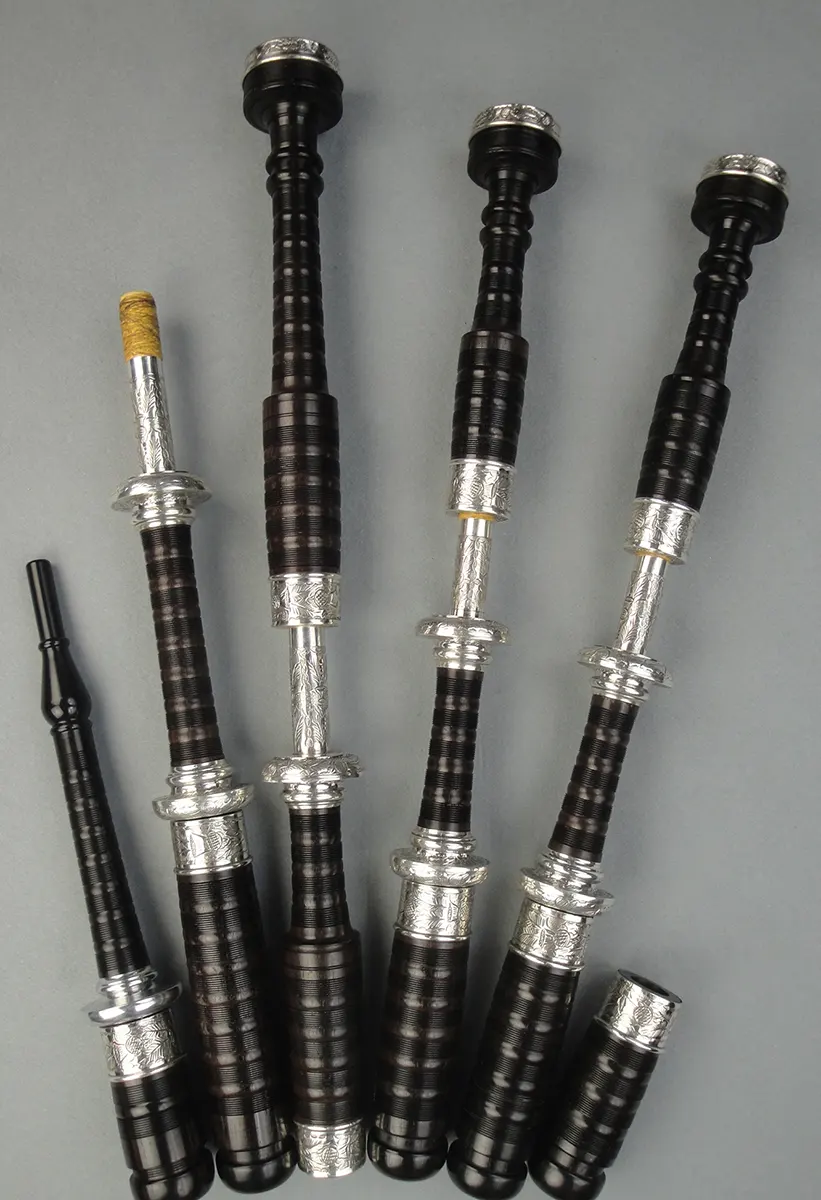
Robertson, Full Silver, Hallmarked 1961-62
SOLD – This Robertson set came to me from a player in midwestern Canada who played them at the highest pipe band levels. They are a rare full-silver Robertson, hallmarked 1961-63. The drone and chanter stock bores are flared: a common treatment in Robertsons of this era.
The pipe was stripped and refinished and came away with a verdict of no blemishes but one: at some point the blowpipe went missing and was never found. A replica has been made with a non-matching aluminum alloy mount which blends in nicely with the set as a whole.
This set played like almost all Robertsons I’ve played: bold, rich and steady.
-
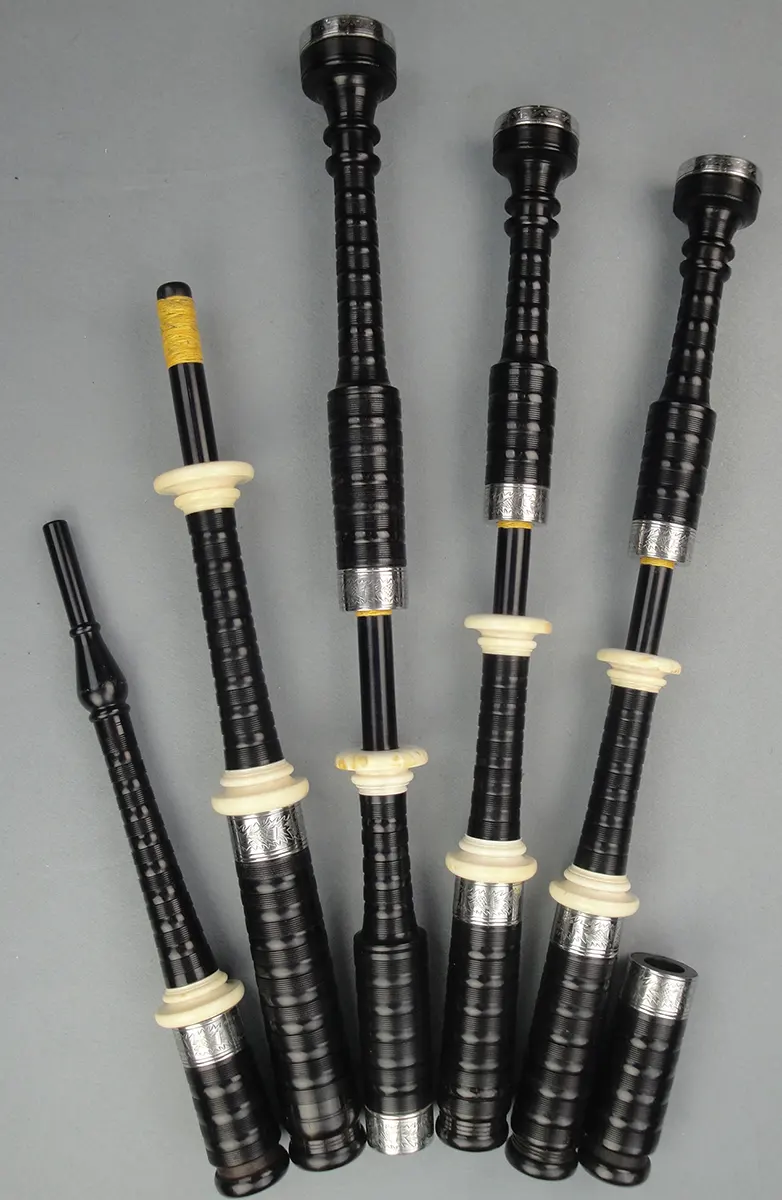
Duncan Macdougall, Ebony, Ivory, Engraved German Silver, Circa 1870s
SOLD – This lovely Duncan MacDougall set is thought to be from his Aberfeldy period, perhaps circa 1875. Ebony, with elephant ivory and German silver with a simple thistle pattern, these pipes are typical of Duncan’s elegant design.
The tuning chambers are brass lined. The drone stock bottoms are rounded off going into the bore, which may or may not be original. There is some staining on the ivory — not too much, just enough to add character!
The pipes played beautifully. Not booming like the full silver Hendersons on this page, but they had good presence, steadiness and great blend.
Typical of pipes with brass inserts, one tenor top required some invisible whipping, as did one stock. Repairs are virtually invisible. The pipes were refinished.
MacDougall sets don’t get much better than this.