
Working with vintage bagpipes is as much a hobby as a business for me. I enjoy the process of turning up old pipes and making sure they will be played for years to come. I think it is a good thing for piping. As such, I take great care in purchasing, examining and restoring old pipes.

My refurbisher is J. Dunbar Bagpipe Maker in St. Catharines, Ontario. Not only do they do masterful restorations, they have eagle eyes for examining 150-year-old wood and discovering replacement pieces and flaws that should be addressed before you play the pipes. If a set of pipes has a replacement or repaired piece, you will know about it before you buy.
You should know from the get-go that pretty much every bagpipe made before 1930 has required or will require repairs of some sort, especially if they are ebony. Ebony and cocuswood are superb woods from which to make bagpipes but they are less resilient than African blackwood. I suspect there is hardly an ebony bagpipe in the world made before 1920 that hasn’t experienced at least one crack.
Photos and descriptions of all instruments featured since October 2010
-
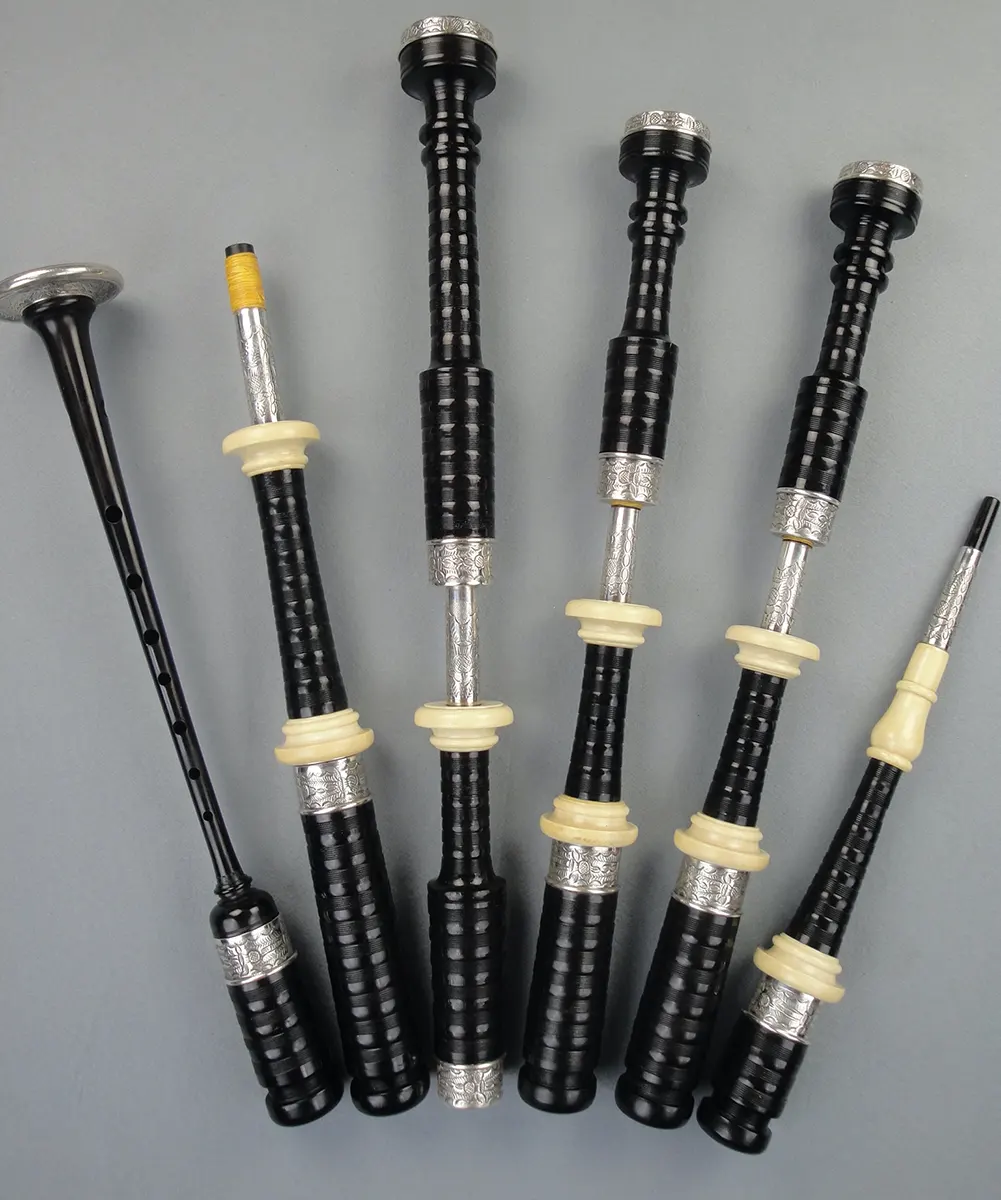
Grainger and Campbell, Silver and Ivory, Hallmarked 1973-74
SOLD – We have two sets of Grainger and Campbell silver and ivory pipes on the set at present, and they are nearly twins.
The Grainger and Campbell pipemaking company operated in Glasgow beginning in 1946. In 1952 they took over the premises and machinery from the defunct Duncan MacRae firm. They made bagpipes of excellent quality until the company closed in 1989.
This silver and ivory set is hallmarked 1973-74 on every piece.
The set is in superb condition, requiring only a good polishing on the lathe and re-truing a couple of the tuning chambers. The original Grainger chanter is still with the pipes. But the original silver sole has been affixed to a Naill blackwood chanter. I don’t know the vintage of the chanter, but I believe it is quite modern. It plays very well. The original Grainger chanter would have played well in it day, though it would be low-pitched in today’s piping world and difficult to reed.
The set also has its original silver and ivory mouthpiece.
As expected, the drones on this set were robust and very steady, locking into tune nicely with my Canning drone reeds.
-
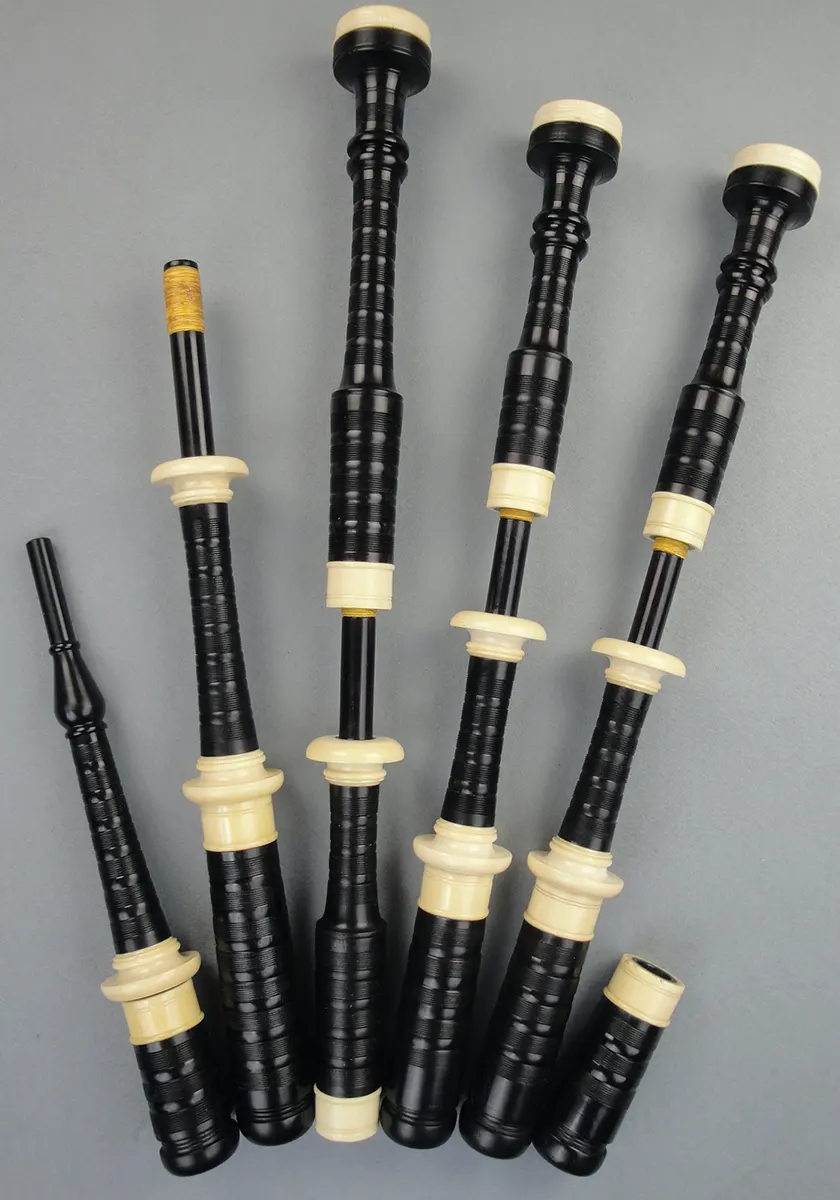
William Sinclair, Circa 1960s, Full Ivory
SOLD – The William Sinclair and Son company of Leith will go down in history as one of the leading pipemakers of their day. The company began making pipes around 1930, but appears to have closed down as of 2019 with the death of the last Sinclair son, a third-generation pipemaker.
This set is made in blackwood, mounted in full ivory, and was likely made in the 1960s.
The pipes have been stripped and refinished in the usual oil/wax finish preferred on this site. Two small hairline cracks were found under two ferrules, and these have been sealed.
This set played very steadily and with a bright, resonant tone.
-
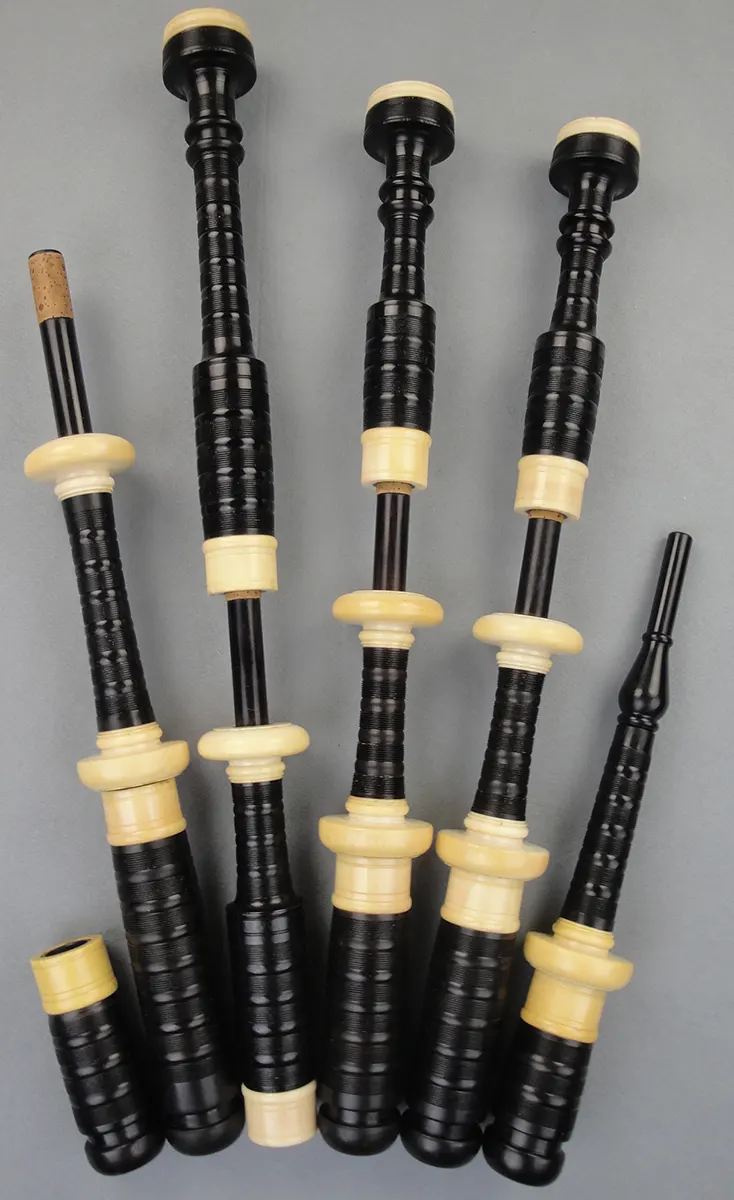
Robertson, Circa 1950s, Full Ivory
SOLD – The quality and consistency of Robertson pipes is legendary, and this Robertson set lines up with other 1950s Robertsons as a fine example of instruments made when George Kilgour and James Martin manned the shop.
The set has been well used over its 70 or so years of life, but cleaned up well with a strip and refinish. The chanter stock ferrule has been replaced by a faux ivory substitute that is extremely convincing. The bass drone bushing has been lost, and has been replaced with one made of moose antler, visible in the caps photograph below. The wood parts were all crack free. The combing is well worn in spots.
The stock bores are tapered, a practice that was quite common in the Robertson shop at this time. The tapered stocks are designed to reduce air turbulence within the stocks.
The previous owner had the tuning slides corked very nicely, and with a touch of cork grease the tuning action is excellent. The stock joints are all hemped. Should any prospective buyer like the cork replaced with hemp, that can be done.
These pipes played in typical Robertson fashion with a robust, seamless sound and great steadiness.
-
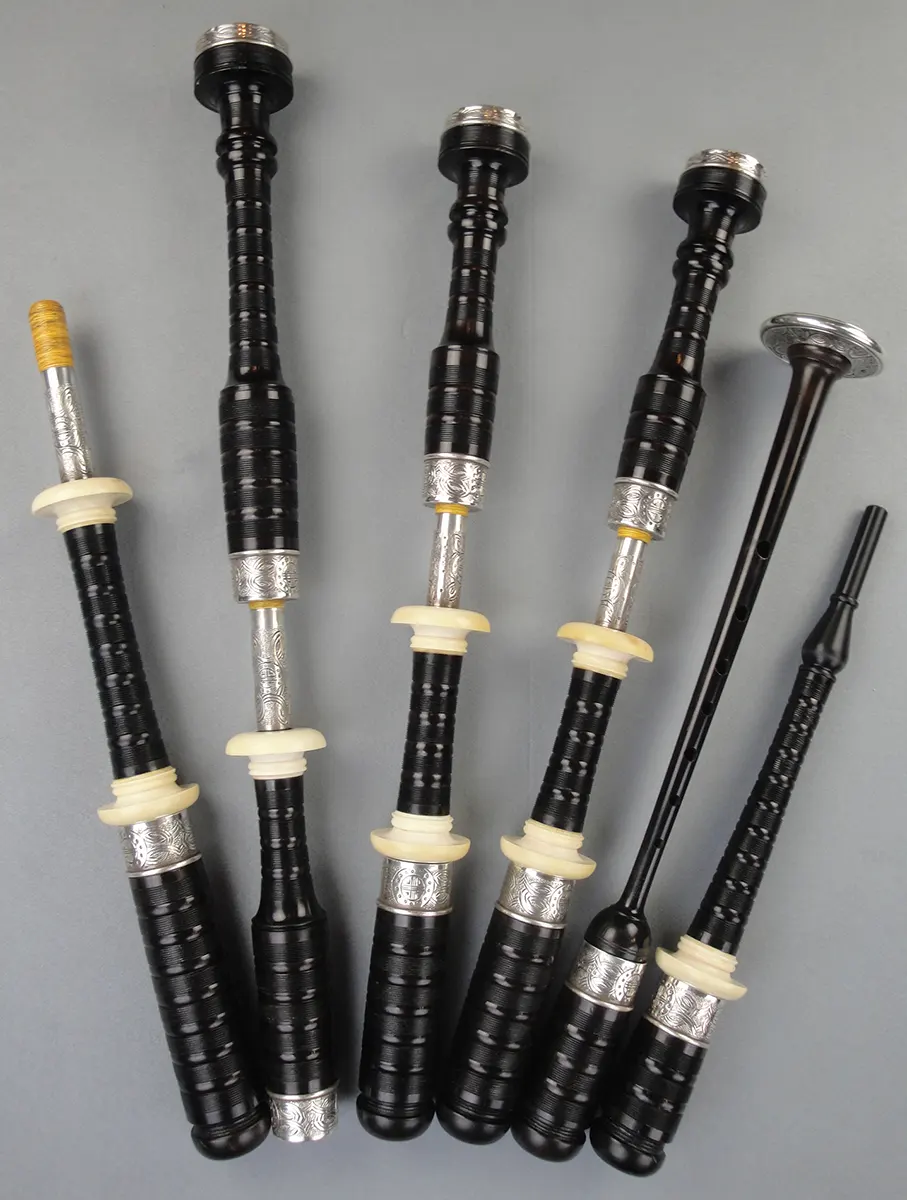
Hallmarked 1968-69 William Sinclair, Engraved Silver and Ivory
SOLD – The William Sinclair and Sons company of Leith goes down as one of the leading modern pipemakers. The company began making pipes around 1930 and appears to have closed down as of last year with the death of the last Sinclair son.
This set came to me from its second owner, who acquired it from his cousin. Made in blackwood and mounted in engraved silver and ivory, the set is hallmarked 1968-69.
The original and well weathered lacquer finish was removed, and the sticks were checked for cracks and then refinished in the usual oil and wax. One small crack appeared at the top end of the blowstick, and this was invisible whipped. The ring caps have numerous slight dents, visible up close, but inconspicuous.
The original Sinclair chanter and sole remain with the pipes.
True to Sinclair pipes, the set had a bright and full tone, steady and sonorous. I played a set of silver and ivory Sinclairs through much of my competing days, so it was a familiar cheerful sound to me.
-
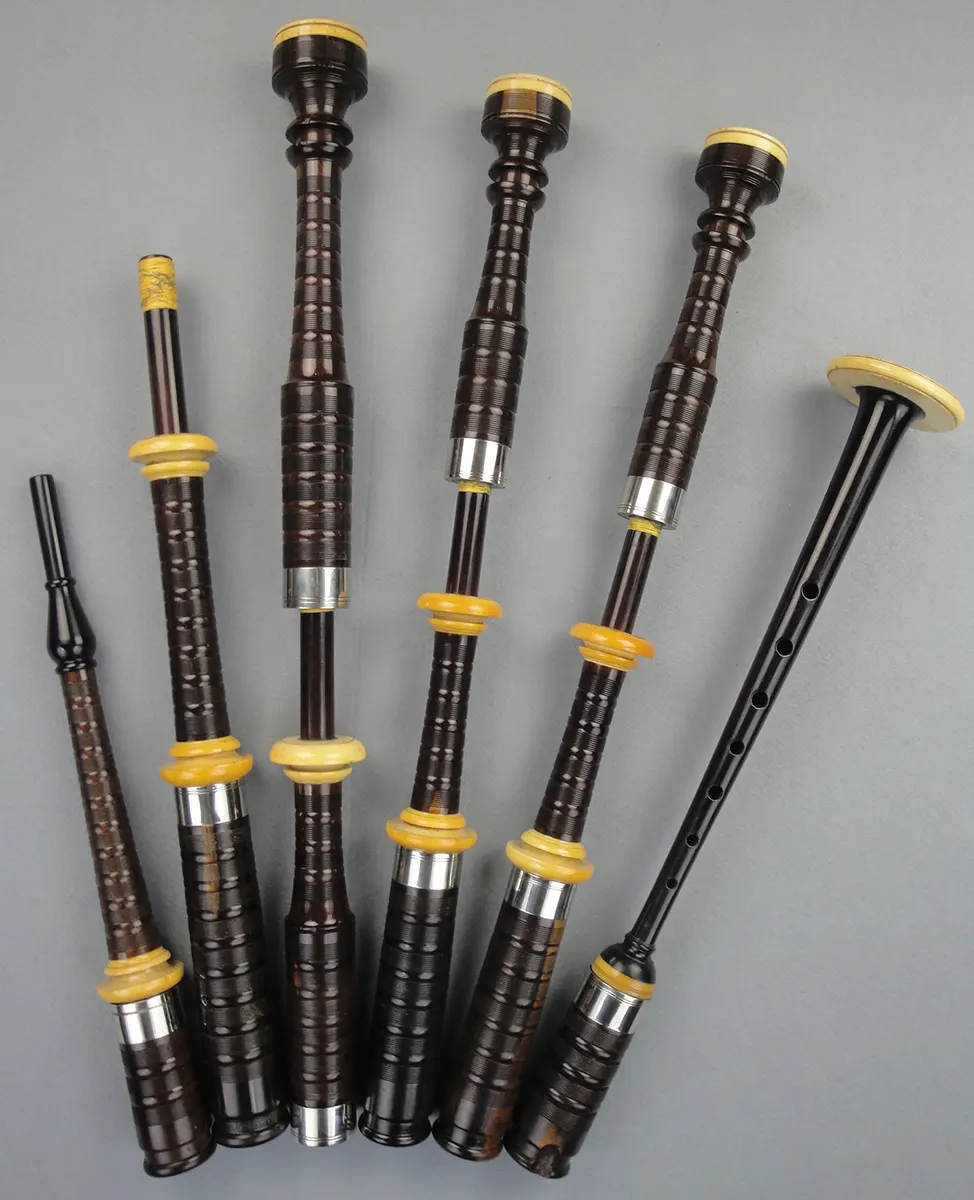
Circa 1890 David Glen, Cocuswood, Ivory, Nickel
SOLD – This elegant David Glen set was likely made in the years around 1890. The sticks are slightly heavier that later David Glen pipes.
The set is made of lovely dark Caribbean cocuswood, with ivory projecting mounts and nickel ferrules. The tuning chambers are lined with brass, not an uncommon practice with several pipemakers during the latter half of the 19th century. A long crack was visible running upward from the ferrule on the bass mid-joint. This has been sealed, though its shadow is still visible. The rest of the pipe is immaculate after a strip-and-refinish. The set comes with a David Glen chanter, though there is no guarantee that it is original to the pipes.
David Glen made pipes from 1873 until his death in 1916. While the tone of most of his pipes might be described as very rich and subdued, this set has a fuller tone, though equally rich and wonderfully steady.
This set locked into a groove very quickly and stayed there with my set of Canning reeds.
-
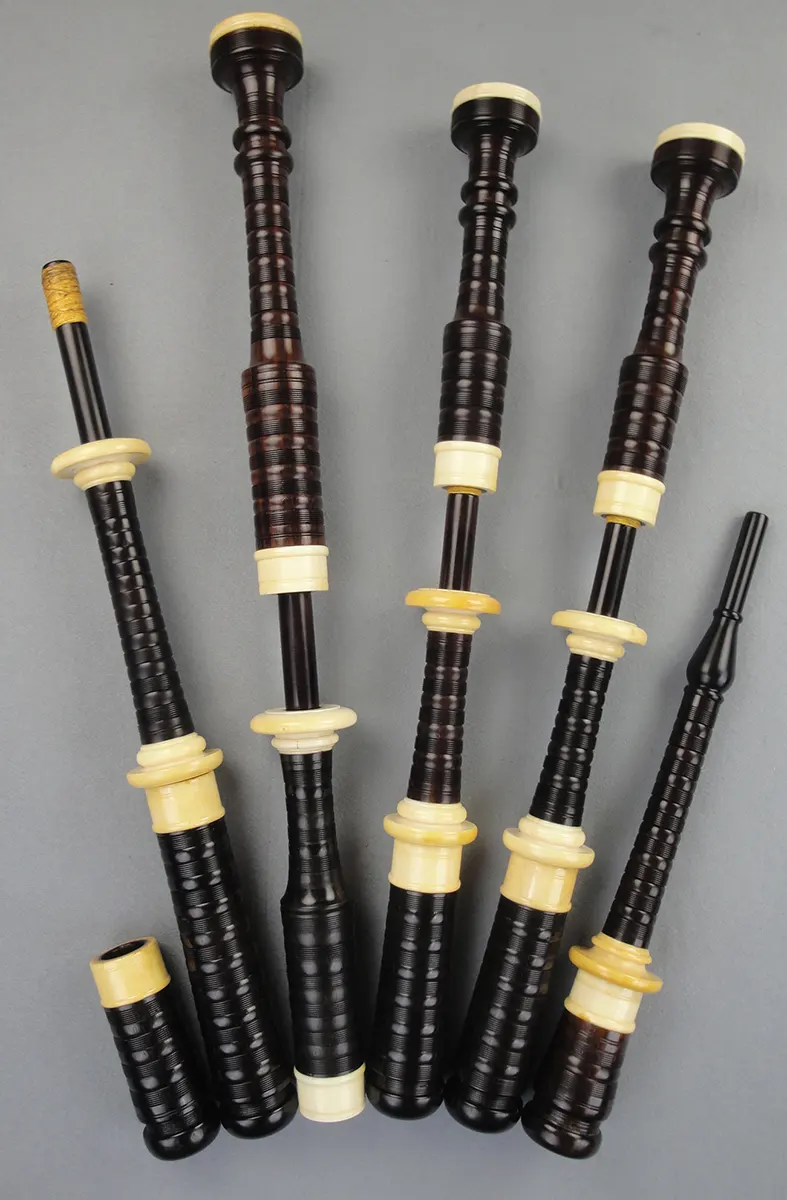
Circa 1940 Lawries, African Blackwood, Full Ivory
SOLD – Profiles suggest manufacture of this Lawrie set around 1940 or a little earlier.
The pipes came to me from Fife, where they had lain unplayed for some years. Stripping the finish revealed cracks in three drone stocks and one tenor top just above the ferrule. These have been sealed and invisible whipped and will cause no more trouble. The blowpipe looks like it came from a Henderson set and the combing and beading match well. The pipes were refinished and came out showing the beautiful African blackwood grain.
They came into tune quickly and held nicely with my Canning drone reeds. They retain characteristics of classic Lawries, with a robust sound and superb steadiness.
-
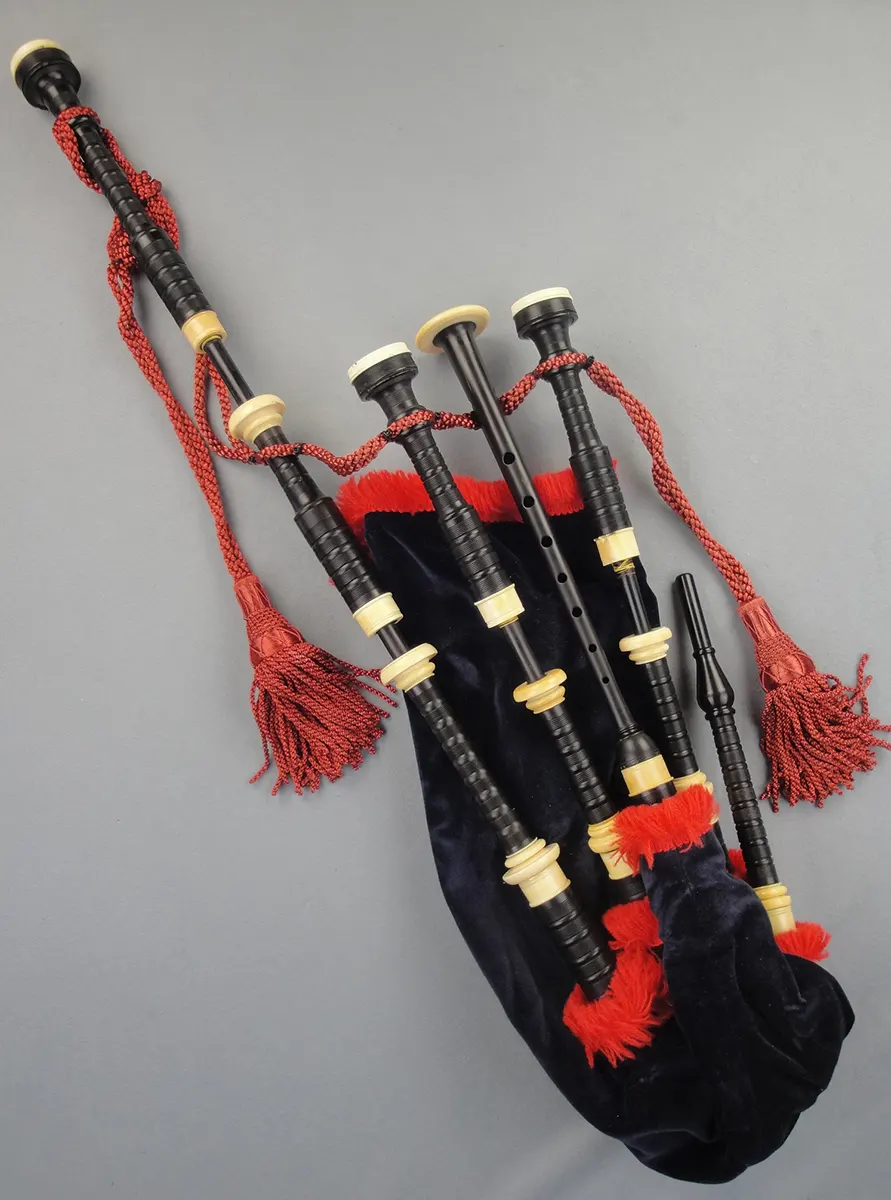
J & R Glen Half-size Set, Circa 1900-1930, African Blackwood, Full Ivory Mounts
SOLD – This is a true half-sized set, not one of the more common three-quarter (more like 7/8th) sized sets we often see. In the past, these have been given to children to play. More commonly today they are set up to go in Bb to play with other instruments or by itself. This set appears to be from J & R Glen, as stamped on the chanter. The vintage was more difficult to determine and could range anywhere between 1900 and 1930
This set is being sold as it came to me and is priced appropriately. The instrument is in good condition but for a couple of chips in one ferrule (visible in the photos). The hide bag is tight, the original chanter has been reeded, and a box of cane drone reeds as well as a brand new and appropriately sized set of Ezeedrone reeds are included. I have not played the set-up instrument.
The set comes with what may well be the original wooden box, including original key.
-
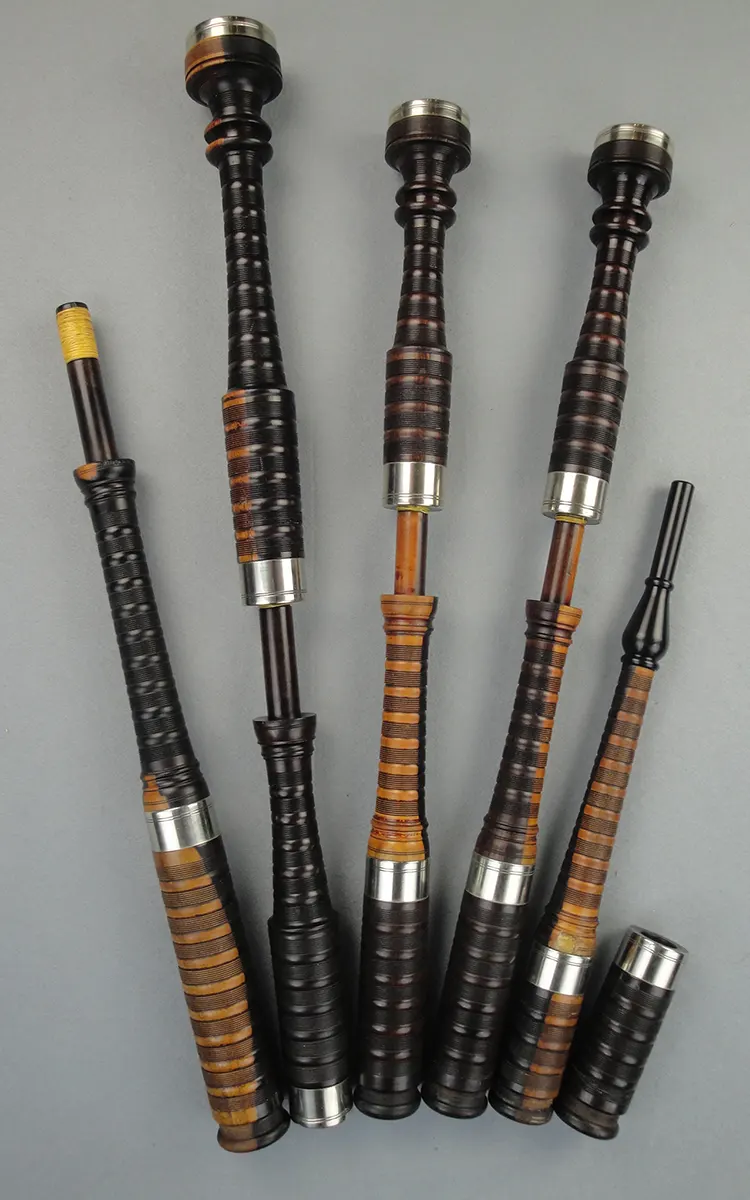
J & R Glen, Circa 1900, Cocuswood, Nickel Ferrules and Rings
SOLD – This set came to me as a David Glen, but with some help from one of my trusted vintage experts we’ve determined it is in fact J & R Glen. John and Robert Glen were the sons of Thomas Glen, the first pipemaker in the Glen family, brother of Alex, uncle of David. Made of cocuswood and with button mounts and nickel ferrules and rings, these pipes are thought to date to 1900 or a few years later.
Unlike David Glen pipes, J & R sets play a bit more robustly, though the richness and chanter blend they produce is a joy. This set was steady and lively with my current Canning drone reeds.
These pipes had already undergone a refurbishment when I acquired them. I discovered a small crack in the blowstick stock, which has been invisible whipped.
-
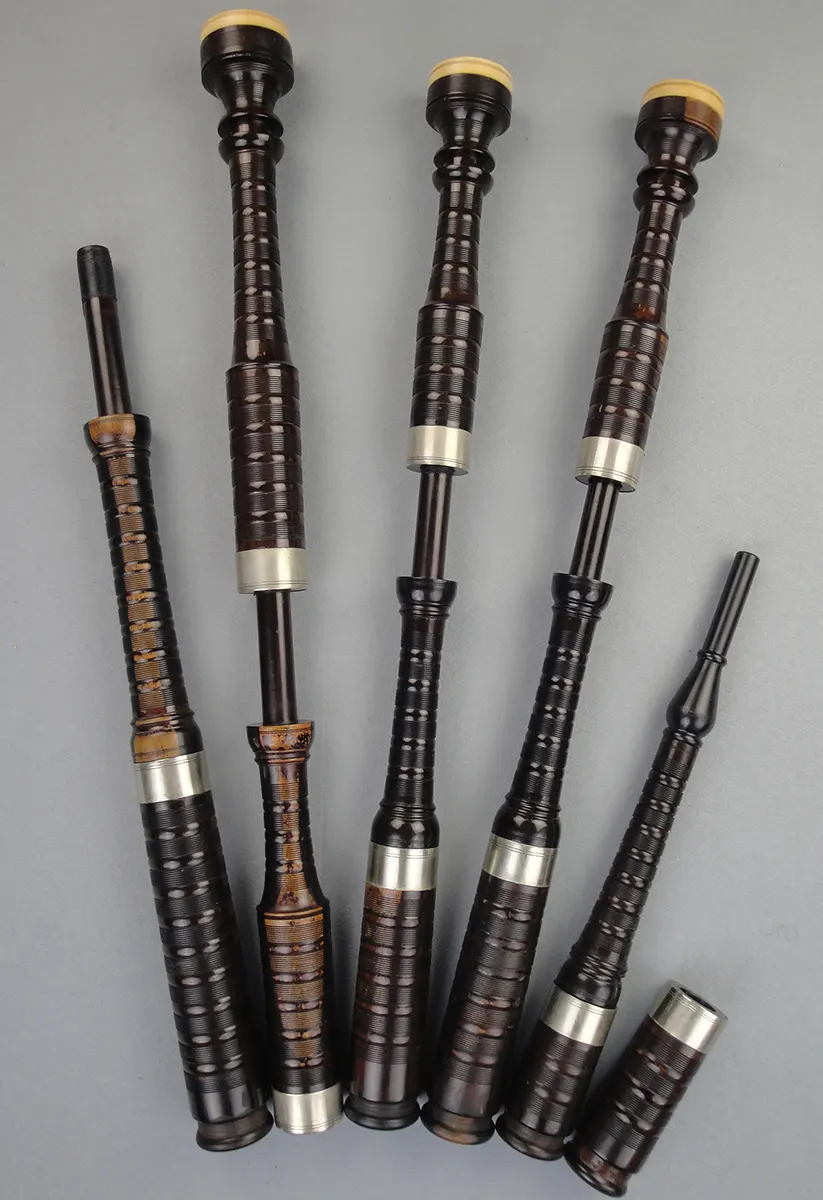
David Glen, Circa 1890, Cocuswood, Nickel Ferrules, Ivory Caps
SOLD – This lovely old David Glen set is thought to date to around 1890. It is made of cocuswood with button mounts, nickel ferrules and ivory caps.
It had undergone a refurbishment and refinishing before I acquired it and it remains in excellent condition. The blowpipe stock has had a brass lining inserted into it to stop a small crack that was also sealed.
David Glen made pipes in Edinburgh from the time his father Alex died in 1873 until David’s death in 1916. Cocuswood appears to have been his favoured wood. His pipes are known for their less robust but rich and buzzy tone that promotes great chanter blend. They are highly air efficient.
This set played rock steady with my current set of Canning drone reeds.
-
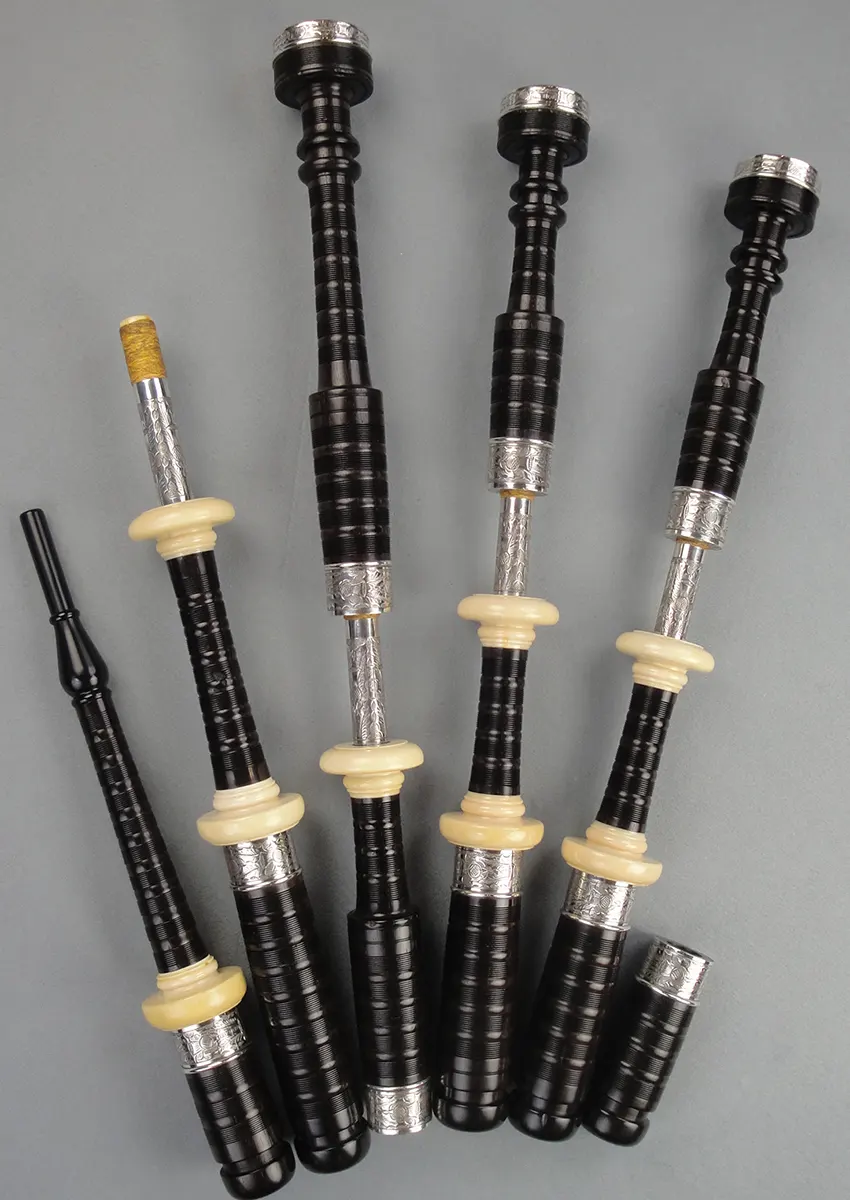
Robertson, Silver and Ivory, Hallmarked 1952-53
SOLD – This James Robertson set came to me in beautiful condition, but for a worn finish. The pipes were stripped, checked for cracks (none), and refinished.
Silver and ivory Robertsons are not uncommon, but those with each piece hallmarked are rare. The hallmarks on this set state 1952-53.
James Robertson’s company was just about the most consistent pipemaker I know: high manufacturing standards, and a full, steady tone through decades and decades of pipemaking, even after James passed in 1948.
This set played beautifully with my set of Canning drone reeds.
-
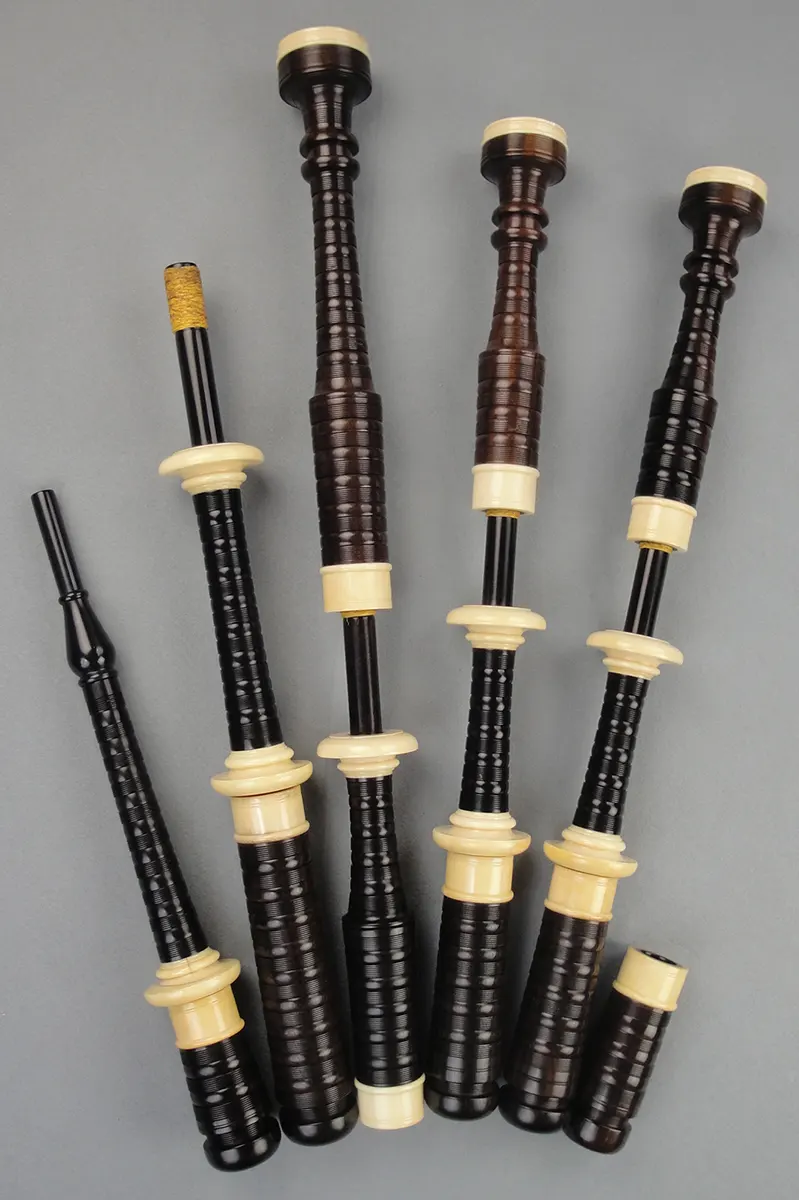
Henderson, Circa 1915, Ebony & Blackwood, Full Ivory
SOLD – This gorgeous set of Hendersons came to me covered with a thick coat of inky material and varnish. I had no idea what kind of wood they were. Once stripped though, they were revealed to be a gorgeous Henderson bagpipe with African blackwood stocks and ebony drones. The profiles and mix of woods suggest a manufacturing period between 1910 and 1920. During the transition to blackwood, makers commonly mixed woods. This particular one is a clever mix, since blackwood is a more resilient wood and better suited to stocks than is ebony.
Hairline cracks were repaired in the blowpipe stock and chanter stock as well as one tenor stock. The bagpipe was refinished. There are a few spider lines in the ivory, and some yellowing on two of the stock ferrules.
The drones played as I expected they would, with the classic, bold and seamless Henderson sound becoming apparent as I pulled the middle tenor into tune and the pipes locked.
Play these on any stage in the world, or enjoy them in your own piping room.
-
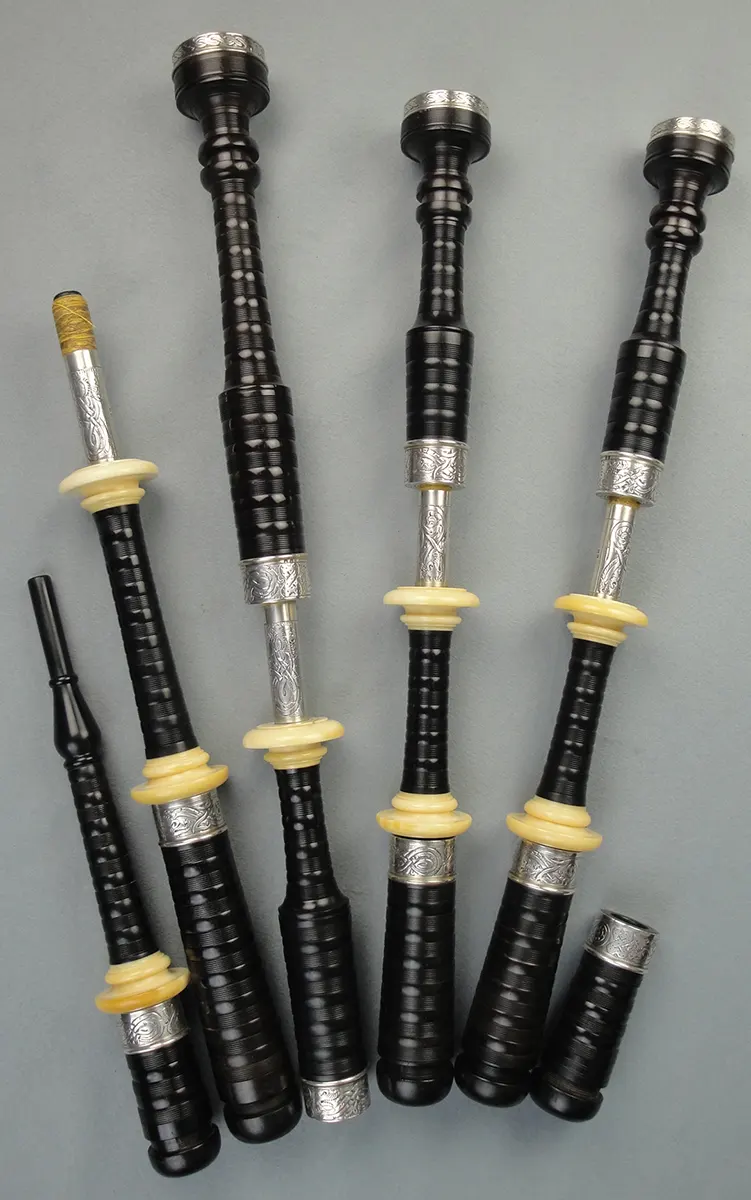
Henderson, Silver and Ivory, Hallmarked 1915-16
SOLD – These don’t come around very often.
This great old set of Hendersons came to me as is. I knew the previous owner, what he thought of these pipes and how well he took care of them. They are a gem.
I recall that he had the pipes refurbished at some point in the not-too-distant past, so after a polish on the lathe they looked pristine. I think the blowstick stock and chanter stock have had some excellent invisible whipping done on them, but it’s hard to be certain.
A few spider lines on the ivory projecting mounts and the 1915-16 hallmark attest to the age of these pipes.
Unlike some Hendersons from this era, the cord guides aren’t stamped with the maker’s name, nor does the silver show the PH (Peter Henderson) maker’s name. But between myself and Ron Bowen — who is the foremost Henderson expert I know — we are confident that these are Hendersons.
The pipes played beautifully when tried by myself and another professional piper, each using our own reeds.