
Working with vintage bagpipes is as much a hobby as a business for me. I enjoy the process of turning up old pipes and making sure they will be played for years to come. I think it is a good thing for piping. As such, I take great care in purchasing, examining and restoring old pipes.

My refurbisher is J. Dunbar Bagpipe Maker in St. Catharines, Ontario. Not only do they do masterful restorations, they have eagle eyes for examining 150-year-old wood and discovering replacement pieces and flaws that should be addressed before you play the pipes. If a set of pipes has a replacement or repaired piece, you will know about it before you buy.
You should know from the get-go that pretty much every bagpipe made before 1930 has required or will require repairs of some sort, especially if they are ebony. Ebony and cocuswood are superb woods from which to make bagpipes but they are less resilient than African blackwood. I suspect there is hardly an ebony bagpipe in the world made before 1920 that hasn’t experienced at least one crack.
Photos and descriptions of all instruments featured since October 2010
-
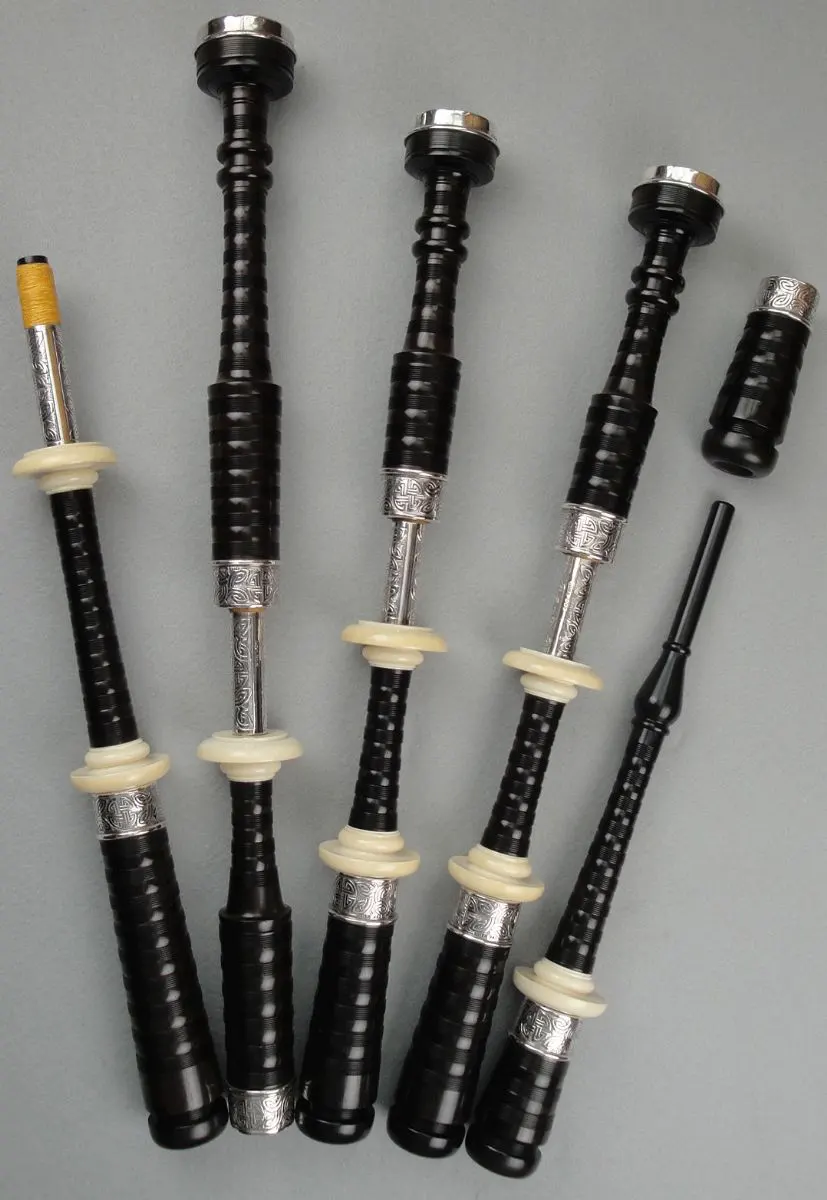
R. G. Lawrie, Silver and Ivory, 1970s
SOLD – These Lawries came to me as a circa 1940s set with the silver added later. The silver is Lawrie-produced, hallmarked RGL with a date that appears to be 1976. The style of the projecting mounts and other evidence suggest the pipes were actually made when the silver was hallmarked.
The set has been recently refinished. There are some very minor dents in the silver from normal wear, but overall the pipes are beautiful and are in fantastic shape.
The tone is full, though not as booming as the classic old Lawries of 100 years ago, and the pipes are priced appropriately. The pipes are very steady and very easy to reed.
For someone looking for a well-priced, beautiful silver and ivory pipe as a reliable work-a-day instrument, you could hardly do better than this.
-
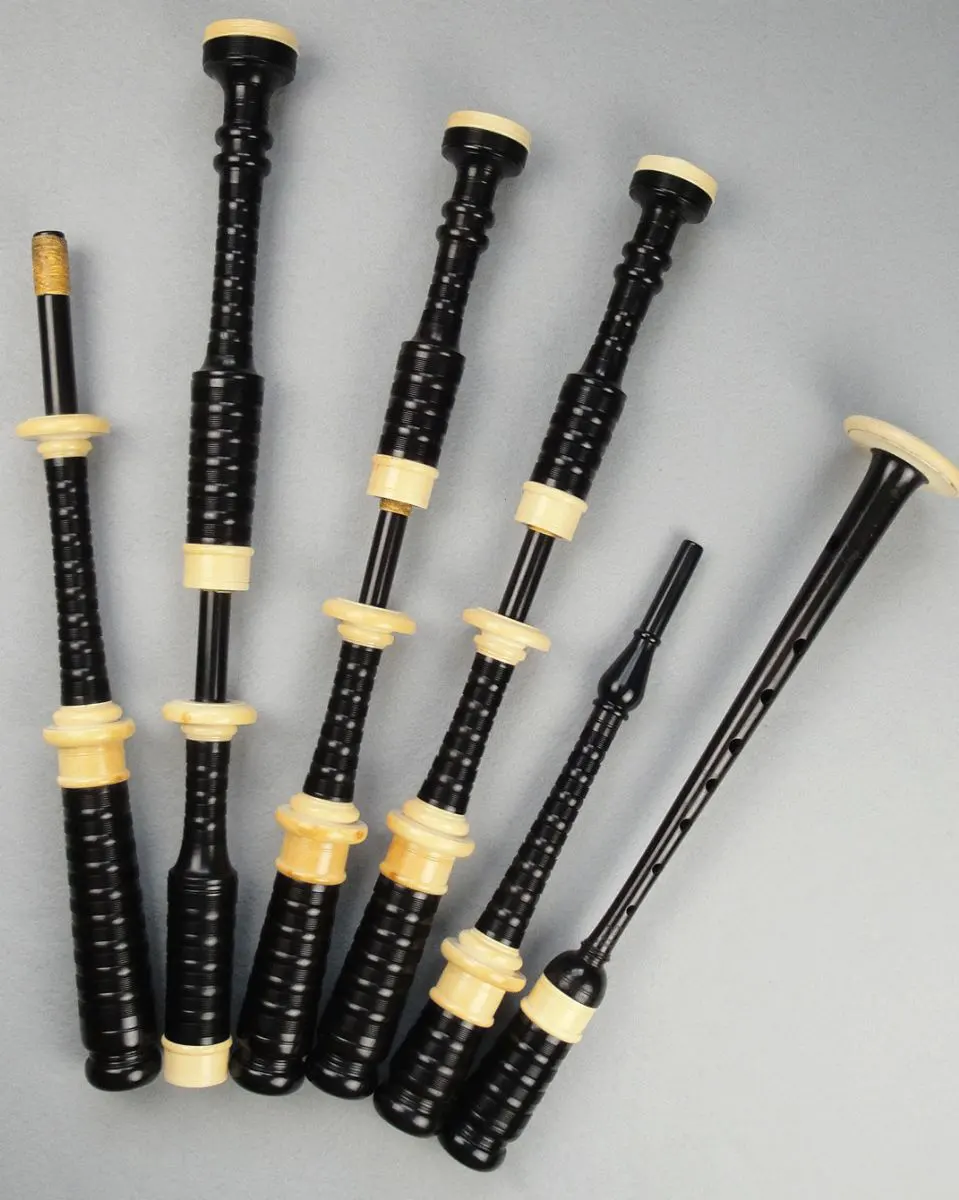
Lawrie, Full Ivory, Circa 1940s
SOLD – This elegant set of Lawries is blackwood, and mounted in full ivory. The large bead on the bottom projecting mounts on the drones suggests a manufacturing date in the 1940s or 1950s, with the ivory patina suggesting early in that era.
The set was free of cracks and has been stripped and refinished. There is some age-staining on the ivory mounts.
The original chanter remains with the pipes, though in truth, old Lawrie chanters were rarely prized for their tonal excellence. However, it is nice to have the complete bagpipe.
The pipes are full-bodied in tone and steady. Like Lawries in general, they are easy to reed. This is a lovely instrument visually, with great lines and character and a good Lawrie tone.
-
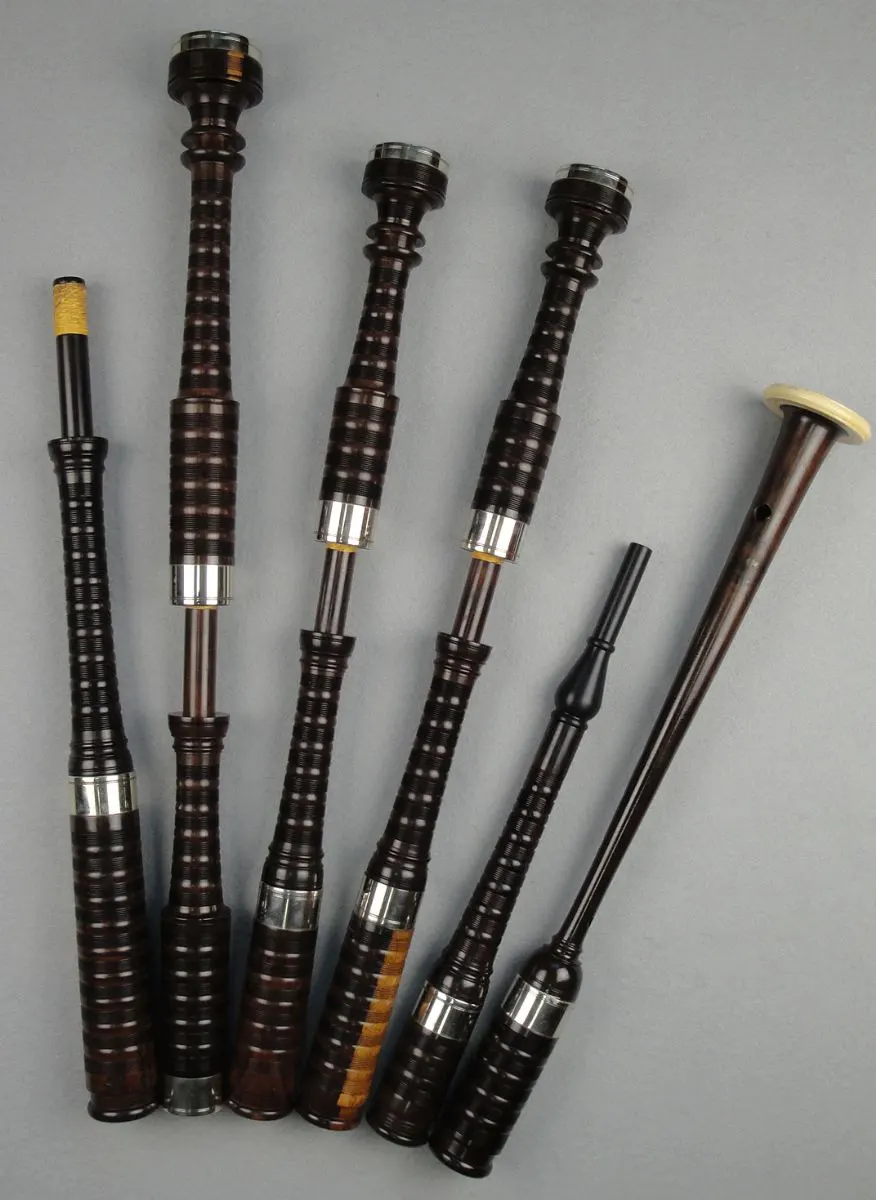
David Glen Circa 1900, Cocuswood with Nickel Ferrules
SOLD – Here is an ivory-free set of David Glen pipes in cocuswood with button mounts and nickel ferrules and rings. Estimated date of manufacture in 1900-1910. The chanter does have an ivory sole, so it may or may not be original to the pipes.
The pipes are in excellent shape. One hairline crack was invisible whipped in one tenor top. Someone has previously put a brass insert in the blowstick stock. This work has been done very well and there was no reason to remove it.
All pieces are original. The set has been refinished.
David Glen’s workmanship is superb and well respected by modern pipemakers. His sets are renown for their steadiness, ease of reeding, and a tone which is very rich and harmonic but a little mellower than the larger bore Hendersons and Lawries.
The pipes are lightweight and suitable for any level of piping, from parade use to professional level competing.
-
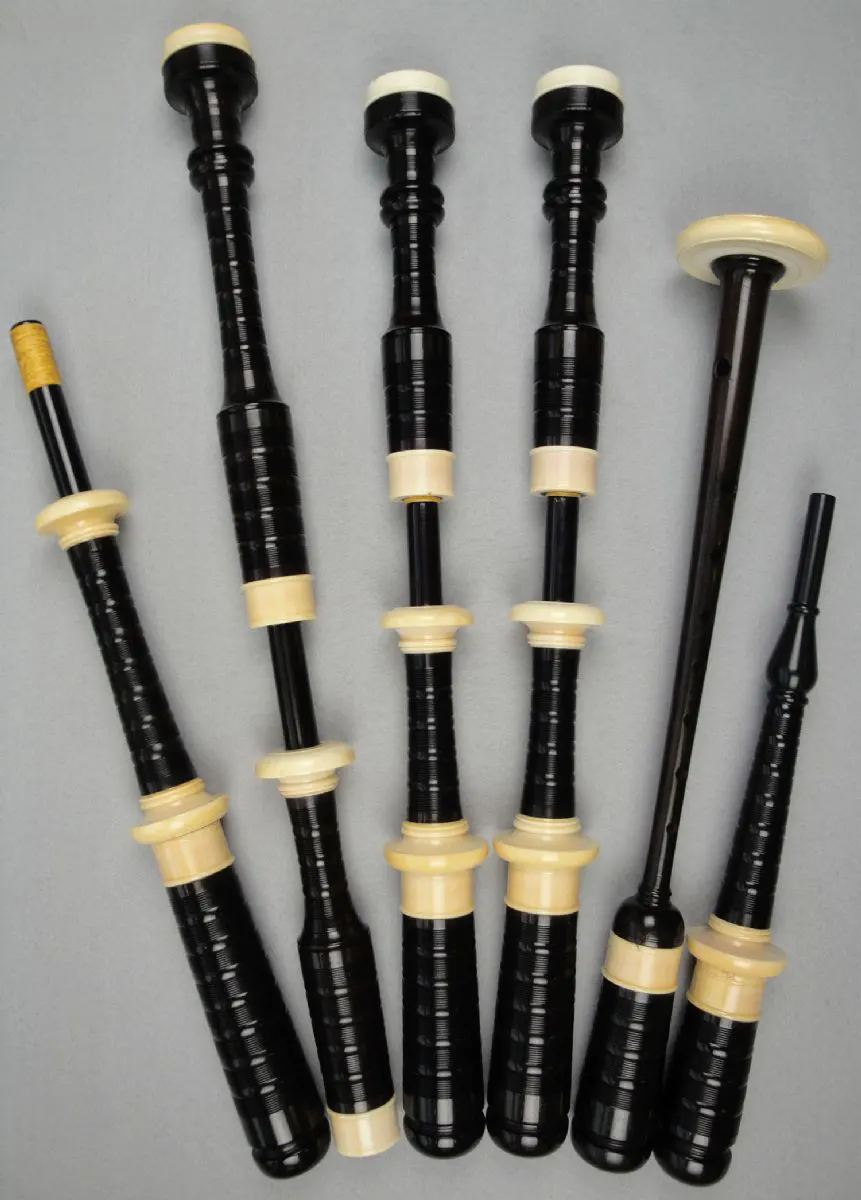
Wm. Sinclair & Son, Full Ivory, Circa 1960
SOLD – This full ivory set by the Edinburgh firm of William Sinclair and Son was purchased new by the previous owner around 1960.
William Sinclair started business in 1931 and still operates today. They have gained a well-earned reputation as the best and most consistent modern pipemaker. The Sinclair sound is full — not quite as full as Henderson — but very rich and bright. I played a Sinclair set throughout the 1980s and won most of my major prizes in Scotland with them.
This set was stripped and refinished, including the chanter. There were no cracks or replacement pieces. The ivory ferrule on the chanter stock has a crack that has been filled. Though quite visible, it is stable and will not cause problems. If you look at the photo of the very typical Sinclair ivory drone caps, you’ll see that someone has lightly etched a serial number into each. While visible up close, these do not detract from the overall appearance of ivory.
The set comes with its original Sinclair chanter. Unlike Hardie chanters of the same vintage, which age badly, the majority of good Sinclair chanters made from the 1950s to today still play very well with modern reeds, though at a flatter pitch than today’s chanters.
The lines, mount shapes, ivory and tone are all exemplary on this set: lots of character here from one of the greatest modern pipemakers in their prime!
-
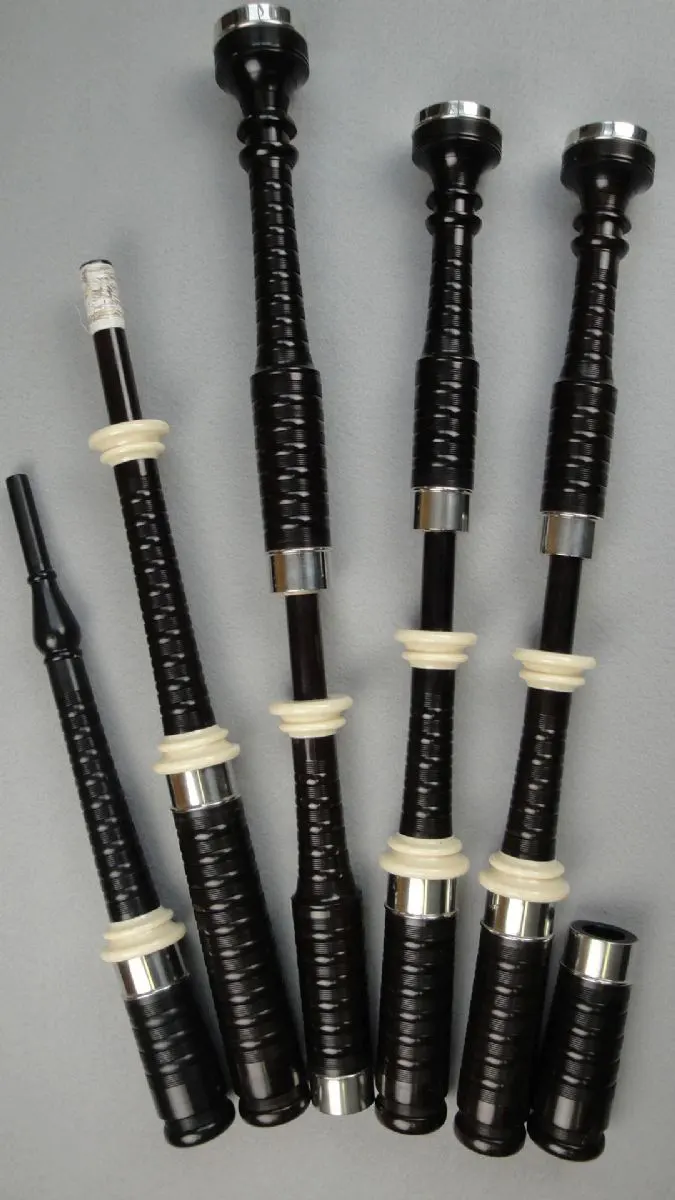
Dave Atherton MD Model, Macdougall Bores, Nickel and Imitation Ivory, 2009
SOLD – This set of Athertons was made in 2009 and owned by me until a couple of years ago. They were purchased and have recently come back from a player who has had to sell off his collection due to financial strife. They are blackwood and mounted in nickel and imitation ivory. The blowstick and stock are poly, as was Dave Atherton’s usual practice. The chanter stock is blackwood, not Dave’s usual practice.
The only visible flaw in this set is a slight nick in the wood just below the hemp on the bass bottom tuning pin. The mark is not visible when the pipes are together and being played.
Dave Atherton is regarded by many to be the best pipemaker of modern times. His attention to detail, quality materials and perfect workmanship are legendary. These pipes were a reproduction of a Duncan MacDougall cocuswood bagpipe previously owned by the late Roddy MacDonald of Wilmington, Delaware, and now owned by his son Calum.
The tone is bold and steady with Canning tenors and a Kinnaird bass and the pipes are as steady as any set you will find.
-
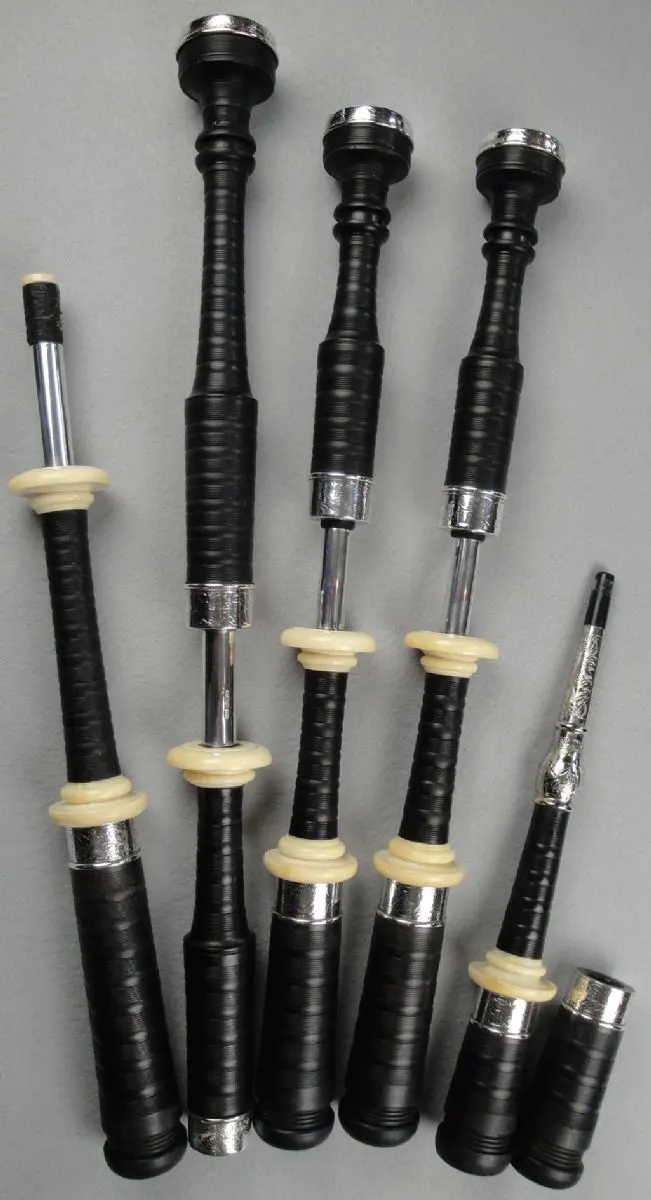
Lawrie, Circa 1920-1930, Engraved Silver, Ivory
SOLD – This set was purchased as a set of Lawries made around or before 1900, though input I have had suggests they are more likely at 1920-1930s set.
The pipes are ebony and appear unusually free of cracks or blemishes in the wood. The silver engraving is shallow, a Lawrie trait, though the ferrules lack the later conical Lawrie shape. The shallow bells suggest Lawrie, as do the larger ivory beads on the bottom drone projecting mounts.
The ferrule on the bass mid-joint has been replaced with a more recent engraved silver ferrule more in the tapered Lawrie tradition. The plain silver slides are a very recent addition, hallmarked 1999. The metal mouthpiece is also modern, likely engraved nickel. Despite the later additions the visual effect of the pipes is lovely and strong, and none of these pieces detracts from the overall appearance.
The tone is robust though not booming: seamless, very rich and very steady, and very much characteristic of ebony. The lovely, natural, buffed finish suggests the pipes were refurbished fairly recently — perhaps when the slides were added.
-
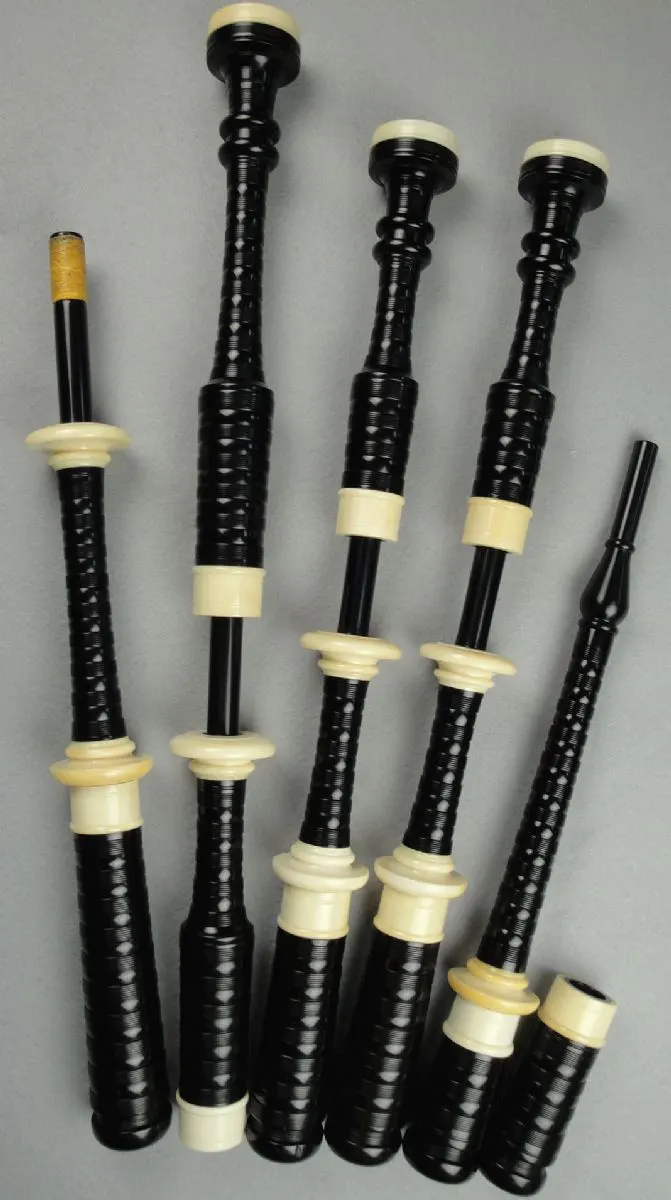
Lawrie, Circa 1910 Ebony, Full Ivory
SOLD – This is quite a pristine set of Lawries in ebony, mounted in full ivory, and thought to date from the years around 1910. They have been refinished, though it’s possible they have had an earlier refurbishment.
The wood is flawless, and the ivory is in superb shape, except for a split in the ferrule on the blowstick stock, which has been repaired. The tuning chambers are perfectly even.
The pipes are rich and steady, thought perhaps not quite as robust as some some Lawries. This can be typical of some ebony pipes which are often not as loud a blackwood sets of the same vintage. It’s a stunning visual set with a smooth and seamless tone much in keeping with its appearance.
-
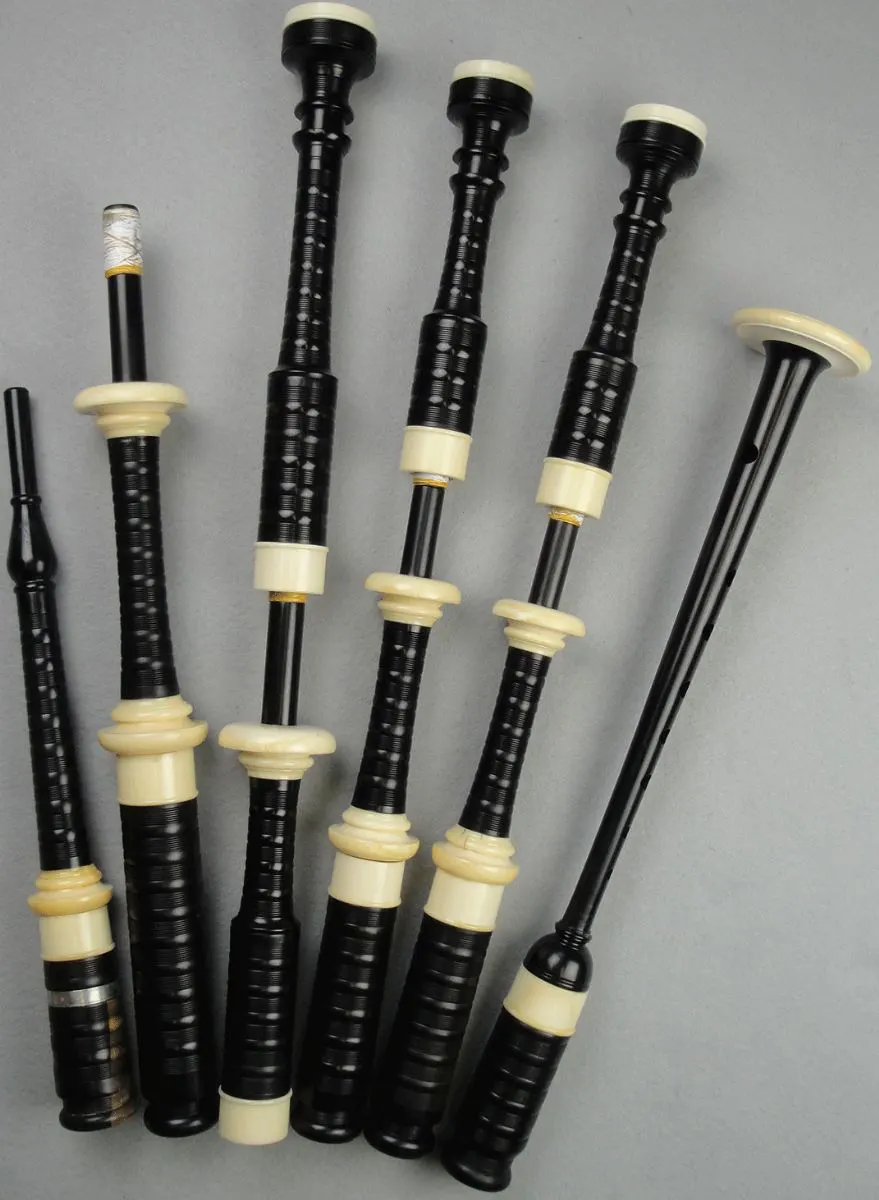
Gavin Macdougall, Circa 1900, Ebony, Full Ivory, Brass Inserts, Built-in Watertrap, Original Chanter
SOLD – I’ve had numerous MacDougall sets on this site, but few as classic or in such great condition as this Gavin MacDougall set. The pipes are ebony, the mounts are ivory, and all tuning chambers are fitted with brass inserts.
While the pipes aren’t stamped, the chanter is stamped “G.C. MacDougall, Aberfeldy,” and appears to be a perfect match with the set. The cord guides are in Duncan MacDougall’s wide style, suggesting that this set was made early in his son’s career. Gavin took the business over when his father died in 1898, though he had been making pipes with Duncan for many years. Lots of pipes stamped with Duncan’s name in the late 1890s were almost certainly made by Gavin.
The blowstick stock is uniquely Gavin: split, and fitted with a brass watertrap. This seems to be a special feature he offered, and I’ve seen only two others like this.
The pipes were stripped and refinished some months ago, and a hairline crack was lightly invisible whipped in one tenor top at that time. I’ve been enjoying playing this set for the past three months. It’s a beauty, both visually and tonally — seamless, with a lovely bass sound.
-
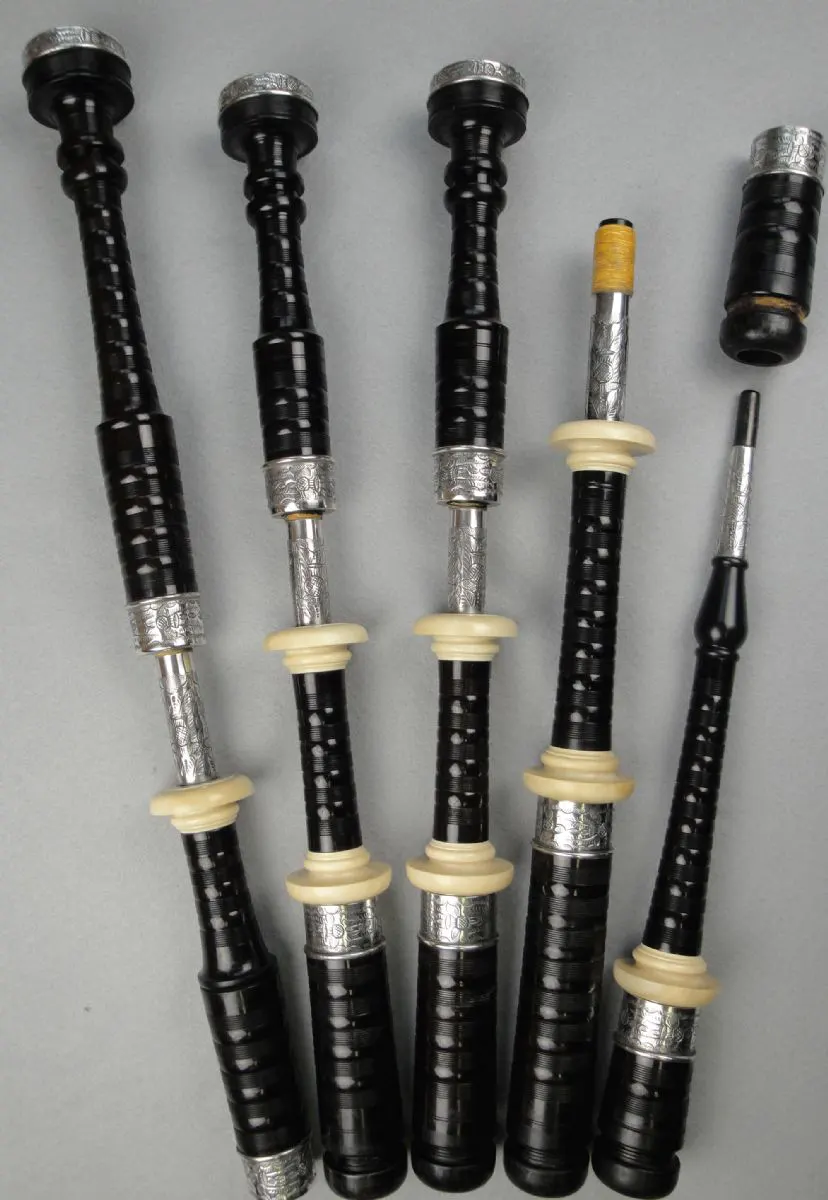
Dunbars, Circa 1970, Engraved Silver with Holly Projecting Mounts
SOLD – This is the first older Dunbar set we’ve had on the site. This set was almost certainly made by Jack Dunbar himself, who served his apprenticeship in the Peter Henderson shop in the 1930s when the firm was at the peak of its pipemaking powers. He brought that expertise to Canada when he founded Dunbar Bagpipe Makers in the 1960s.
Jack’s pipes were all made in the Henderson tradition. He was the first pipemaker to create instruments out of polypenco plastic. Perhaps as a result of this, his blackwood pipes were for many years underrated. But they are superbly made instruments with a bold and steady Henderson sound. Their manufacturing standards are very high, which is why I’ve chosen the company for all my vintage refurb work.
This set was originally mounted in the engraved silver pictured here as well as catalin. The previous owner had the orange catalin replaced with holly, giving a great set of pipes new visual life. Only the original catalin bushes remain.
The finish is original, and this 40-year-old set plays with a bold and steady tone that displays a rich, dominating bass.
-
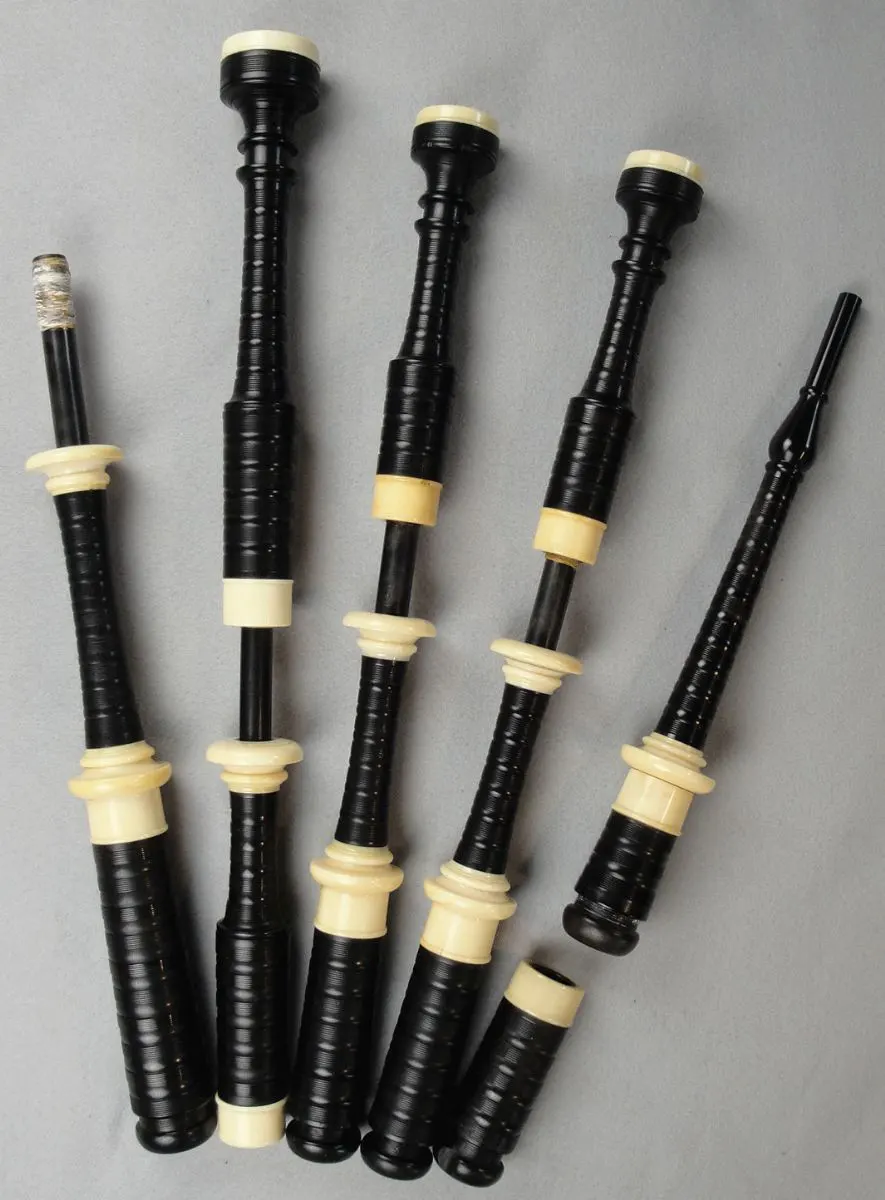
Duncan Macdougall, Ebony, Natural Mounts, Circa 1880s
SOLD – This old silver and ivory Henderson set is in excellent condition. It appears to be blackwood, though the finish that was on the pipes was in good shape so I didn’t have it removed. The silver on the stocks is hallmarked 1910. The matching silver on the pipes has a different hallmark that I couldn’t trace but is clearly the same pattern and vintage.
The bass top is a Henderson replacement that may be older than the rest of the pipes. The silver pattern is different but equally lovely and in no way stands out. It is hallmarked 1909.
I played this set for a week and it is robust and steady in a fashion typical of blackwood Hendersons of this era: really a first class instrument.
If there have been any repairs done they are invisible to me.
-
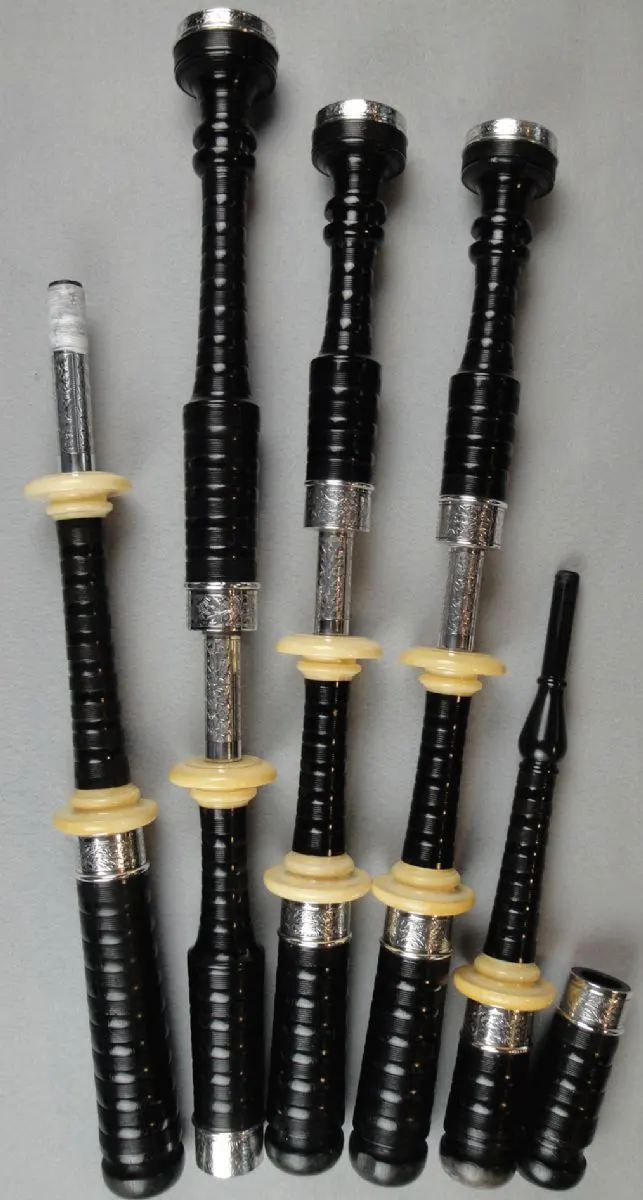
Henderson, Silver and Ivory, Circa 1910
SOLD – This old silver and ivory Henderson set is in excellent condition. It appears to be blackwood, though the finish that was on the pipes was in good shape so I didn’t have it removed. The silver on the stocks is hallmarked 1910. The matching silver on the pipes has a different hallmark that I couldn’t trace but is clearly the same pattern and vintage.
The bass top is a Henderson replacement that may be older than the rest of the pipes. The silver pattern is different but equally lovely and in no way stands out. It is hallmarked 1909.
I played this set for a week and it is robust and steady in a fashion typical of blackwood Hendersons of this era: really a first class instrument.
If there have been any repairs done they are invisible to me.
-
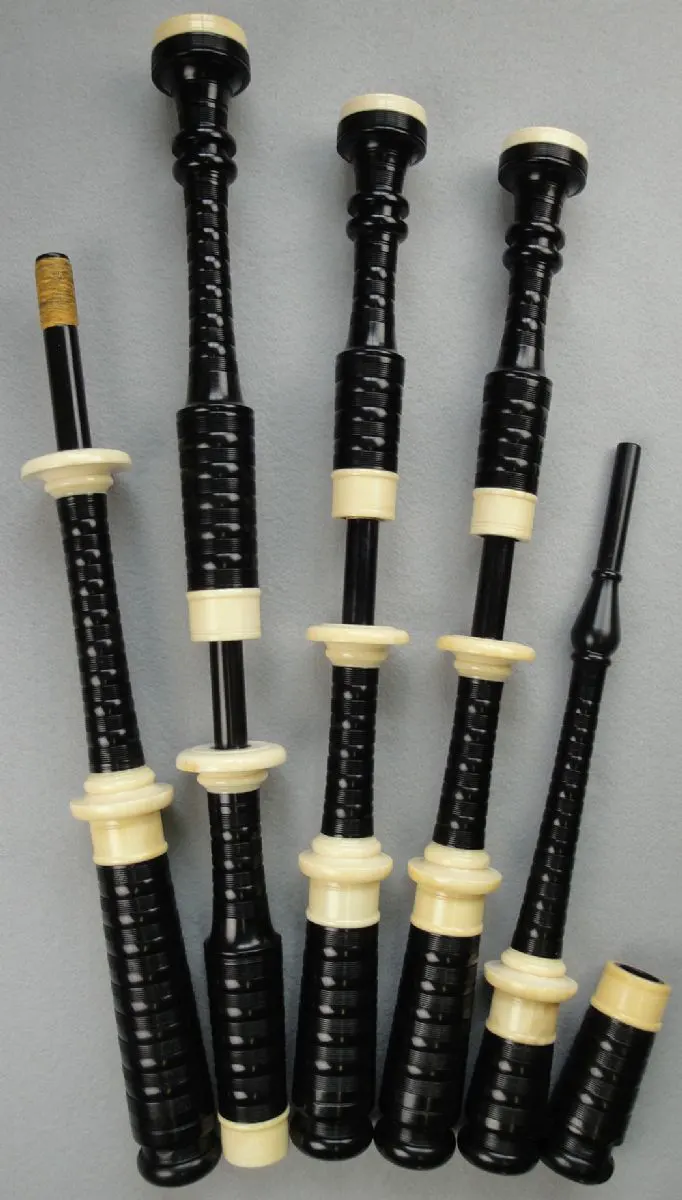
R. G. Lawrie, Circa 1925, Ebony, Full Ivory Mounts
SOLD – This set of Lawries was purchased by the previous owner from Jim McIntosh some years ago. Jimmy identified them as circa 1925 Lawries, and I concur.
The are in ebony with immaculate full ivory mounts. There is no evidence of any repairs to the drones or stocks — rare for ebony pipes nearly 100 years old. There is no staining on the ivory, and the patina of the ivory is lovely, with the grain showing beautifully. The pipes were stripped, checked for cracks, and beautifully refinished by Dunbar Bagpipes, who, I am confident, do the best refurb work on the planet.
The set plays beautifully, as nearly all old Lawries do — they are full and balanced, steady and vibrant, and lock into tune in a way old ebony seems to do. They went well with both Ezeedrone and Canning reeds. I doubt you’ll find many vintage, fully ivory Lawries in ebony as lovely as this one.