
Working with vintage bagpipes is as much a hobby as a business for me. I enjoy the process of turning up old pipes and making sure they will be played for years to come. I think it is a good thing for piping. As such, I take great care in purchasing, examining and restoring old pipes.

My refurbisher is J. Dunbar Bagpipe Maker in St. Catharines, Ontario. Not only do they do masterful restorations, they have eagle eyes for examining 150-year-old wood and discovering replacement pieces and flaws that should be addressed before you play the pipes. If a set of pipes has a replacement or repaired piece, you will know about it before you buy.
You should know from the get-go that pretty much every bagpipe made before 1930 has required or will require repairs of some sort, especially if they are ebony. Ebony and cocuswood are superb woods from which to make bagpipes but they are less resilient than African blackwood. I suspect there is hardly an ebony bagpipe in the world made before 1920 that hasn’t experienced at least one crack.
Photos and descriptions of all instruments featured since October 2010
-
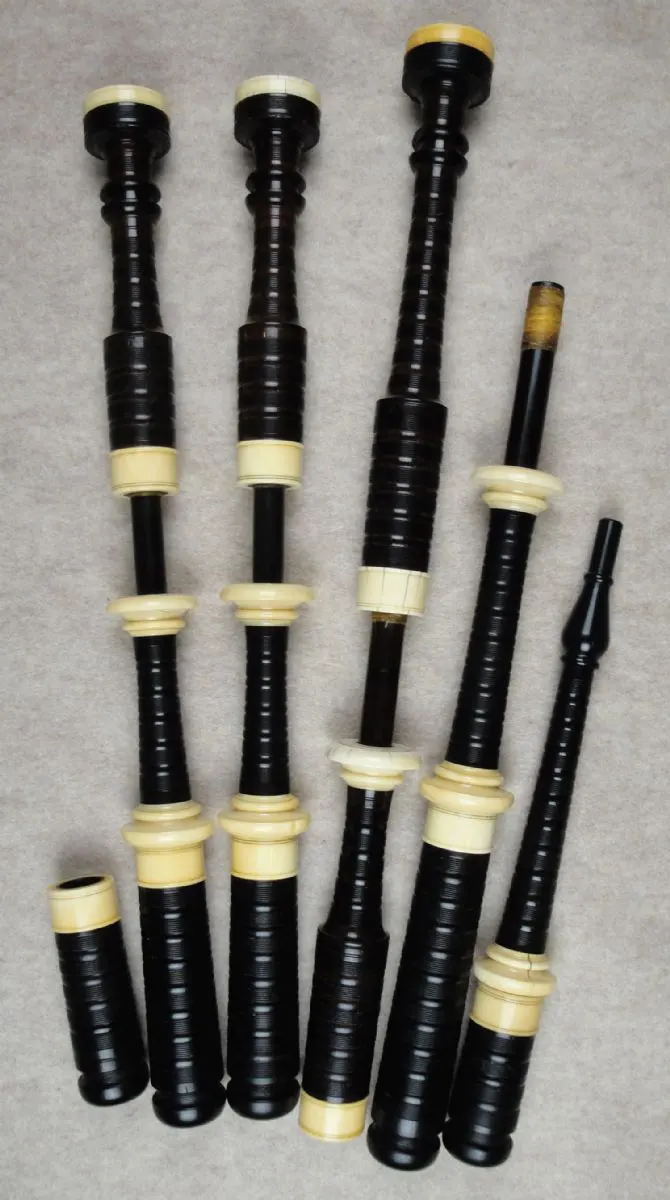
John Center, Circa 1890, Cocuswood, Full Ivory
SOLD – John Center pipes are uncommon, but this is the second coccuswood Center set to became available here in recent months. Many vintage aficionados consider John Center one of the greatest pipemakers, ranking in both tone and craftsmanship along with Duncan MacDougall, David Glen and Henry Starck. He made pipes in Edinburgh from 1869 to 1908, moving with his son James to Melbourne in the last few years of his life.
He favoured cocuswood as the material of choice for his sticks. His pipes are superbly crafted, and display a refined, buzzy tone about half way been the more robust MacDougall and the subdued Glen. The bass is full and dominant, and the pipes are very steady.
This set is all original and has no major damage to the wood. There is some spider cracking in a couple of the ivory pieces, and one ring and one projecting mount are cracked slightly open, but are still solid and unmoving. The set needed no work or refinishing. The two pieces of cracked ivory could be filled, but there was no reason to, and the fill would likely be more visible than the cracks.
This set is a great example of the work of one of the 19th-centuries great pipemakers.
-
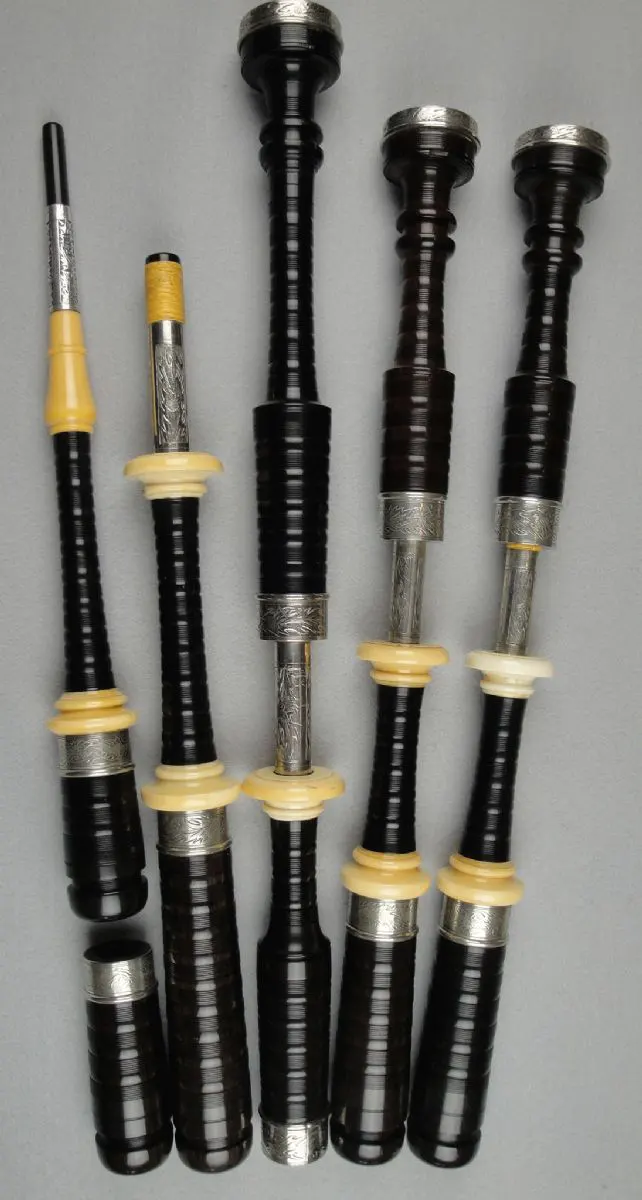
Unknown Silver and Ivory, Circa 1930
SOLD – This silver and ivory bagpipe has a brilliant Henderson-like tone: bold, rich and steady, with a wide tuning range that holds the drones in tune for long periods.
I was pleasantly surprised by this, because the visuals left me not knowing what to expect. Looking at the combing, the tenor drones appear to match. The bass top and bottom match, but are different from the tenors, and the bass middle is different again. The ivory projecting mounts are all similar but not identical. (One tenor projecting mount was replaced by a larger mount turned down to match when the pipes were refurbished.)
The patina of the ivory suggests the 1930s or earlier. The silver all matches, but is not hallmarked. Seams are visible in some of the ferrules, and one stock ferrule has a noticeable gap in the seam. The fit of a couple of the silver pieces is not perfect and suggests it was added later.
The mouthpiece bulb is imitation ivory, but is a reasonable match for the aged ivory. A hairline crack in the bass top has been repaired and is not visible. All stocks have been replaced and the original mounts affixed.
However, the bottom line, tonally speaking. is that the pipes are absolutely superb. If this pipe looked as good as it sounds, it would be priced at $7,500 — the price of a high-end silver and ivory Henderson or Lawrie.
But, the flaws don’t allow that, and the price below reflects this.
If you have always wanted a brilliant silver and ivory Henderson or Lawrie pipe, but can’t afford the price tag, this is the bagpipe for you.
-
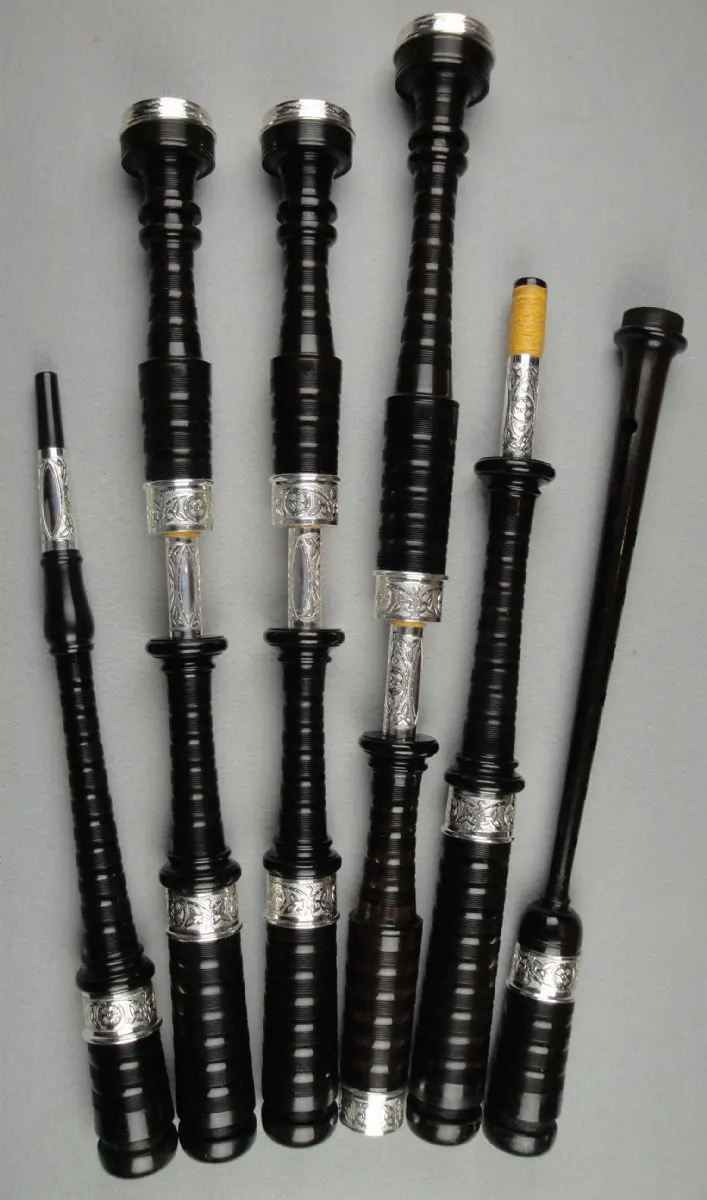
Henderson, Circa 1930, Blackwood Projecting Mounts, New Silver Ferrules, Slides, Caps
SOLD – This Henderson set is thought to date from around 1930, give or take 10 years. The ring caps were very old catalin, and the ferrules were nickel, neither of which did justice to the pristine wood and tone of this set. I don’t very often mess with original Hendersons, but this set needed an aesthetic makeover, so they were ‘half-silvered’ with lovely Ancient Celtic. The bushes are blackwood.
The chanter is original but has no sole. A matching silver sole can be acquired for this chanter, or whatever chanter is selected for the pipes. The sticks were in immaculate condition, well cared for and played until recently by a friend of mine in New York state. The wood required no refinishing.
The pipes are full and rich Henderson: steady and easily reeded. A great old set, done up beautifully, if I do say so myself.
-
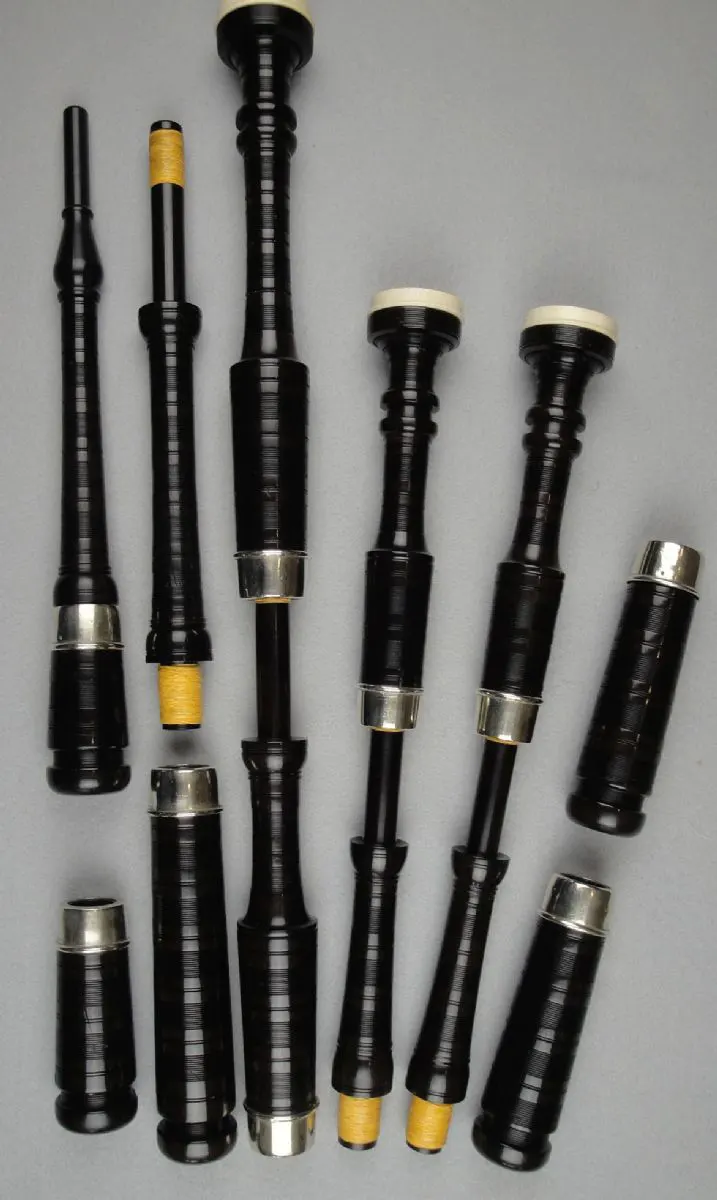
Circa 1940s Flat-combed Lawrie, Nickel Ferrules, Holly Caps
SOLD – This is a very sweet little R. G. Lawrie set with lines and ferrules typical of the firm’s 1940s products. The nickel ferrules are more rounded and aesthetically pleasing than other Lawrie nickel mounts.
The drone caps were orange catalin, which nobody likes, especially me. These have been replaced with holly.
The pipes are crack free, and have been refinished. The tone is very steady, and while not as full as the Lawries of the earlier part of the century, they are still fairly robust. They are very light to carry.
I got these for a great price, and they were in great shape, so the refurb was not costly. I’m often asked about affordable vintage pipes for young people looking for good quality for competition, or for a lightweight, low-maintenance set for older hobby pipers.
Well, this here is the set!
-
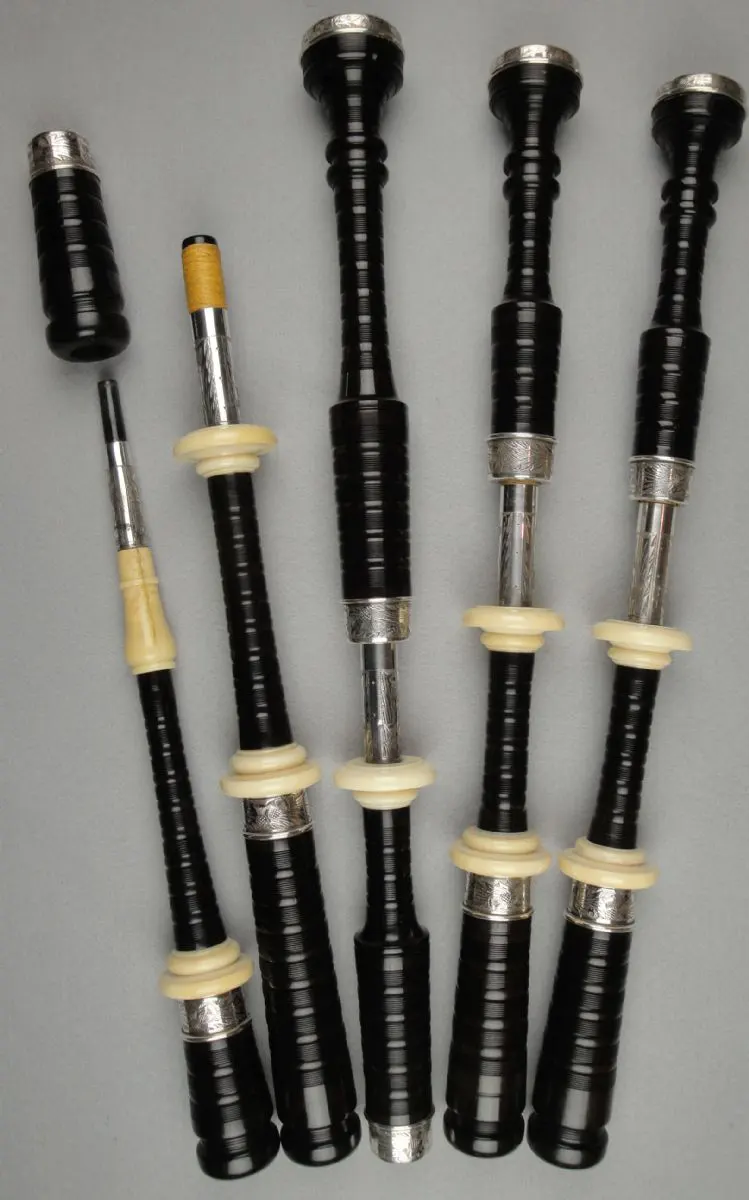
R. G. Lawrie, Hallmarked 1951, Silver and Ivory
SOLD – This is a lovely Lawrie set that was a bit unusual when I acquired it. The tenor tuning pins (including the silver slides) were extremely long. The bores of the bottom joints were quite narrow, like Hardies. When I played the pipes, it was clear that they could play quite close to concert A. I had the pins shortened and the tenor bottoms opened out, and it became a normal bagpipe, though the tenors still want to tune fairly low on the tuning pins. In all other tonal respects it is a solid, steady set of Lawries, though, because of the tenors, perhaps most suitable for someone who likes to play a flatter pitch — 466-472.
The bushes were catalin, which was unusual given that the rest of the mounts are ivory. The catalin bushes have been replaced by holly. The wood above the projecting mounts on the three bottom pieces was quite narrow — not the usual comb or bead — so this has been built up for a more traditional appearance.
There were no cracks in the wood. The ivory blowpipe bulb is cracked but has been visibly sealed. All other ivory and silver is in excellent condition.
-
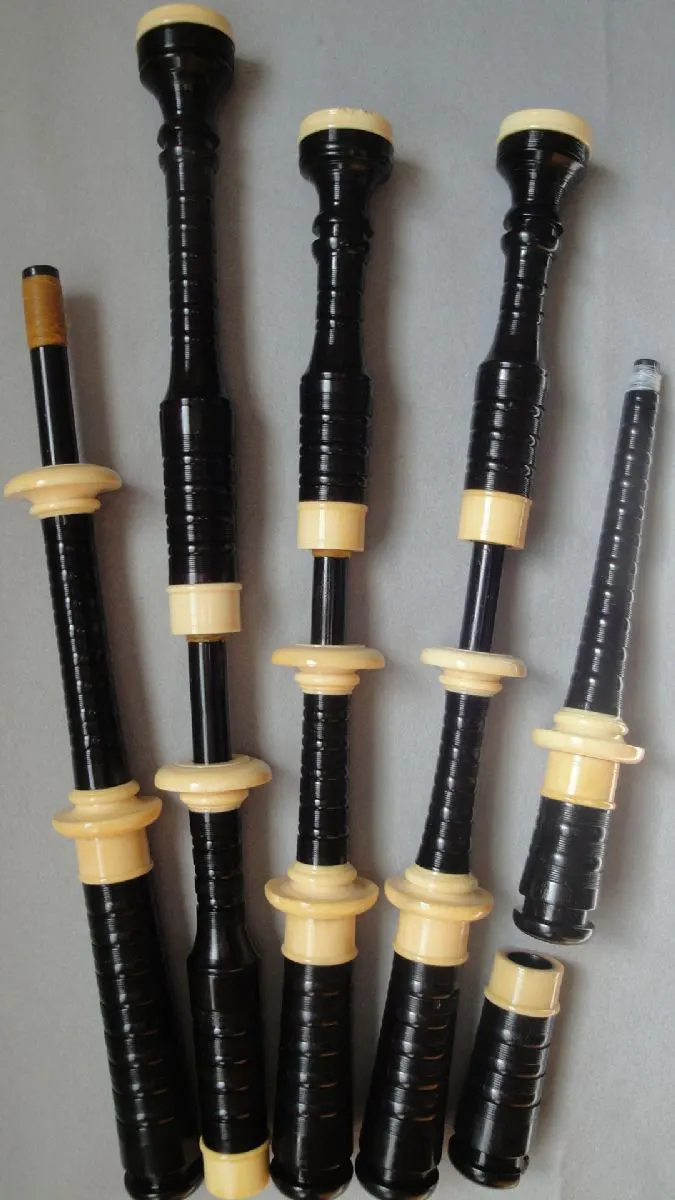
Henry Starck, Ebony, Ivory, Circa 1900
SOLD – This set of Starcks is not completely original, but it is made entirely in old ebony and ivory and the replacement pieces match Starck specifications.
The bass bottom joint and one tenor bottom are not original. The stocks are not original but all match. All ivory matches nicely as the photos show.
The bass mid-joint had a hairline crack and has been invisibly whipped; one tenor top and one stock have been whipped slightly under the ferrules. These flaws will never budge and they are imperceptible.
The Henry Starck, London stamp is visible on one tenor pin and the bass middle pin.
The pipes exhibit the classic, steady tone of ebony Starcks made by the elder Henry (d. 1924): full, but not overpowering, and with a rich buzz.
Since not all pieces are original and there has been some whipping, the pipes are priced appropriately. But the tone is as good as any Henry Starck pipes you’ll find.
These pipes were played by a good friend of mine in Ohio for years. He spoke highly of them many times before parting with them due to ill health.
The pipes were recently stripped and refinished.
-
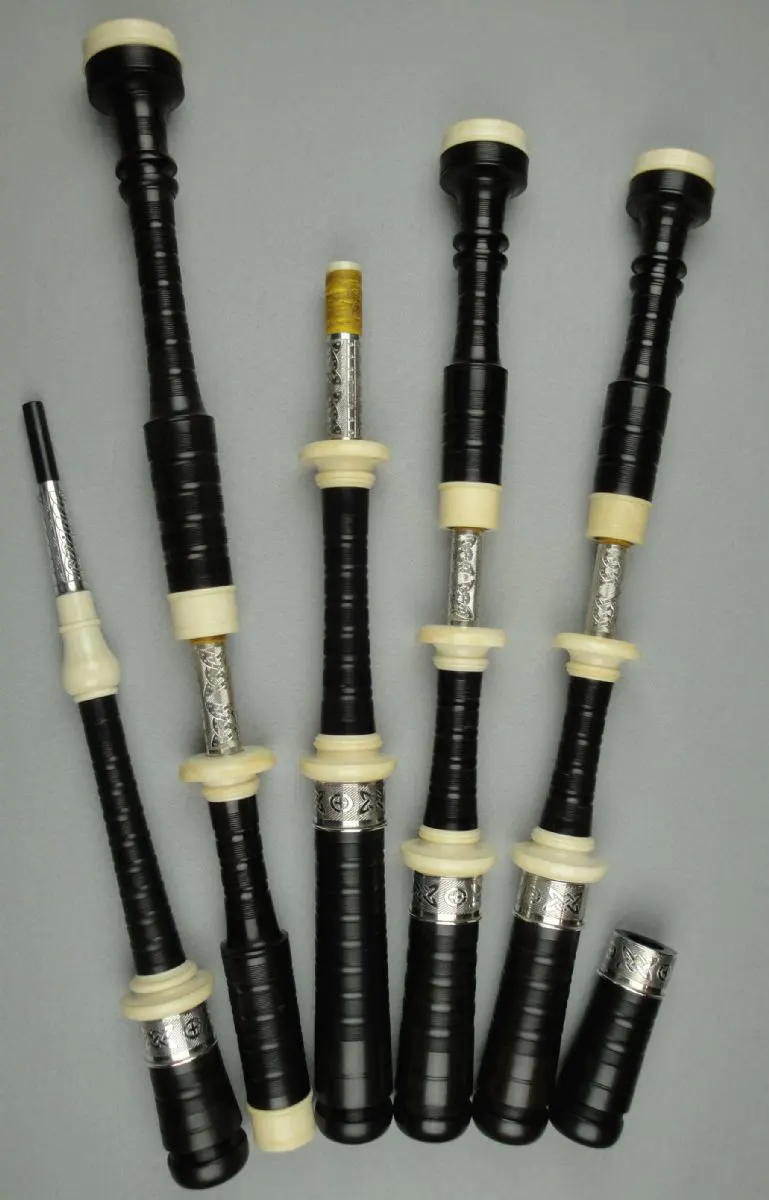
Wm. Sinclair & Son, Circa 1960, Ivory Mounted with Engraved Silver Slides, Stock Ferrules
SOLD – This great old set of 1960s Sinclairs is in mint condition. They were originally mounted full ivory. In 1977, the pipes were sent to Sinclair to replace a cracked blowpipe and blowpipe stock. The silver slides were added then. It’s possible the stocks were replaced at that time or the silver was added to the existing stocks. A slightly different finish on the stocks would suggest they were replaced. The stocks and blowpipe have now been refinished to match the pipes.
A matching engraved silver mouthpiece tube was added in 1977, as well as the imitation ivory bulb. The pipes display the unique one-piece ivory caps Sinclair was known for. Close-up photos of the silver below show it to be a lovely and intricate pattern.
The set is virtually perfect now. The ivory is absolutely pristine, as the photos show.
Full, rich, and very steady, Sinclair pipes were the leading modern instrument of the 1960s, and the Edinburgh firm has enjoyed a solid reputation for excellent since its inception in the 1930s under the first William Sinclair.
-

Henderson, Engraved Silver and Ivory, Hallmarked 1928-29, D.R. Maclennan’s Bagpipe
SOLD – This is a pretty spectacular set of blackwood Hendersons. The engraved silver and ivory are in nearly pristine condition, and the pipes play beautifully. The ferrules and caps are hallmarked 1928, and the slides 1929. The stocks are perfect blackwood replacements with the original silver ferrules. There is a barely visible crack in the blowstick just above the projecting mount, so at some point the blowstick was bored out and a thin copper sleeve was inserted.
There have been no repairs to the drones or silver. The ivory bulb has cracked at some point, but the crack was filled and the piece is stable. The bottom bass joint was replaced using the original mounts by Brian Donaldson in 1985.
The Peter Henderson company was, of course the premier pipemaker of the 20th century, perhaps of all time. Their best pipes were made before 1950, and their pre-1930 pipes are the most sought after of all. Their tone is full and rich and they are renown for their remarkable steadiness. This set is no exception.
UPDATE: Since this set was posted, they have been identified as set purchased around 1984 by Brian Donaldson of Inveran Bagpipes from Brigadier MacLennan, the son of D. R. MacLennan, the half-brother of G.S. McLennan. D.R. died that year, and the pipes were his. Donald Ross MacLennan was very prominent piper and piping figure in his own right. He is one of the few players to win the Gold Medals at Oban and Inverness in the same year (1956). Whether these pipes are the same as those in the photo or are the pipes with which he won the Medals with is not yet certain.
-
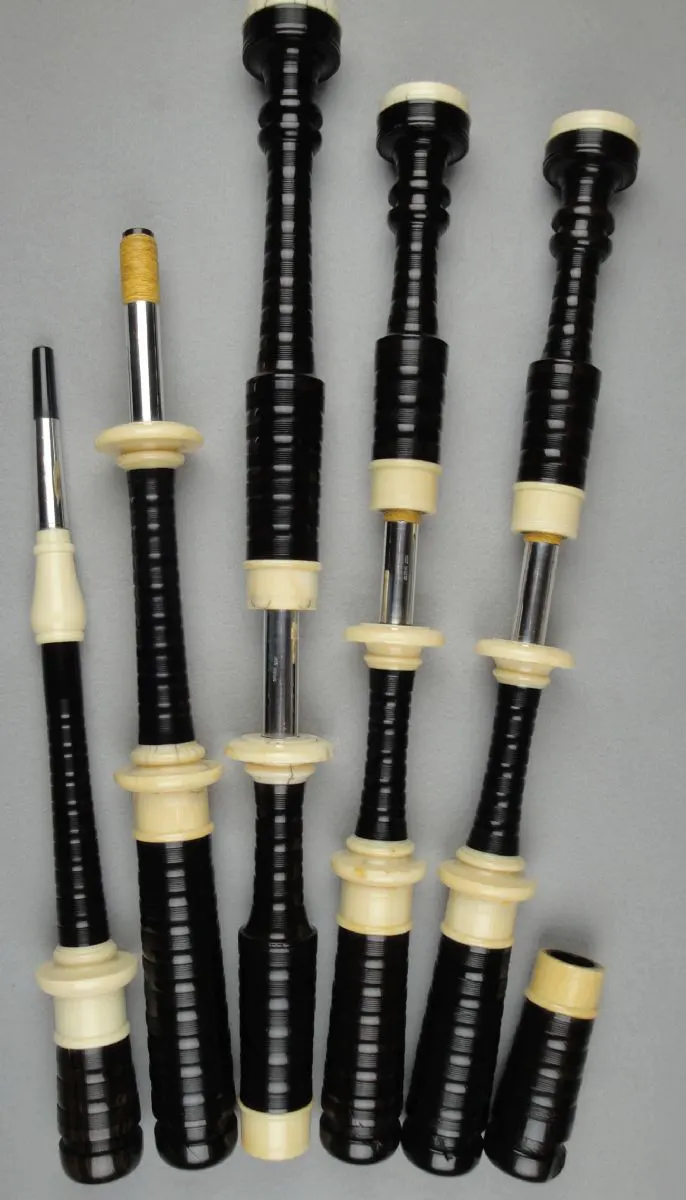
Henderson, Circa 1900-1910, Cocuswood/Blackwood, Full Ivory, Silver Slides
SOLD – This very old set of Hendersons is a mix of cocuswood and blackwood. The two tenor drone bottoms are blackwood, and while makers at this time were known to mix woods, it is possible that these two pieces were later Henderson replacements. Visually, this is indiscernible.
It is thought that the pipes date from between 1900 and around 1910. The ivory shows some spider cracking, none of which threatens the mounts. There is some staining and chipping on the ivory, consistent with a set of pipes that is over 100 years old. The slides are hallmarked silver, added in the mid-1970s.
The Henderson stamp is visible in all the cord slots.
One tenor top and the bass mid-joint had hairline cracking that has been invisible whipped. These repairs are indiscernible.
The blowpipe and blowpipe stock are complete replacements and have been fitted with non-chip imitation ivory.
The tone of this set is outstanding — great Henderson boldness and steadiness. The tuning chambers are very even and the drones are easy to reed, also a Henderson trait.
-
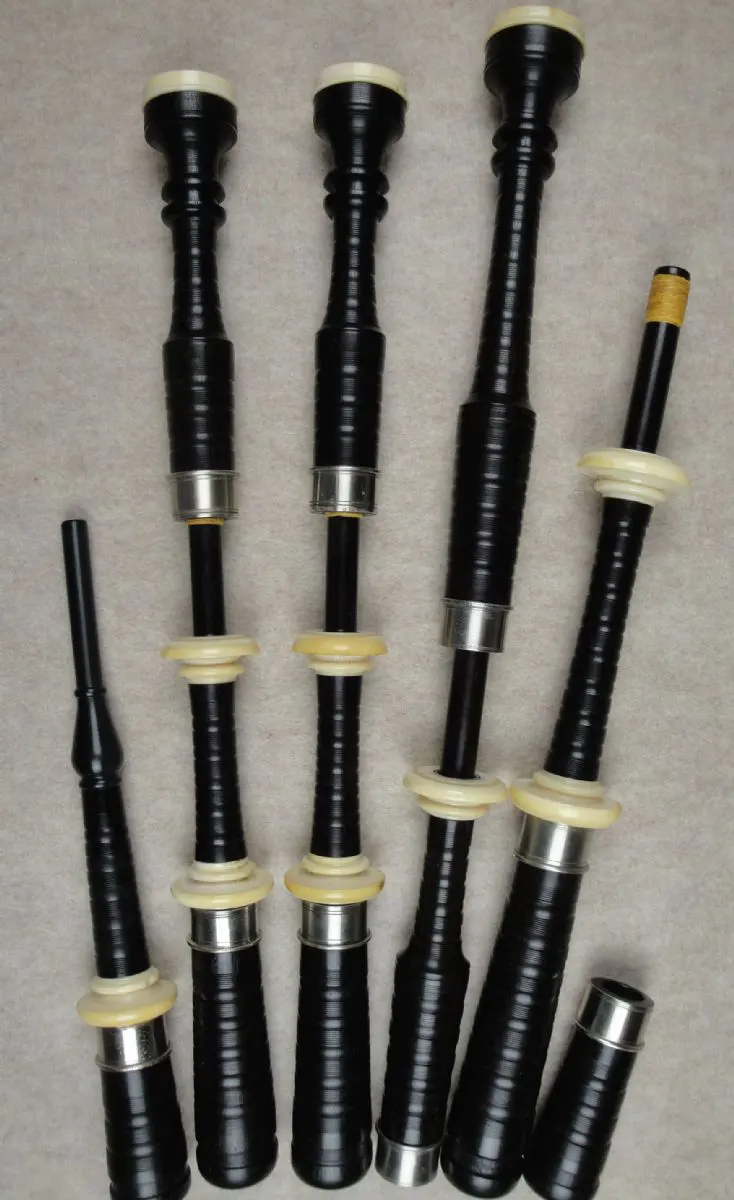
Unknown Cocuswood Set, Pre-1920s, Ivory, Nickel
SOLD – This set is an unusual visual misfit, but with an absolutely brilliant tone. I purchased it as an ebony set of unknown make. When the pipes were stripped to be refinished, they were found to be made entirely of very high quality cocuswood.
Not all the pieces or mounts match up externally, yet the overall visual effect is good. The projecting mounts and rings are ivory, the ferrules are nickel, likely added later. There are some chips in the ivory and some small splits in a couple of the ferrules. One of the bass projecting mounts is clearly a retrofit. The bass drone mid-joint had a surface crack which has been invisible whipped. The blowpipe is a new poly stick with the mount that came with the pipes.
Despite outward appearances, this set is tonally superior, very much in the Lawrie tradition: robust, rich, steady and easy to reed. If you’re looking for an affordable vintage set with a high-end sound, these are your pipes.
-
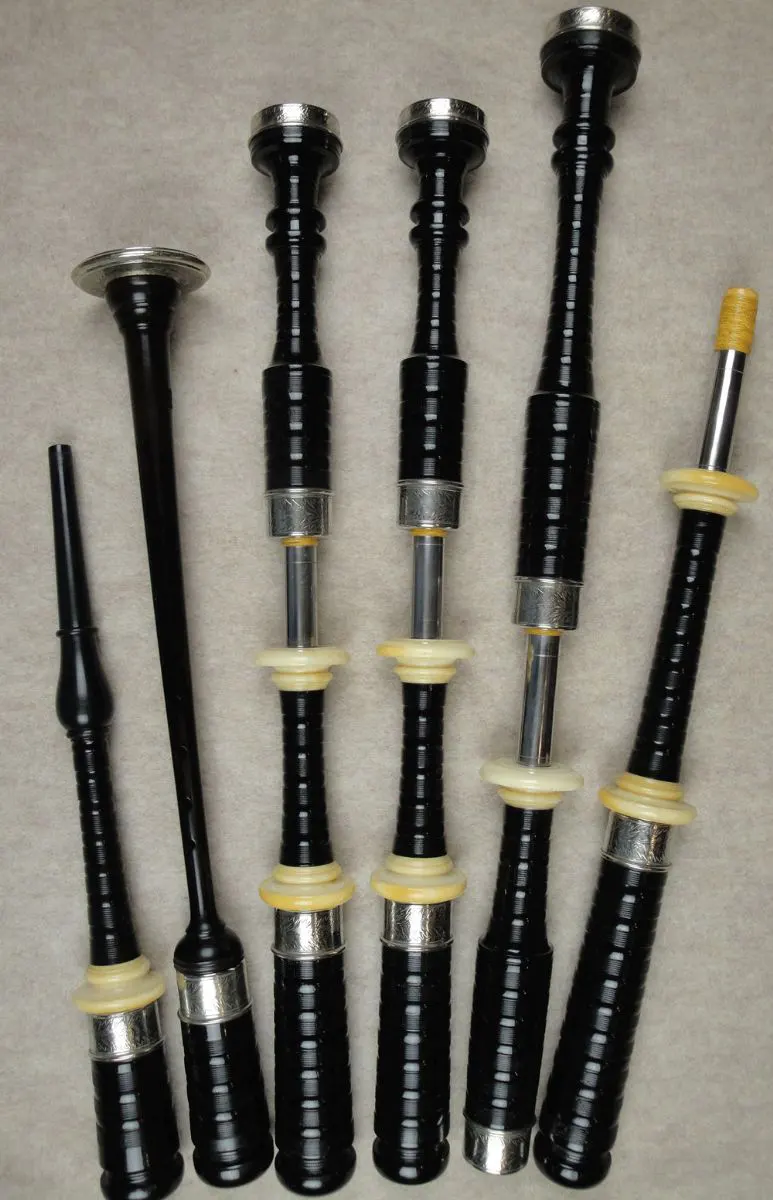
R. G. Lawrie, Pre-1920, Silver and Ivory
SOLD – Here is a set of Lawries from the company’s prime, likely from the time when John MacColl managed the pipemaking. The silver is not hallmarked, but the small bead on the ivory and upper profiles suggest very early Lawrie, perhaps even earlier than WW1.
It is difficult to tell what wood has been used since the lacquer finish hides it, but I suspect it is blackwood since the pipes appear to be free of cracks. The ivory has some minor dents, but overall the pipes are in superb shape.
The make of the chanter is unknown, but it plays well and appears fairly modern. The lack of a maker’s name on it suggests it might be a “back-door” item, likely a Sinclair.
The pipes are classic Lawrie: big, bold, steady, and with a velvety richness that permeates the room.
They appear to have lived their life in Scotland, and were played in the Muirhead & Sons band in Grade 1 during the 1960s and, more recently, the Boghall & Bathgate Grade 1 band.
These are classic vintage Lawries at their best.
-
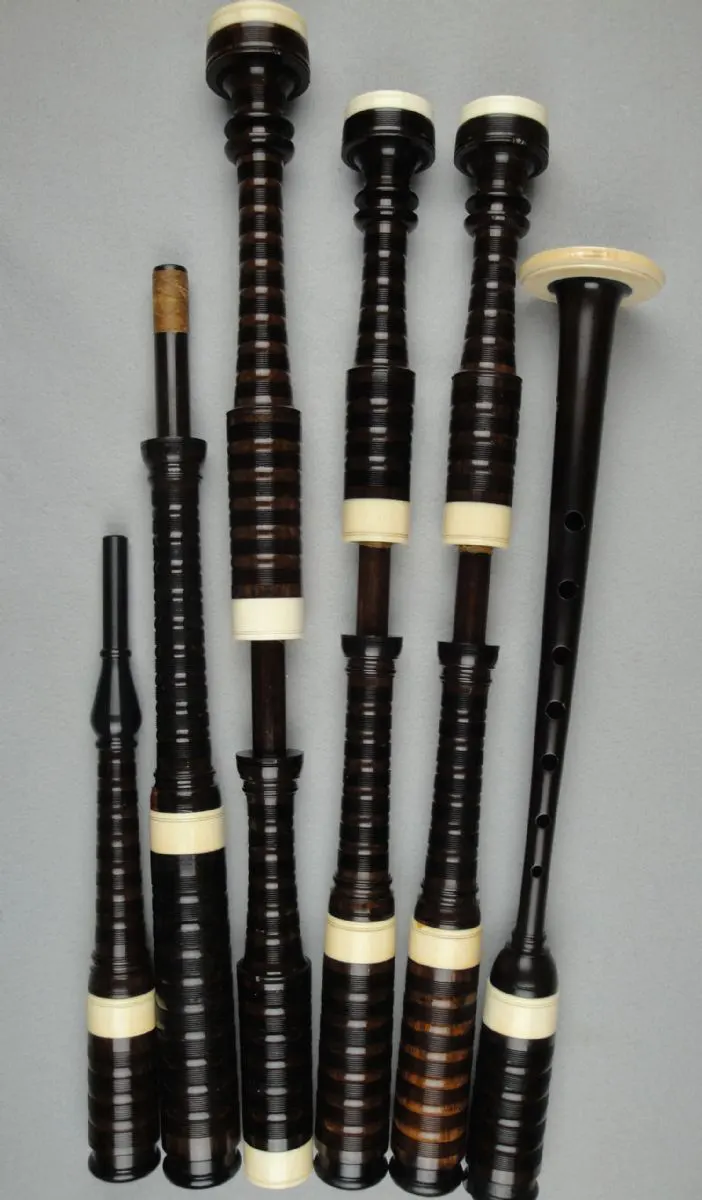
David Glen, Stamped, Circa 1900, Cocuswood, Ivory, Button Mounts
SOLD – If you want a David Glen bagpipe, cocuswood is the way to go. This set is in great shape, and has a vivid “David Glen and Sons, Edinburgh” stamp on the bass drone stock.
The pipes are mounted in ivory, with button projecting mounts. The caps are wood — cocus or ebony. The ivory is in supurb condition.
The drones and stocks are in great shape with no cracks. The blowstick has at some point cracked, but has been sealed and fitted with a copper sleeve. It was bored before the sleeve was installed, so there is no blowing restriction.
The chanter is original and was cracked, but has been completely restored. It plays well, albeit with a 1900 pitch.
Glen pipes are known to be “mellow” — another way of saying quiet. This set isn’t as mellow as some, and the rich buzz Glen gets from his drones makes up for any lack of volume. Glen’s steadiness is legendary. Showing David Glen’s outstanding craftsmanship, this is an outstanding set of pipes, and they sit on your shoulder as light as a feather.