
Working with vintage bagpipes is as much a hobby as a business for me. I enjoy the process of turning up old pipes and making sure they will be played for years to come. I think it is a good thing for piping. As such, I take great care in purchasing, examining and restoring old pipes.

My refurbisher is J. Dunbar Bagpipe Maker in St. Catharines, Ontario. Not only do they do masterful restorations, they have eagle eyes for examining 150-year-old wood and discovering replacement pieces and flaws that should be addressed before you play the pipes. If a set of pipes has a replacement or repaired piece, you will know about it before you buy.
You should know from the get-go that pretty much every bagpipe made before 1930 has required or will require repairs of some sort, especially if they are ebony. Ebony and cocuswood are superb woods from which to make bagpipes but they are less resilient than African blackwood. I suspect there is hardly an ebony bagpipe in the world made before 1920 that hasn’t experienced at least one crack.
Photos and descriptions of all instruments featured since October 2010
-
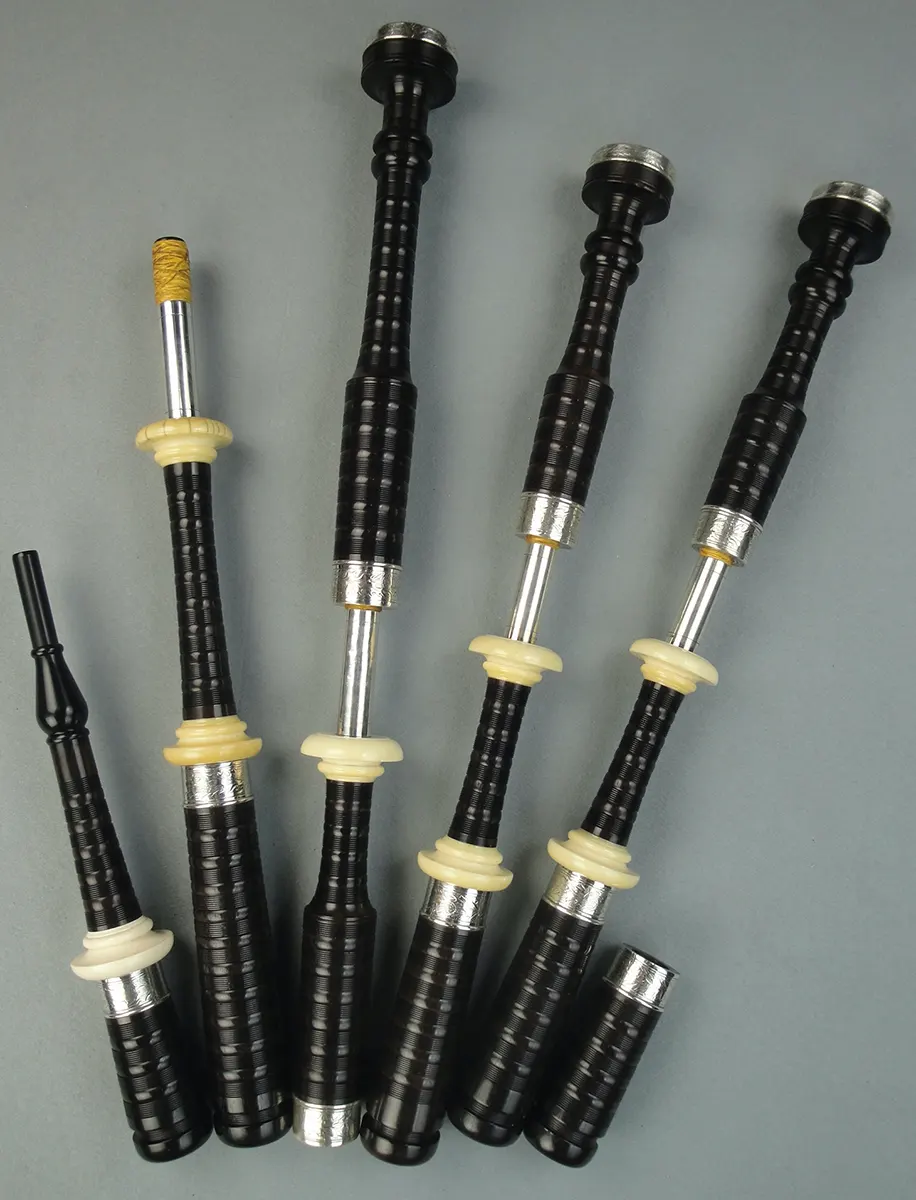
Inveran, 2002, Reclaimed Silver and Ivory
SOLD -In the year 2000, master player Brian Donaldson took over the Inveran Bagpipes shop founded by Jimmy Tweedie, a firm now resident in the United States.
This bagpipe was made by Brian Donaldson in 2002 using silver and ivory reclaimed from older sets. The ivory was taken from an early 1900s set — spider lines are clear on one of the bass projecting mounts. The ferrules and caps are silver, without hallmarks; the silver slides are hallmarked 2002. One tenor stock has been replaced using the original mount, and the blowpipe is a replacement with an imitation ivory mount. The top bass silver slide has some slight dents, and two of the stock ferrules have very slight splits in the seam that are stable.
The pipes have been refinished and hairlines under some ferrules fixed and the pipes now look splendid.
I played the drones for 10 minutes with my own Canning reeds and they were full, rock steady and showed great blend with the chanter. This bagpipe would be comfortable on any stage or on any parade.
-
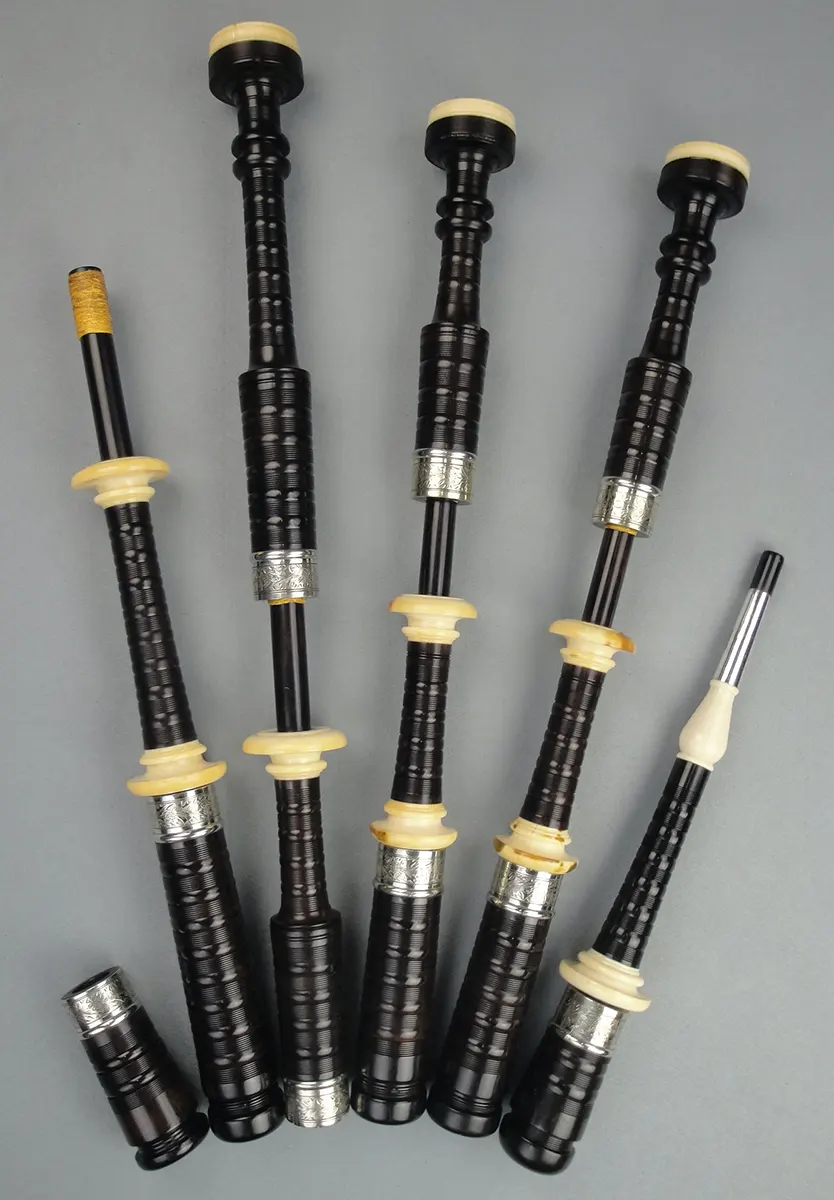
Center, Circa 1908, German Silver and Ivory
SOLD – John Center was a superb pipemaker (and photographer) who made pipes in Edinburgh from 1869 until 1908 before moving to Australia in that year. He died in 1913, but his son James (the subject of Willie Ross’s jig “Center’s Bonnet”) continued to run the business until his death from the Spanish flu in 1919. Pipes by the Centers are rare and distinctive both tonally and visually.
The fact that this set is African blackwood suggests it was made after 1900 as blackwood was coming into wider use over ebony and cocuswood. It may have been made in Australia.
The German may or may not be original to the set. The chanter stock looks distinctly like a Starck replacement, with the German silver ferrule retrofitted over top of ivory. The blowstick is a poly-lined/blackwood replica. The blowstick stock is not original, and the matching ferrule is split but solid and stable. The imitation ivory mouthpiece bulb is mounted with a Sterling silver sleeve. The drones and drone stocks are all original. There is some staining on the tenor projecting mounts.
The set was stripped and refinished; no cracks or hairlines were found.
Tonally, the set is magic. It’s a bold, seamless sound that held rock steady as I tested the pipes for 10 minutes with my reeds.
-
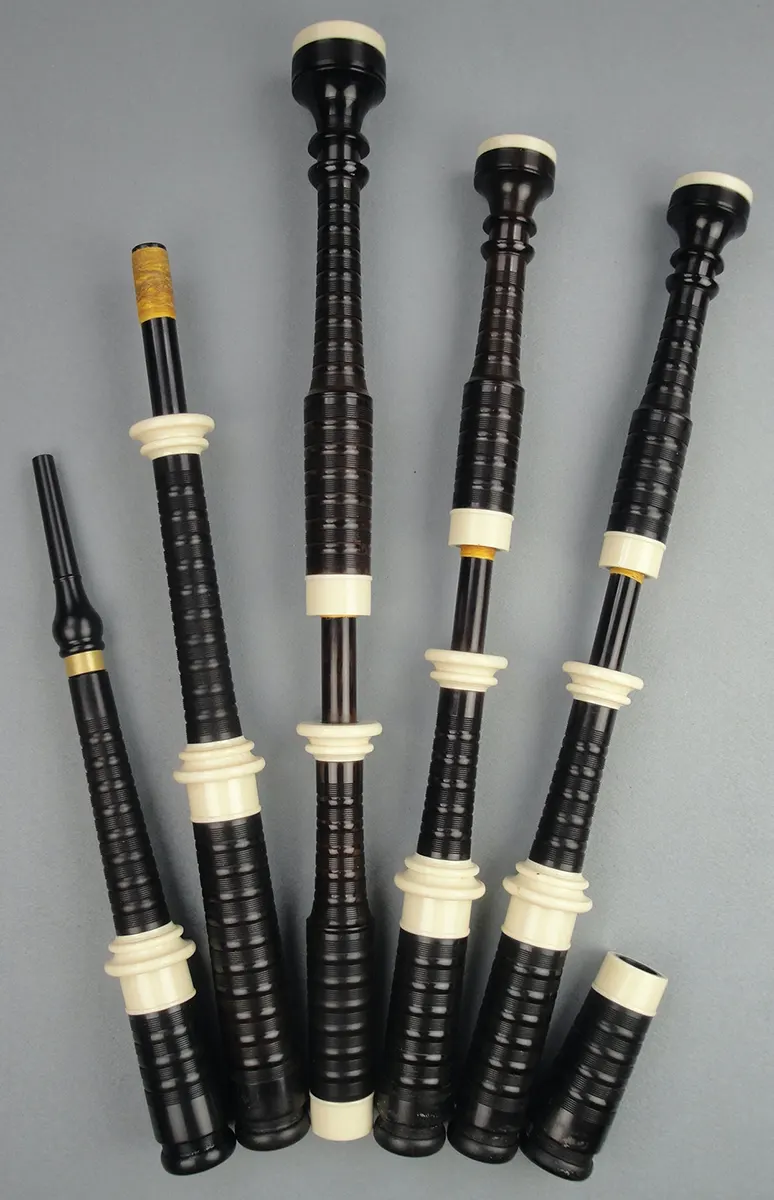
Atherton MD, 2009, Full Imitation Ivory
SOLD – This 2009 Dave Atherton “MD” set is modelled after a Duncan MacDougall set owned by the late Roddy MacDonald, Deleware. It is African blackwood and full imitation ivory.
Dave’s reputation as perhaps the premier modern pipemaker is well earned. His instruments are beautifully and meticulously crafted and display a bold and steady tone. Atherton pipes — in particular the MD — have been adopted by some of the world’s greatest pipers. The wood Dave used was exceptional, and these pipes are in demand.
This set came to me unblemished but for a very small chip in the bass ring, visible in the photos. Tuning chambers were still perfect. It played exactly like my own set, remarkably steady, full, and with lots of harmonics.
Some day this will be a premier vintage set. For now, it’s a premier modern set.
-
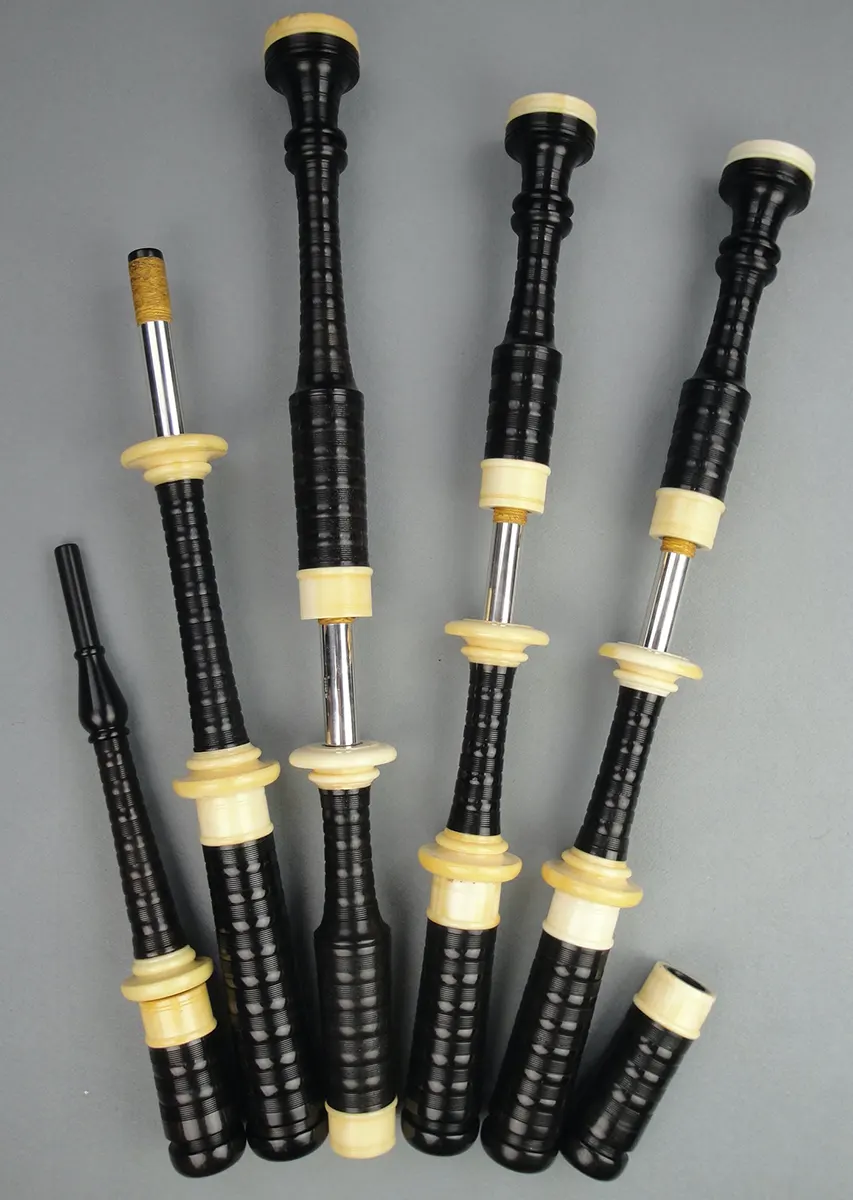
Lawrie, Circa 1905, Ebony, Full Ivory
SOLD – This Lawrie set is thought to date to 1905, give or take a few years. The fact that it is ebony supports the early date. The set is mounted in full ivory.
The pipes were stripped and a number of cracks and hairlines were found. These have all been invisible whipped and will give no more trouble. The blowstick stock is a poly-lined replica in blackwood with a mount that matches almost perfectly. The tuning chambers were evened up and the set was refinished. The tuning slides were nickel and not in very good shape. These have been replaced by Sterling silver slides, hallmarked 2016. The odd tiny chip in the ivory, including a pea sized chip in one tenor ferrule, is pretty typical of a pipe of this age.
The pipes played like a dream. Not quite as robust as blackwood, old ebony offers a steadiness and refinement of sound quite specific to that wood. These pipes locked in at first tuning and needed no touching up in the 10 minutes I played them. It was an inspired sound.
-
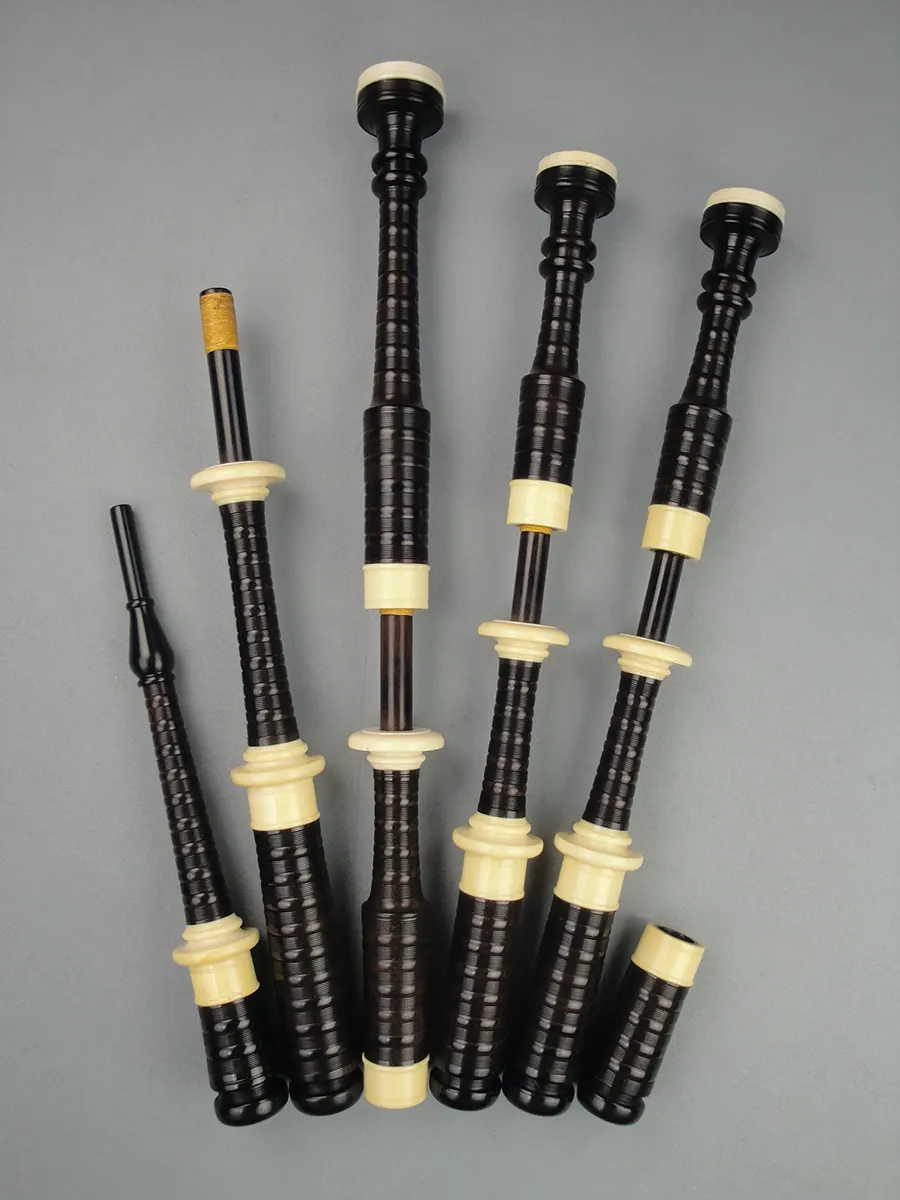
Henderson, Circa 1915, Full Ivory
SOLD – This is a tonally spectacular set of Hendersons, likely made in the years around 1915. At first glance this appeared to be cocuswood, but upon stripping the finish it was found to be African blackwood. The pipes are mounted in full ivory.
All pieces are original. There were the beginnings of cracks in several places, but these have been invisible whipped. There were the beginnings of a couple of wormholes that were filled. None of these repairs is visible, and none of them will be problems again. The tuning chambers were evened out.
I loved this set when I played it with my Canning drone reeds. It was robust, rock steady, tonally captivating, and the chanter just latched right onto the drone sound. This is a special set.
-
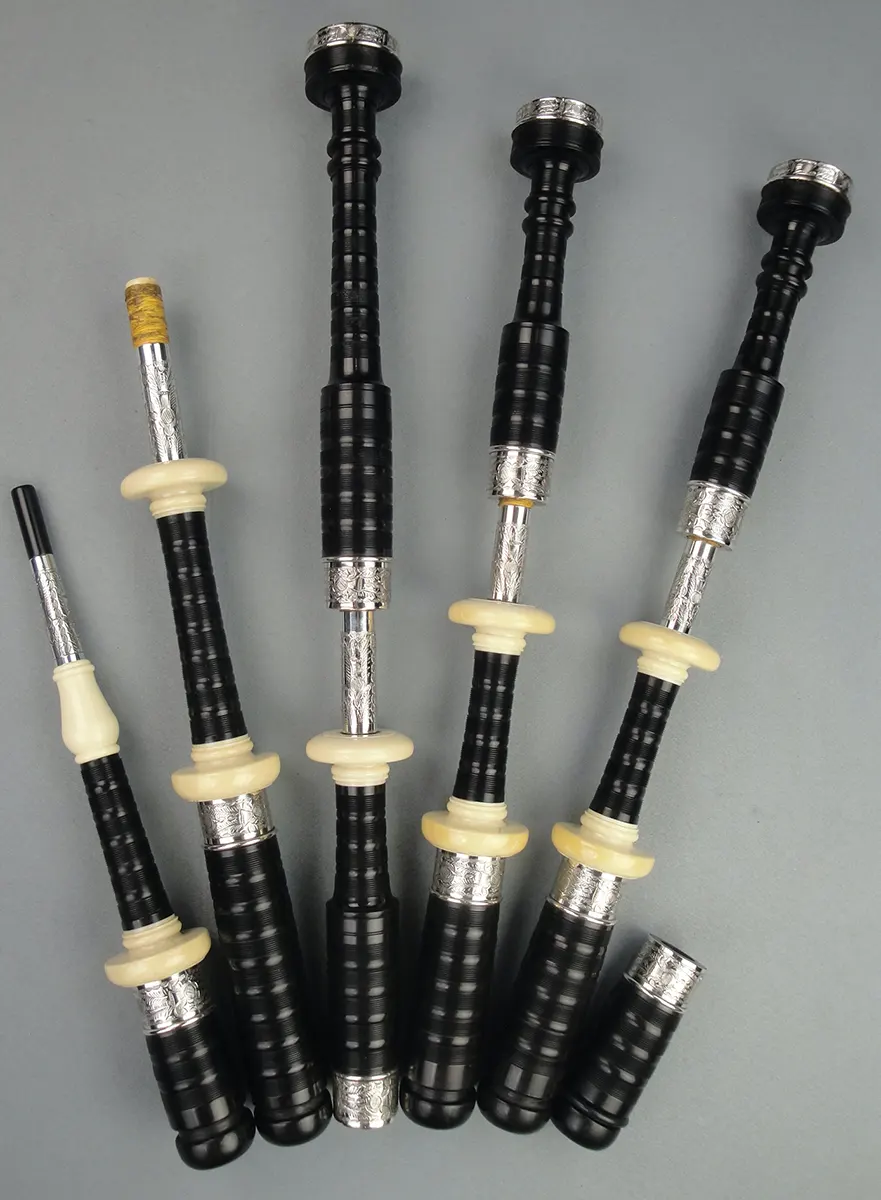
Robertson, Silver and Ivory, Hallmarked 1961
SOLD – We had a set almost identical to this on the site a few weeks ago, hallmarked 1960-61. This set has pieces hallmarked 1959, 1960 and 1961, so clearly Robertson kept a large stock of ready-to-go engraved silver, and the pipes were probably made in 1961.
The set was in great shape, requiring only a polish on the lathe and rehemping. One tenor lower projecting mount has a narrow crack that goes right through in the middle, but is quite secure around the edges, so it shouldn’t be a problem. The original ivory mouthpiece bulb was missing, so an imitation ivory bulb was made and fitted with the original silver sleeve.
The stocks have tapered bores, a practice adopted by Robertson during this period.
The pipes played boldly, brightly and steadily for me; the tenors tuned a bit low on the pins, but the drones showed great chanter blend.
-
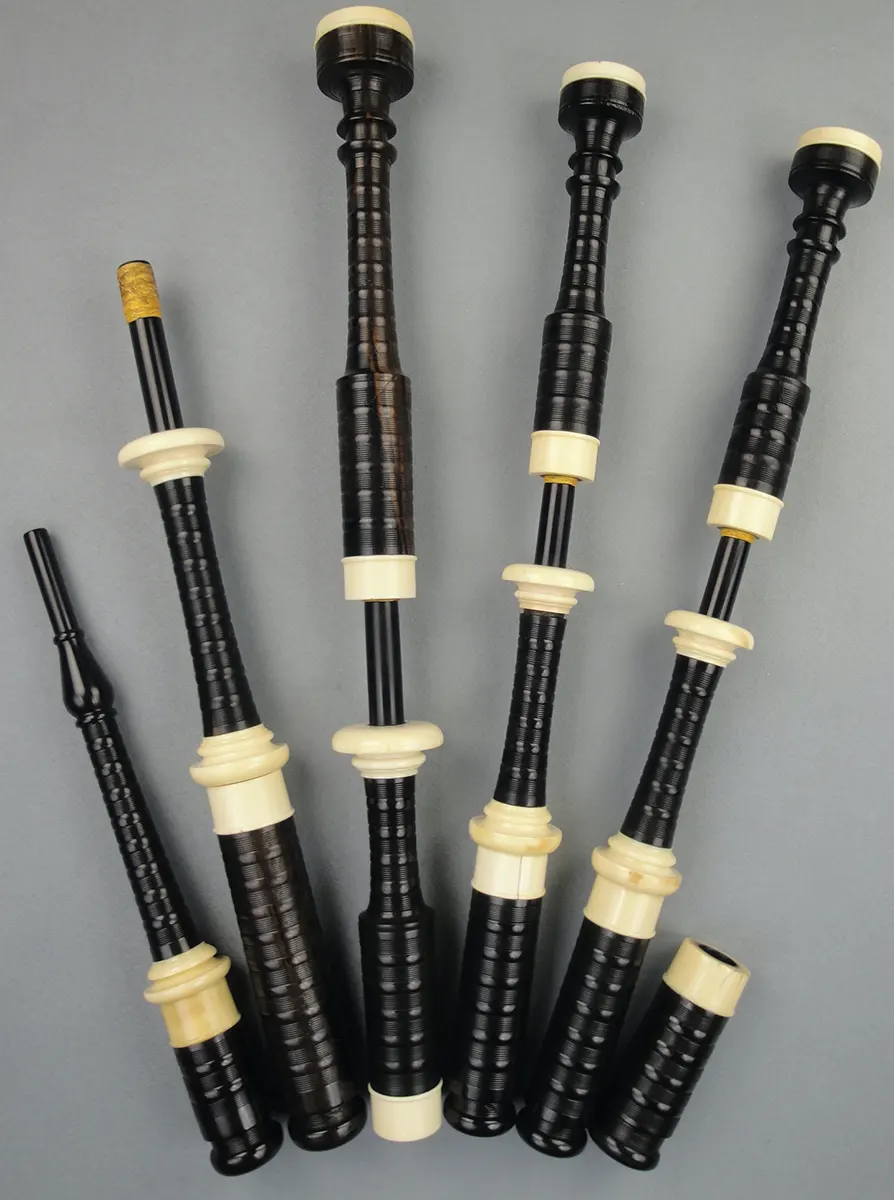
Duncan Macdougall, Circa 1890, Ebony, Marine Ivory
SOLD – Lovely MacDougalls like these come up periodically, and I’m always pleased when they do, because they are all good. It’s difficult to date Duncan MacDougall’s pipes from this period, but 10 years on either side of 1890 is probably accurate. The three wide cord guides, the distinctive ferrules and the elegant projecting mounts combine to make this a classic example of Duncan’s work.
The set came to me with some damage, almost all of it reparable. The only replacement pieces are the blowstick and blowstick stock. The stock is a poly-lined replacement with original mount; the blowstick is an old Glen with a Glen parrot’s beak mount and a copper sleeve in the bore. It’s a good match for the pipes. One stock ferrule has a crack that has been sealed and is visible in the photos. Being ebony of substantial age, there were a number of hairline and ‘beginner’ cracks in the sticks. We take no chances with ebony and these have been sealed and invisible whipped. One tenor projecting mount is not flush to the wood. Unfortunately even my reliable refurbishers at Dunbar Bagpipes could not get that mount loose, and that’s saying something. So the small gap visible in the pics is a permanent fixture.
The pipes were completely stripped and refinished and the tuning chambers were evened out.
The pipes played much like my own MacDougalls. They locked in with my Canning drone reeds and played me a seamless wall of sound for the 20 minutes I played them.
-
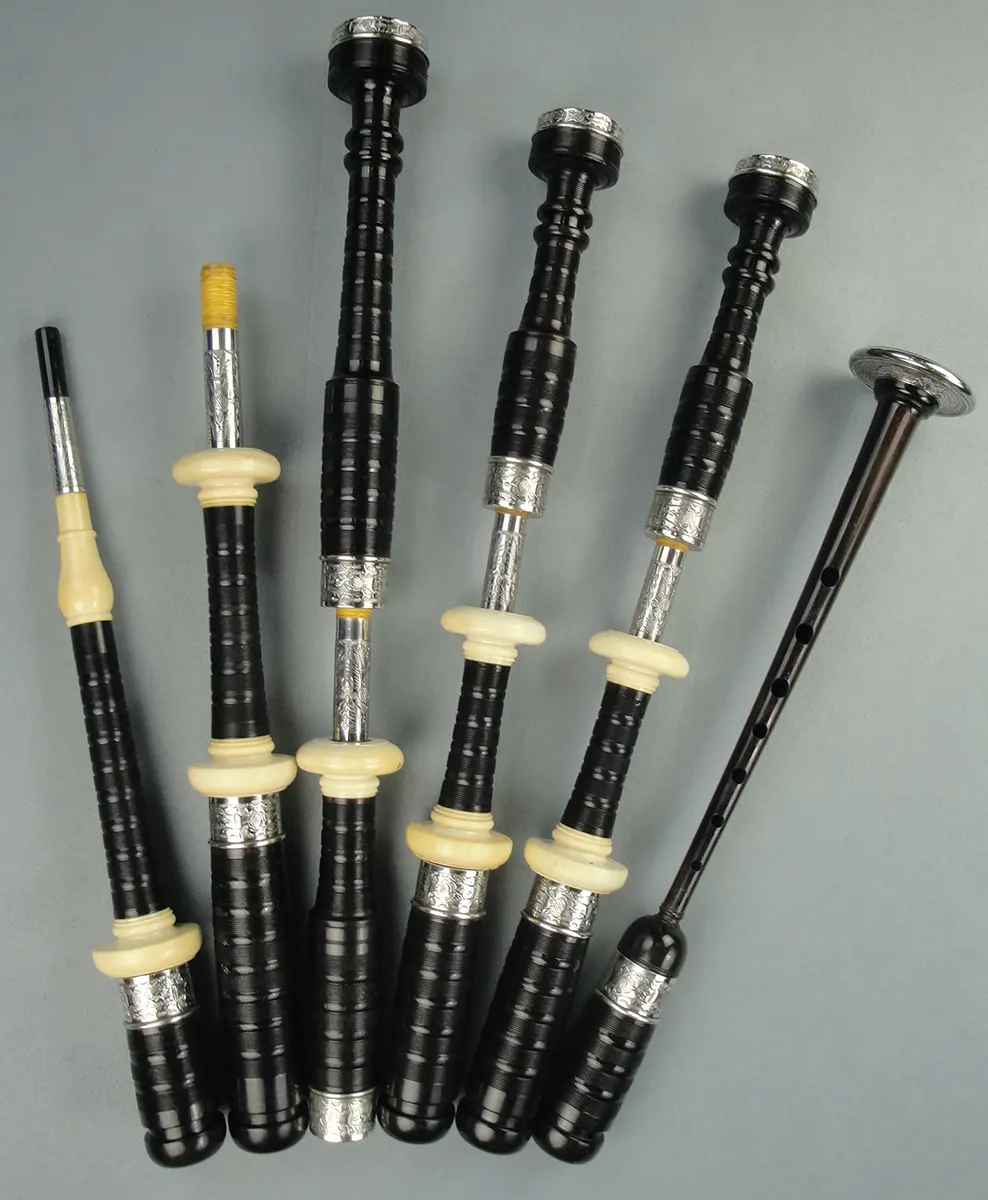
Robertson, Silver and Ivory, Hallmarked 1960-61
SOLD – This Robertson set displays the classic ‘mushroom’ ivory projecting mounts when they were most mushroom like, and it was made at a time when the Robertson company may have been at its best, 1960-61, as evidenced by the hallmark on each piece. The pipes needed no repairs, only a polish on the lathe. The tuning chambers were evened out.
The pipes still have their original finish and there are no replacement or repaired wood or ivory pieces. The chanter, silver sole, mouthpiece bulb and silver sleeve are all original. The silver sleeve had split on the seam, but this has been resealed.
The stocks are conically bored, meaning the bores are wider at the bottom than the top. Some makers believe this improves air flow to the drones for a steadier sound. Moisture control systems that insert into the bottoms of the stocks can’t be used with conically bored stocks.
As I always am with Robertsons, I was taken with the rich, robust tone and extreme steadiness of these drones, which I played for 35 minutes, touching them up only twice after the initial tune-up. They were just lovely — as good as Robertsons get.
-
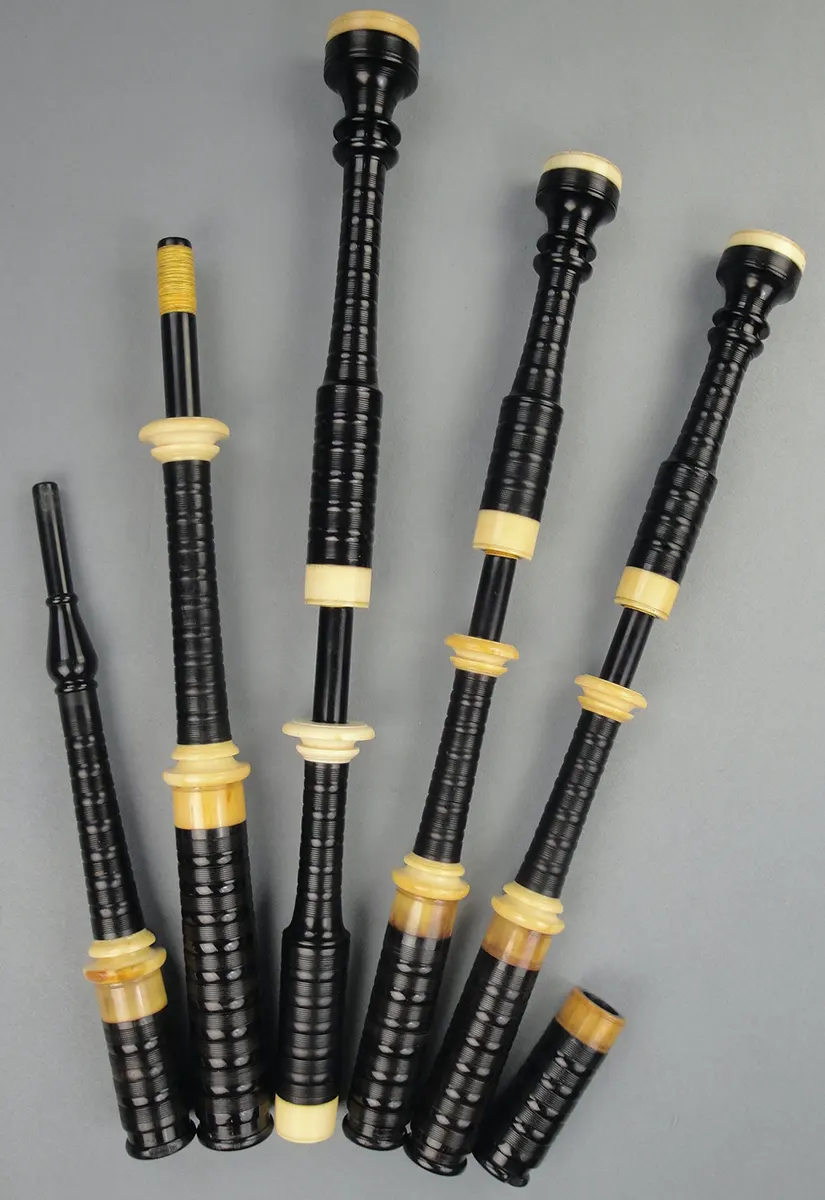
Alexander Glen Circa 1860, Ebony, Marine Ivory
SOLD – This set came through the shop in 2018 and found its way back to me, as many sets do after some years of use. The description below was written then. The photos are new and the pipes were tested anew.
Alexander Glen began making pipes in Edinburgh around 1835 and continued until his death in 1873. His son David was perhaps the most famous Glen in this pipemaking dynasty that spanned more than 120 years, but Alex set the original standard for craftsmanship.
This remarkable set came to me almost complete, lacking only its blowpipe. The wood is ebony and the mounts are marine ivory — walrus — which was used widely in pipemaking during the 19th century. The pipes display the narrow profiles and mounts typical of Edinburgh pipemakers during this period.
Unfortunately, the blowpipe stock and one tenor stock were cracked badly enough that it was best to make blackwood replicas. The blowpipe and blowpipe stock are poly-lined, with the projecting mount on the blowstick coming from an orphan tenor bottom in my collection that matched very well. A number of hairline cracks in the drone pieces were invisible whipped and will not recur. It would appear that one of the tenor bushings may have been replaced at some point in the distant past. The pipes have been completely refinished (2018).”
This is a lovely piece of antique history as well as a superb musical instrument.
The tone was sonorous, rich and steady, slightly fuller in sound than son David’s pipes.
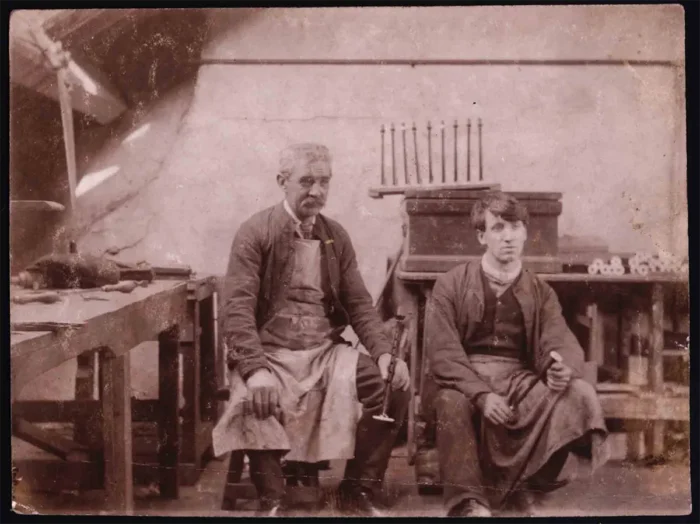
Alexander Glen with son David in their Edinburgh shop around 1870. -
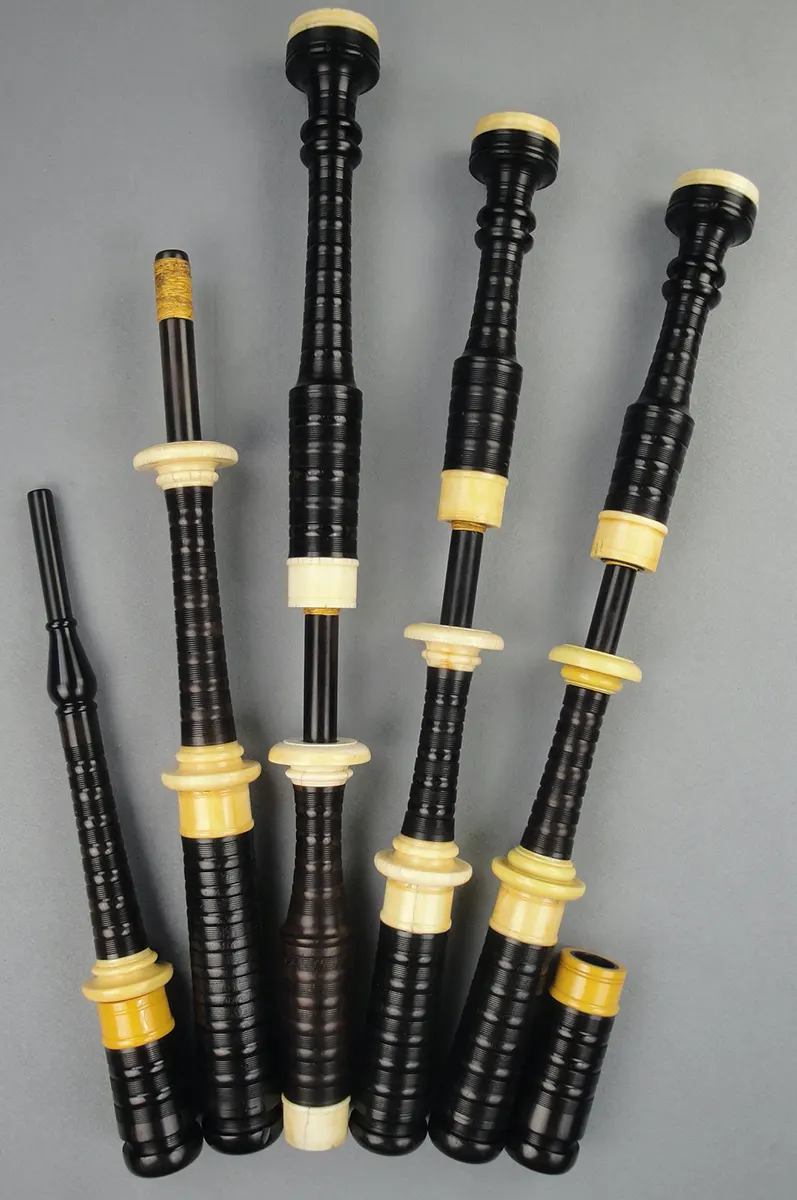
Henderson, Circa 1920, Full Ivory
SOLD – This is a Henderson bagpipe from the 1920s with two major alterations and two minor ones. One tenor drone bottom is not a Henderon but a Lawrie in imitation ivory from the 1930s. The bottom joint is a modern replica with the original mounts. The Chanter stock, blowpipe and blowpipe stock are replacement pieces mounted in imitation ivory. The blowpipe and stock are polypenco-lined.
One odd feature about this set is that the two tenor top ferrules are quite different, yet the wood pieces are absolutely identical.
These pipes played very well for me with the robust, steady and seamless sound characteristic of Henderson bagpipes of this period.
The pipes are priced with the above-mentioned compromises in mind.
-
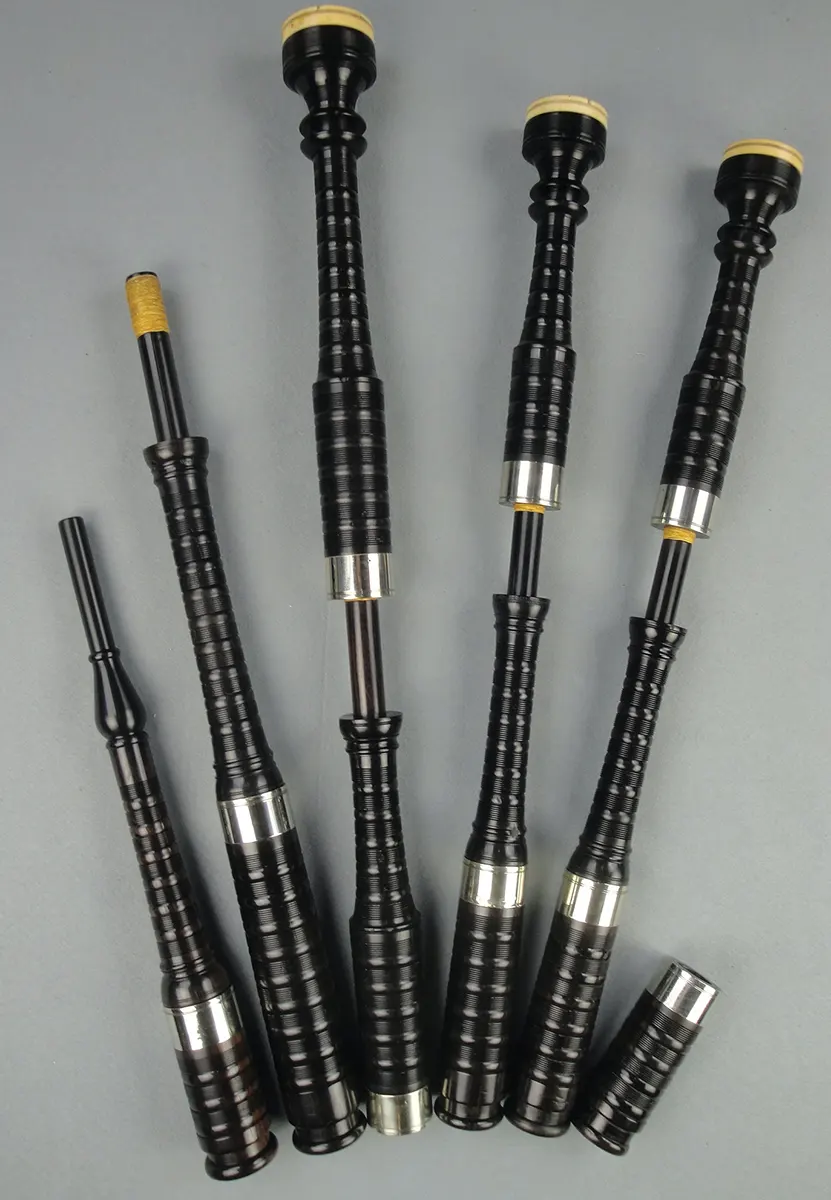
Unknown Edinburgh Bagpipe, Circa 1890s, Ebony, Nickel, Ivory
SOLD – It can be difficult to determine the make and age of button-mount pipes because projecting mounts are such an important visual identifier. This set came to me with no known maker, but a distinctly Edinburgh appearance. Guesses as to maker have included Hutcheon, J&R Glen, and possibly Thow, but this may just remain a mystery set.
The pipes are ebony, with nickel ferrules and ivory rings. Being ebony, we had the pipes stripped, and being ebony, there were some hairline cracks to be invisible whipped. The blowstick and blowstick stock are poly-lined replacements. The pipes have been refinished.
-
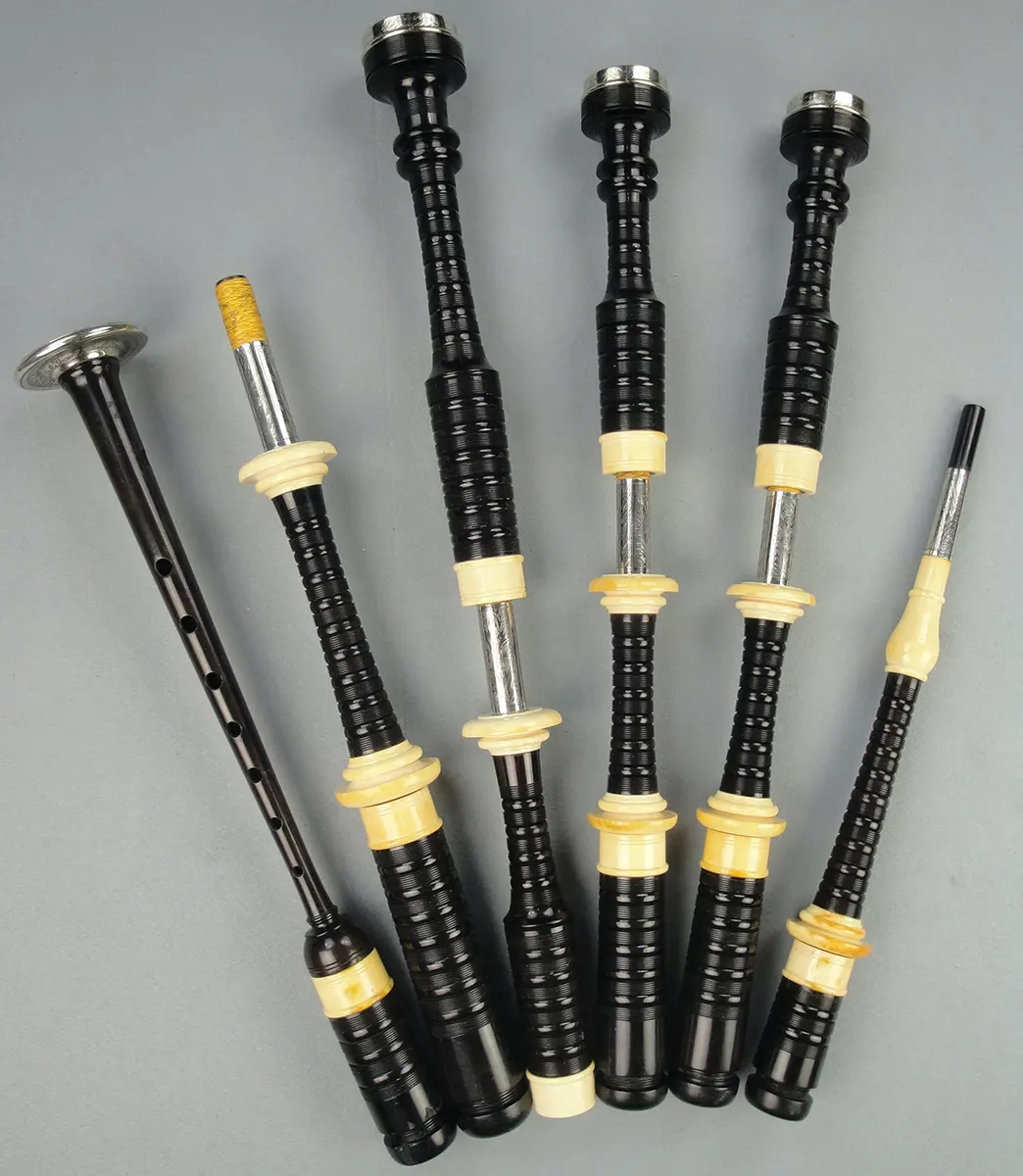
Starck, Circa 1930, German Silver and Ivory
SOLD – This bagpipe was presented to me as a Glen instrument because the J & R Glen name was engraved on the chanter sole (visible in the picture below). However, the deeply cut beads on the wood are the most distinctive feature on pipes made by the Henry Starck company. Henry Starck, a German woodwind maker living in London, was convinced by William Ross, the Queen’s Piper, to make bagpipes for him. And what a bagpipe he made from the late 1880s onward! Early Starcks are superbly made and very toneful.
It would appear that at some point this set had the engraved German silver caps and slides added, almost certainly by the J & R Glen company, given their stamp (but no hallmark) on the chanter sole.
All pieces appear to be original, but for the mouthpiece sleeve, which is a match for the thistle engraving but is actually hallmarked silver. The chanter is a J & R Glen, which must have been acquired along with the engraving. The chanter sole is detached from the chanter and can be installed on any modern chanter.
The pipes came crack free and in great shape, requiring only a clean-and-polish on the lathe. They were robust and rock steady on my shoulder, with a great chanter blend.