
Working with vintage bagpipes is as much a hobby as a business for me. I enjoy the process of turning up old pipes and making sure they will be played for years to come. I think it is a good thing for piping. As such, I take great care in purchasing, examining and restoring old pipes.

My refurbisher is J. Dunbar Bagpipe Maker in St. Catharines, Ontario. Not only do they do masterful restorations, they have eagle eyes for examining 150-year-old wood and discovering replacement pieces and flaws that should be addressed before you play the pipes. If a set of pipes has a replacement or repaired piece, you will know about it before you buy.
You should know from the get-go that pretty much every bagpipe made before 1930 has required or will require repairs of some sort, especially if they are ebony. Ebony and cocuswood are superb woods from which to make bagpipes but they are less resilient than African blackwood. I suspect there is hardly an ebony bagpipe in the world made before 1920 that hasn’t experienced at least one crack.
Photos and descriptions of all instruments featured since October 2010
-
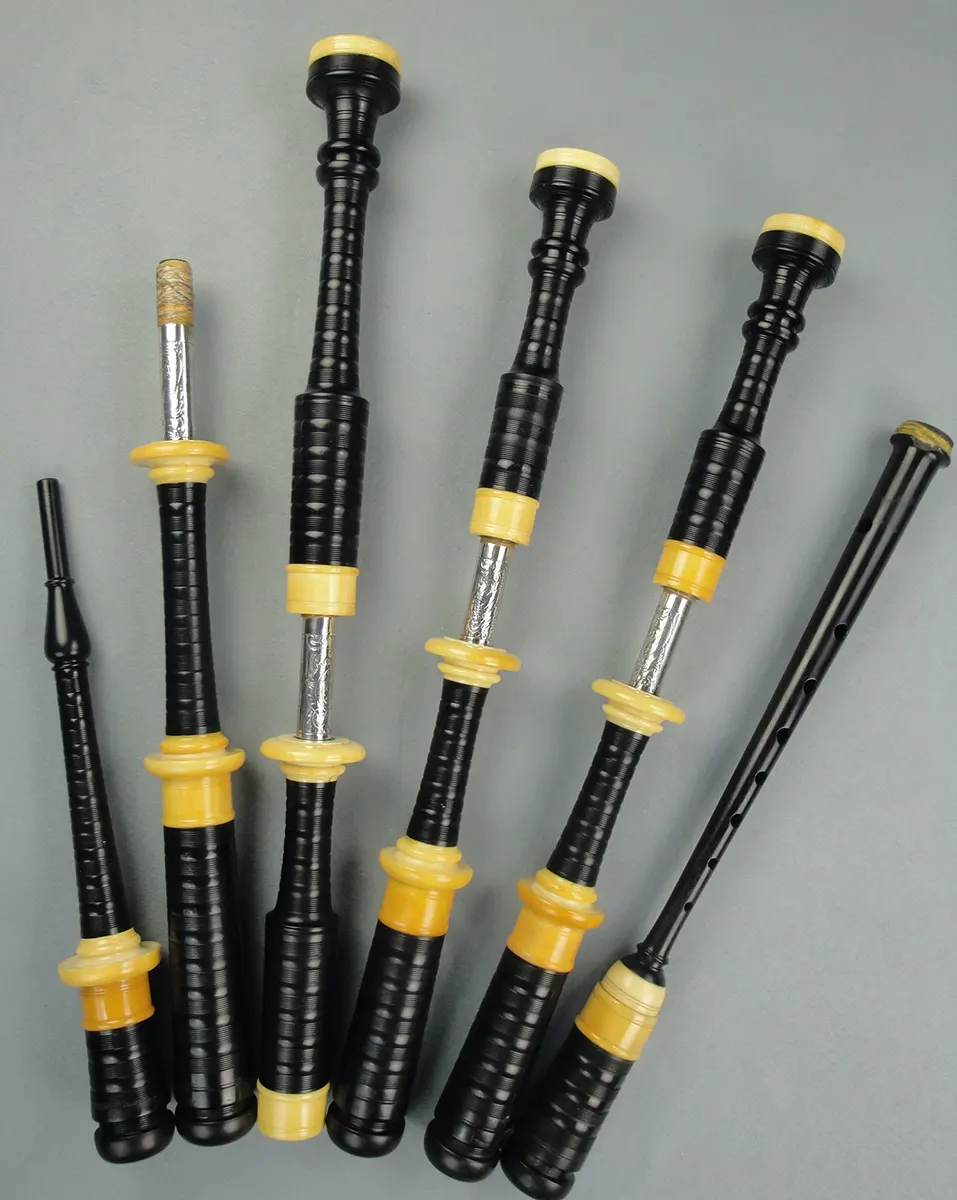
Henderson, 1931, African Blackwood, Ivory, Engraved Silver Slides Hallmarked
SOLD – The silver slides hallmarked 1931 suggest an exact year of manufacture for this Henderson set. The lovely, aged amber appearance of the ivory, the general profiles of the pieces and the fact that the silver maker’s mark is PH, for Peter Henderson, all suggest that the slides are original to the pipes and the pipes were made in 1931-32.
The pipes came with a section of one tenor top that was missing three combed sections. This combing was subsequently added by Dunbar Bagpipes. The work is slightly visible up close to the piece. The chanter stock was cracked, but has since been invisible whipped and should give no more problems. It would appear that the blowstick stock ferrule, if not the whole stock, is a replacement. The ferrule on the stock appears to be catalin, but a pretty reasonable match to the rest of the set. The chanter is a Henderson, but not original to the set.
These played like classic Hendersons, bold, steady and seamless, and came into tune quickly with my Canning drone reeds.
-
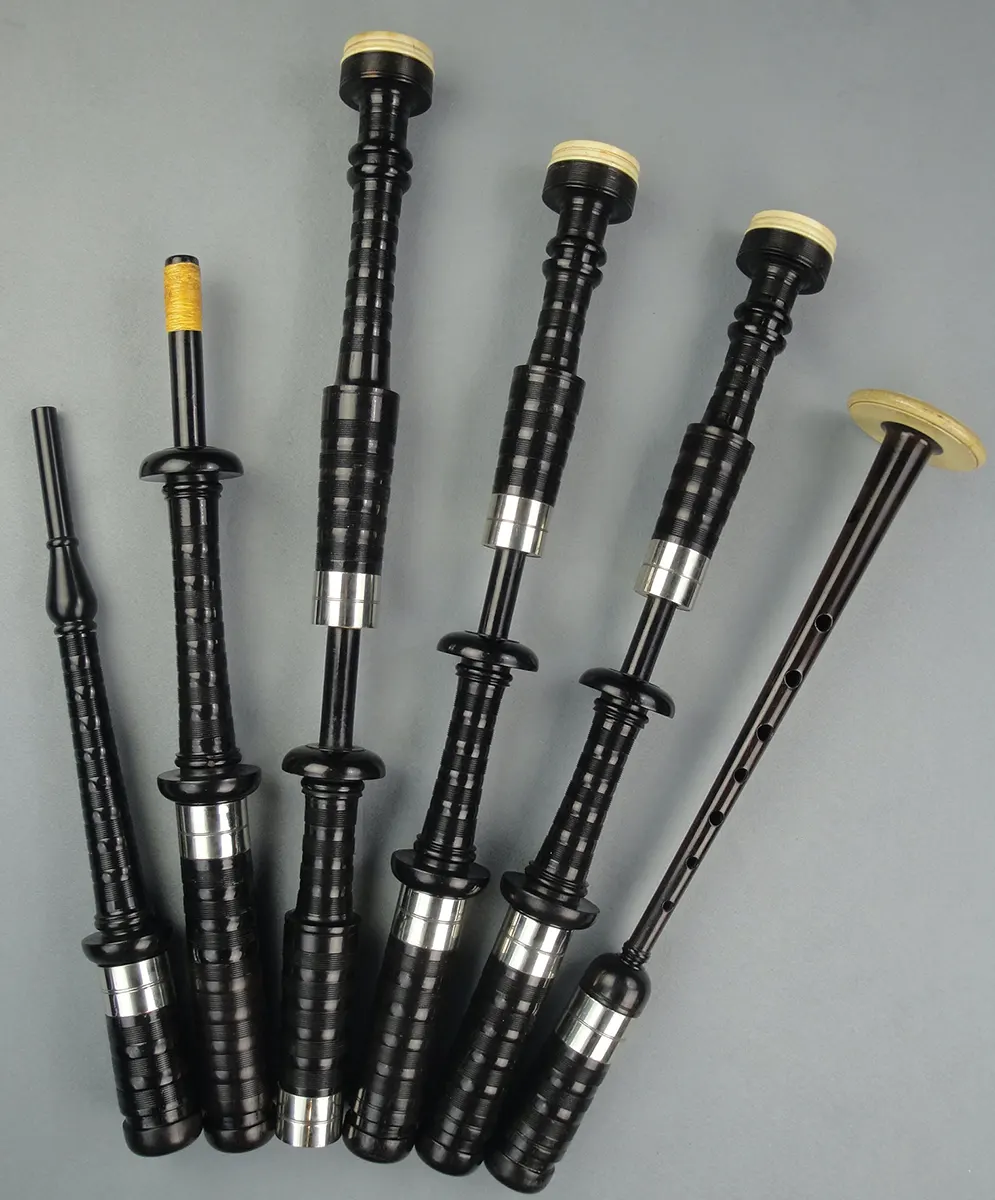
Robertson, Circa 1930s, African Blackwood, Nickel, Casein
SOLD – The double scribe lines in the middle of the ferrules tell us right away that this is a Robertson bagpipe from the 1920s. Other features such as the wood projecting mount shapes, the square profiles of the upper pieces and the casein ring caps complete the Robertson identification.
The set needed no repairs, only a polish on the lathe. The blowpipe came with a copper insert, suggesting it may have cracked at some time, but no crack is visible.
The casein is in excellent shape — not chalky and mottled as is usual. It looks as though it has been skimmed and polished on a lathe, renewing its original patina. The chanter appears original to the set, though the casein sole has not been skimmed.
The pipes played well, the tenors tuning lower than usual. The drones locked in nicely with my Canning reeds, and displayed typical Robertson steadiness and richness.
-
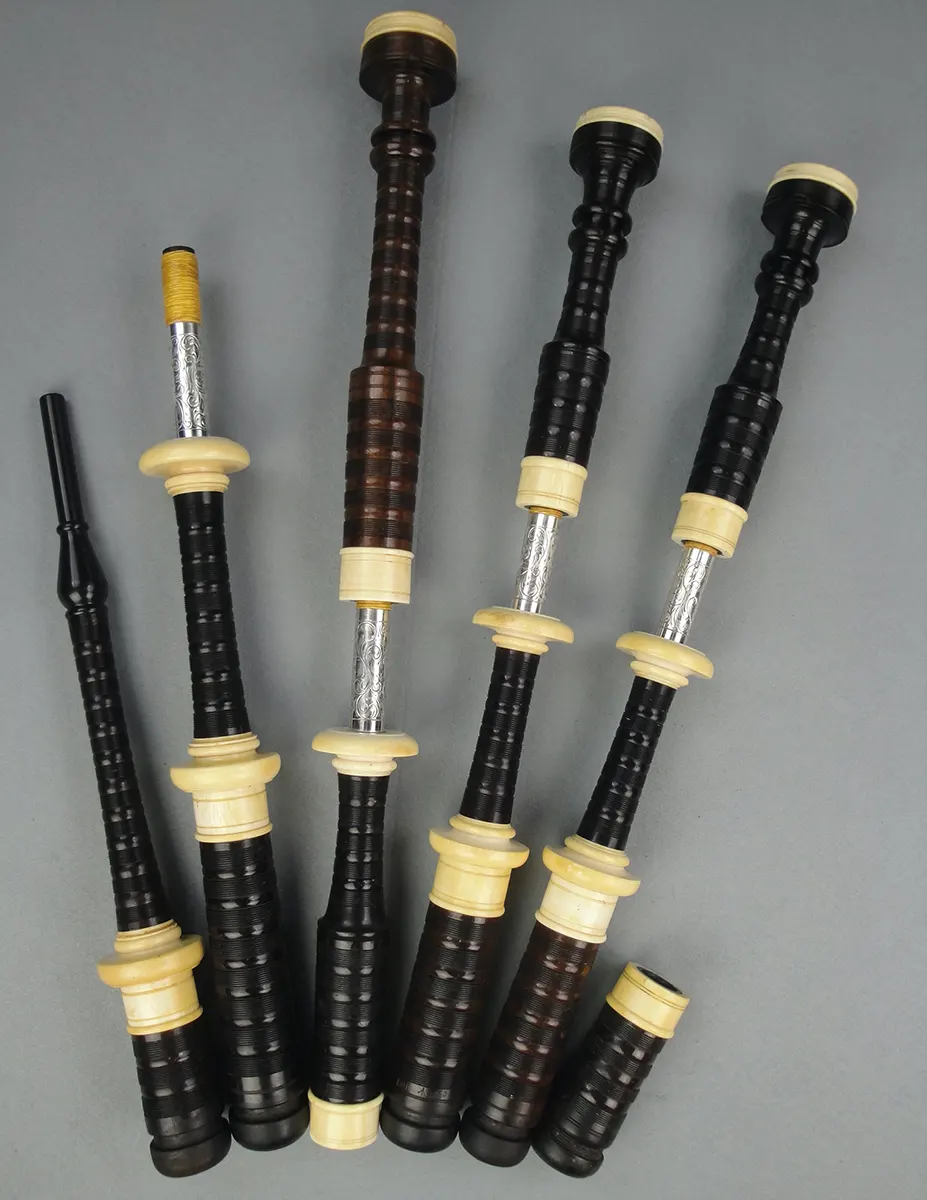
Mixed Parts, Circa 1930s
SOLD – This instrument came to me just as it is. It is a mix of three premier pipemakers: Henderson, Lawrie and Robertson. One tenor drone appears to be Henderson, the other a Lawrie. The bass top and bottom are Robertson, and the bass mid-joint is Henderson. All stocks but the chanter stock are Robertson. The blowstick is a Robertson. All of the pieces are thought to originate in the 1930s. At some point all of the tuning slides were fitted with engraved sleeves which appear to be silver, though they are not hallmarked.
As you might expect from pieces from renown pipemakers, the pipes play very well. Full and rich, they locked in nicely with my Canning drone reeds.
All of the pieces are in excellent shape, though one tenor stock has a small gouge of it it. The ivory has some minor staining issues.
The only provenance known for this set is that it came out of the estate of Bill Burnett, former co-owner of Burnetts and Struth Scottish Regalia in Ontario. Bill passed away in the early 2000s, so the pipes have been dormant since then.
-
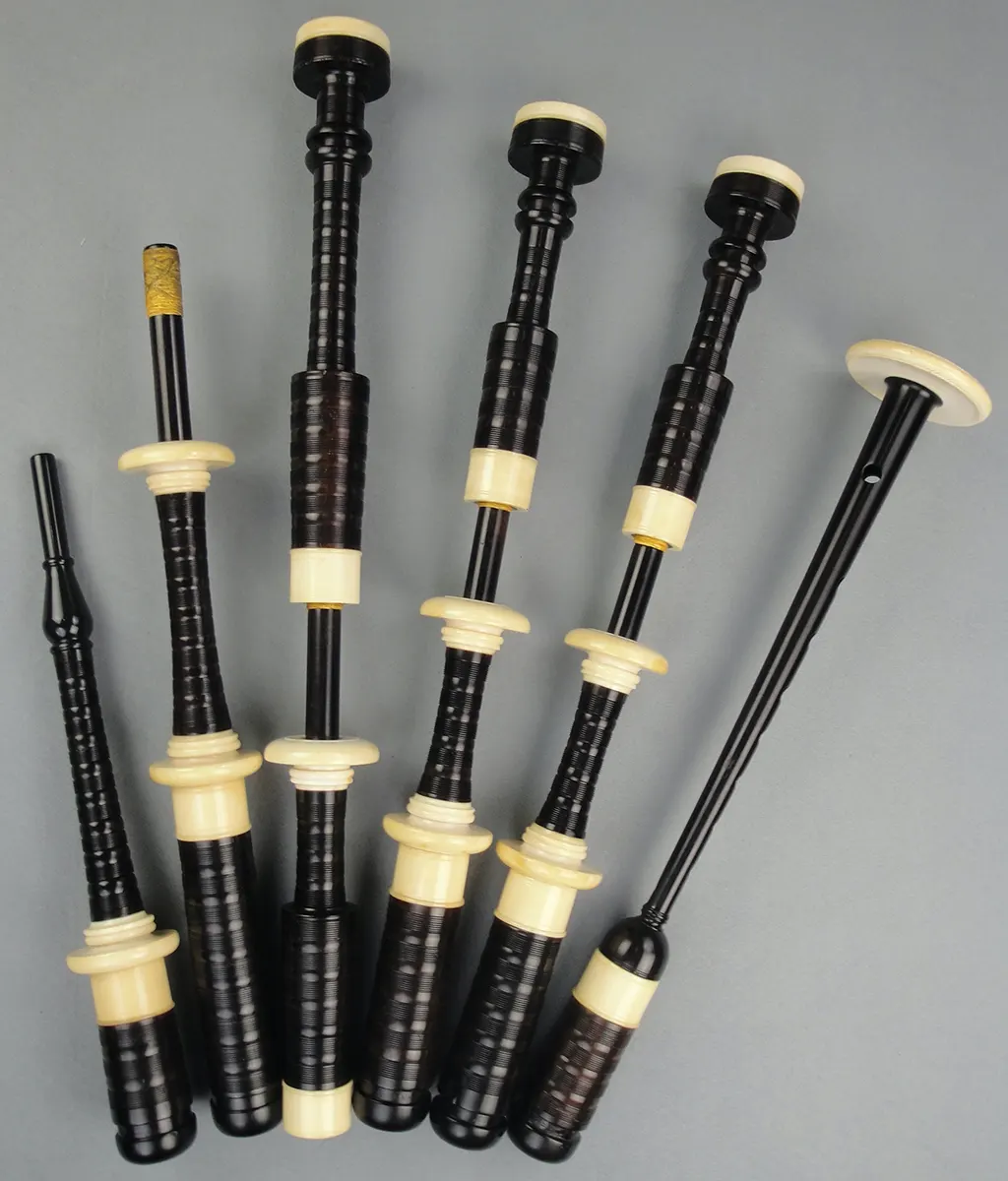
Robertson, Full Ivory, Circa 1930s
SOLD – We’ve had a few Robertson pipes on the site recently. This set appears to date from the 1930s, perhaps the early part of that decade. The mushroom mounts are more subdued and as close to a ‘standard’ look as Robertson ever got. The ferrules are long with a small bead, and the double scribe lines have migrated from the middle of the ferrule in the 1920s to the bottom in the 1930s.
The set came to me with some minor hairline cracks under ferrules. These were fixed and will cause no more trouble. The bass mid-joint came with a brass sleeve in the tuning chamber, likely to counter a small crack which has now been addressed with invisible whipping. The set has been stripped and refinished. It comes with what is most likely the original chanter, though a 100-year-old chanter is more a curiosity than something you would play.
These pipes played beautifully with my reeds and chanter in typical Robertson fashion — full, rich and steady.
James Robertson made pipes in Edinburgh as early as 1908. He died in 1948 but the high tonal and manufacturing standard he set was maintained until the company ceased operations in 1965.
-
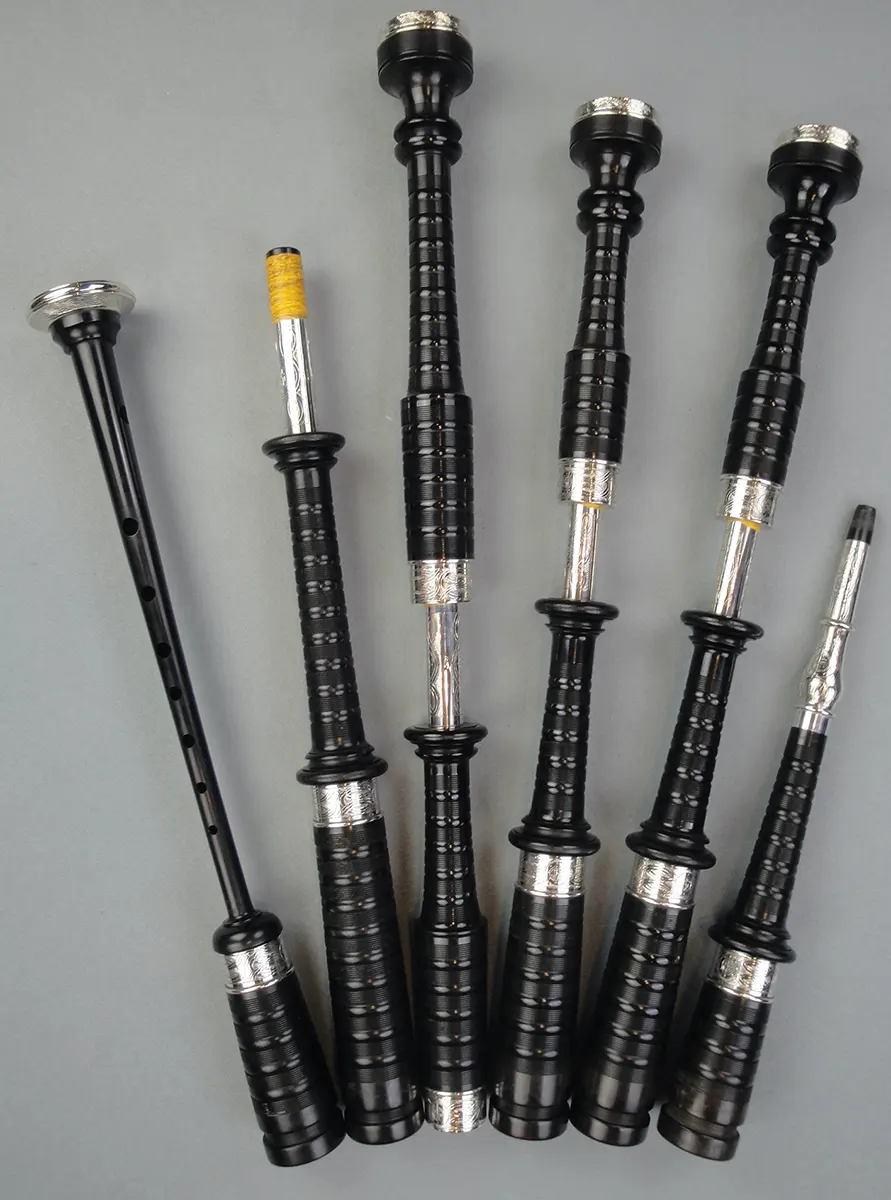
C. E. Kron ‘Standard’, 2006, Silver, Blackwood Mounts
SOLD – This Kron ‘Standard’ set was made by Dave Atherton in Charley Kron’s shop and is hallmarked 2006.
I sold the bagpipe originally to the first owner, and purchased it back from the second. The set has been well taken care of and is in mint condition. It is beautifully made, as were all of Dave Atherton’s bagpipes.
Charley Kron has made bagpipes in Dobbs Ferry NY since he learned the trade from former James Robertson employee and Scots Guards Pipe Major George Kilgour in the mid-1980s. Dave Atherton raised the profile of the company in the early 2000s, becoming known as an extraordinary craftsman, meticulous with wood selection and turning detail. Dave would subsequently leave the firm.
This bagpipe played beautifully on my shoulder, steady and full, silver gleaming.
It comes with its original Kron Medallist chanter and sole. The blowpipe is brass lined, and the mouthpiece bulb is solid silver.
-
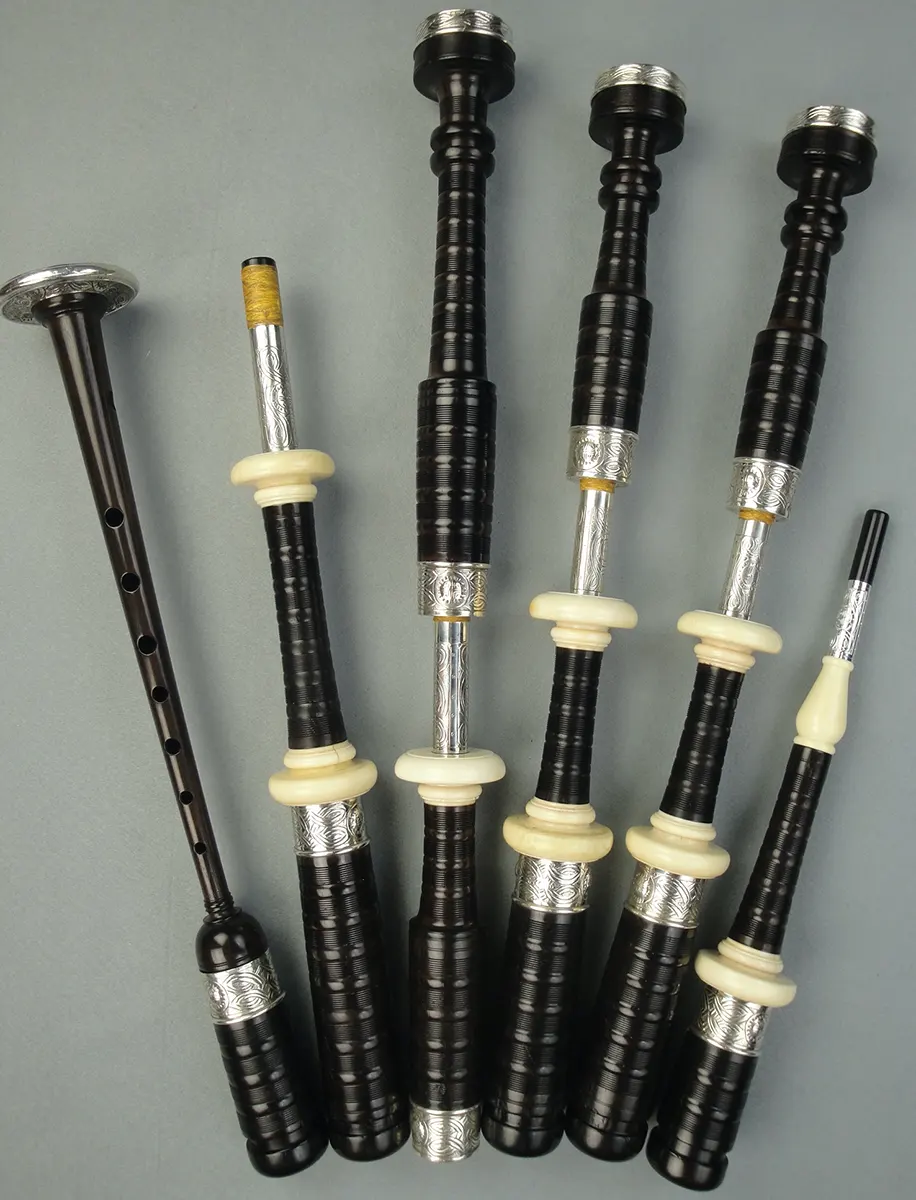
Robertson, Silver and Ivory, Hallmarked 1947-48
SOLD – James Robertson made pipes in Edinburgh as early as 1908. He died in 1948 but the high tonal and manufacturing standard he set was maintained until the company ceased operations in 1965.
This is a classic silver and ivory Robertson, with every piece hallmarked 1947-48 except for the mouthpiece tube, which is matching hand-engraved nickel alloy on an imitation ivory bulb.
The set arrived in excellent shape — including the original chanter and sole. The finish was well worn, so the pipes underwent a full strip-and-refinish. This uncovered hairline cracks in the bass top, chanter stock and blowpipe which have been invisible whipped and will not cause trouble. As might be expected of a 73-year-old set, the wood has a few nicks here and there, and the ivory a bit of staining and spider cracking, but the set is solid and ready for another 70 more years.
The drones played like so many other great Robertson sets I’ve known: steady, rich and bold. Robertsons are vastly underrated pipes by a vintage piping population intent on Hendersons. They should be seen more regularly at the highest levels.
-
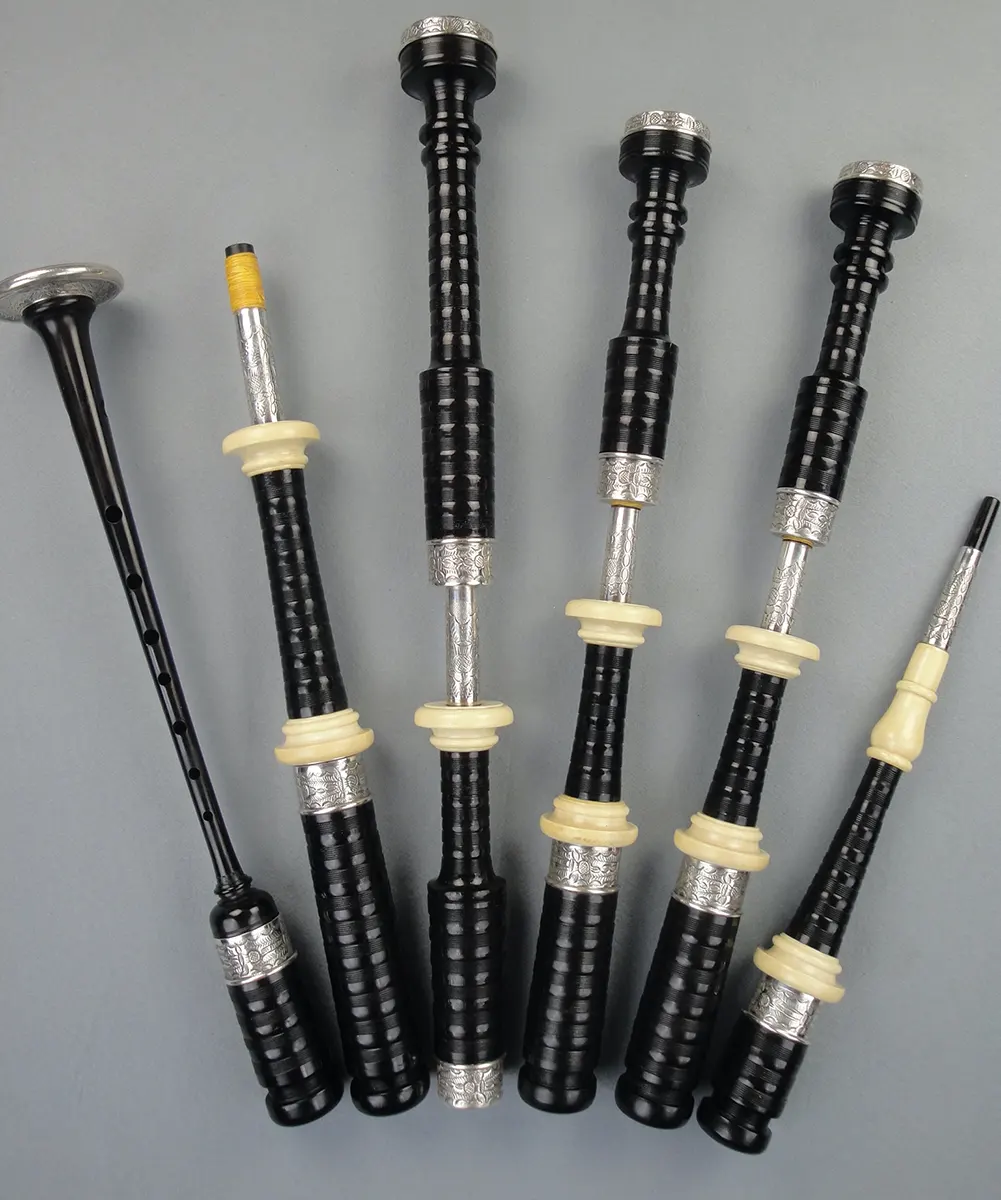
Grainger and Campbell, Silver and Ivory, Hallmarked 1973-74
SOLD – We have two sets of Grainger and Campbell silver and ivory pipes on the set at present, and they are nearly twins.
The Grainger and Campbell pipemaking company operated in Glasgow beginning in 1946. In 1952 they took over the premises and machinery from the defunct Duncan MacRae firm. They made bagpipes of excellent quality until the company closed in 1989.
This silver and ivory set is hallmarked 1973-74 on every piece.
The set is in superb condition, requiring only a good polishing on the lathe and re-truing a couple of the tuning chambers. The original Grainger chanter is still with the pipes. But the original silver sole has been affixed to a Naill blackwood chanter. I don’t know the vintage of the chanter, but I believe it is quite modern. It plays very well. The original Grainger chanter would have played well in it day, though it would be low-pitched in today’s piping world and difficult to reed.
The set also has its original silver and ivory mouthpiece.
As expected, the drones on this set were robust and very steady, locking into tune nicely with my Canning drone reeds.
-
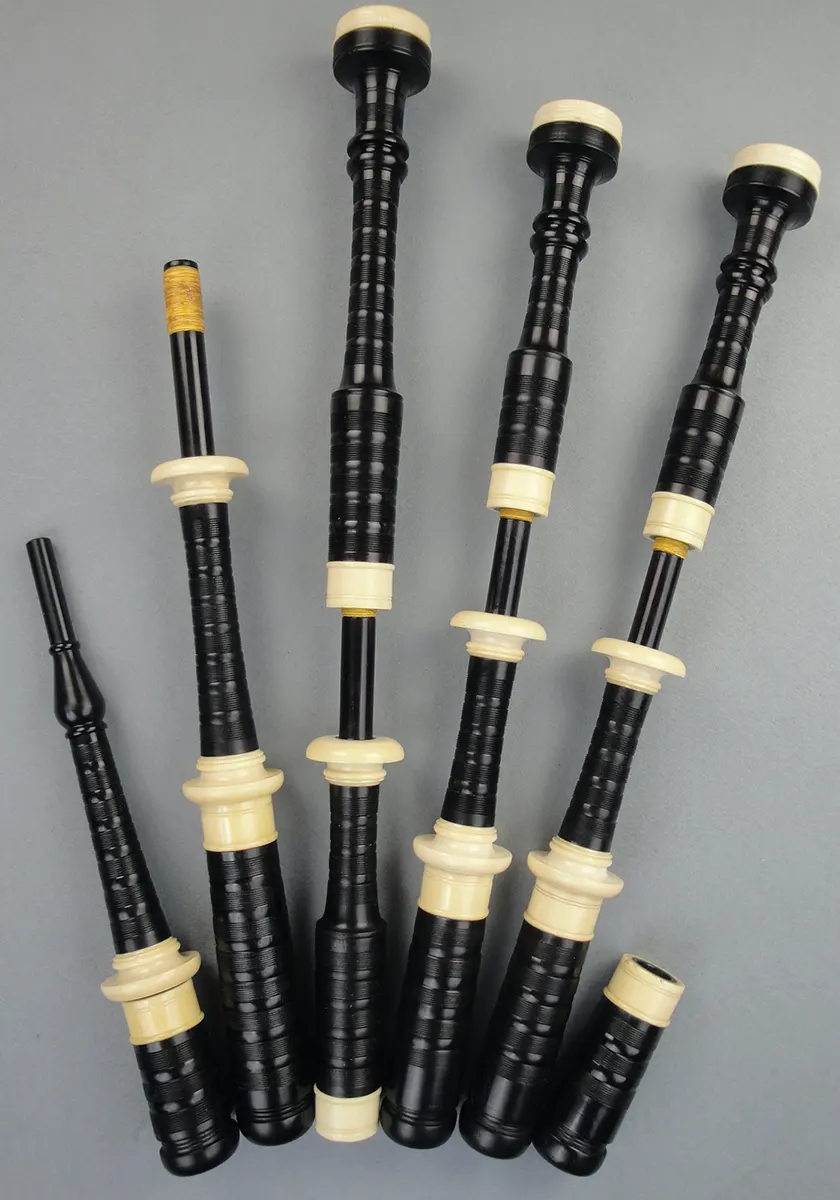
William Sinclair, Circa 1960s, Full Ivory
SOLD – The William Sinclair and Son company of Leith will go down in history as one of the leading pipemakers of their day. The company began making pipes around 1930, but appears to have closed down as of 2019 with the death of the last Sinclair son, a third-generation pipemaker.
This set is made in blackwood, mounted in full ivory, and was likely made in the 1960s.
The pipes have been stripped and refinished in the usual oil/wax finish preferred on this site. Two small hairline cracks were found under two ferrules, and these have been sealed.
This set played very steadily and with a bright, resonant tone.
-
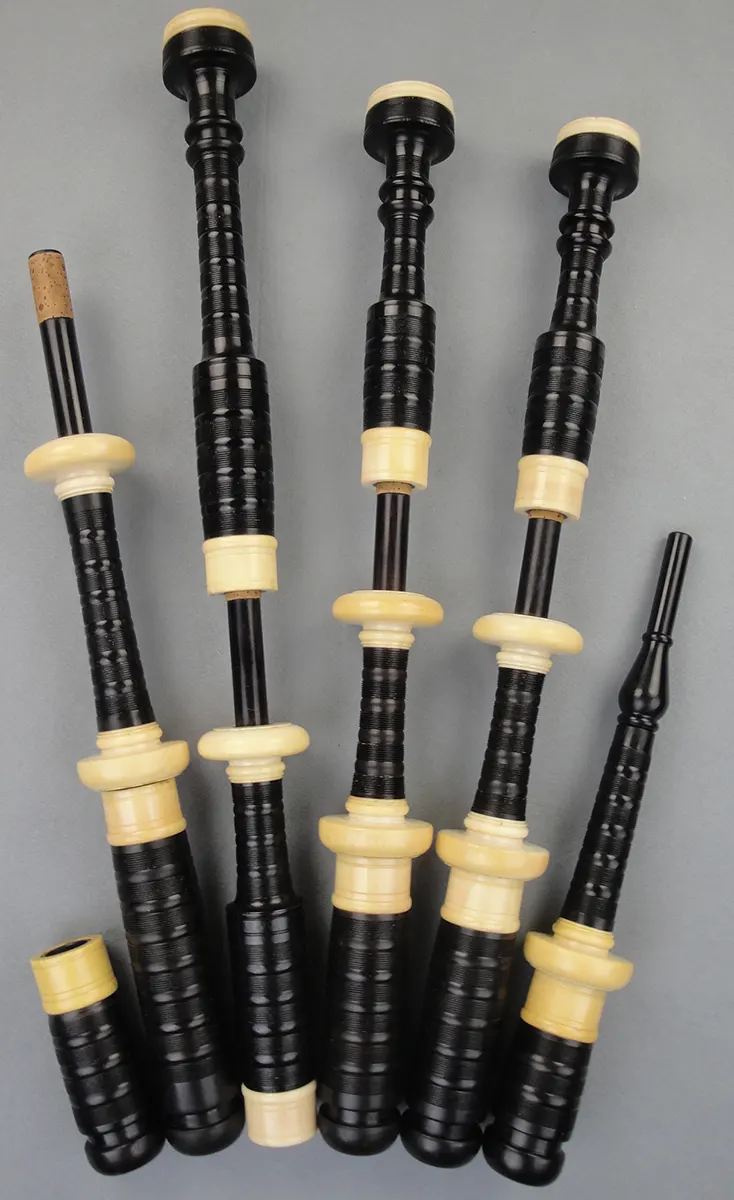
Robertson, Circa 1950s, Full Ivory
SOLD – The quality and consistency of Robertson pipes is legendary, and this Robertson set lines up with other 1950s Robertsons as a fine example of instruments made when George Kilgour and James Martin manned the shop.
The set has been well used over its 70 or so years of life, but cleaned up well with a strip and refinish. The chanter stock ferrule has been replaced by a faux ivory substitute that is extremely convincing. The bass drone bushing has been lost, and has been replaced with one made of moose antler, visible in the caps photograph below. The wood parts were all crack free. The combing is well worn in spots.
The stock bores are tapered, a practice that was quite common in the Robertson shop at this time. The tapered stocks are designed to reduce air turbulence within the stocks.
The previous owner had the tuning slides corked very nicely, and with a touch of cork grease the tuning action is excellent. The stock joints are all hemped. Should any prospective buyer like the cork replaced with hemp, that can be done.
These pipes played in typical Robertson fashion with a robust, seamless sound and great steadiness.
-
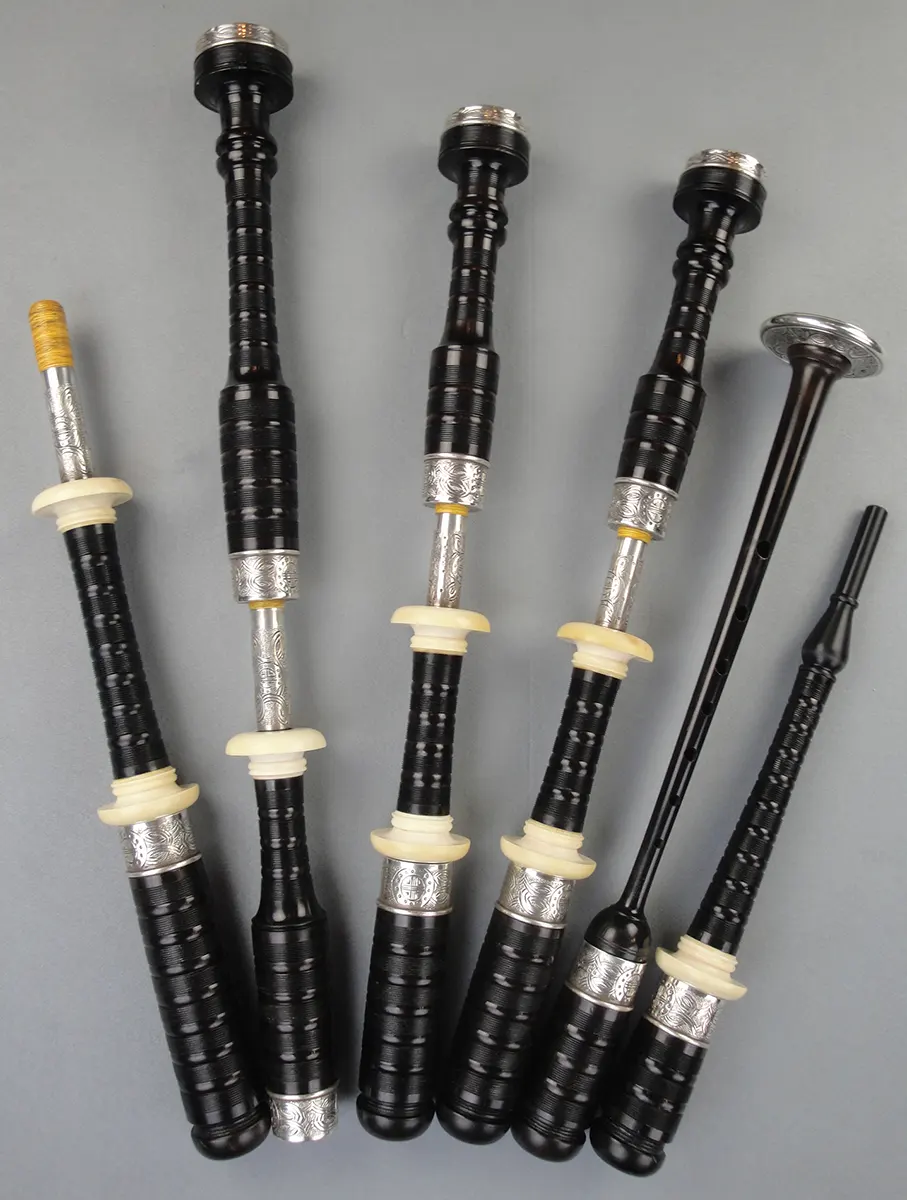
Hallmarked 1968-69 William Sinclair, Engraved Silver and Ivory
SOLD – The William Sinclair and Sons company of Leith goes down as one of the leading modern pipemakers. The company began making pipes around 1930 and appears to have closed down as of last year with the death of the last Sinclair son.
This set came to me from its second owner, who acquired it from his cousin. Made in blackwood and mounted in engraved silver and ivory, the set is hallmarked 1968-69.
The original and well weathered lacquer finish was removed, and the sticks were checked for cracks and then refinished in the usual oil and wax. One small crack appeared at the top end of the blowstick, and this was invisible whipped. The ring caps have numerous slight dents, visible up close, but inconspicuous.
The original Sinclair chanter and sole remain with the pipes.
True to Sinclair pipes, the set had a bright and full tone, steady and sonorous. I played a set of silver and ivory Sinclairs through much of my competing days, so it was a familiar cheerful sound to me.
-
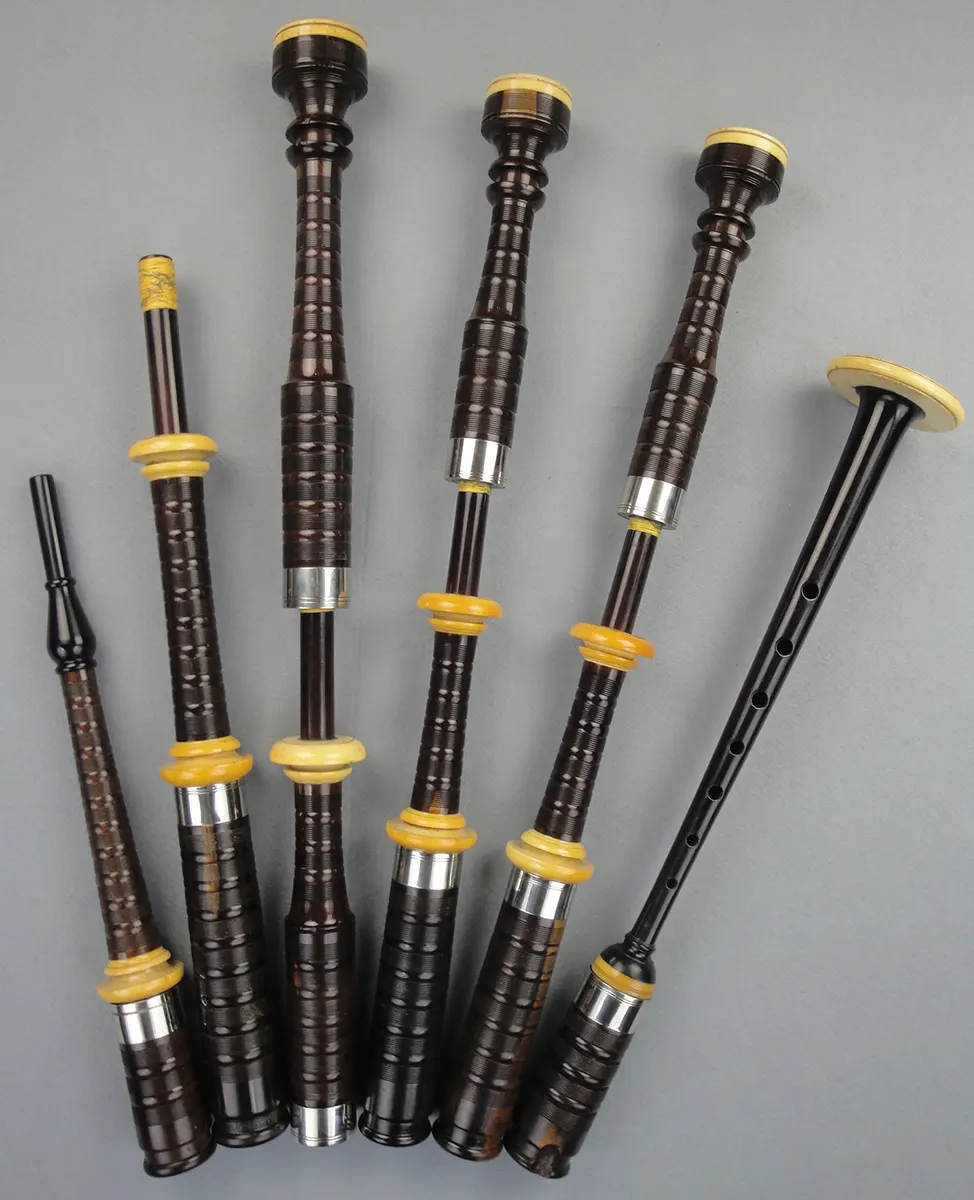
Circa 1890 David Glen, Cocuswood, Ivory, Nickel
SOLD – This elegant David Glen set was likely made in the years around 1890. The sticks are slightly heavier that later David Glen pipes.
The set is made of lovely dark Caribbean cocuswood, with ivory projecting mounts and nickel ferrules. The tuning chambers are lined with brass, not an uncommon practice with several pipemakers during the latter half of the 19th century. A long crack was visible running upward from the ferrule on the bass mid-joint. This has been sealed, though its shadow is still visible. The rest of the pipe is immaculate after a strip-and-refinish. The set comes with a David Glen chanter, though there is no guarantee that it is original to the pipes.
David Glen made pipes from 1873 until his death in 1916. While the tone of most of his pipes might be described as very rich and subdued, this set has a fuller tone, though equally rich and wonderfully steady.
This set locked into a groove very quickly and stayed there with my set of Canning reeds.
-
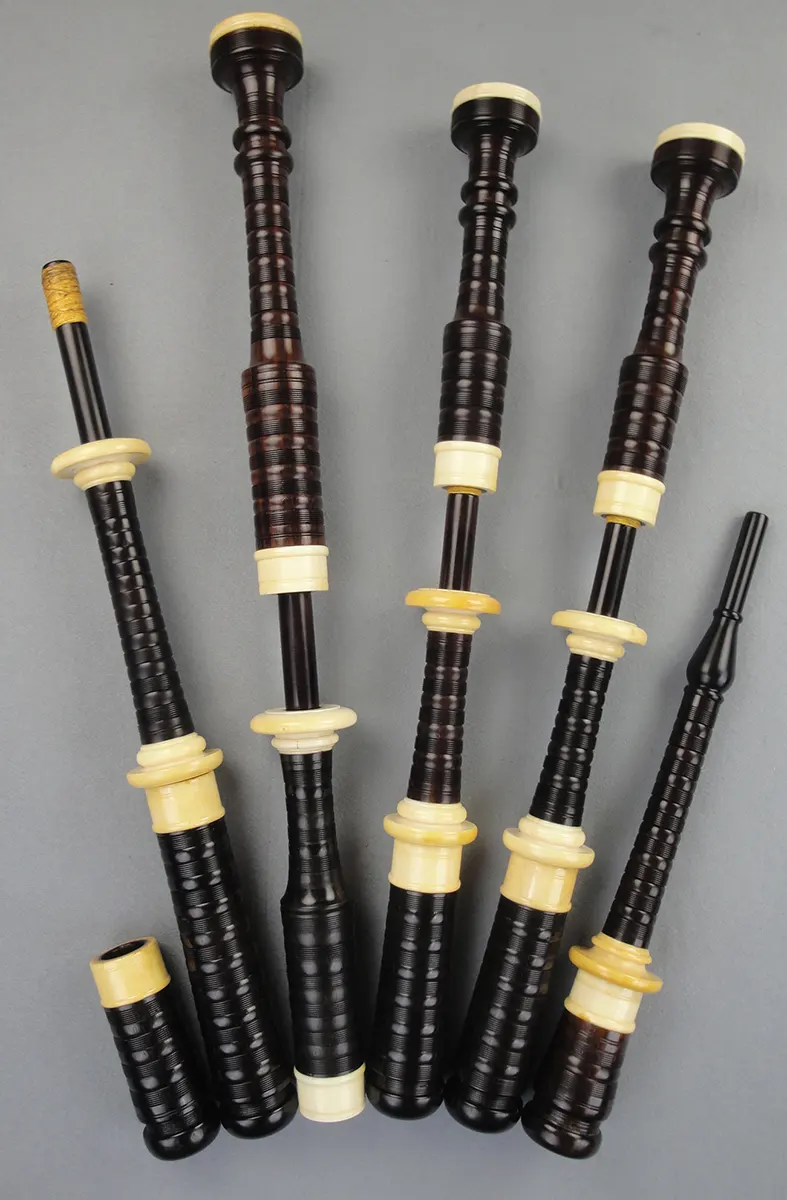
Circa 1940 Lawries, African Blackwood, Full Ivory
SOLD – Profiles suggest manufacture of this Lawrie set around 1940 or a little earlier.
The pipes came to me from Fife, where they had lain unplayed for some years. Stripping the finish revealed cracks in three drone stocks and one tenor top just above the ferrule. These have been sealed and invisible whipped and will cause no more trouble. The blowpipe looks like it came from a Henderson set and the combing and beading match well. The pipes were refinished and came out showing the beautiful African blackwood grain.
They came into tune quickly and held nicely with my Canning drone reeds. They retain characteristics of classic Lawries, with a robust sound and superb steadiness.