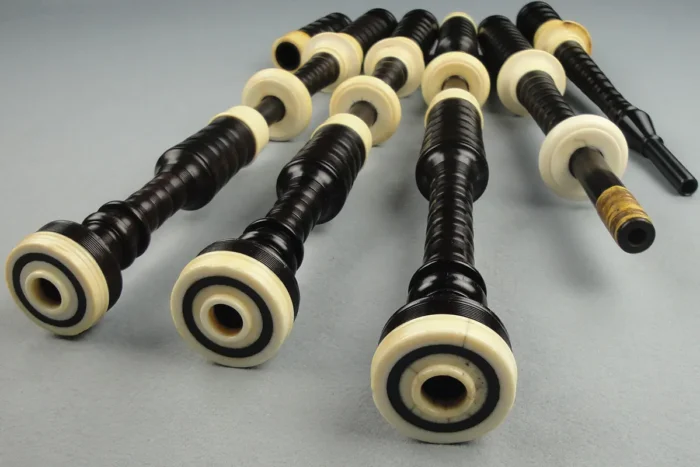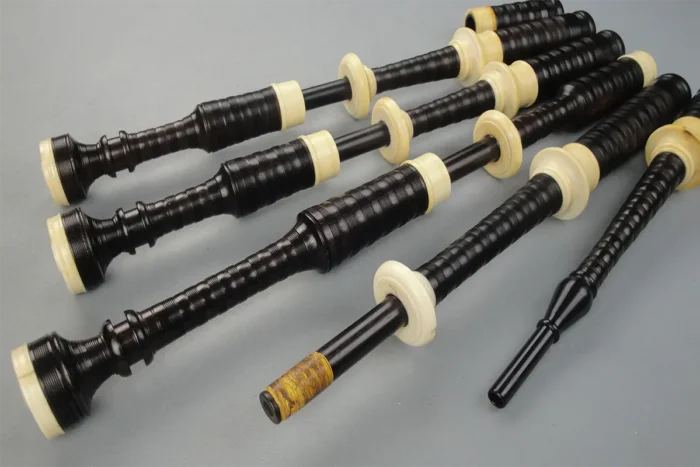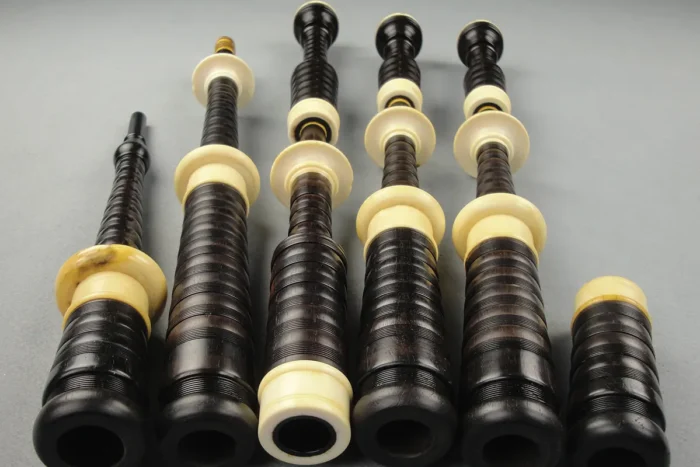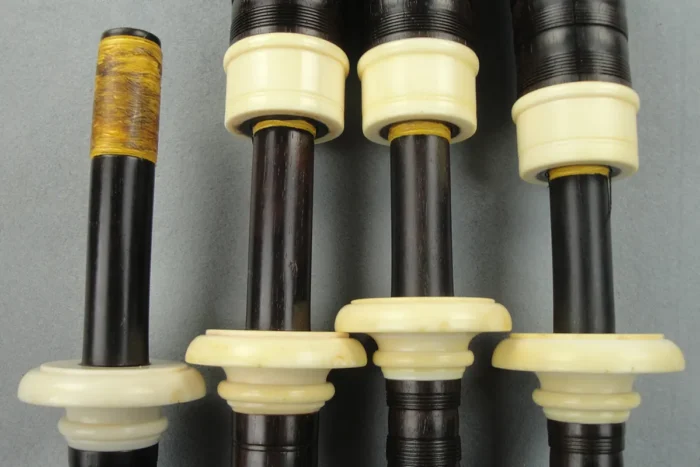
Working with vintage bagpipes is as much a hobby as a business for me. I enjoy the process of turning up old pipes and making sure they will be played for years to come. I think it is a good thing for piping. As such, I take great care in purchasing, examining and restoring old pipes.

My refurbisher is J. Dunbar Bagpipe Maker in St. Catharines, Ontario. Not only do they do masterful restorations, they have eagle eyes for examining 150-year-old wood and discovering replacement pieces and flaws that should be addressed before you play the pipes. If a set of pipes has a replacement or repaired piece, you will know about it before you buy.
You should know from the get-go that pretty much every bagpipe made before 1930 has required or will require repairs of some sort, especially if they are ebony. Ebony and cocuswood are superb woods from which to make bagpipes but they are less resilient than African blackwood. I suspect there is hardly an ebony bagpipe in the world made before 1920 that hasn’t experienced at least one crack.
Photos and descriptions of all instruments featured since October 2010
-
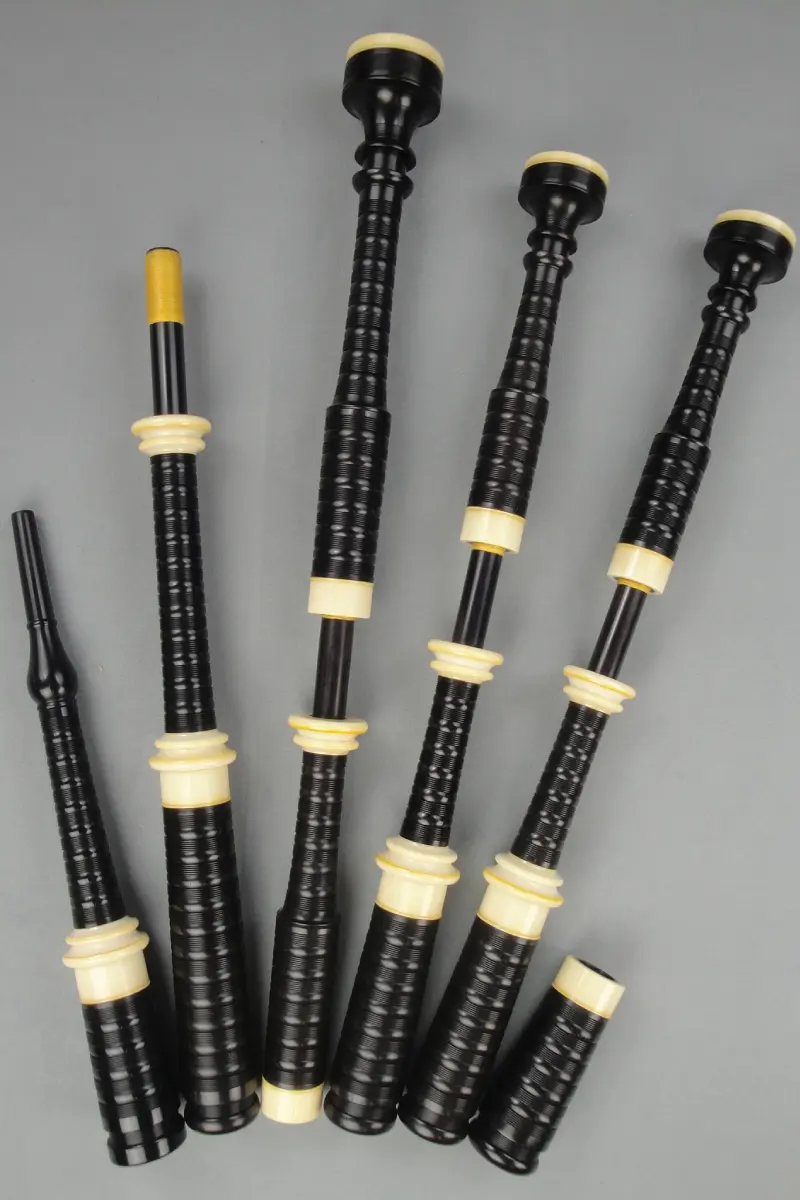
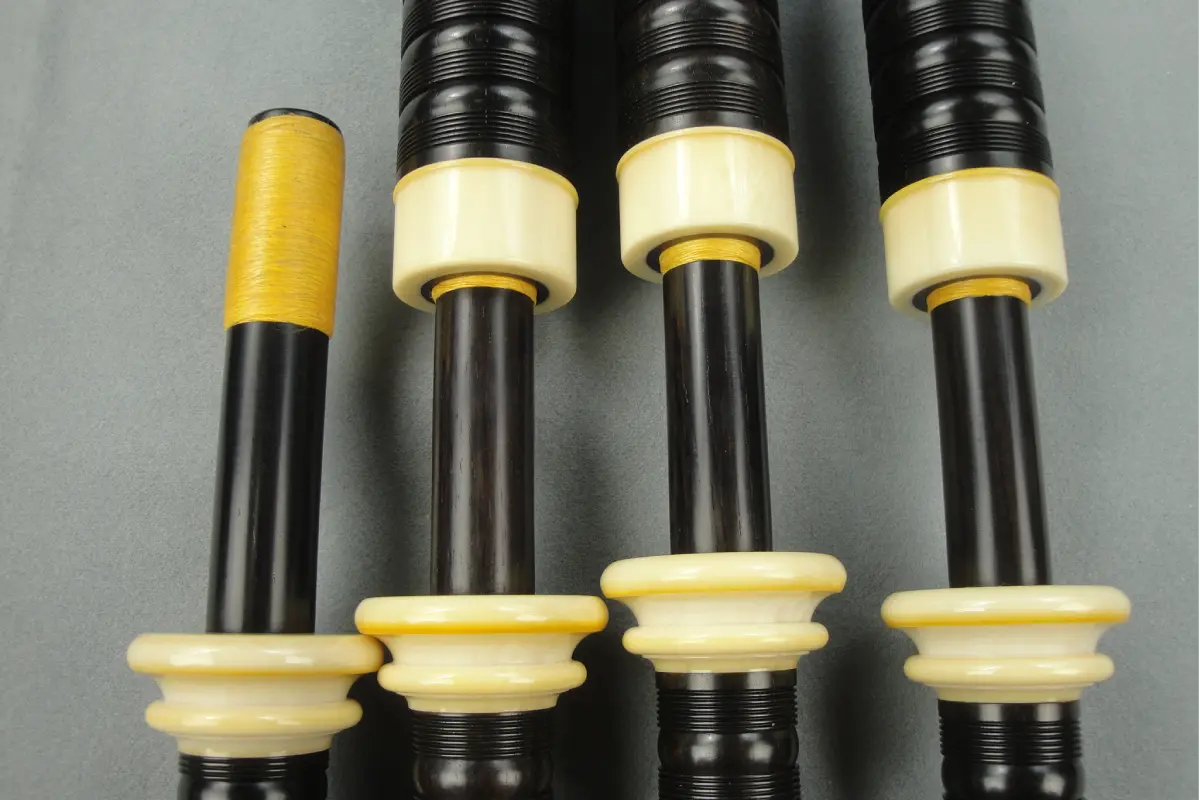
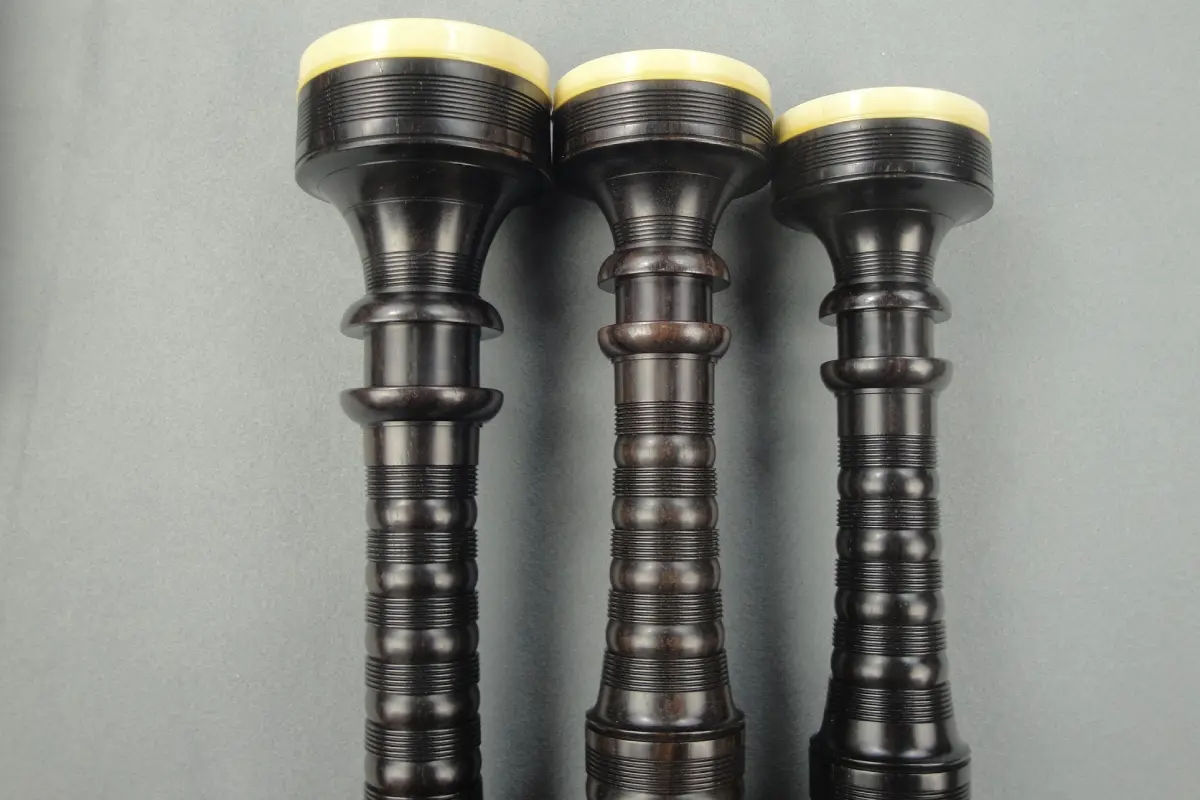
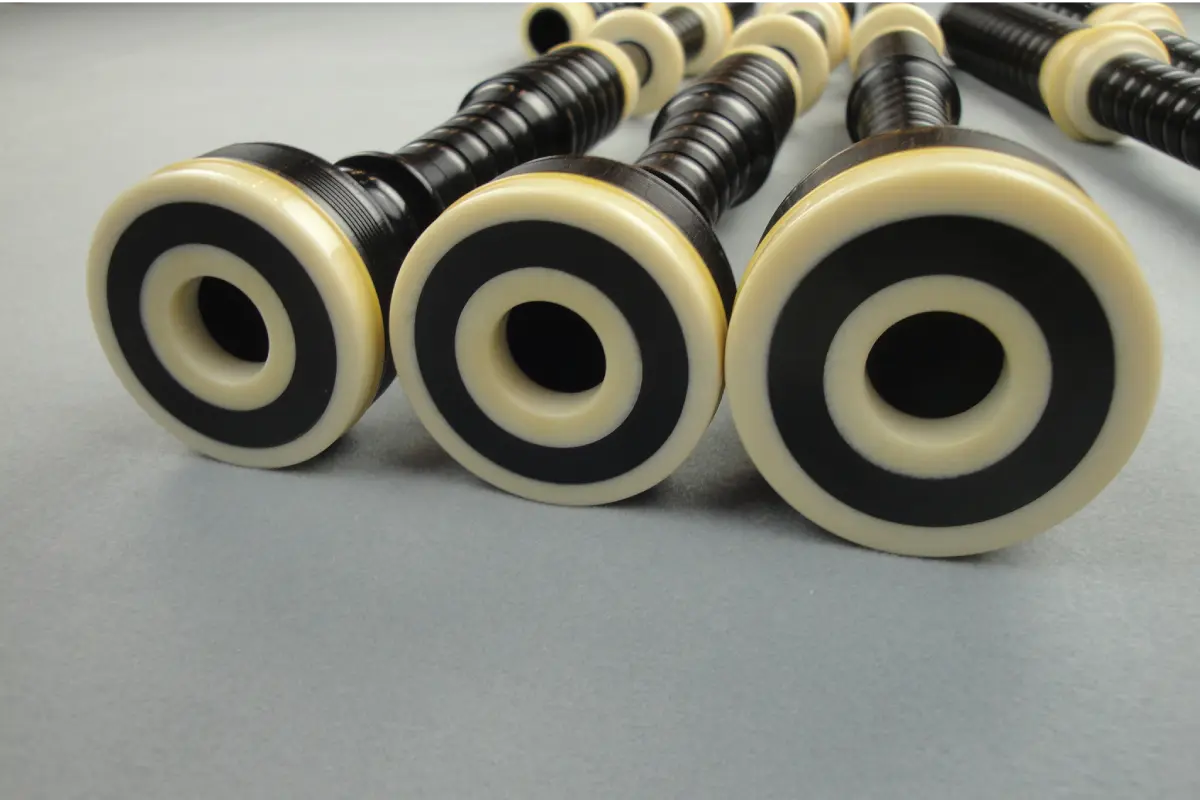
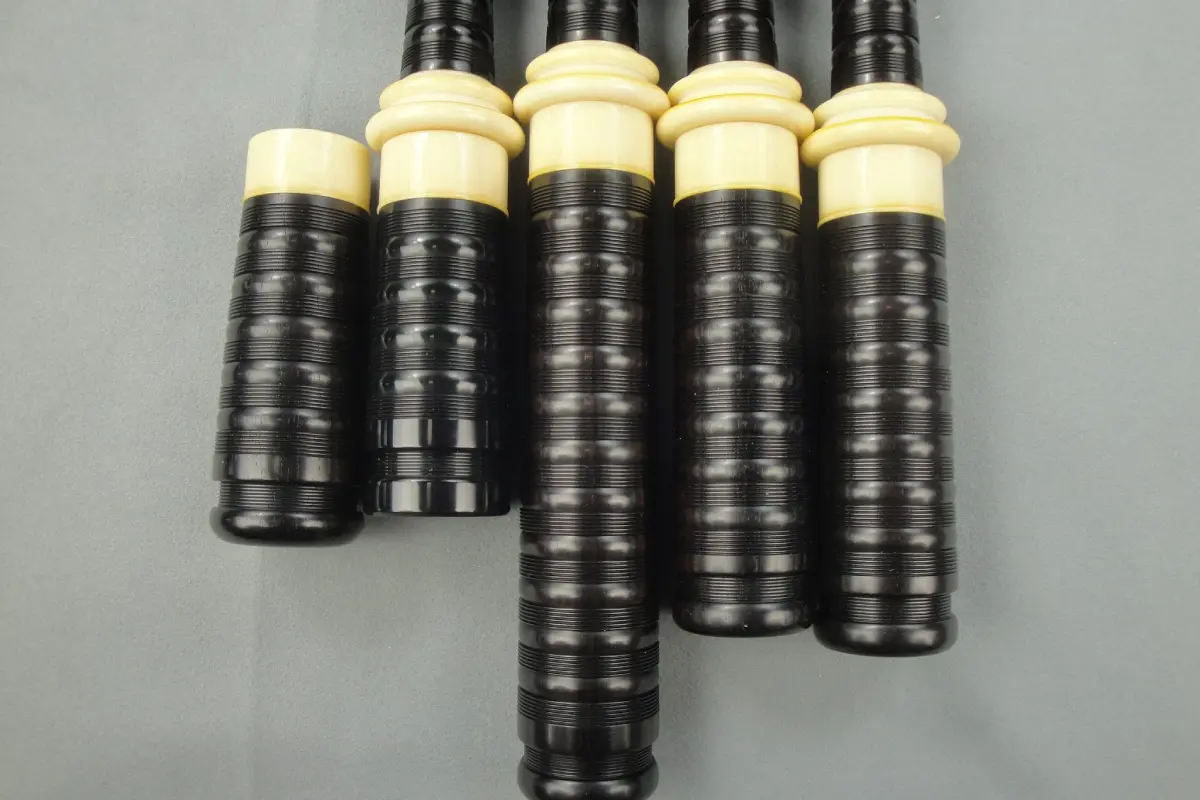
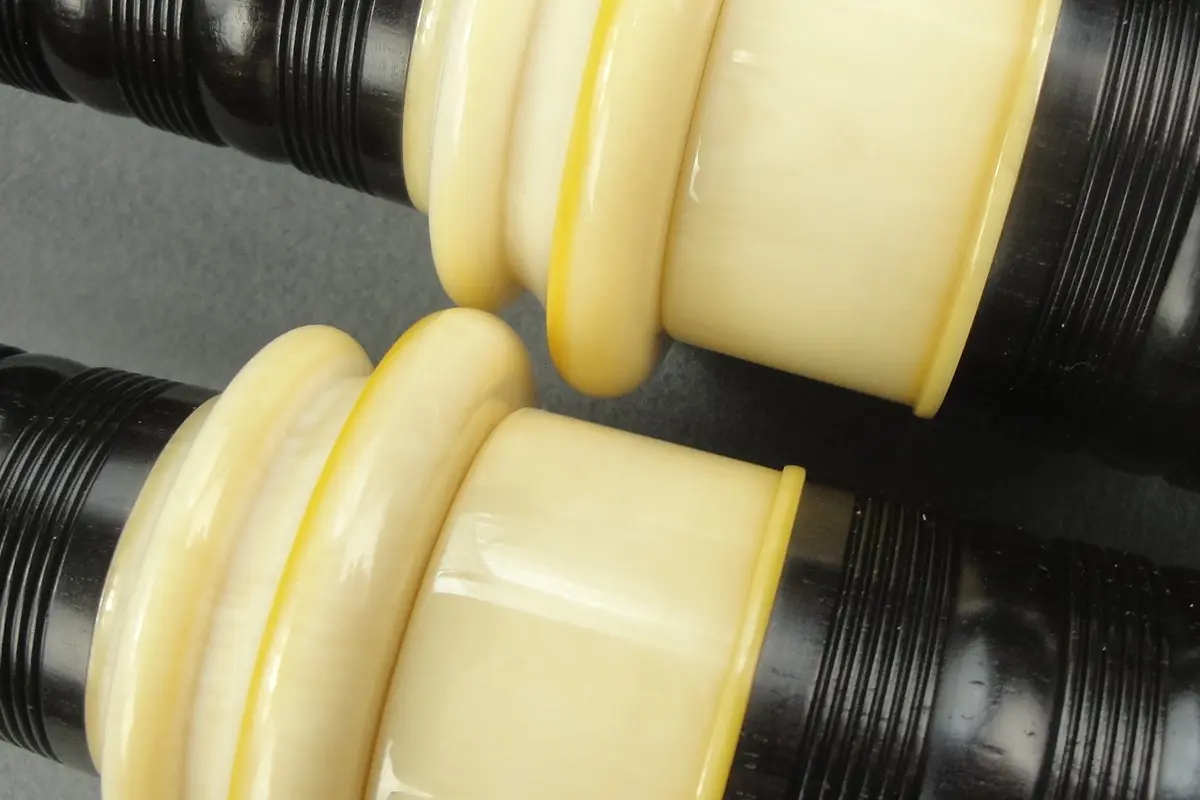
Atherton MD, 2026, aged imitation ivory
SOLD – This Atherton MD Duncan MacDougall reproduction is a particularly superb example of Dave’s work. Dave always choses exceptional and well-aged wood, but more so with this set. He spent an extraordinary amount of time on this instrument, making every detail perfect.
The set is mounted in aged imitation ivory, the wood has been aged for some years and every detail on the bagpipe is perfect. You will not find a better manufactured bagpipe on the planet. You will rarely find another set of drones with the locking ability these have. Numerous top players in the highest levels of solo competition play Atherton pipes, as do those in top grade 1 bands. SFU pipe major and successful solo player Alan Bevan plays a set, as do others in that vaunted band.
This is a bagpipe you care for and leave to your heirs. As time passes and the wood ages, it will only get better.
-
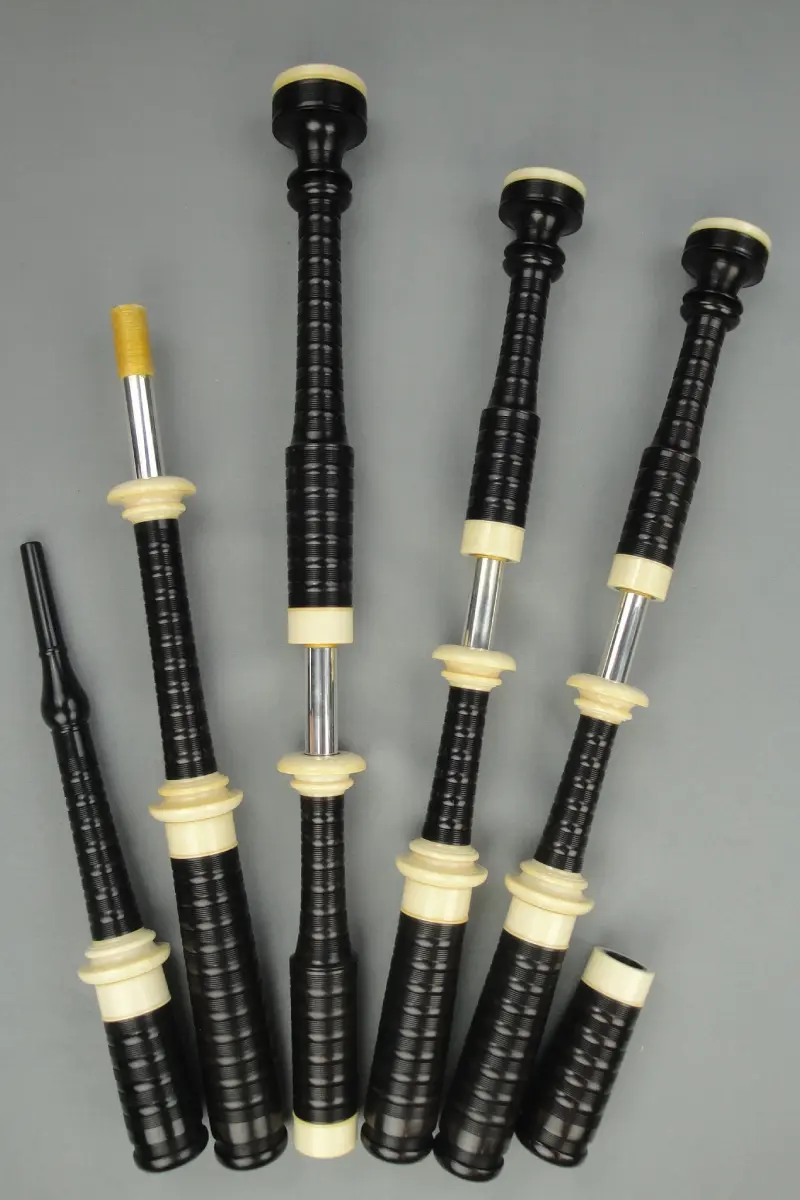
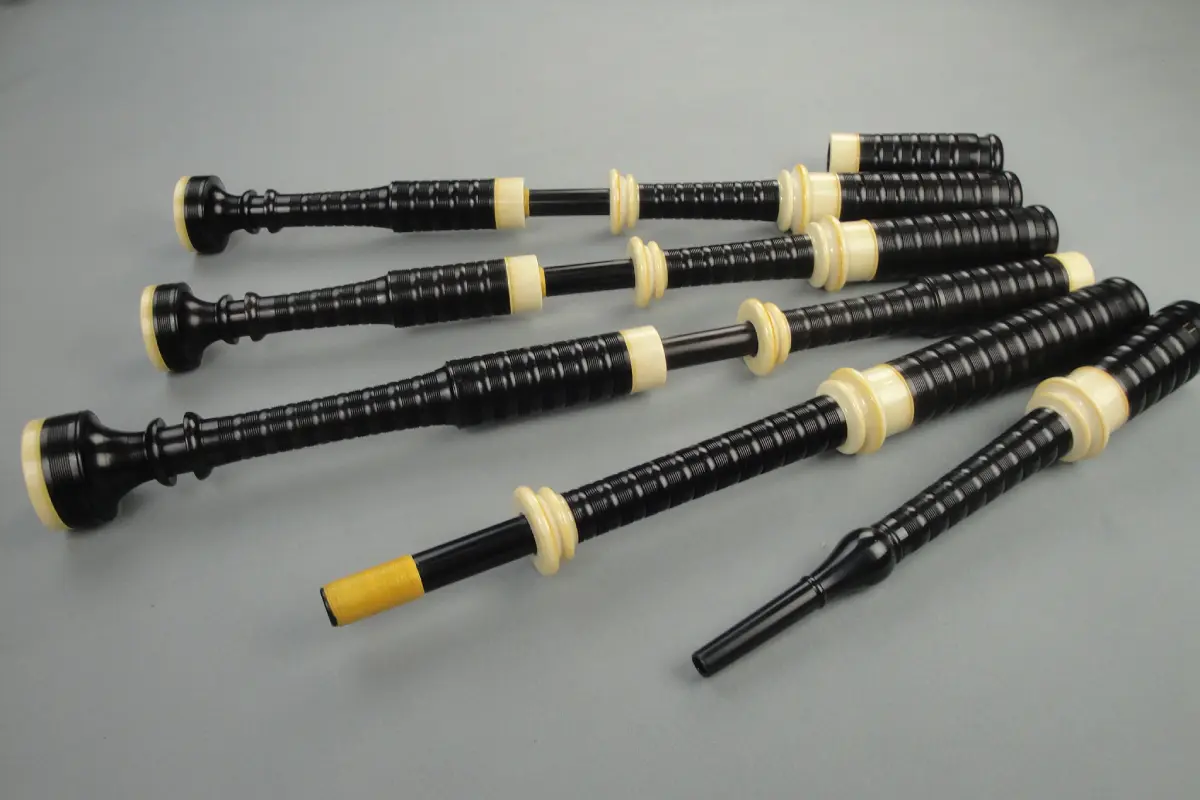
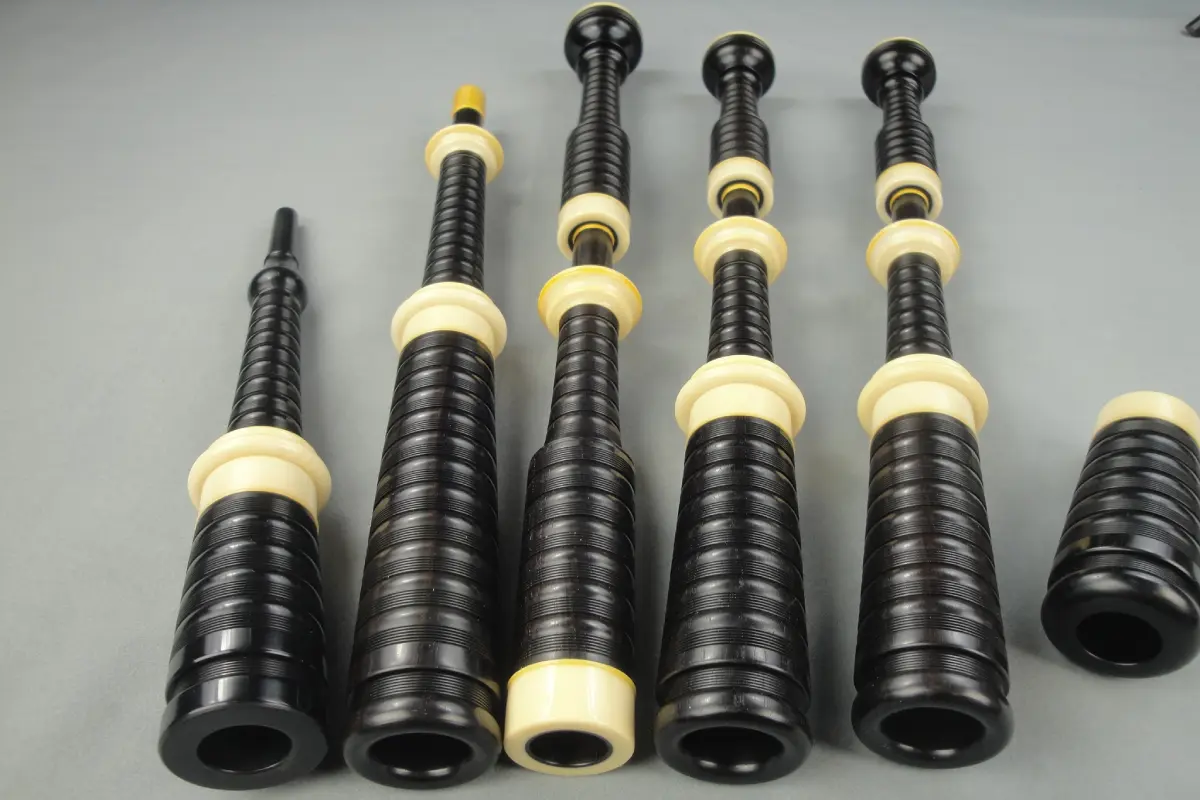
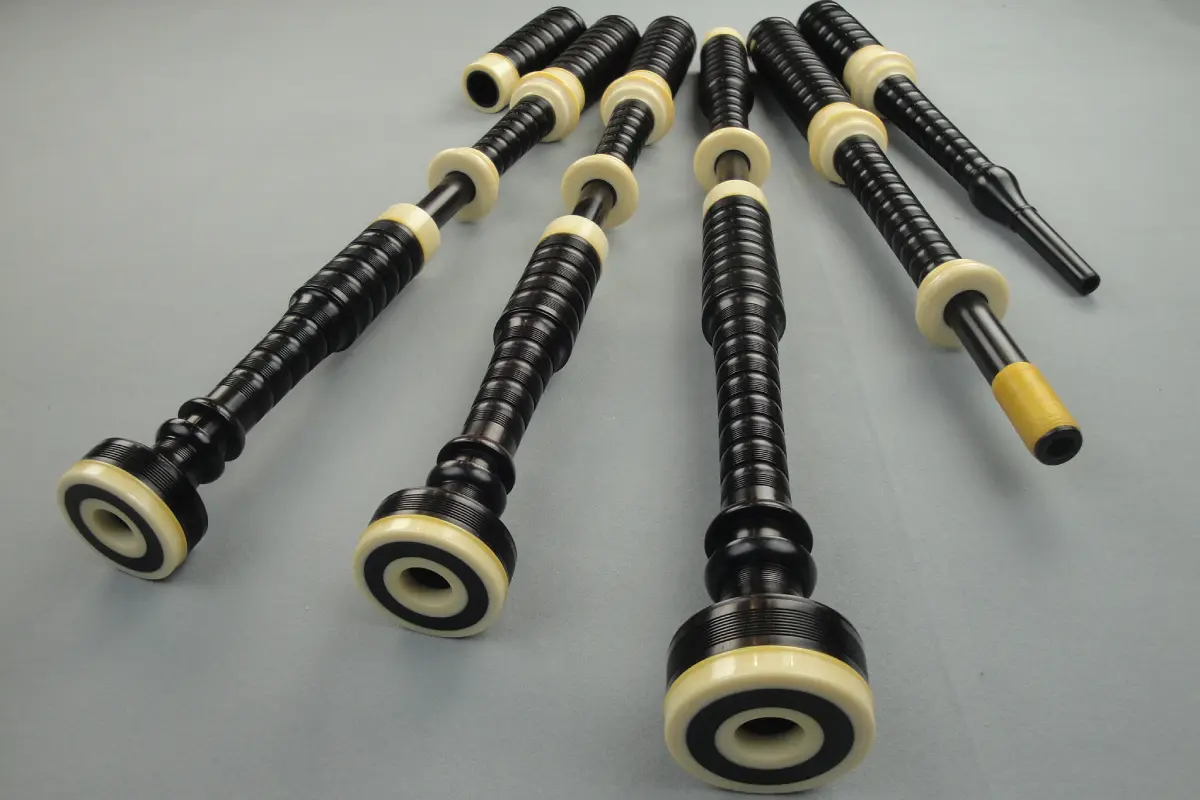
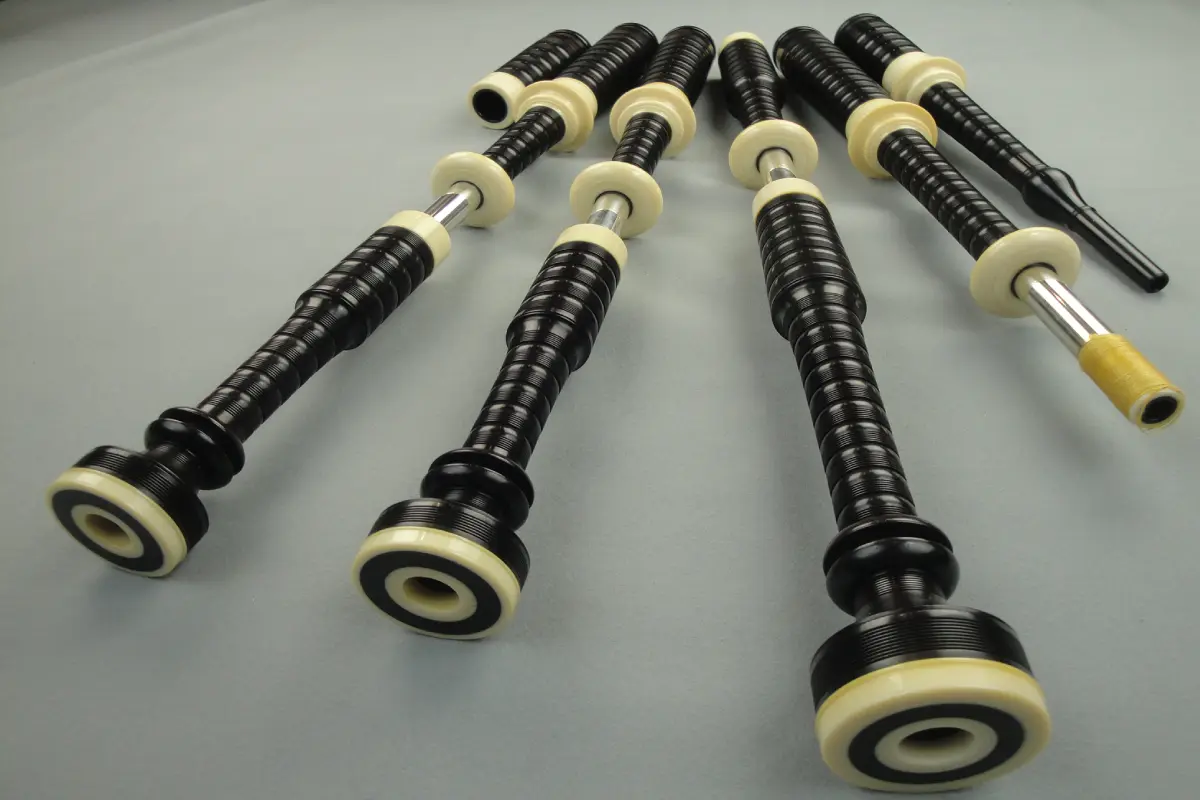
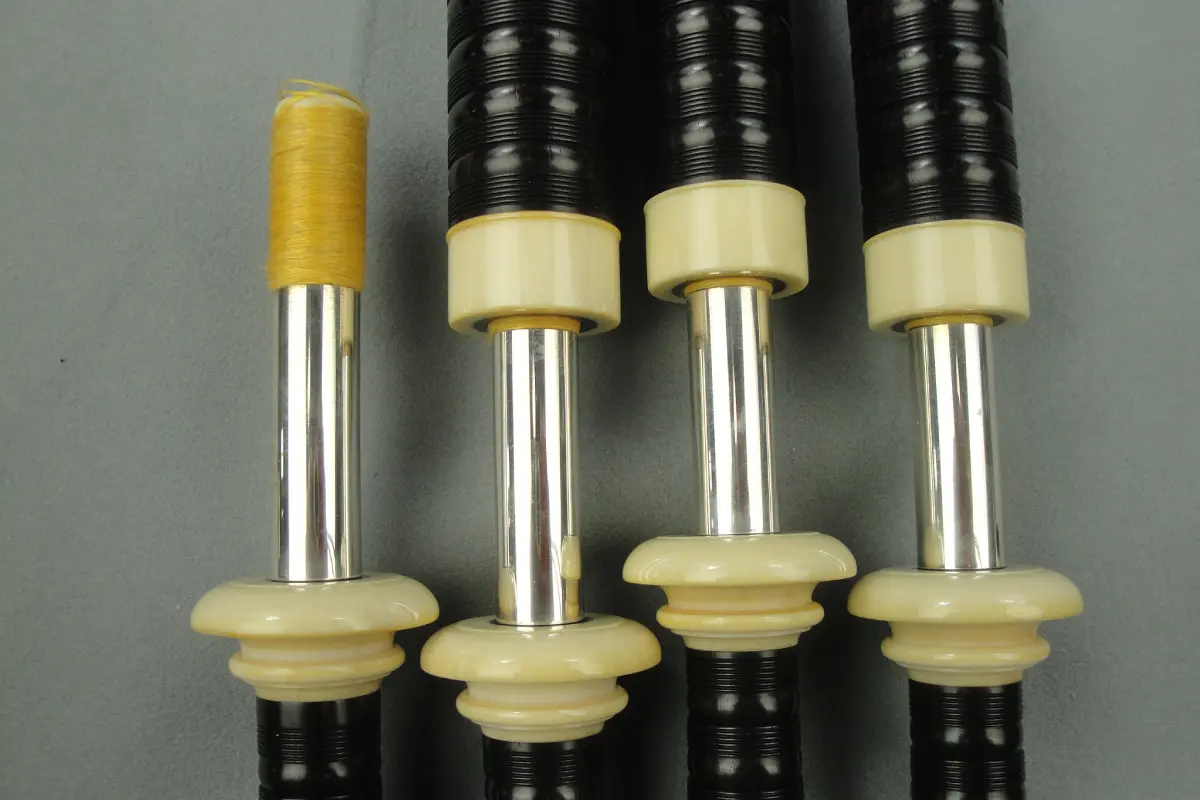
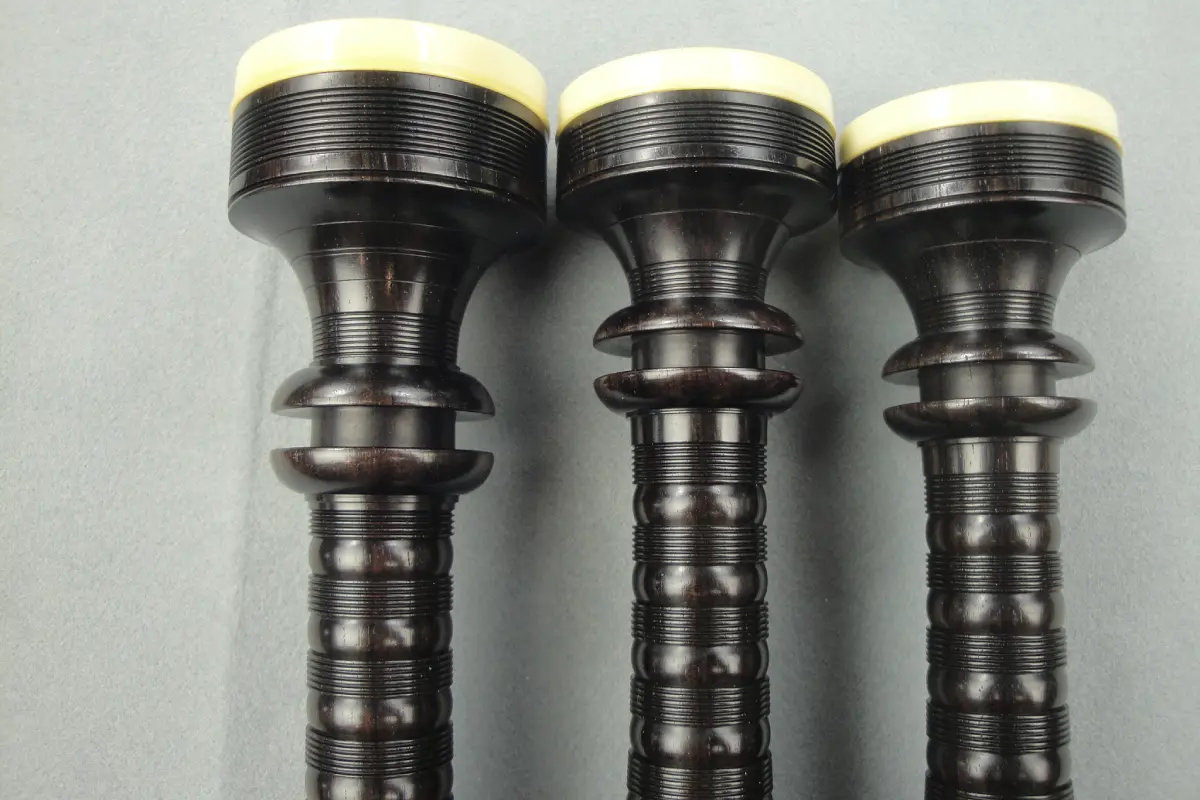
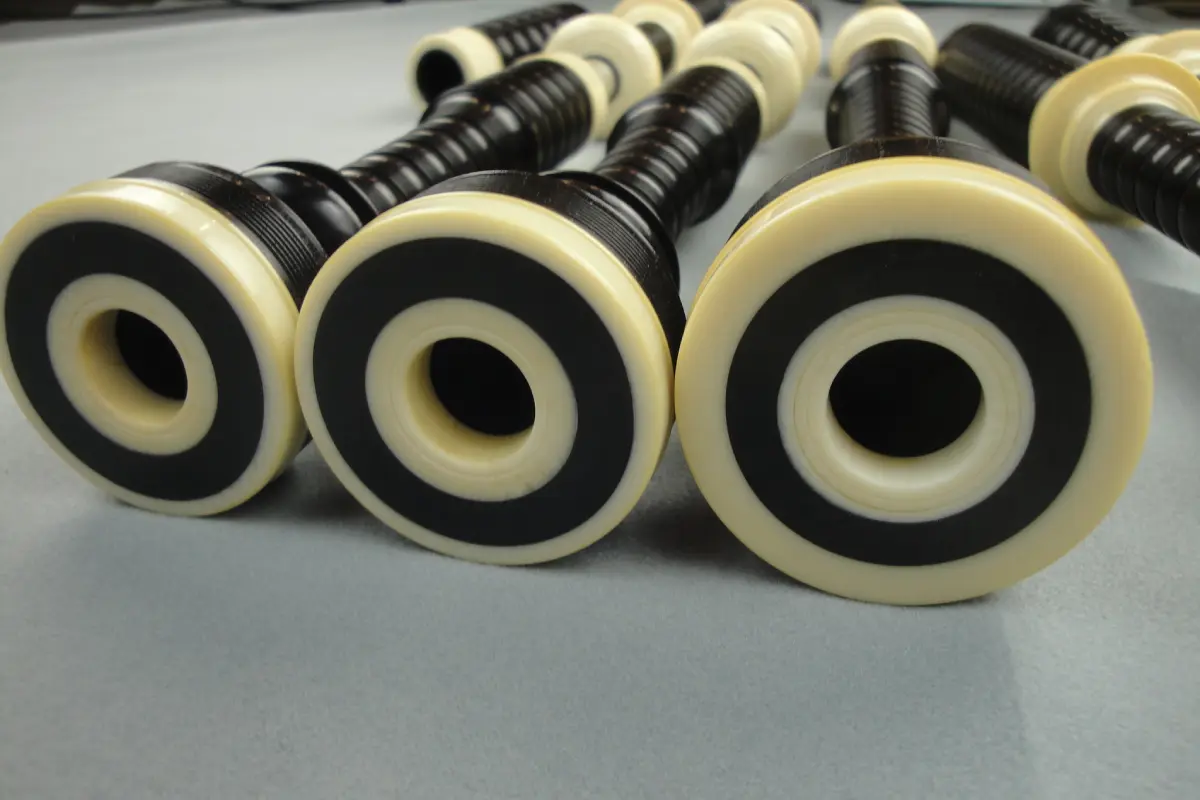
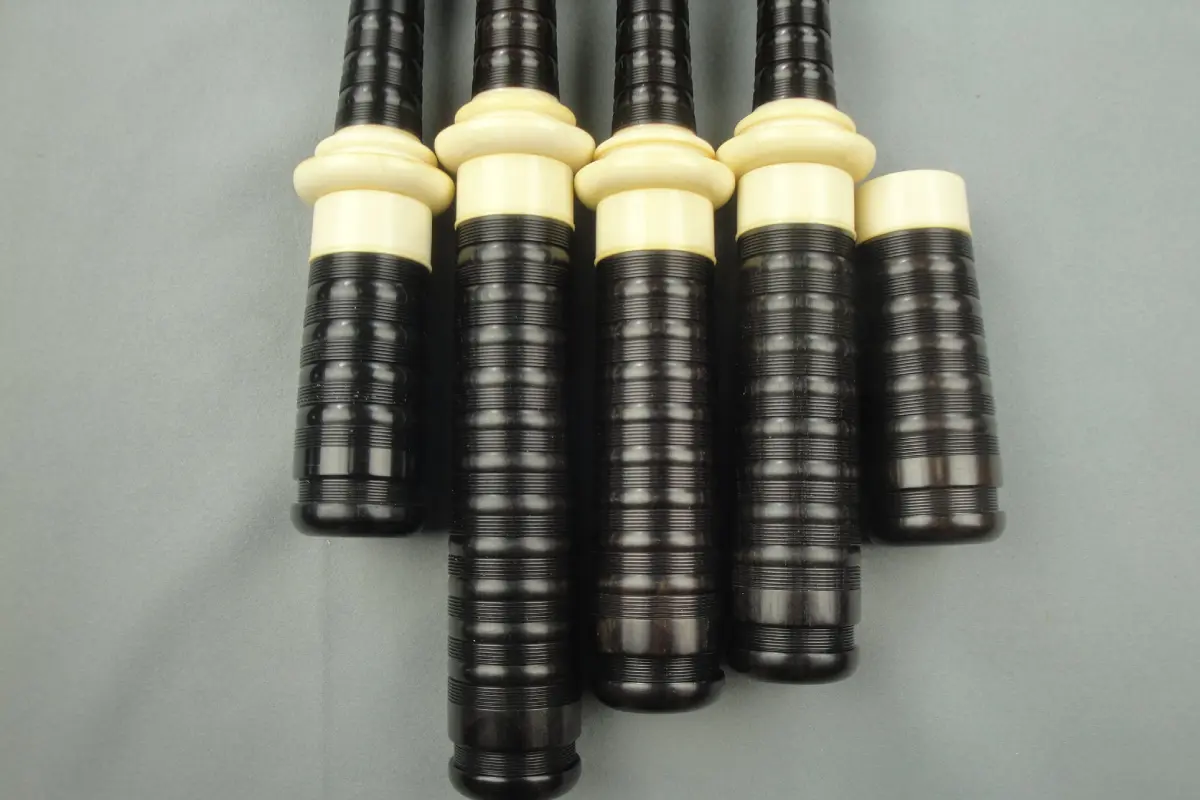
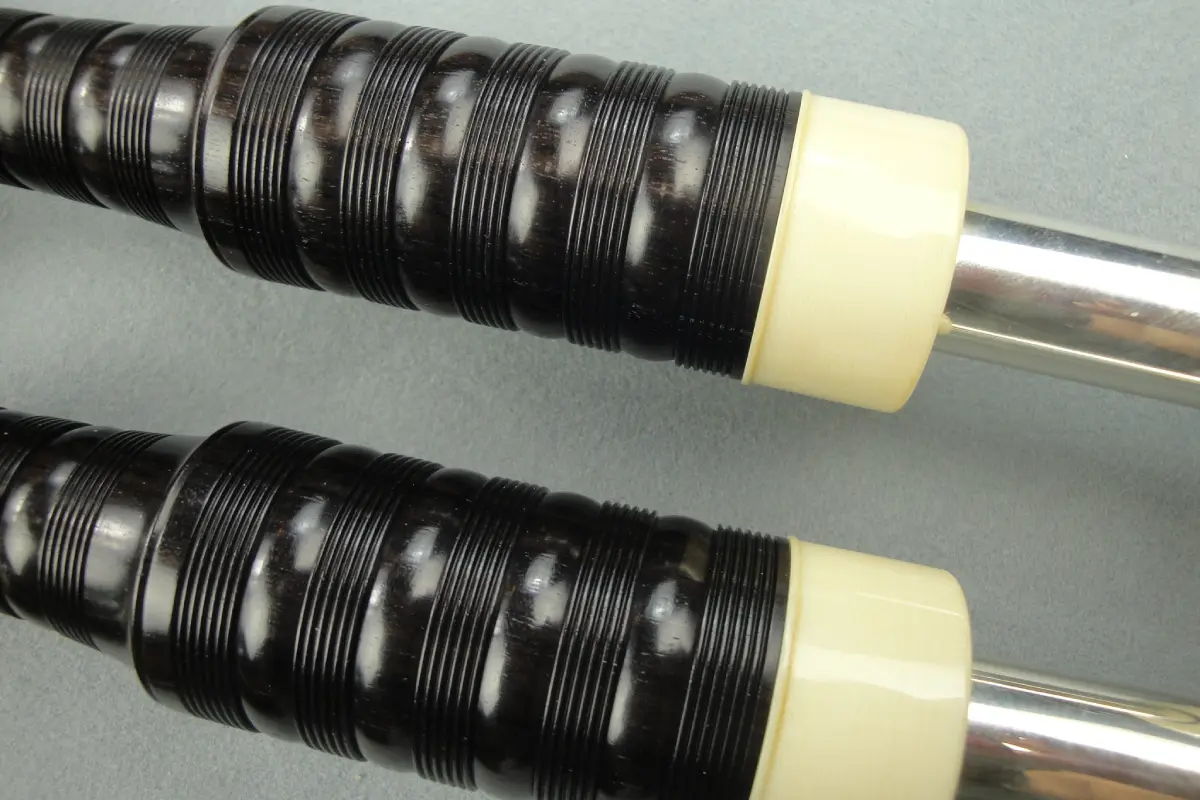
Atherton Legacy, 2026, Imitation Ivory, Sterling Silver Slides
SOLD – This is a brand new set of Atherton Legacy, made this year. Why is it on the vintage page? It’s on the vintage page because more that any other bagpipe on the market today, Atherton bagpipes are an heirloom bagpipe with tonal qualities that match most that of the vintage pipes on this page.
That’s a big claim, but the inordinate amount of time Dave Atherton spends on a bagpipe results in virtually perfect manufacturing standards. Dave selects only premier wood that has been aged anywhere from 3 to 12 years.
Atherton pipes are being played at the highest levels in the world, including the big events at Oban and Inverness, as well as in the World Pipe Band Championship.
This set is mounted in aged imitation ivory and Sterling silver slides. The blowpipe and blowpipe stock are polypenco.
-
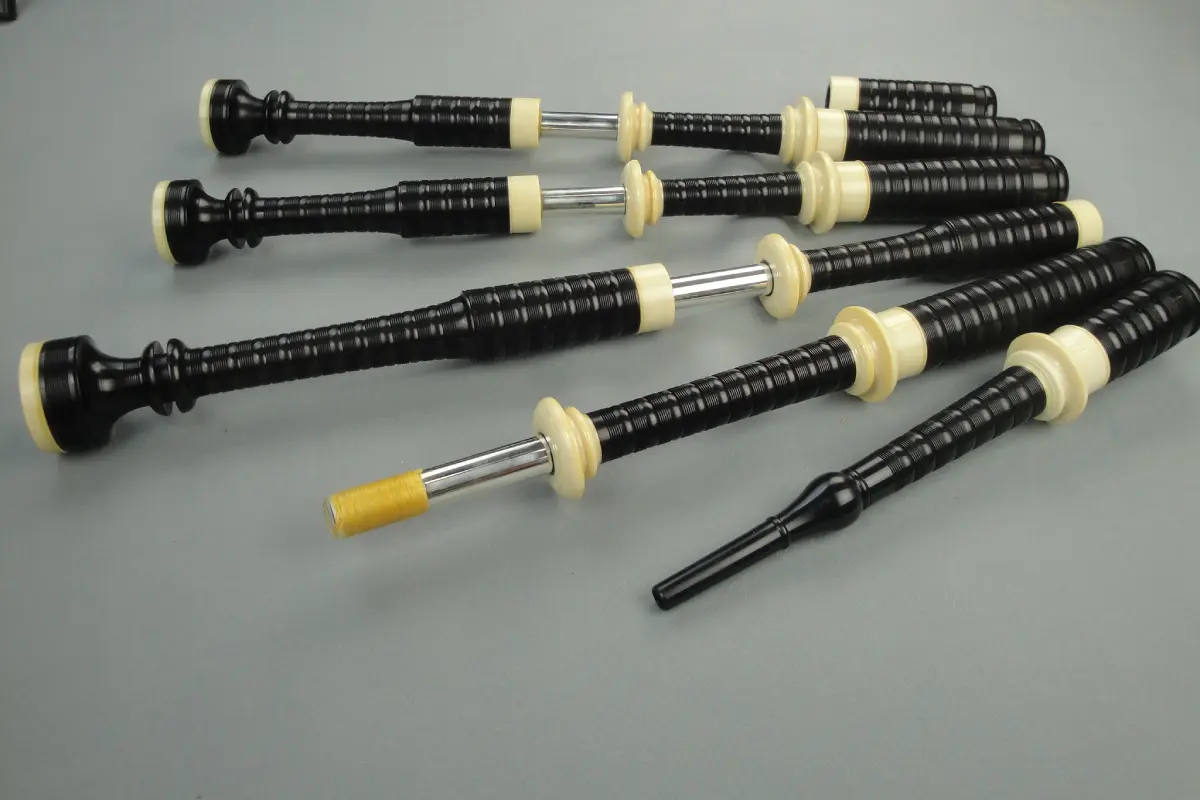
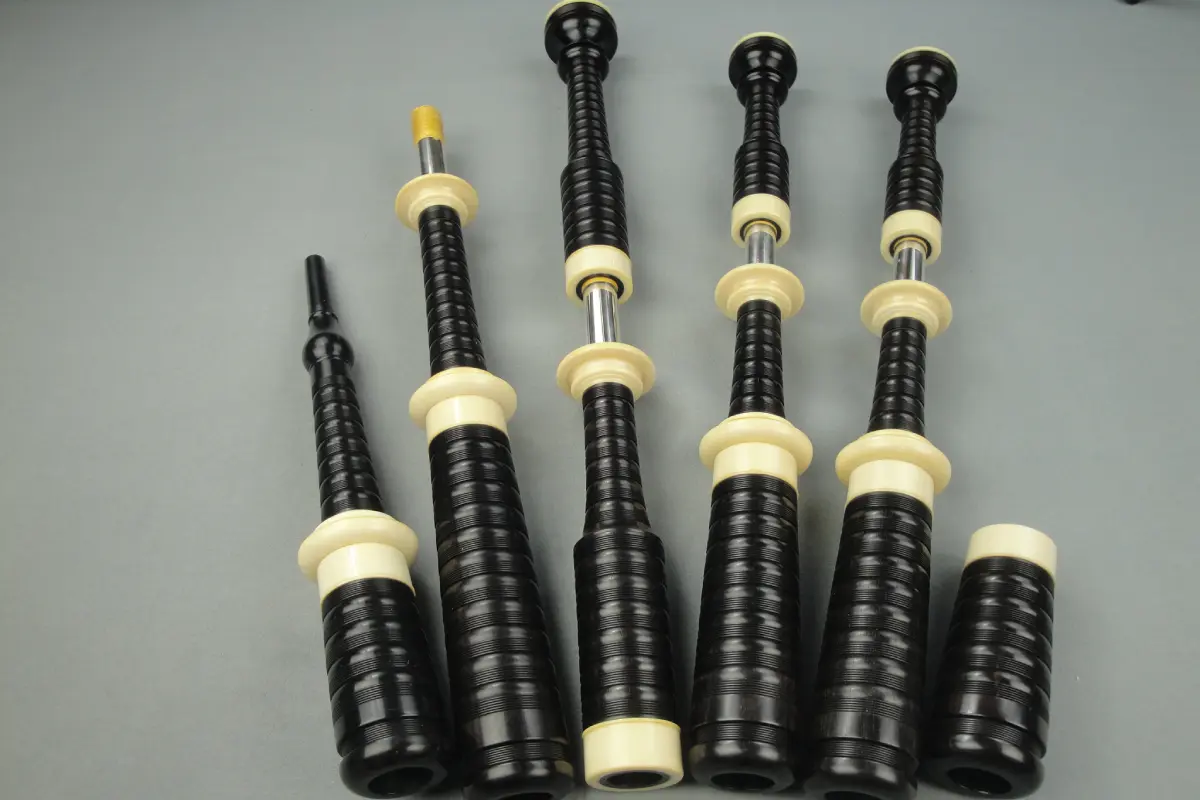
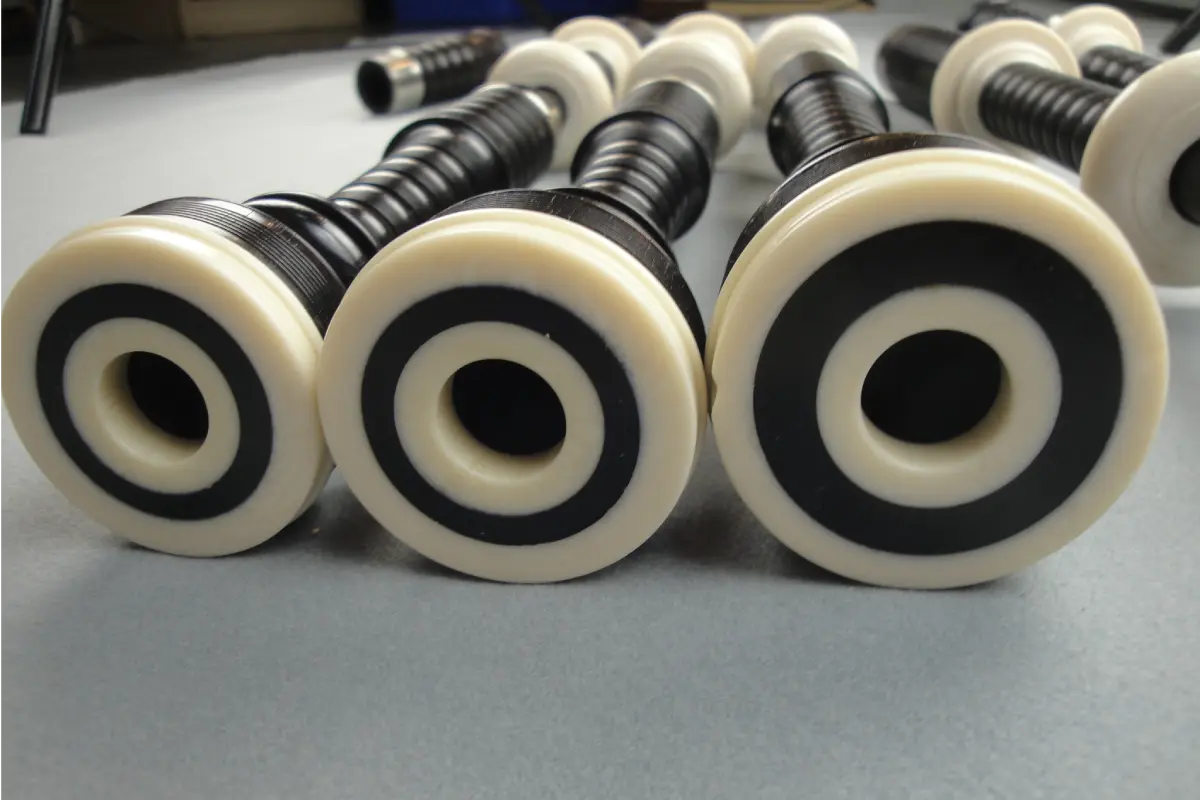
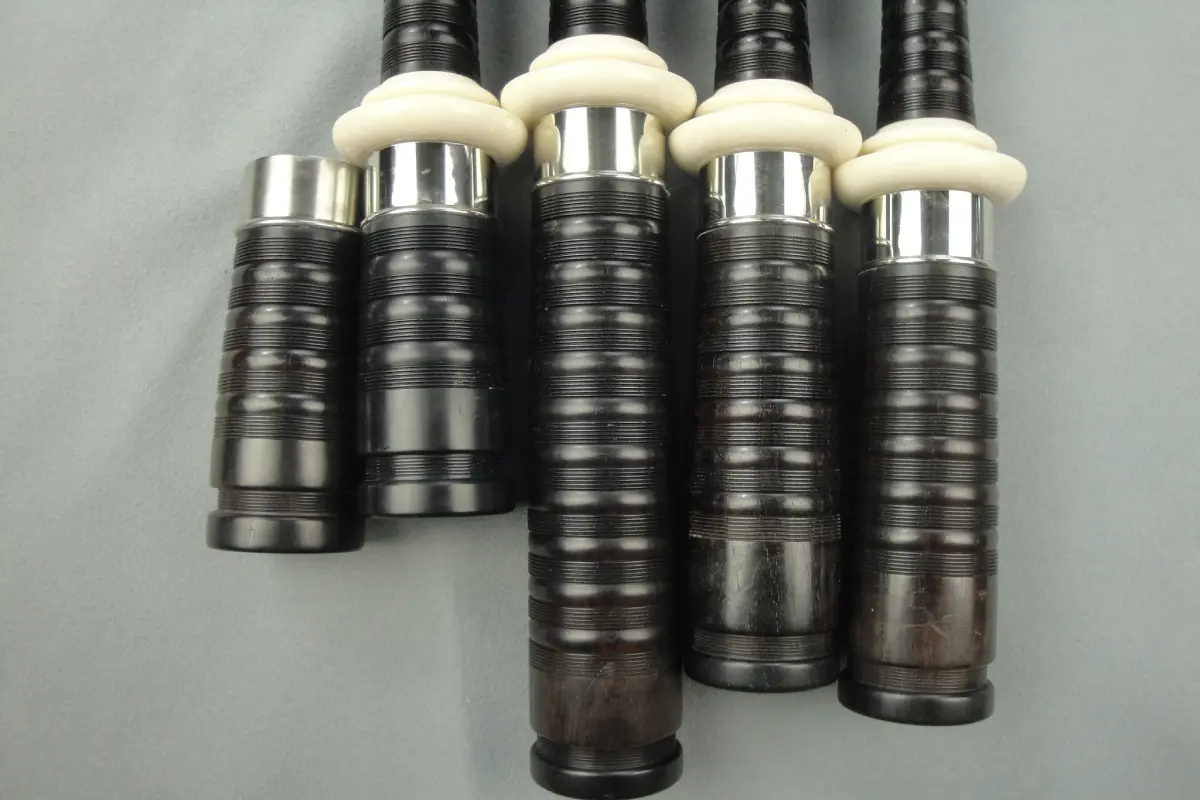
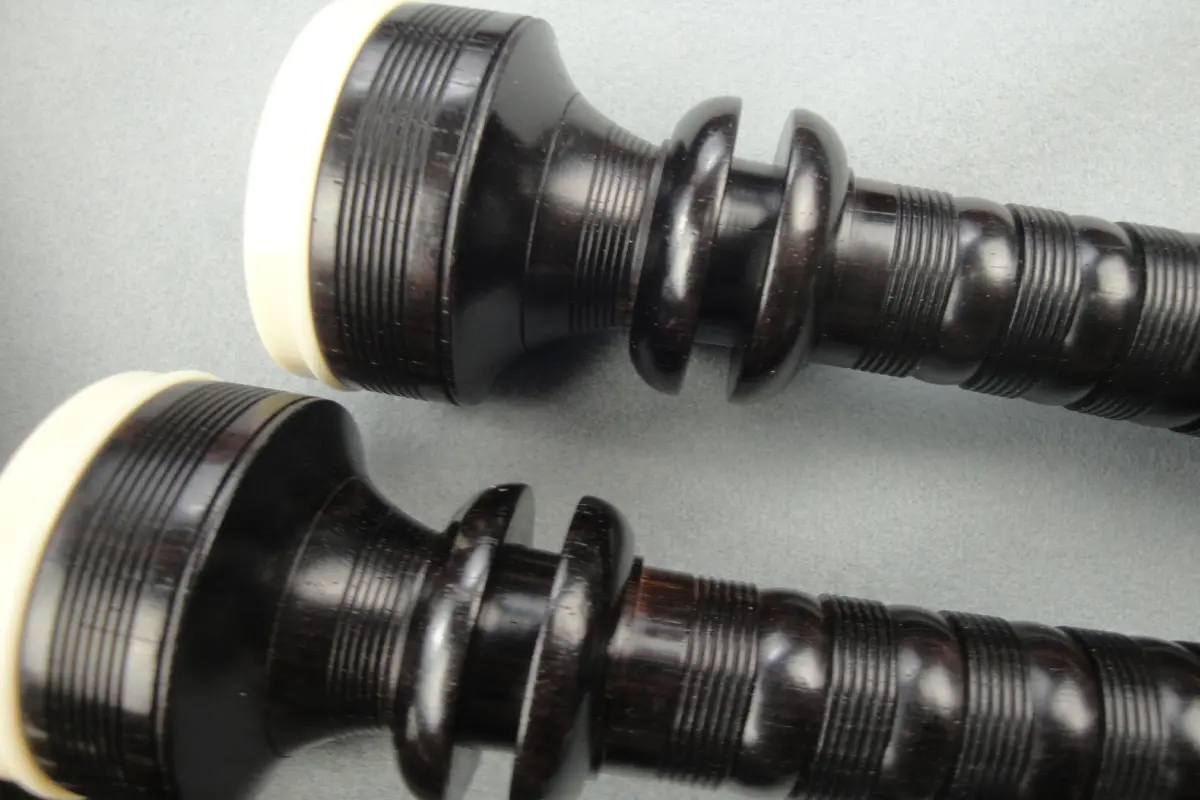
Atherton Legacy, 2017, Nickel and Imitation Ivory
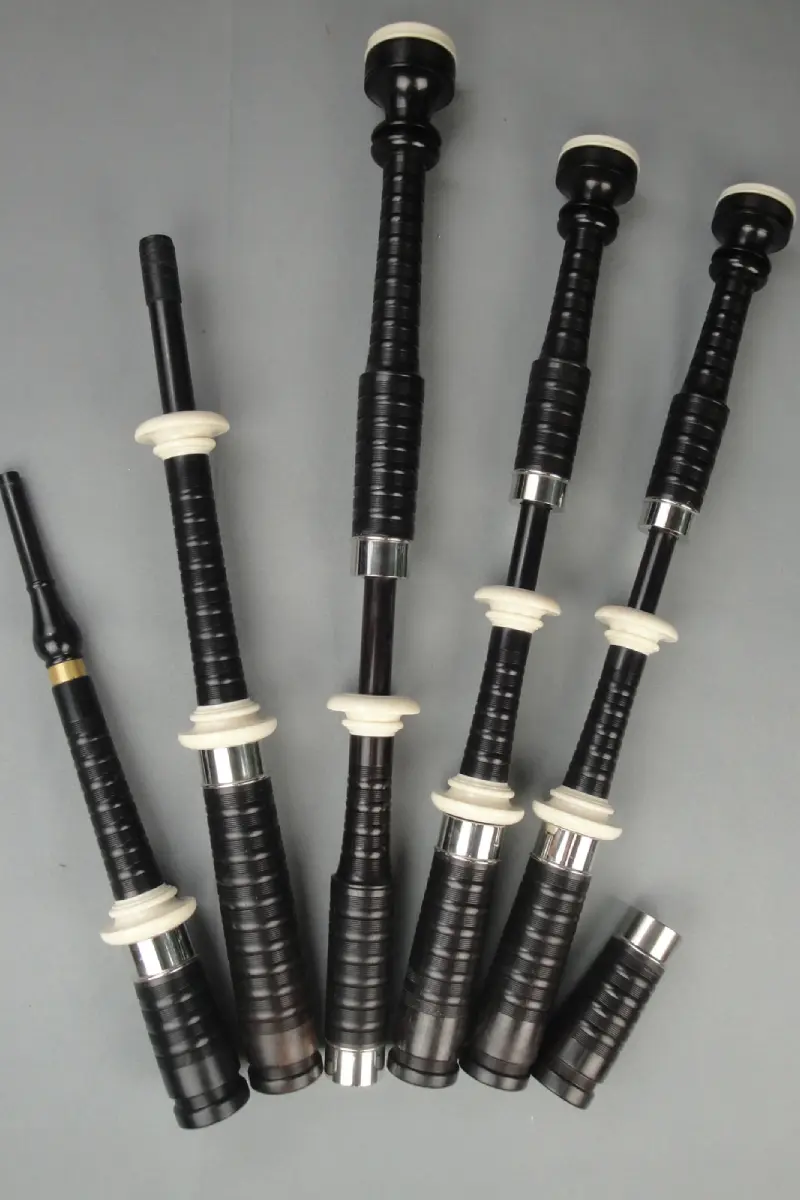
SOLD – This Legacy set has been played by one owner since 2017. The pipes are in superb condition but for one small chip on the bass ring.
The Legacy displays the most robust sound of any Atherton pipe. It is full and remarkably steady. The workmanship is without peer. When Dave came onto the market more than 20 years ago he set a new standard in handmade craftmanship and wood quality. That standard of quality has improved as Dave has evolved as a pipemaker, as have the tonal quality of the instruments.
This bagpipe is mounted in imitation ivory and nickel. It has a brass-lined blowpipe. The blowpipe stock is polypenco.
This is an heirloom bagpipe that will stand the test of time.
-
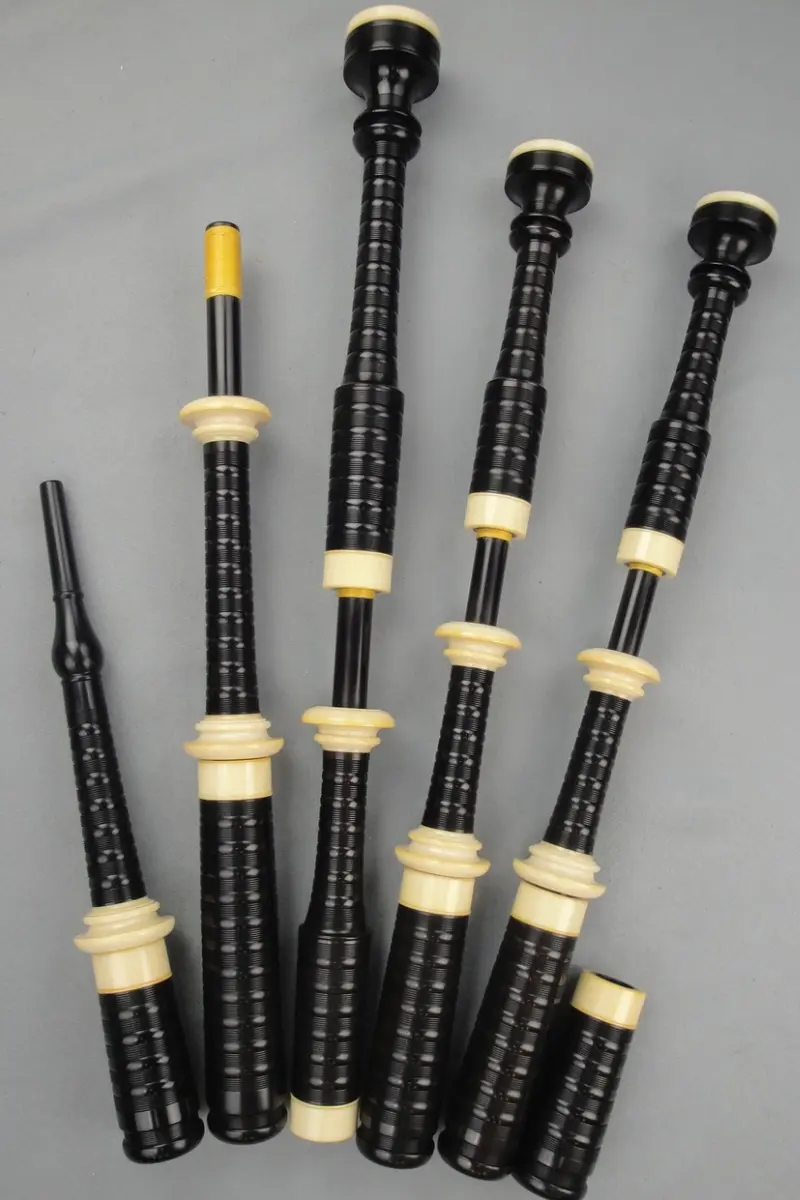
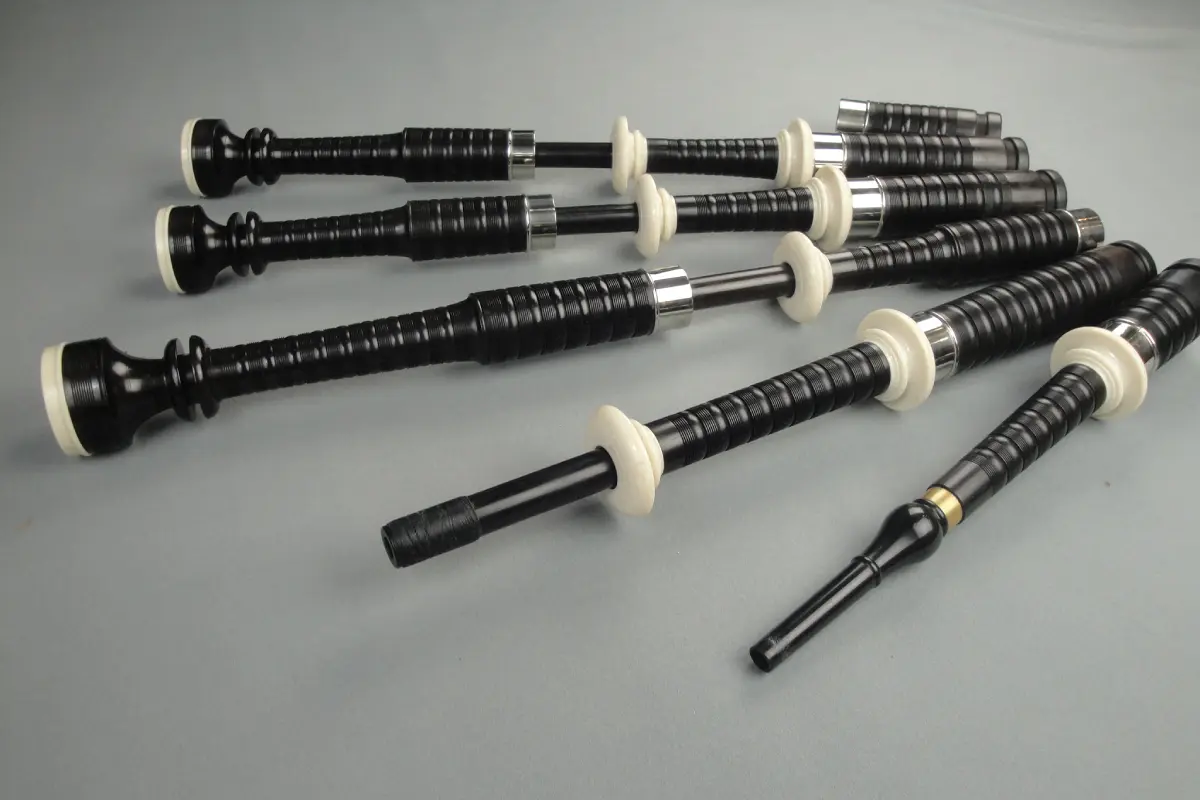
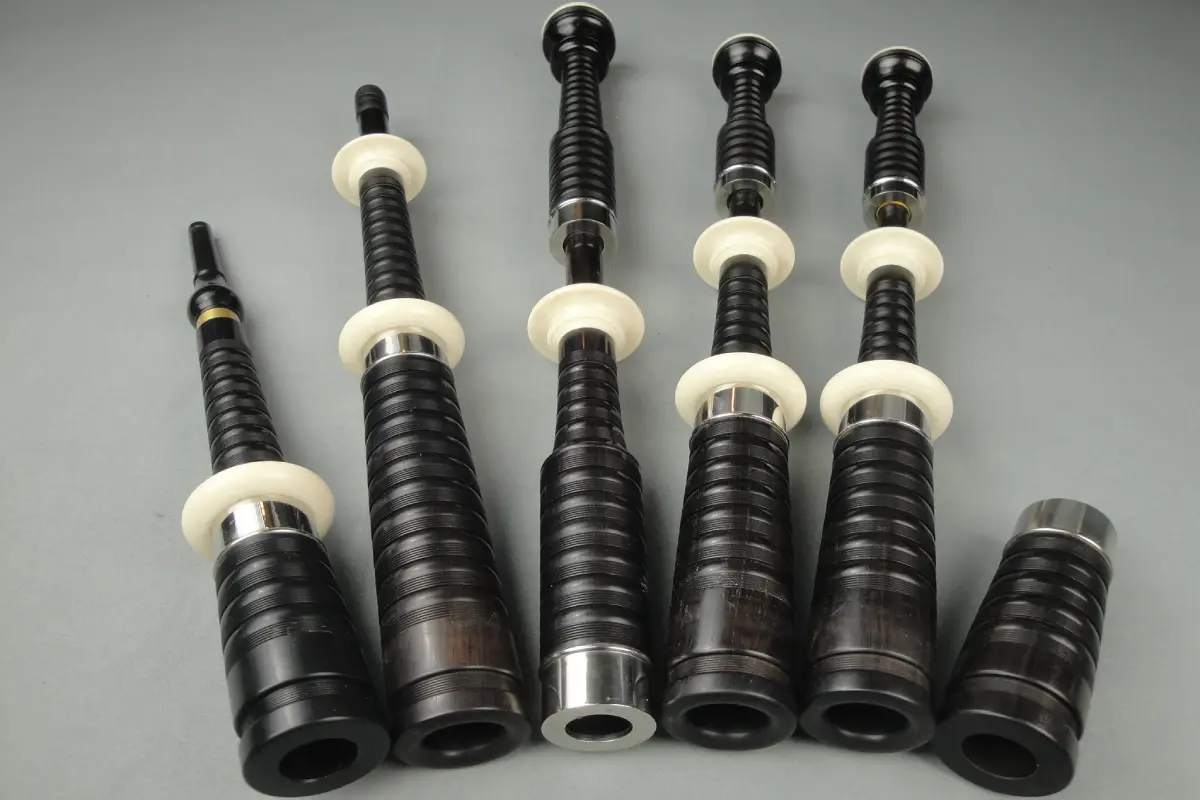
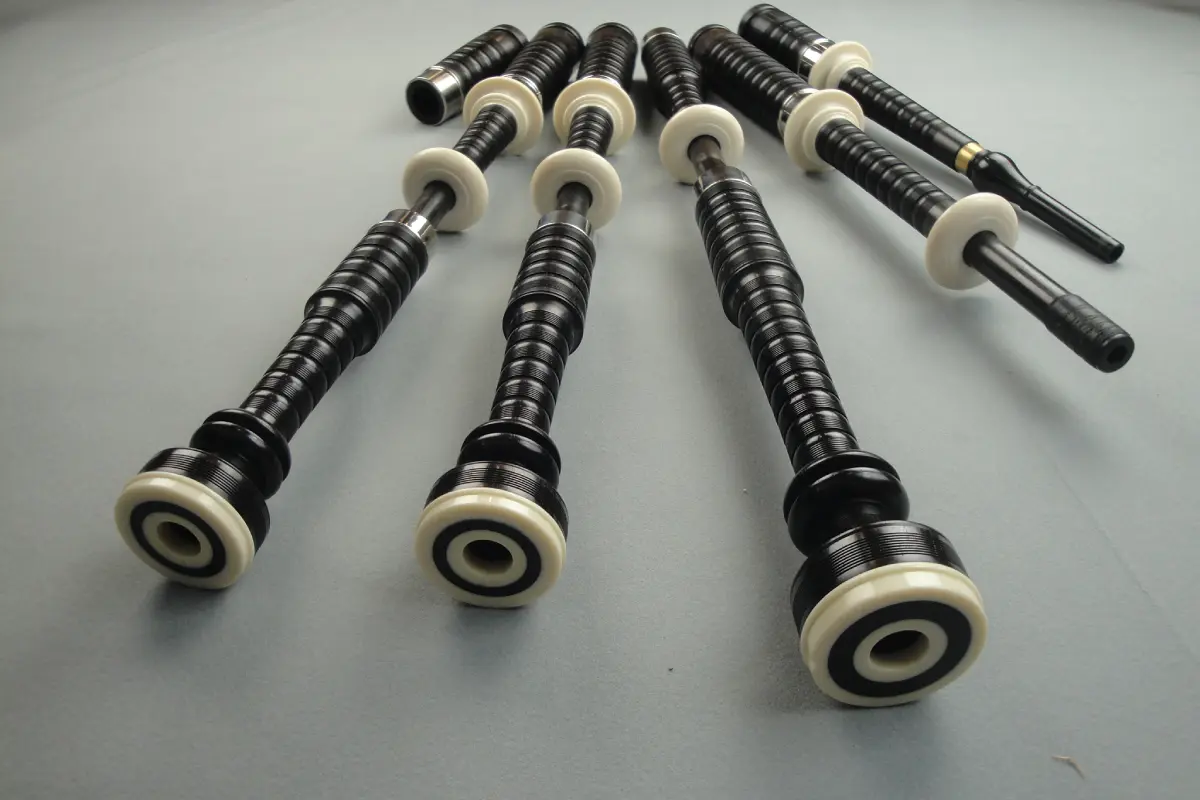
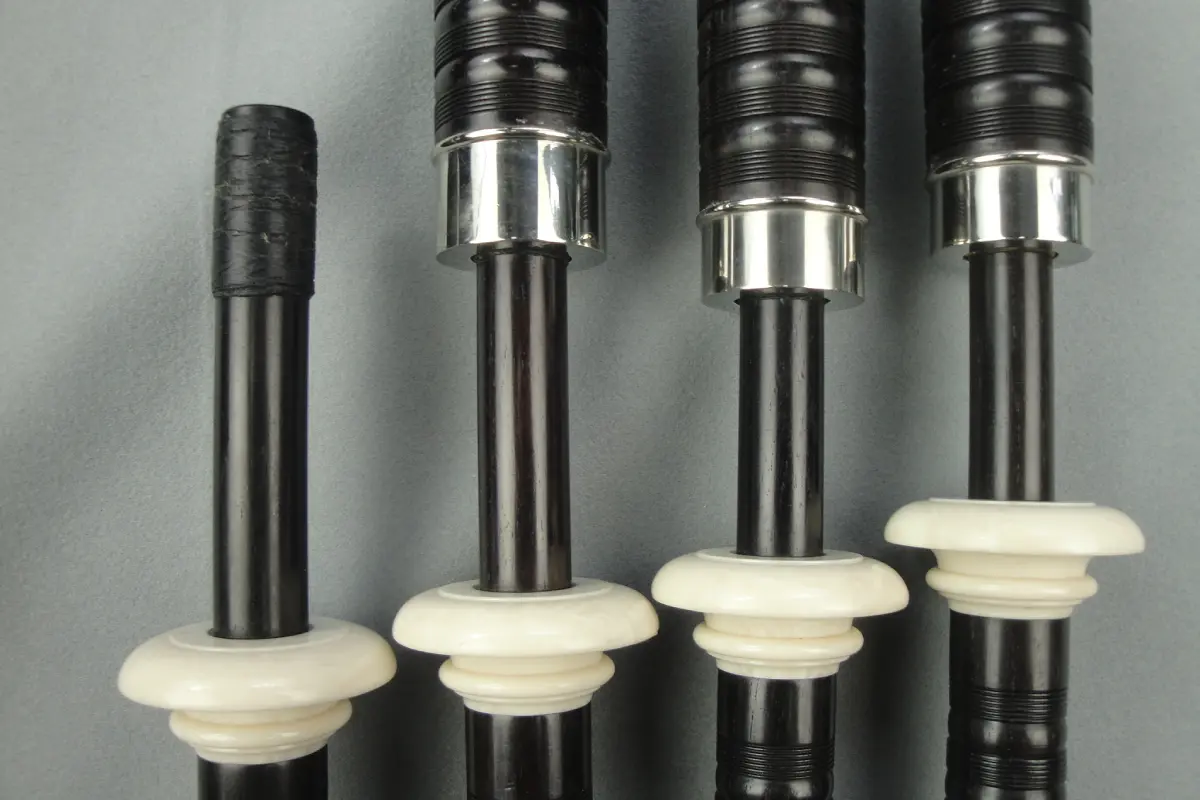
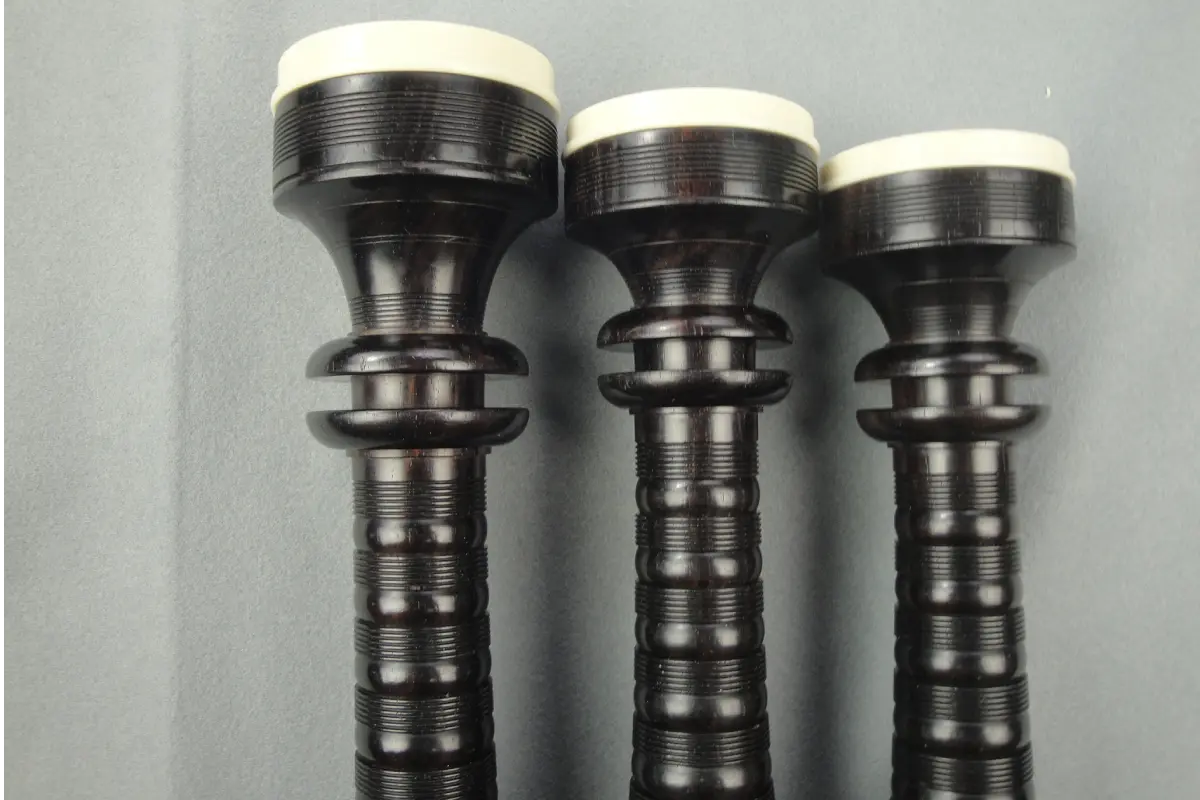
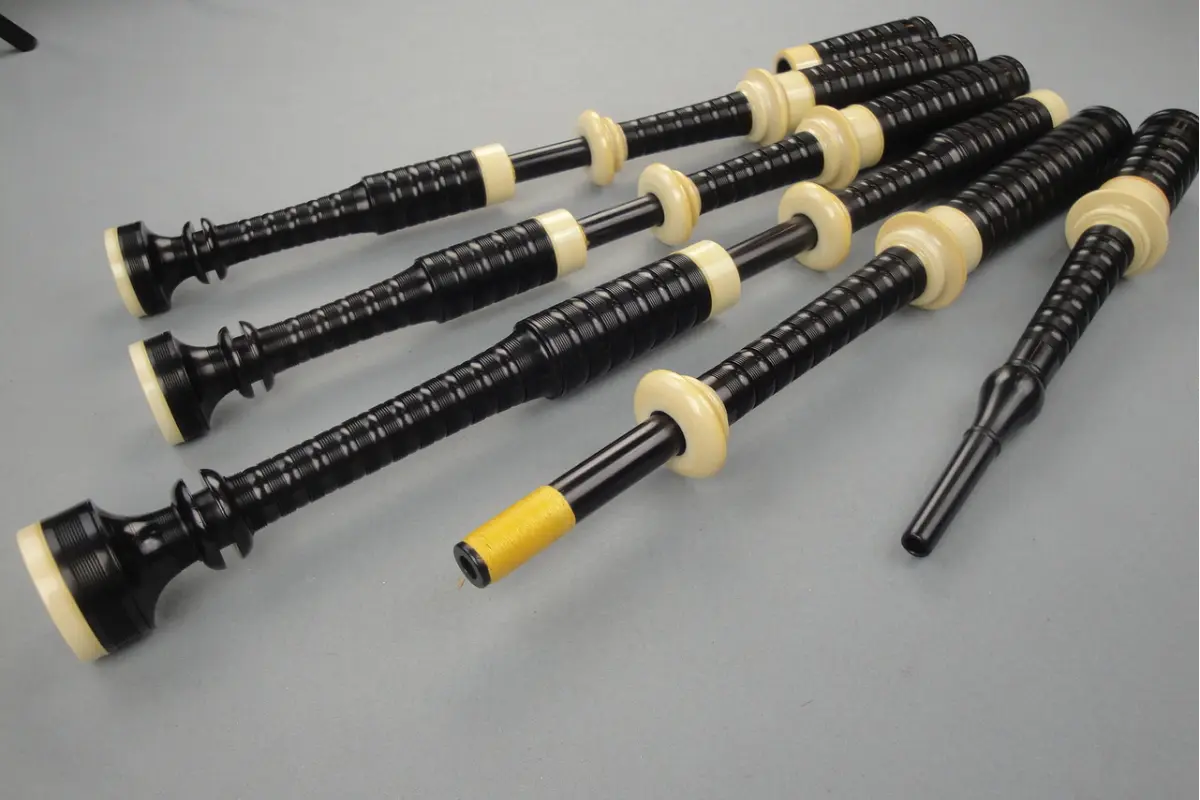
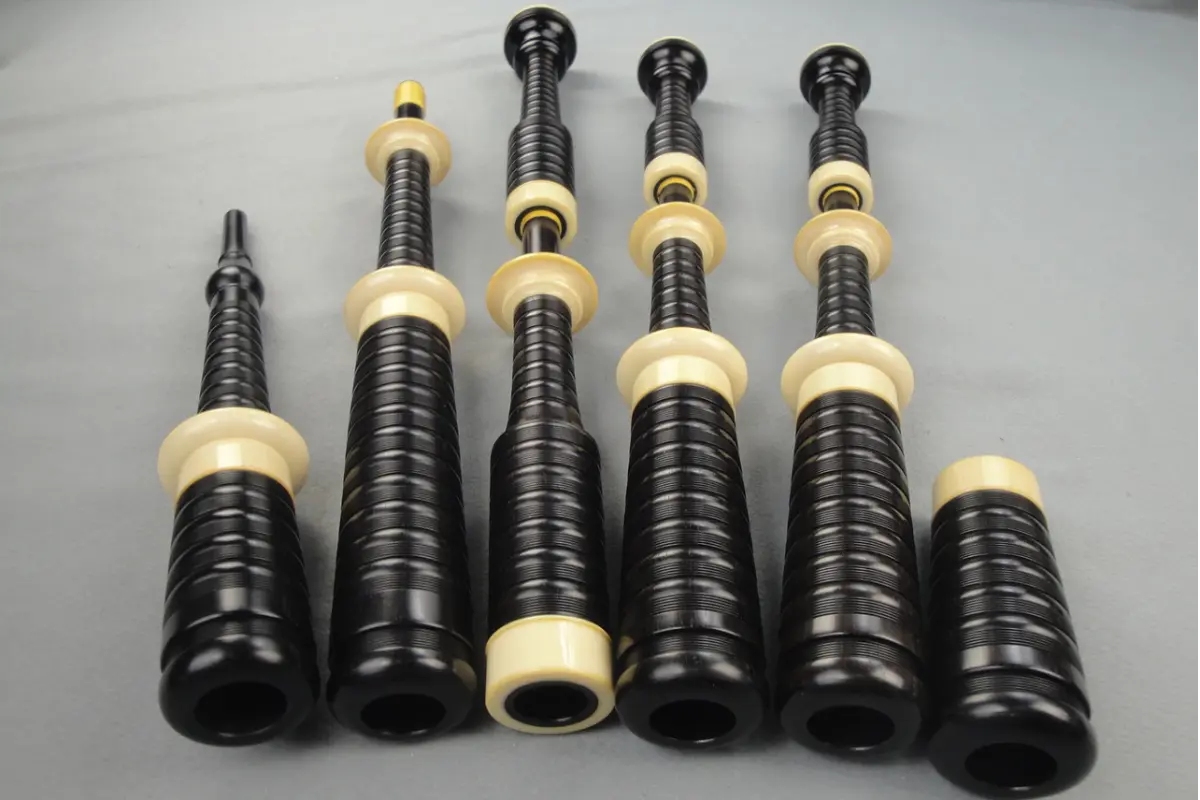
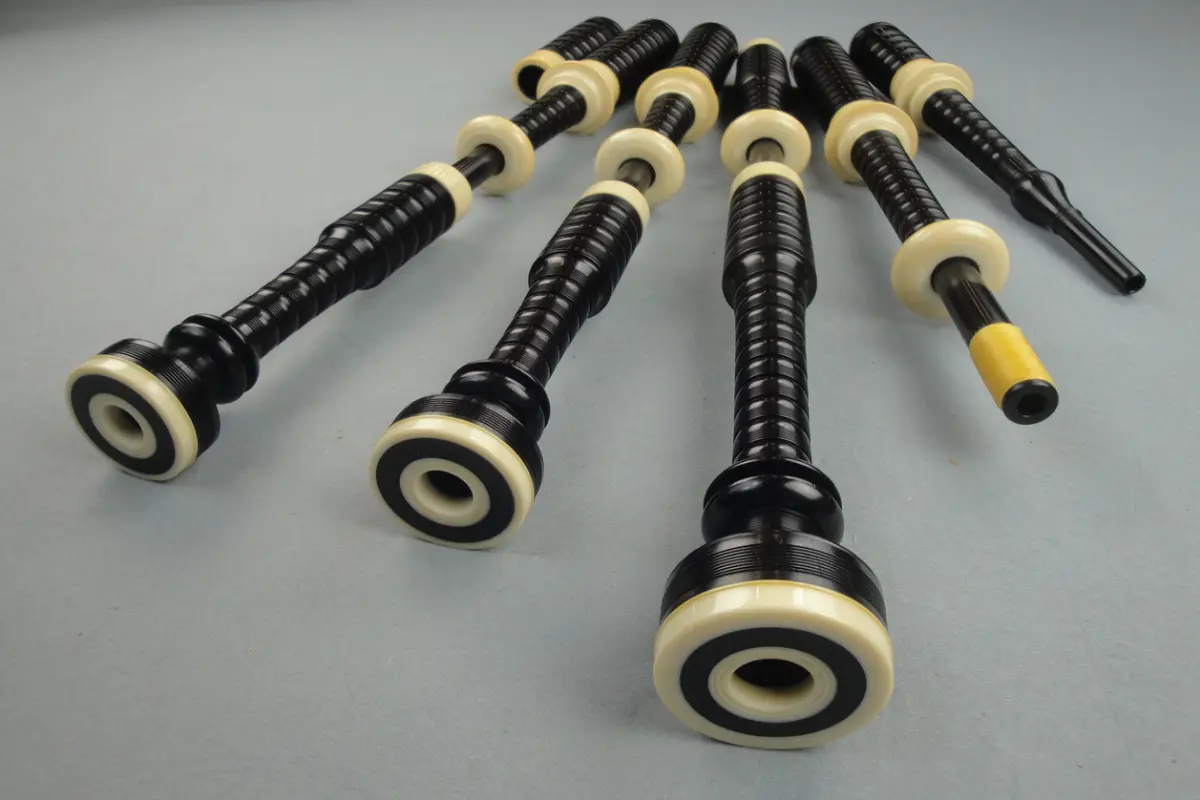
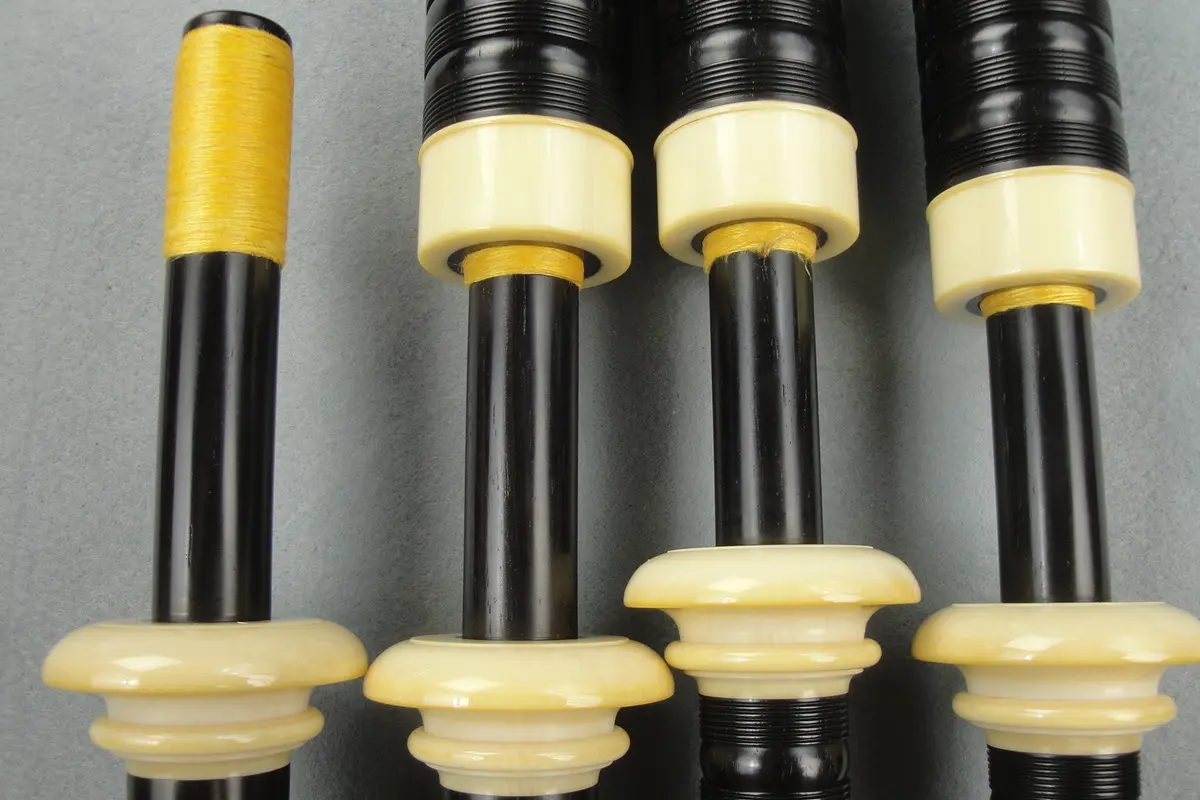
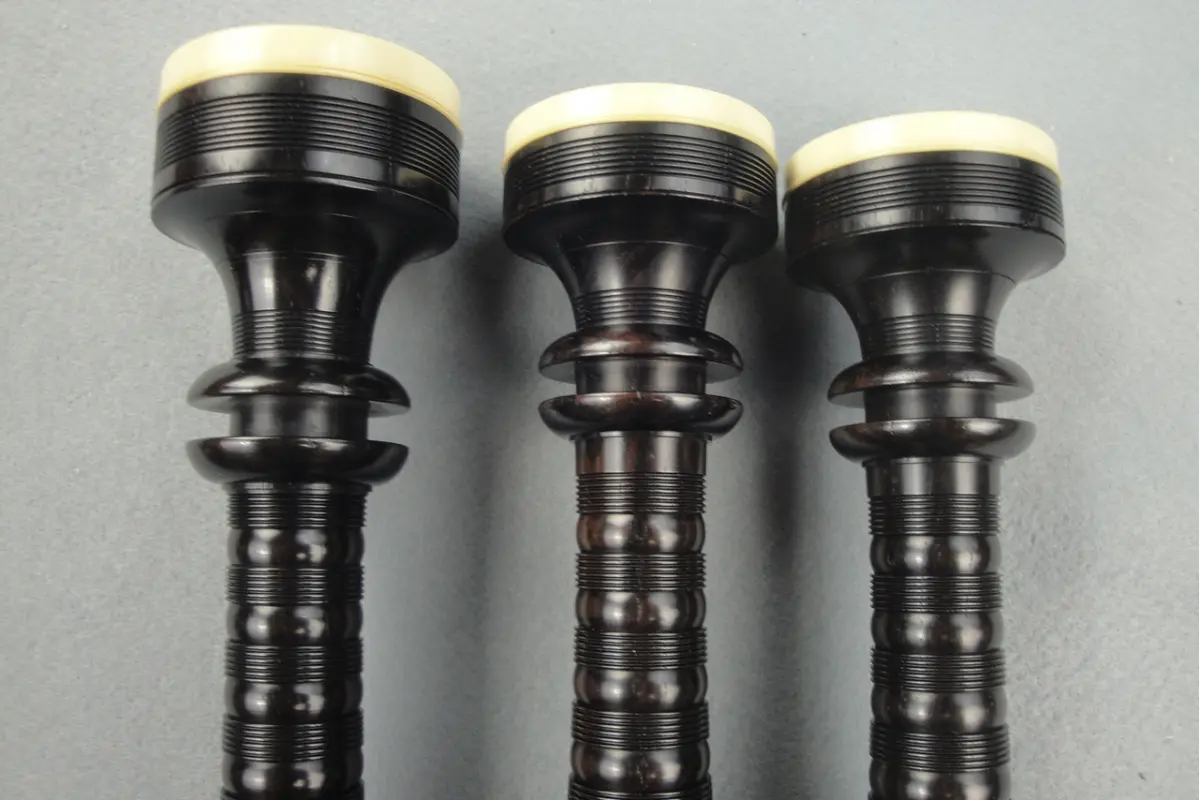
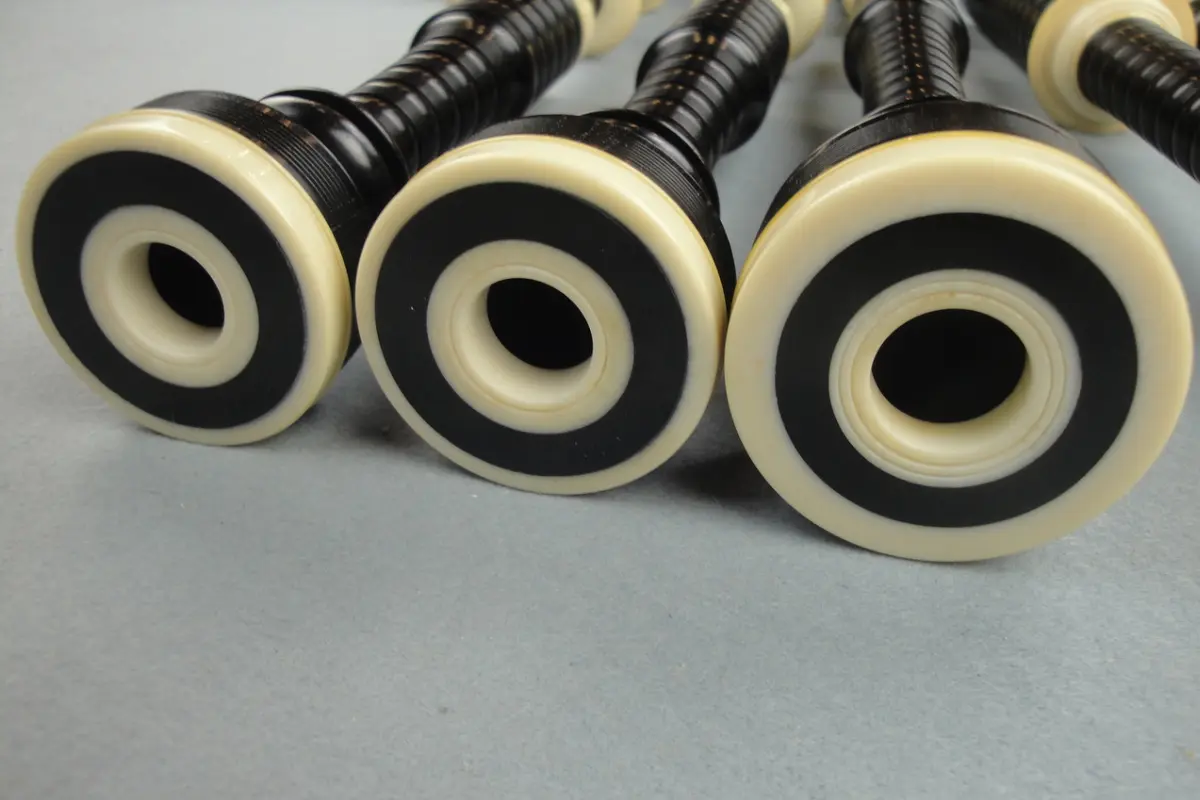
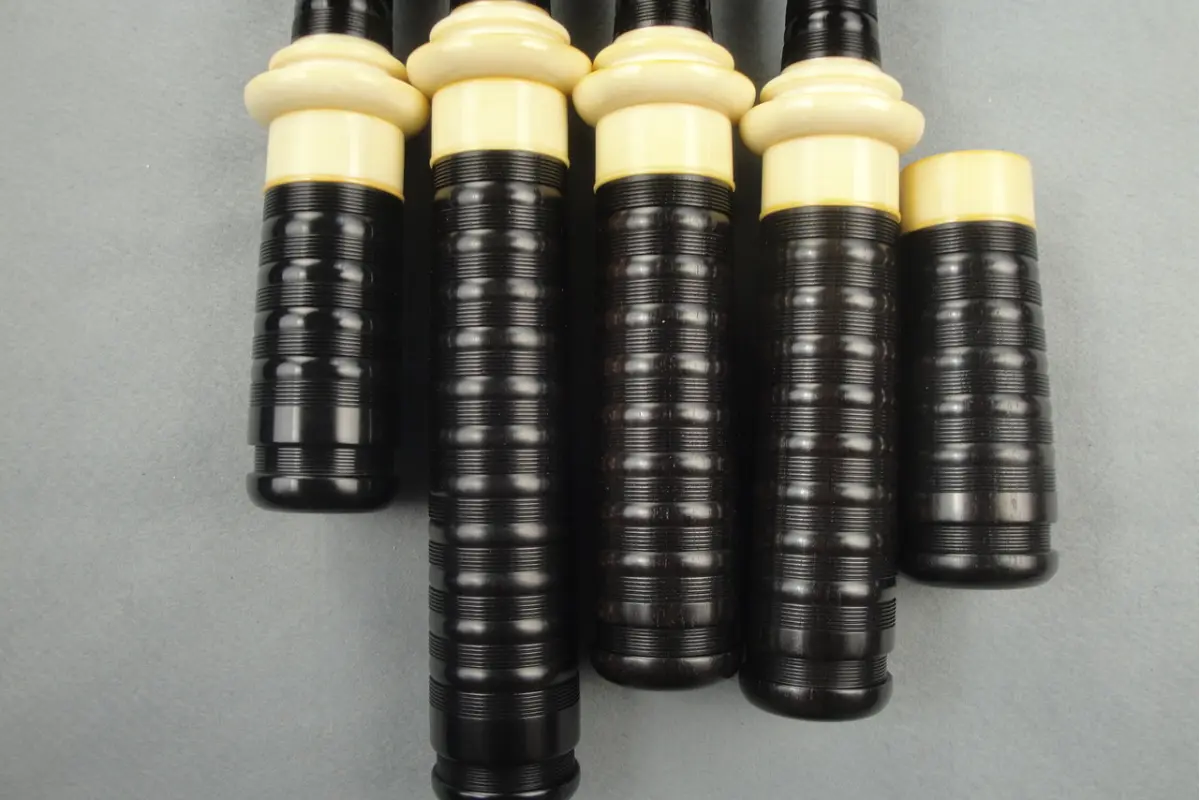
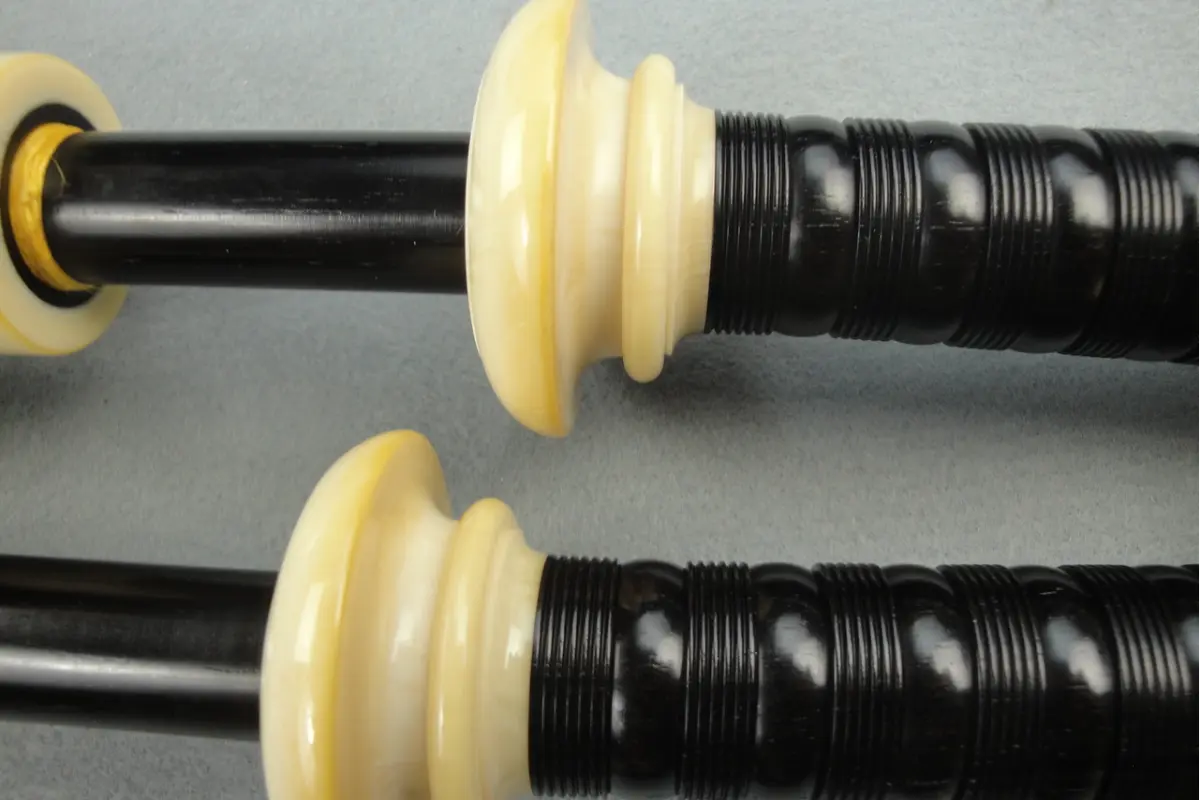
Dave Atherton ‘Legacy,’ 2026
SOLD – Though not a ‘vintage’ pipe per se, Dave Atherton’s pipes are valued just as much, and when a set comes available, it is listed here.
This Legacy set is the most robust bagpipe Dave makes. The bass/tenor balance makes for a seamless sound, and the steadiness of Dave’s bagpipes is remarkable. Atherton pipes are prize-winners at the highest level, and the Legacy has won more prizes than any other Atherton model. Dave uses the highest quality wood in the business, and his manufacturing standards are unparalleled. These are heirloom instruments.
This bagpipe is made in African blackwood with aged imitation ivory mounts.
-
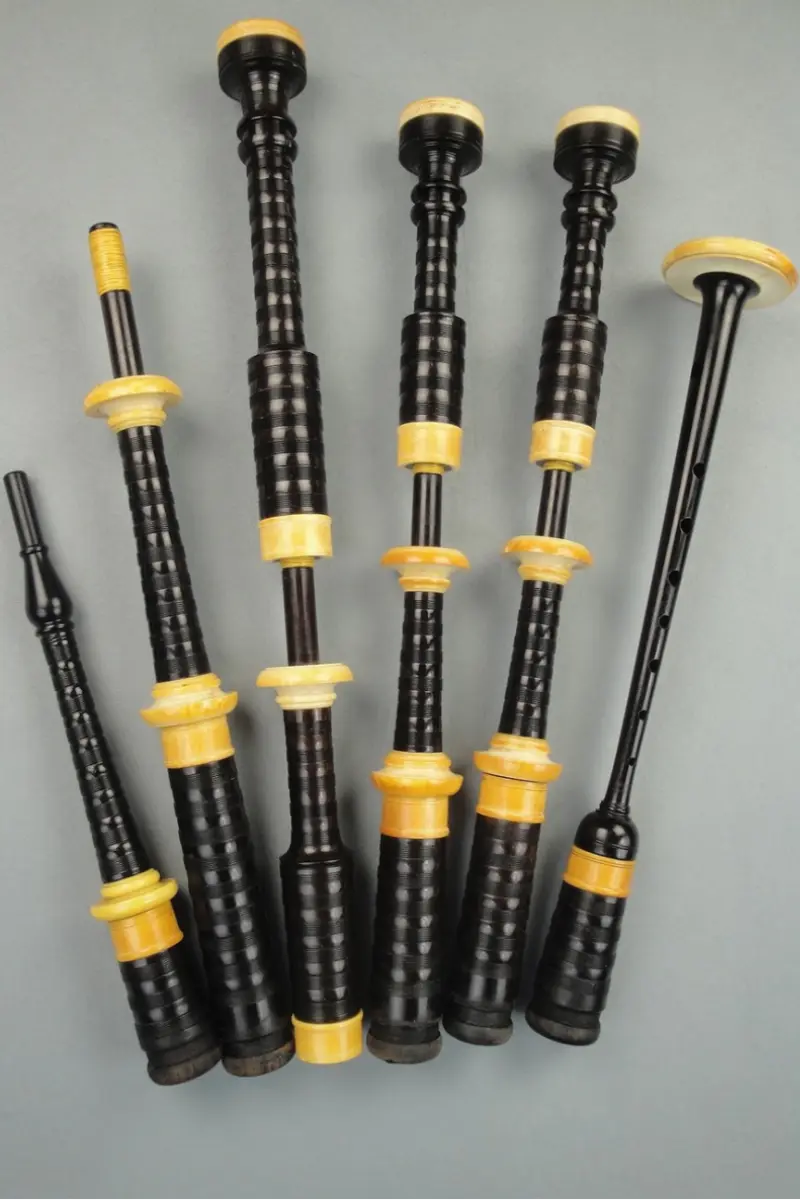
Grainger & Campbell, Circa 1960, Full Ivory
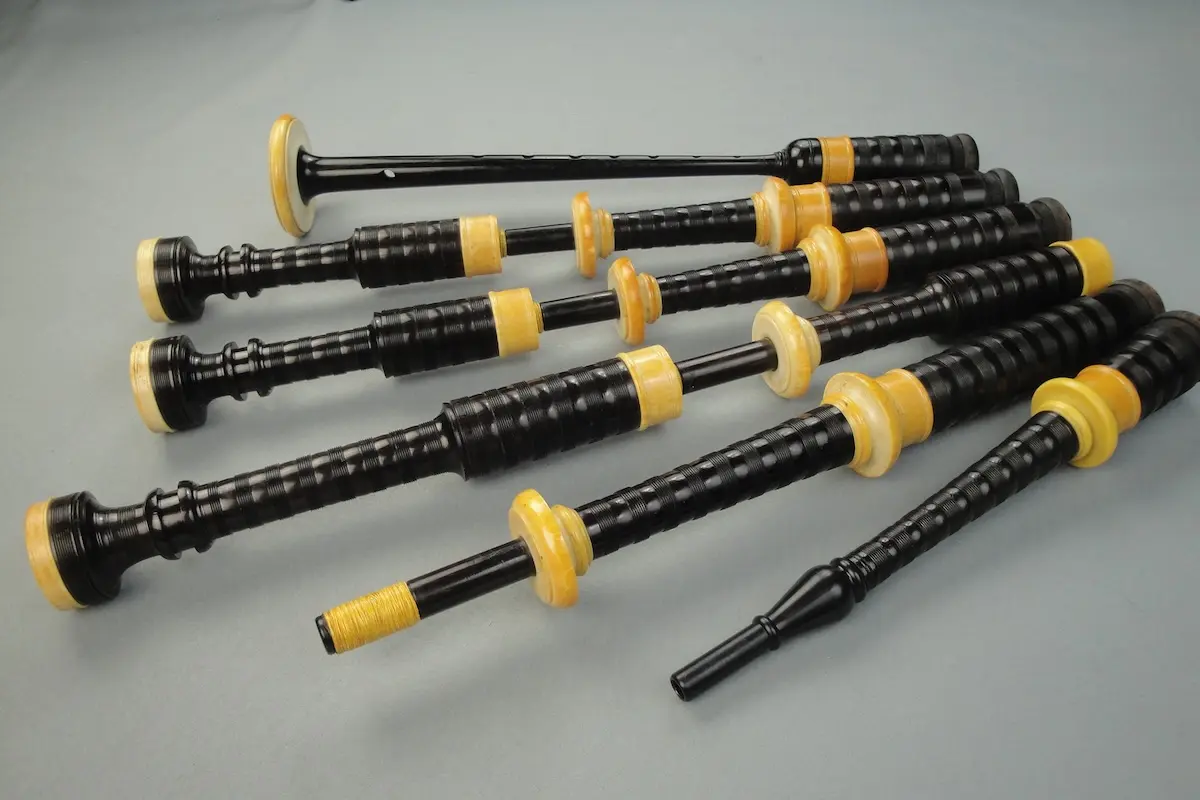
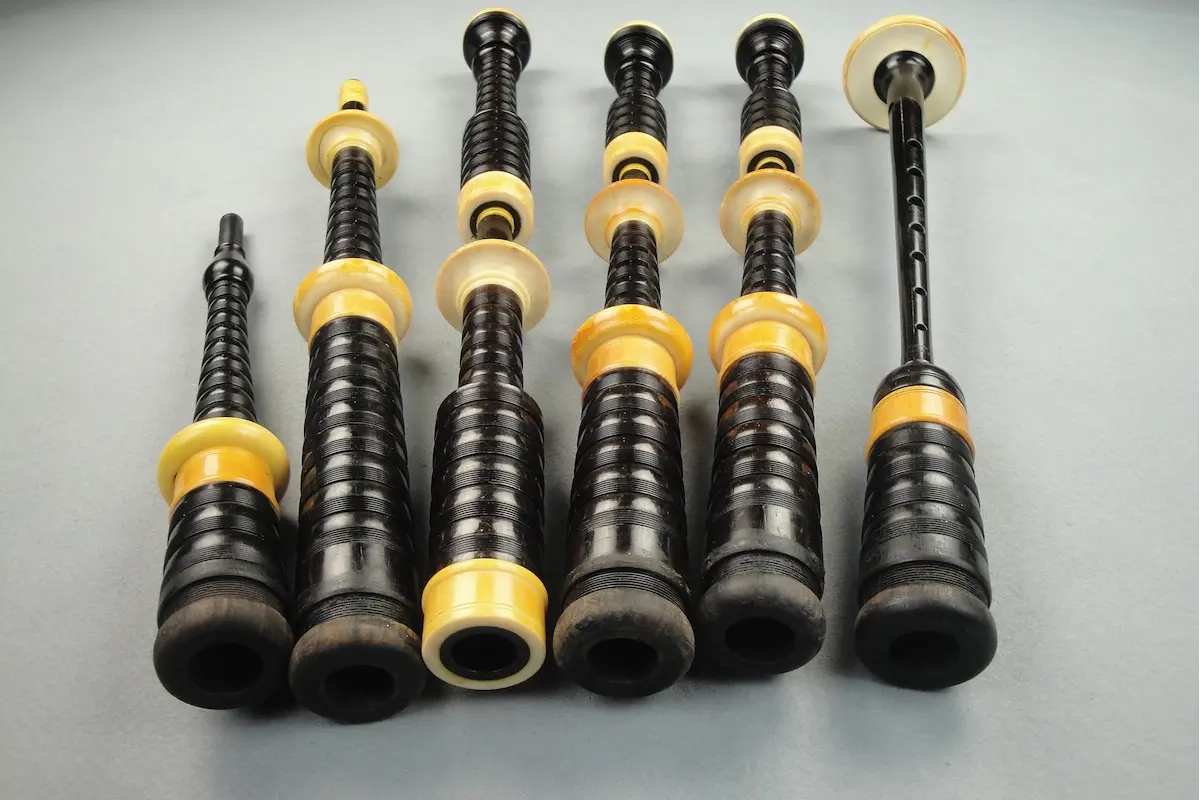
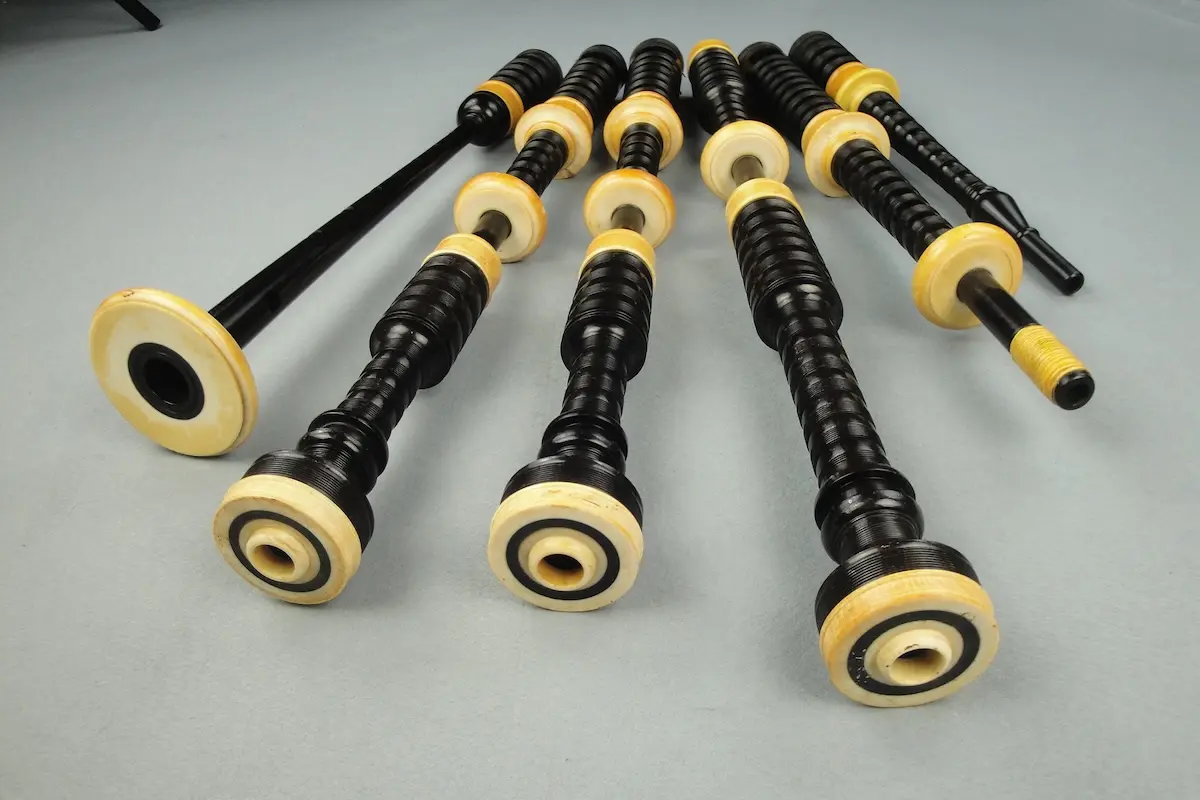
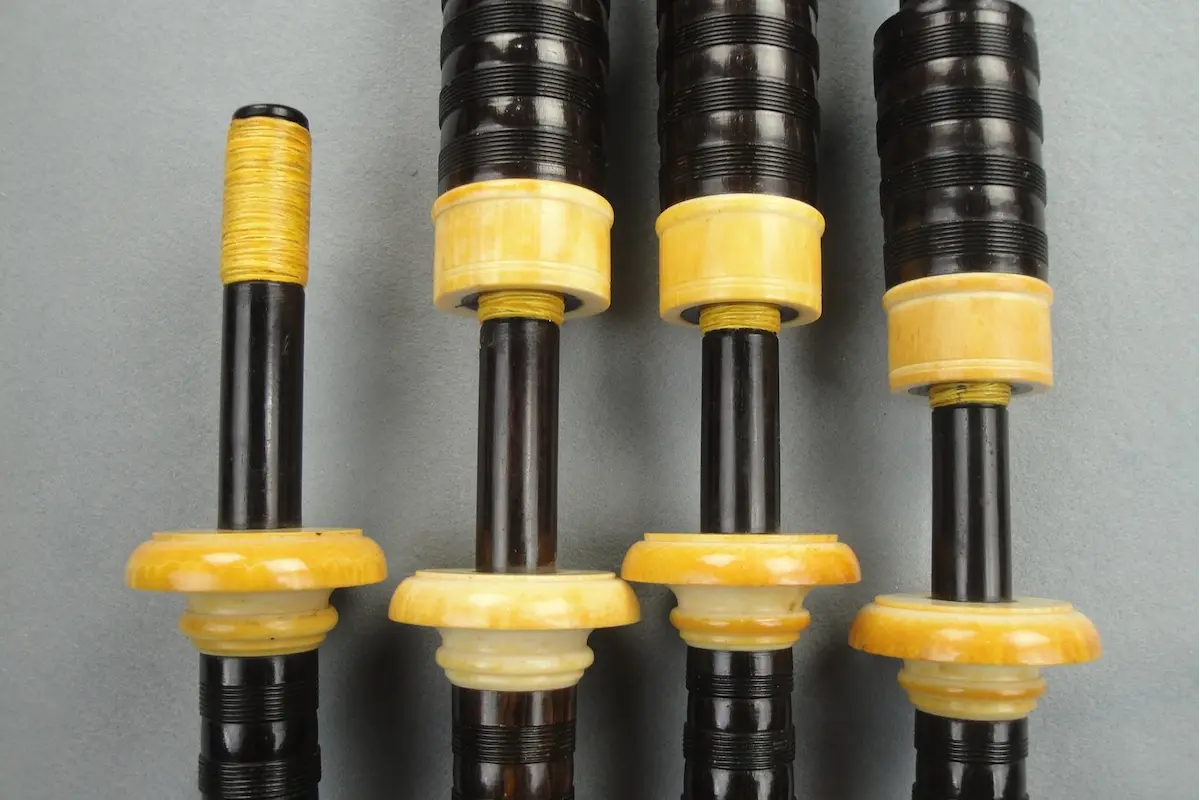
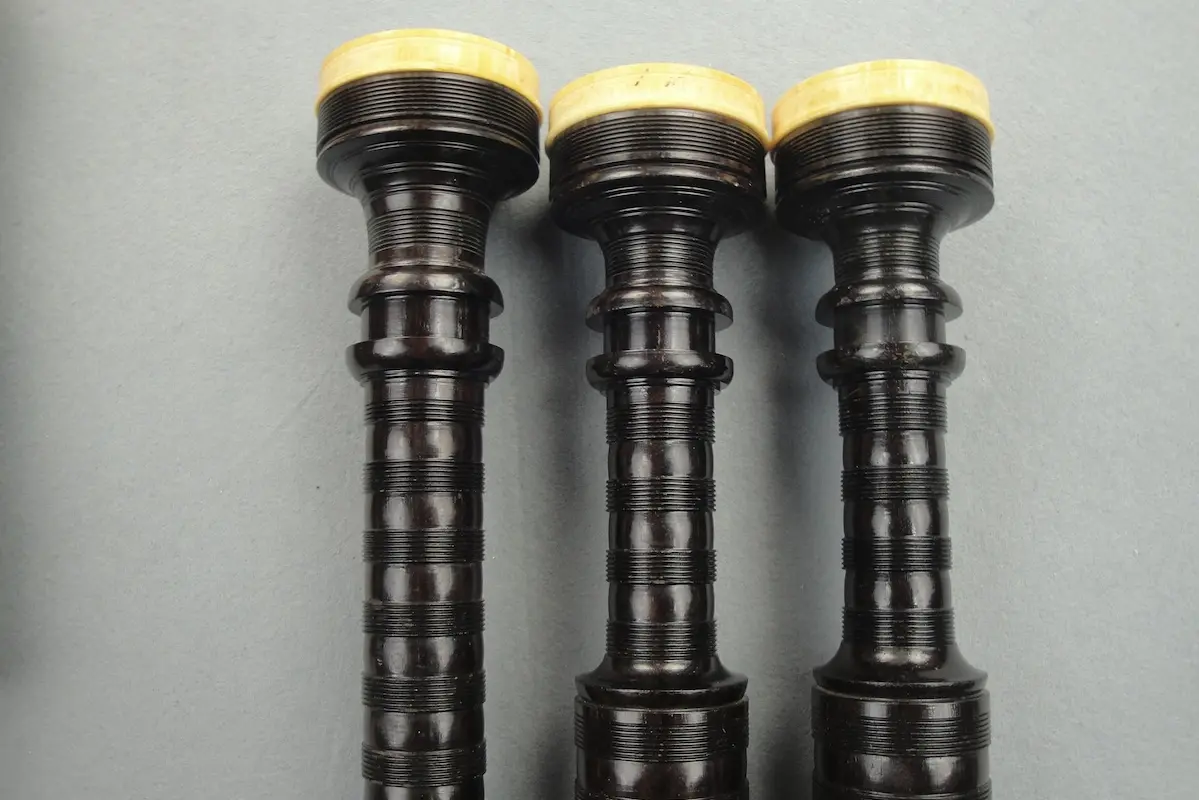
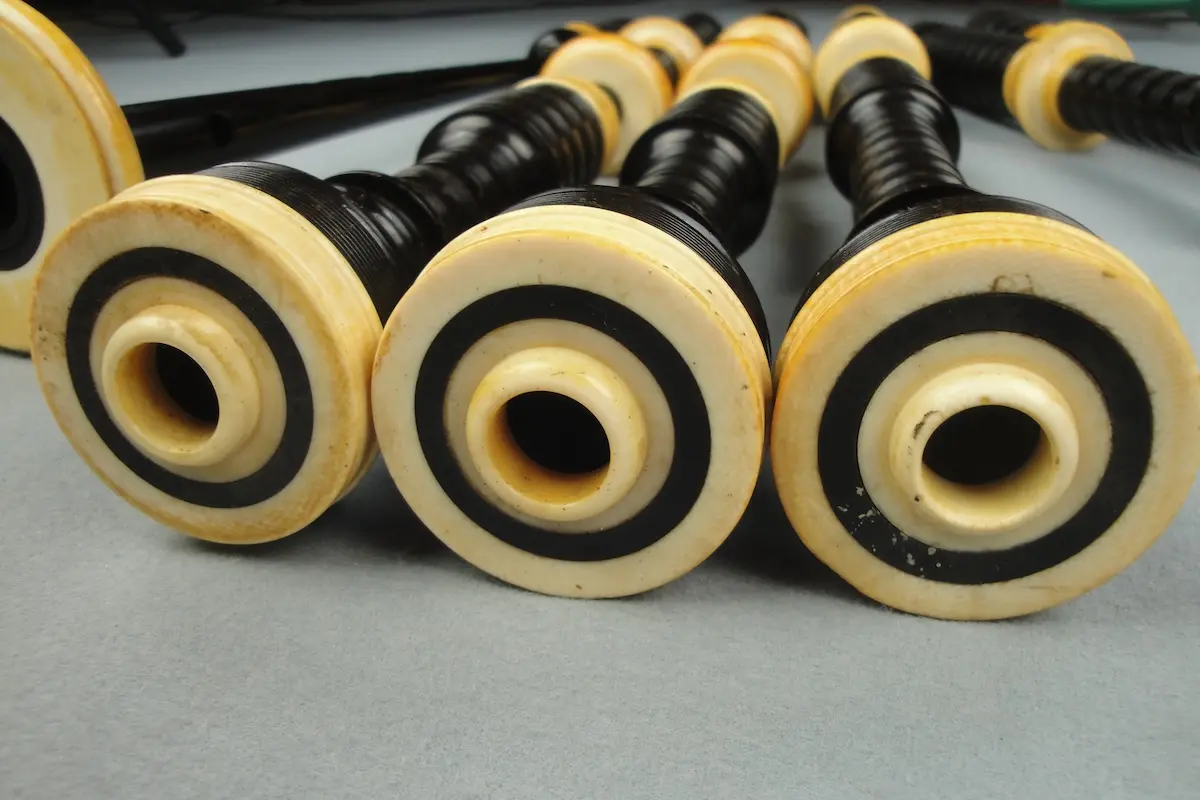
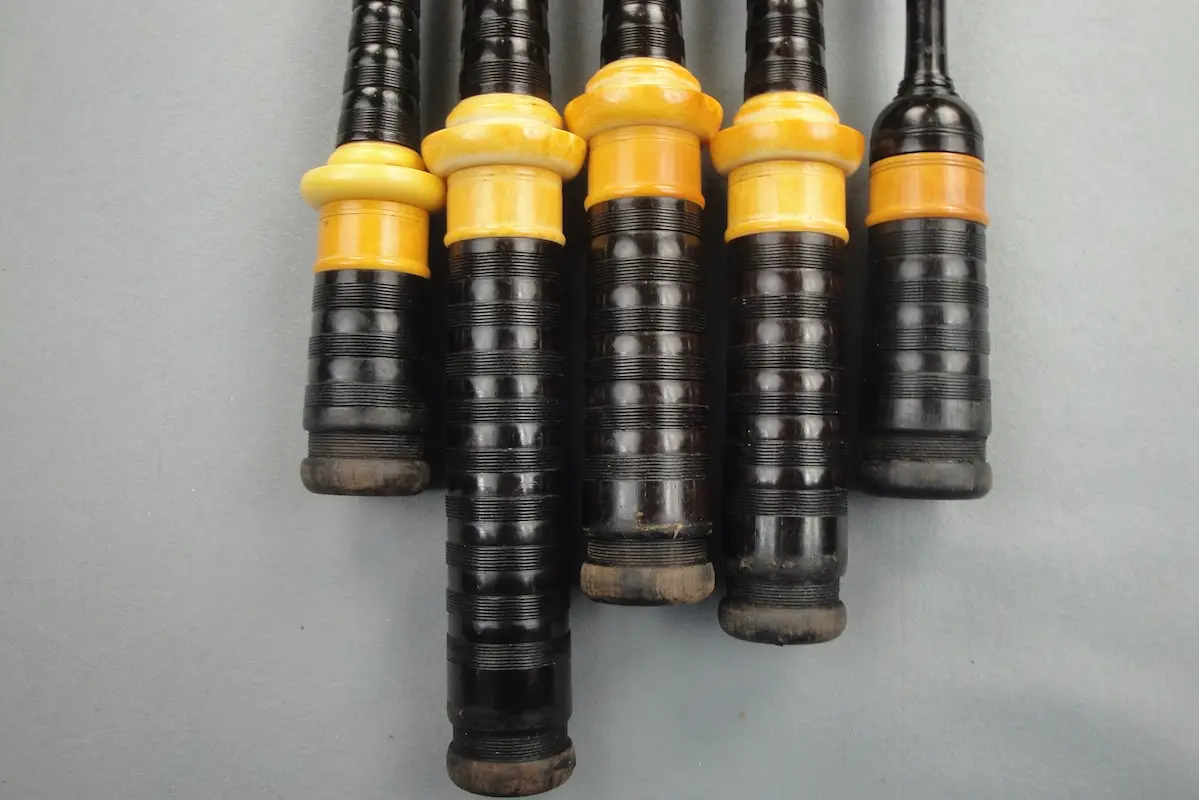
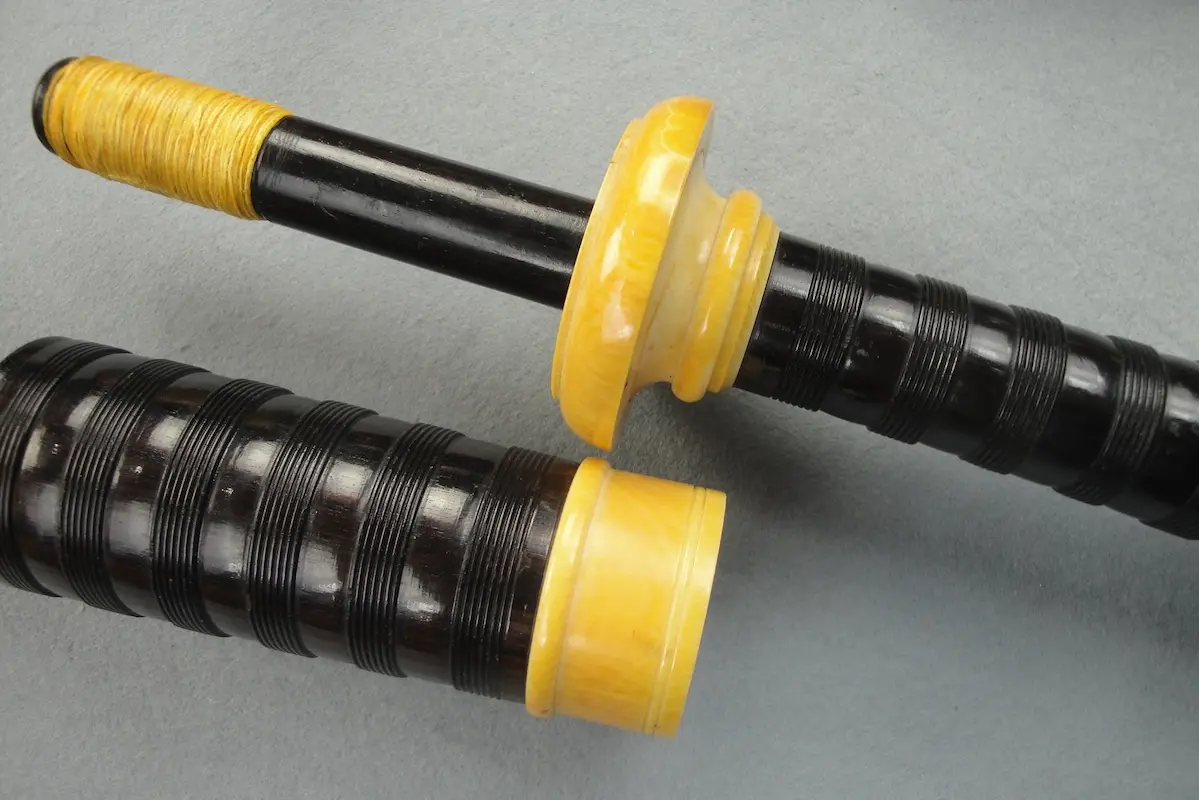
SOLD – In 1946, the Grainger & Campbell pipemaking company appeared in Glasgow. In 1952 they moved into the premises of the recently closed Duncan MacRae pipemaking company at 1103 Argyle Street. The company’s heyday would occur when legendary pipers John MacFadyen and Donald MacLeod became associated with the company in the late 1950s and ’60s and the shop became a magnet for pipers from all over the world.
This set came to me in fine shape with no cracks, or damage. The original finish is still in good shape. The ivory has taken on an unusual but attractive aging patina that gives the set a lot of personality. The blowpipe is not original to the set, but the mount is a good colour match.Grainger and Campbell made a tonally strong instrument back in the day: full, vibrant and with good chanter blend. All in all, this is an affordable vintage instrument with excellent character and tone.
-
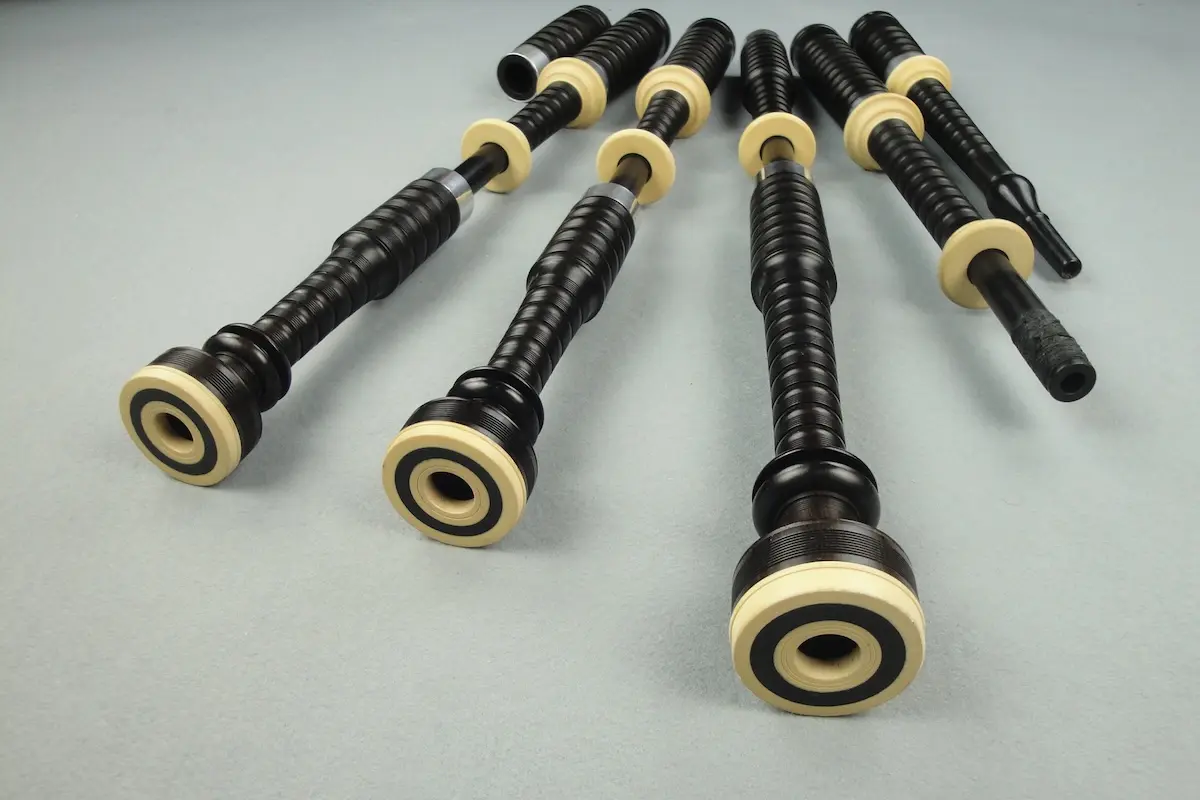
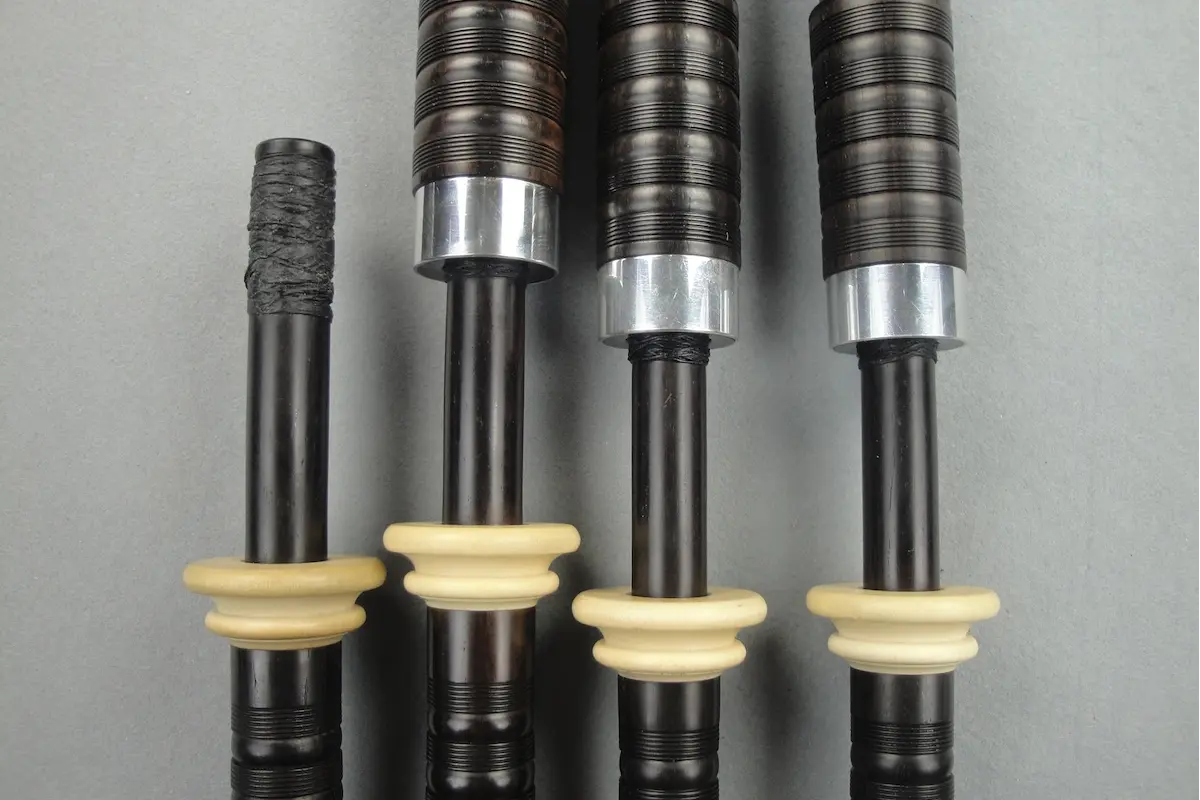
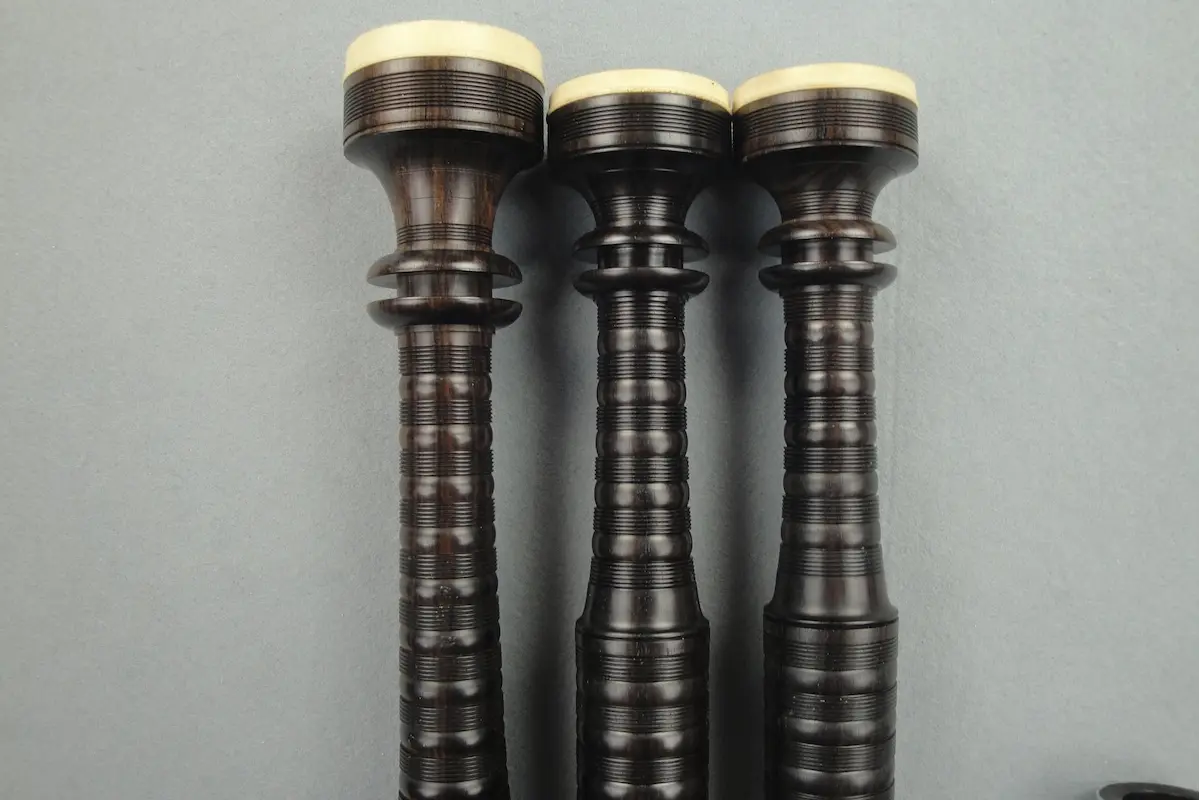
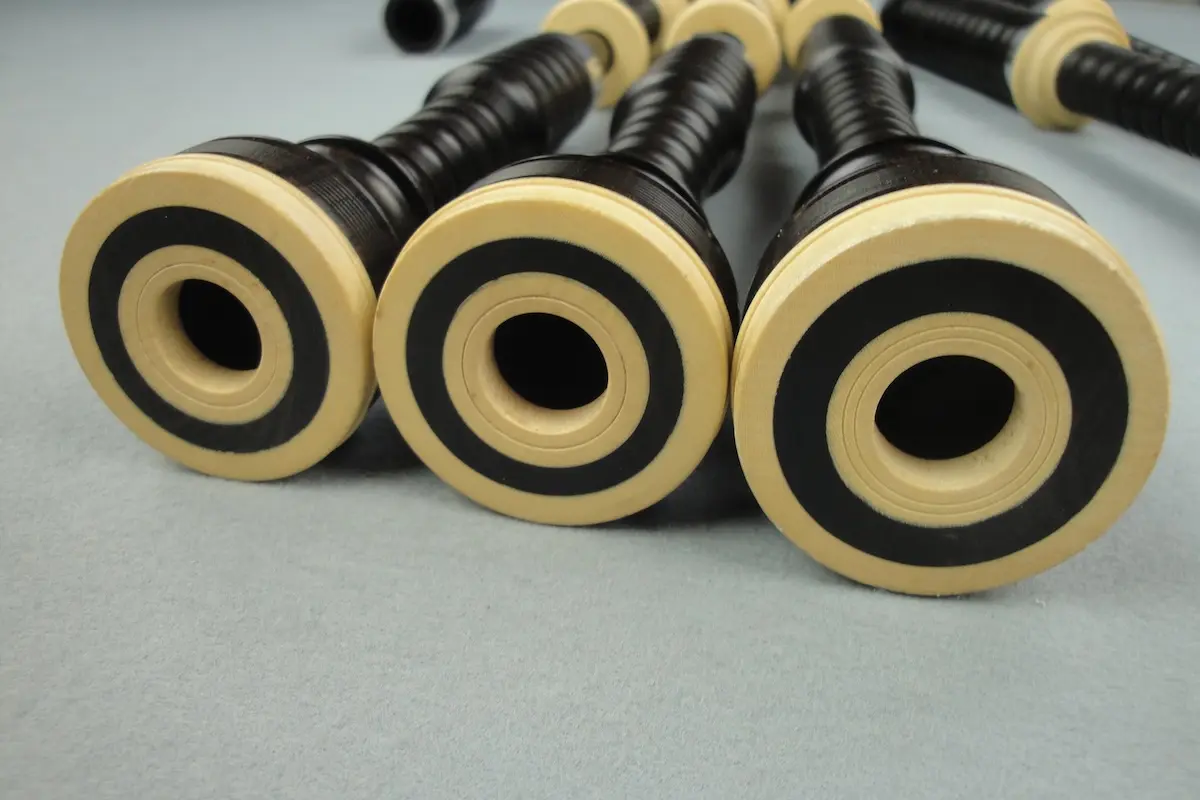
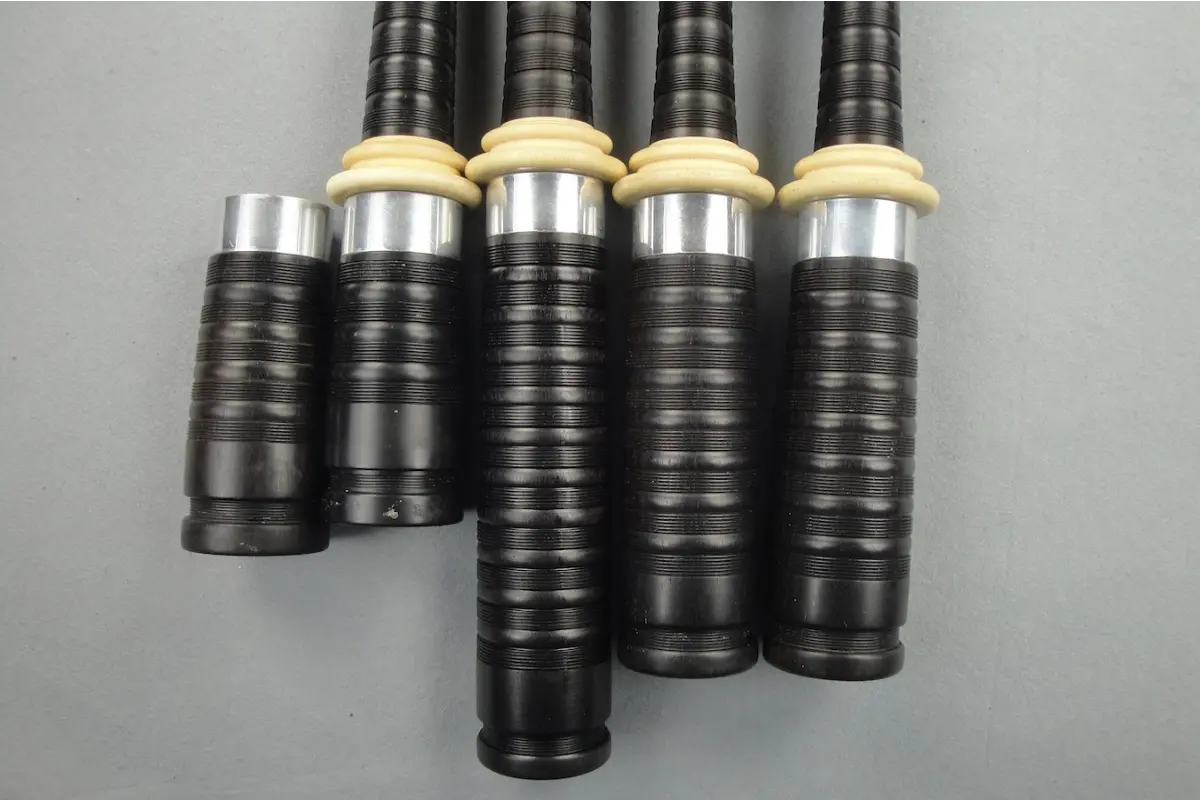
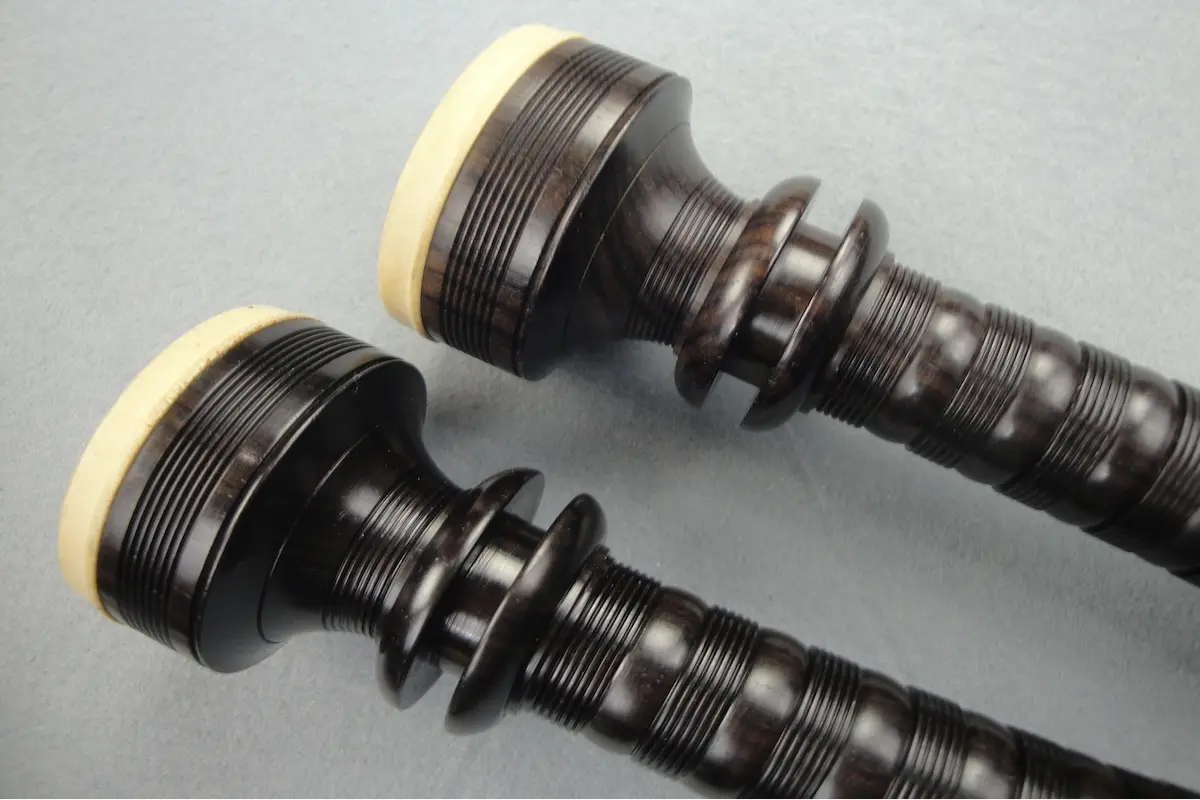
Atherton Premier, 2022, Holly, Aluminum Alloy
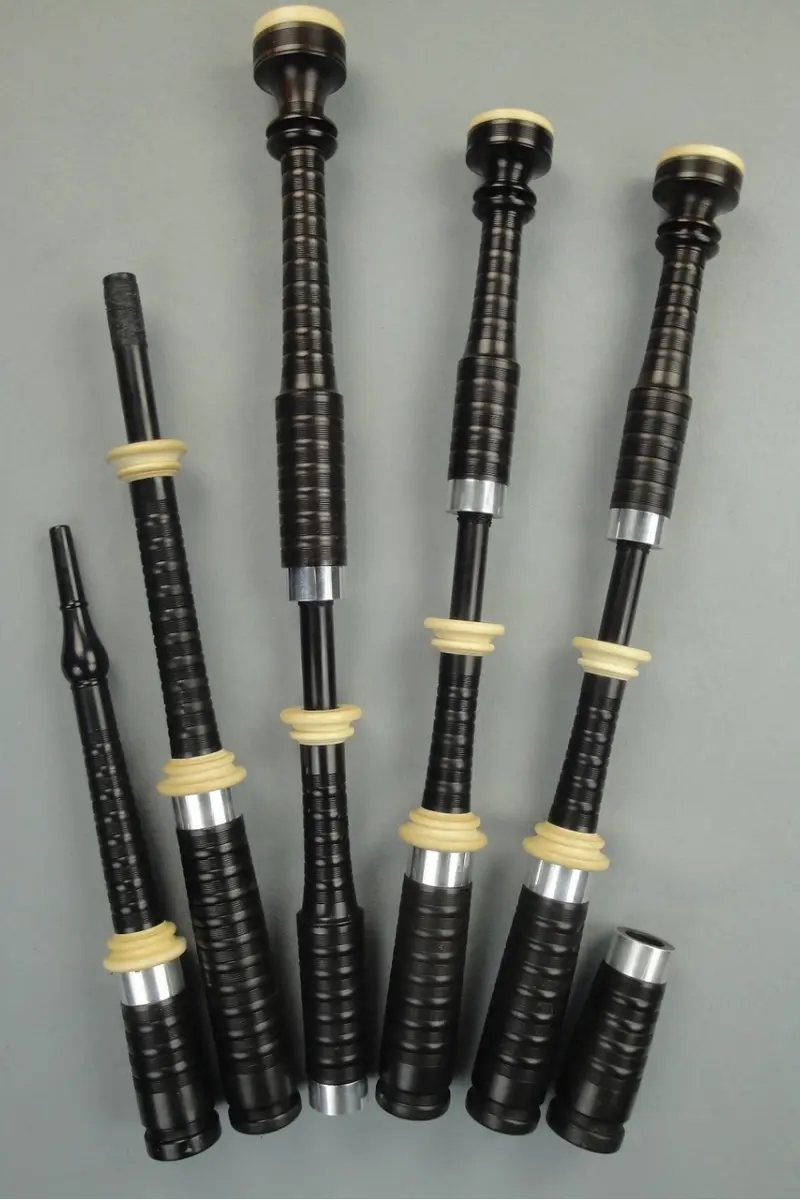
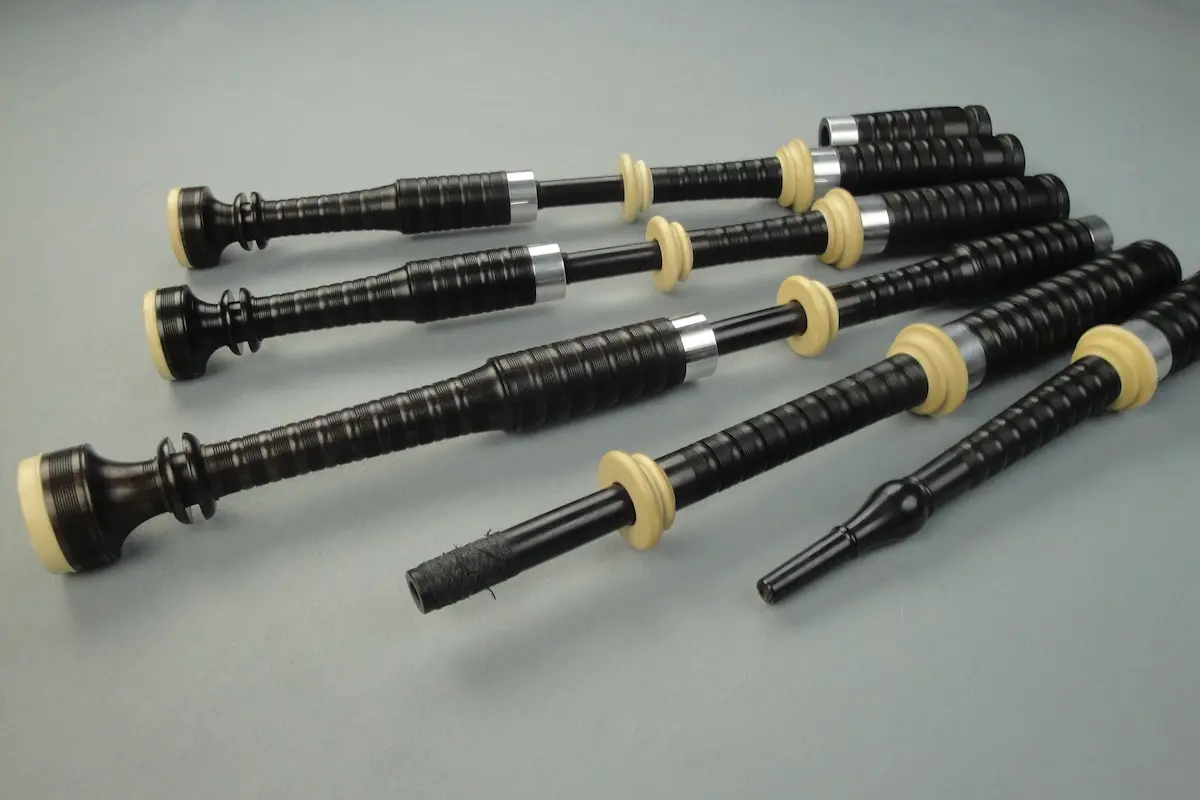
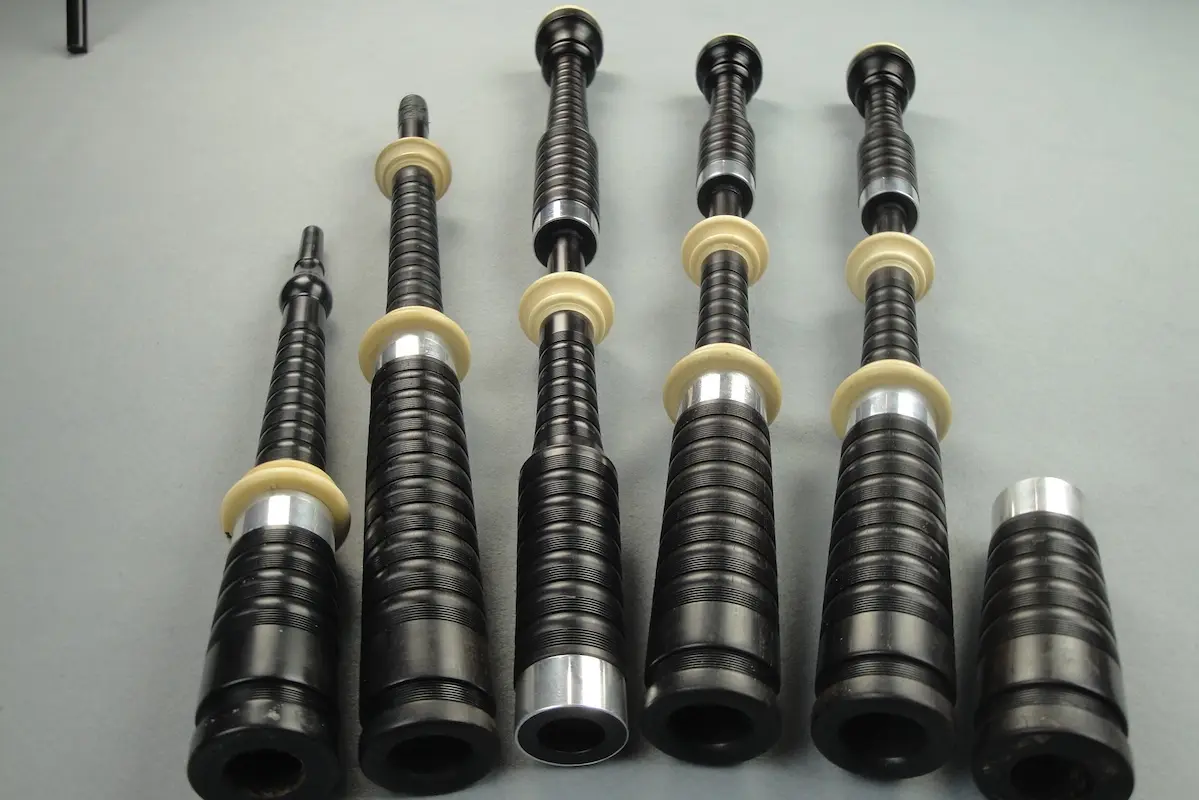
SOLD – A spinoff of the famous Atherton MD Duncan MacDougall reproductions, the Premier has won more major prizes than any other Atherton model.
The Premer sound is big and rich, with a bass sound that fills the room and a steadiness virtually unequalled by any modern bagpipe maker.
The set is made in African blackwood with holly projecting mounts and caps and aluminum alloy ferrules. At some point a crack was fixed on one tenor drone top, the remnants of which are still visible. Aside from this, the set is in superb condition.
-
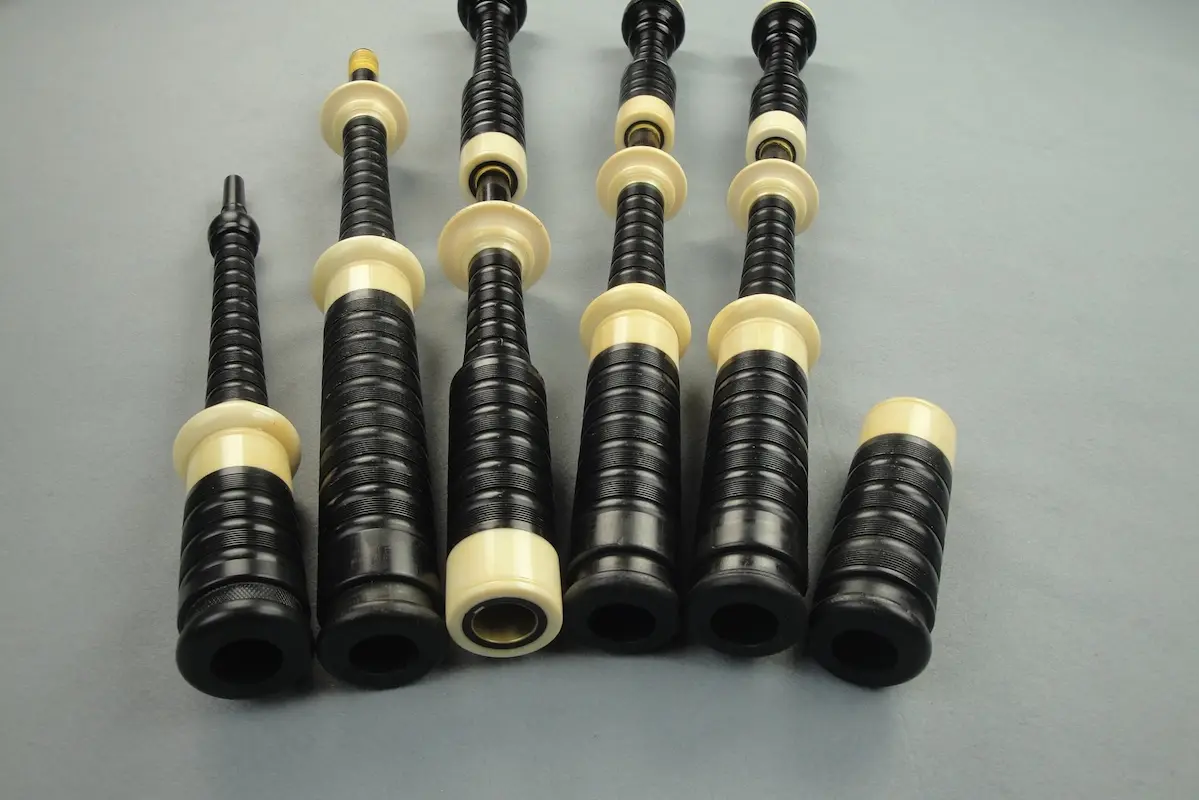
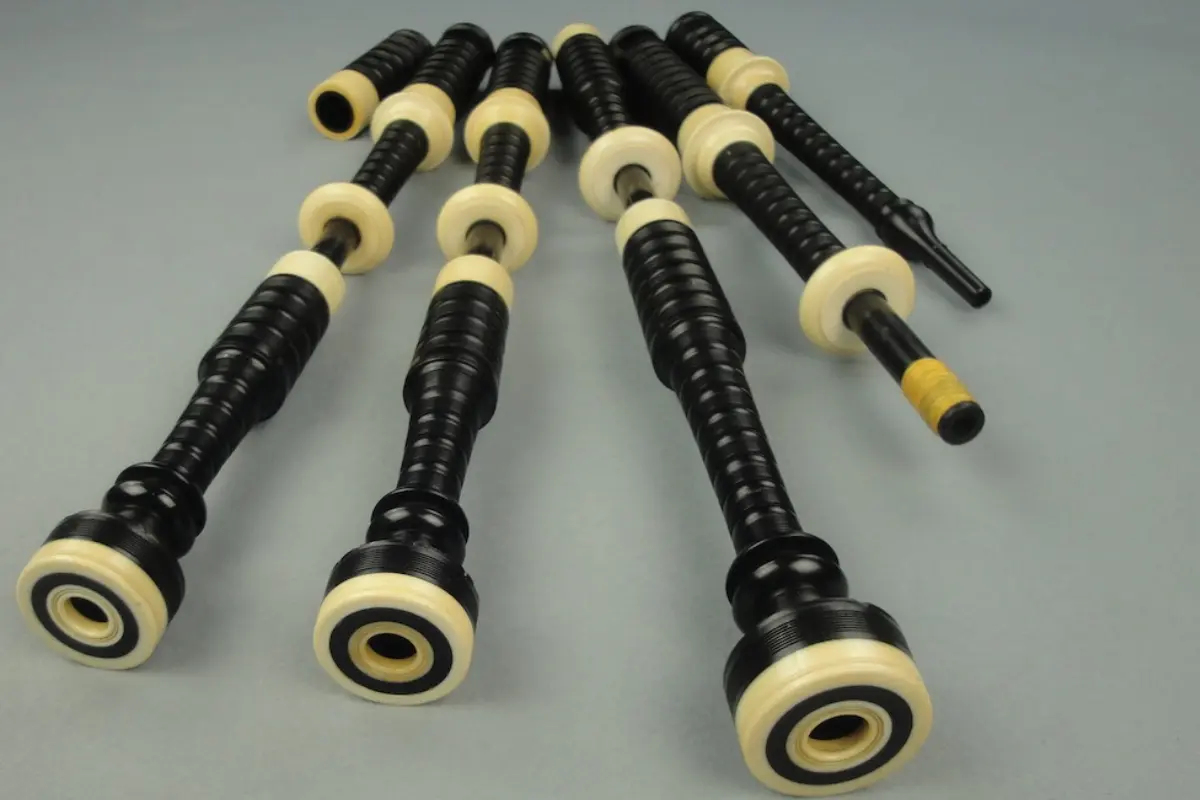
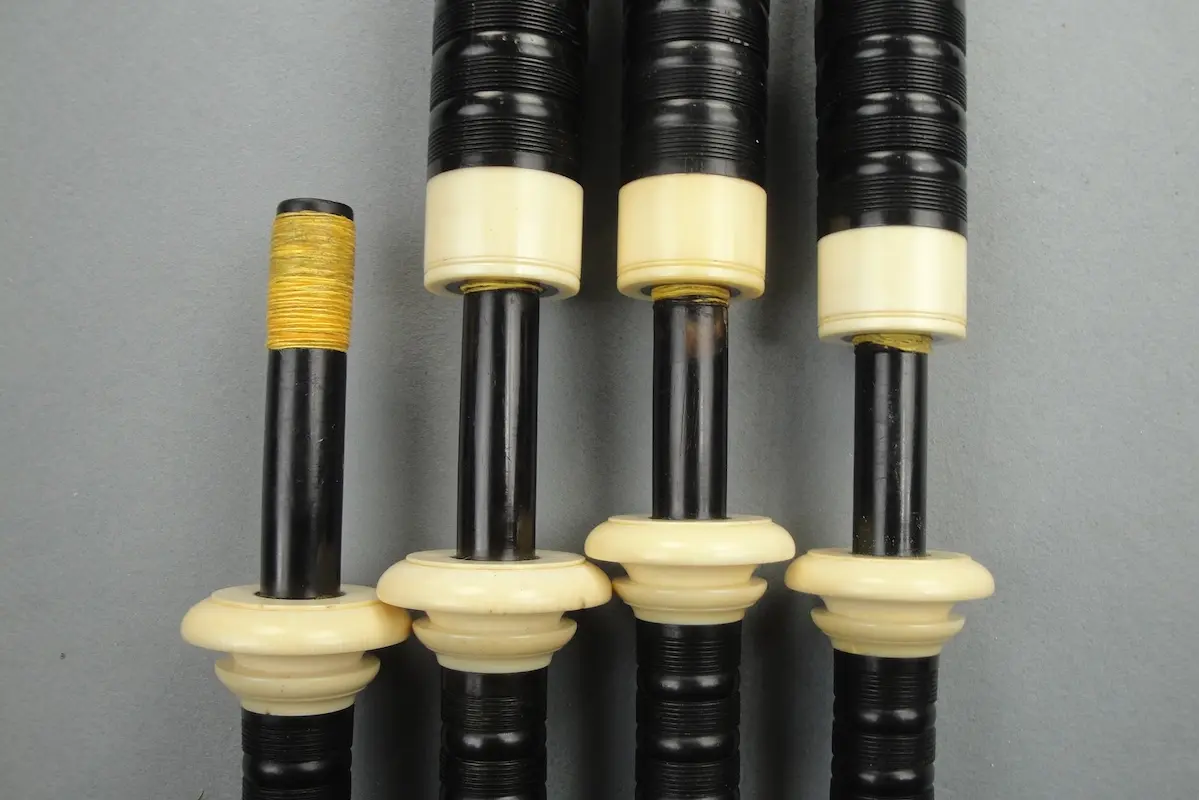
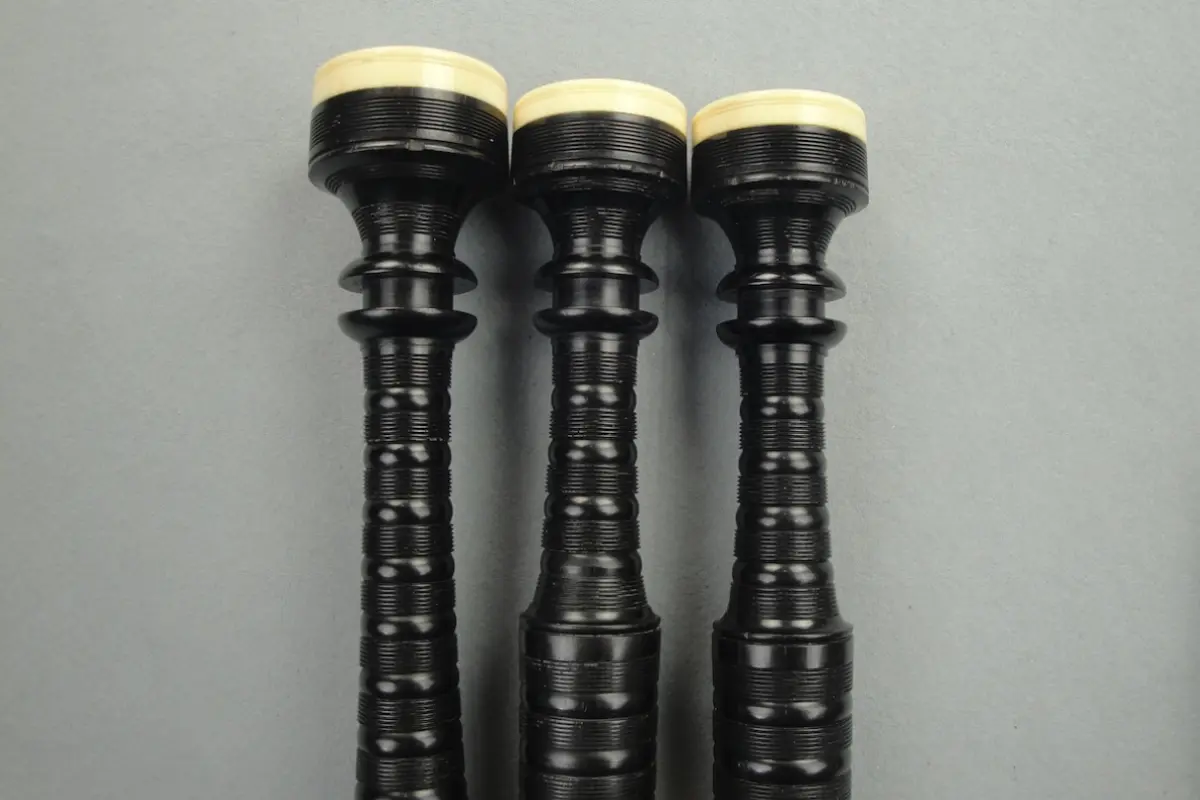
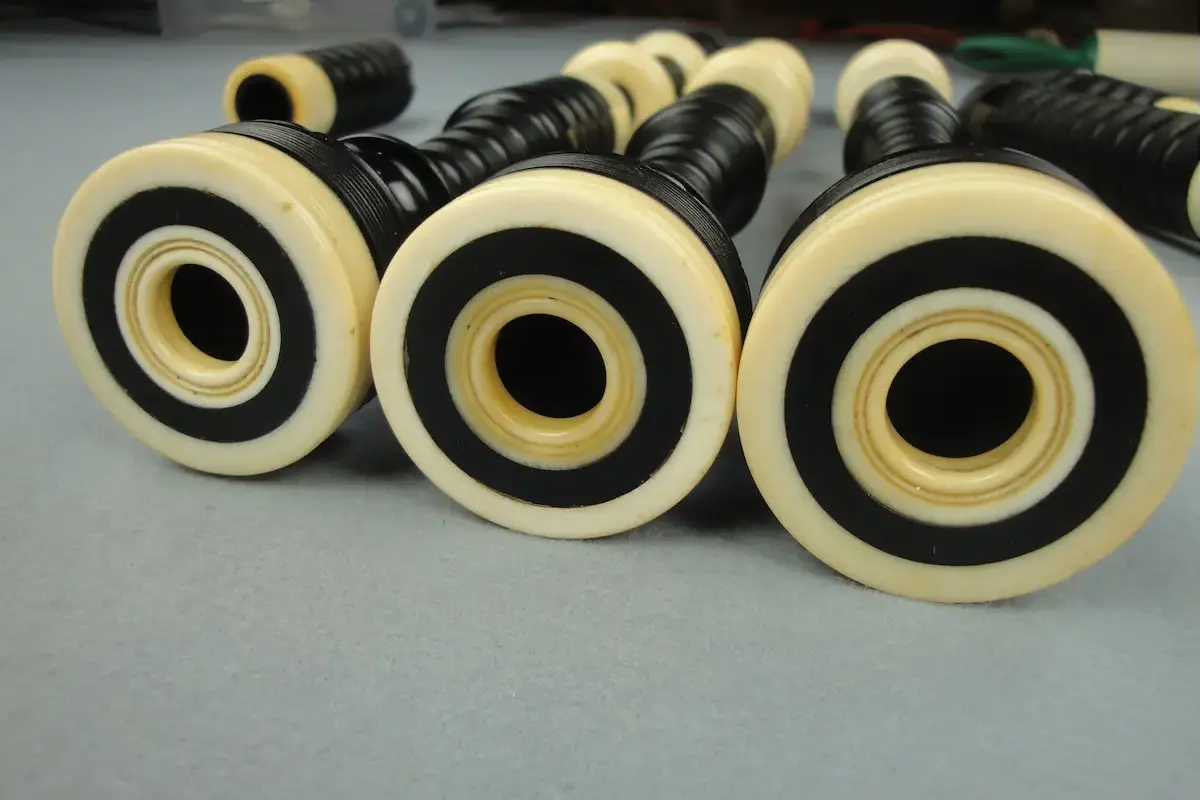
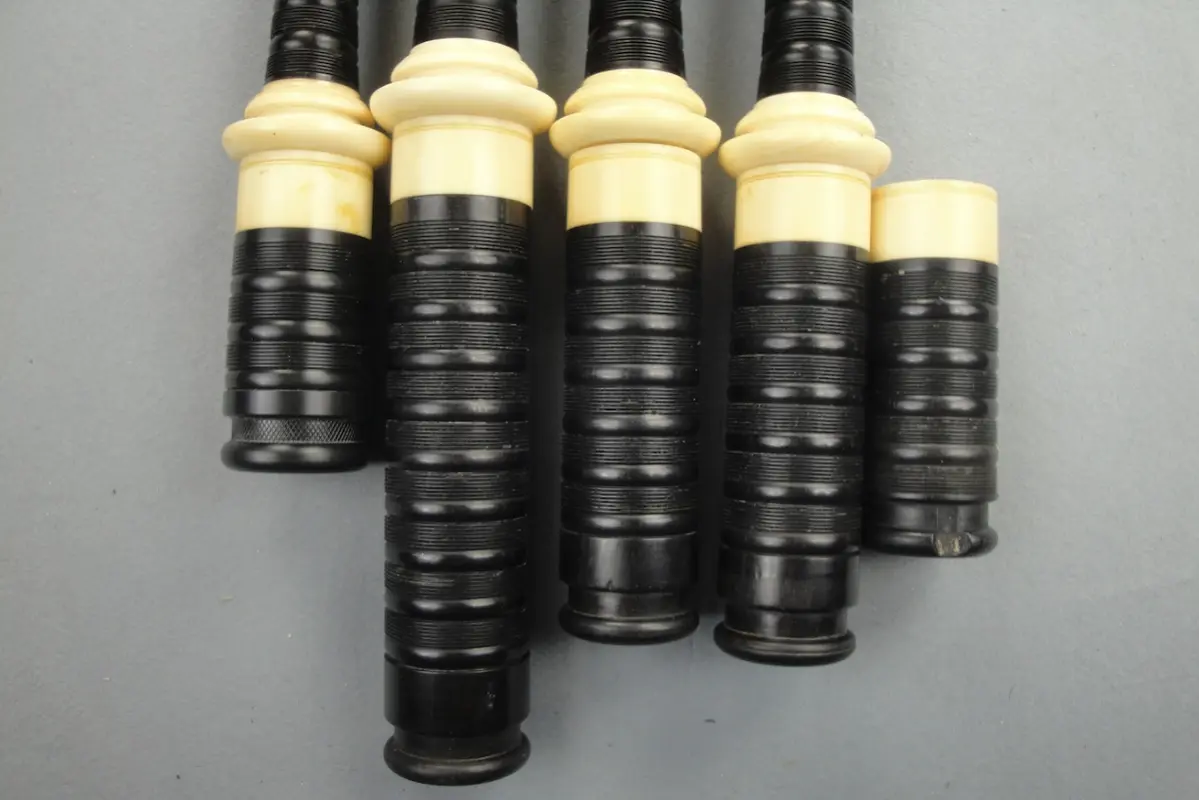
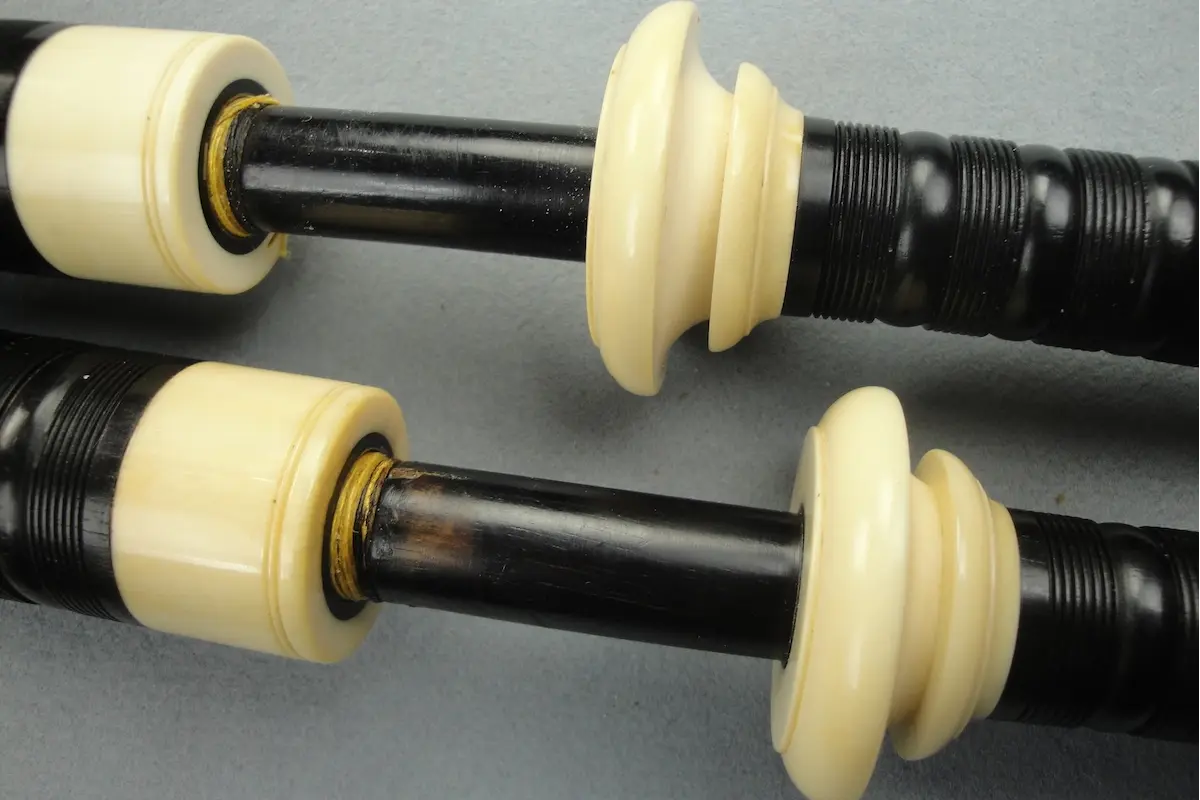
David Glen, Circa 1900, Ebony, Ivory
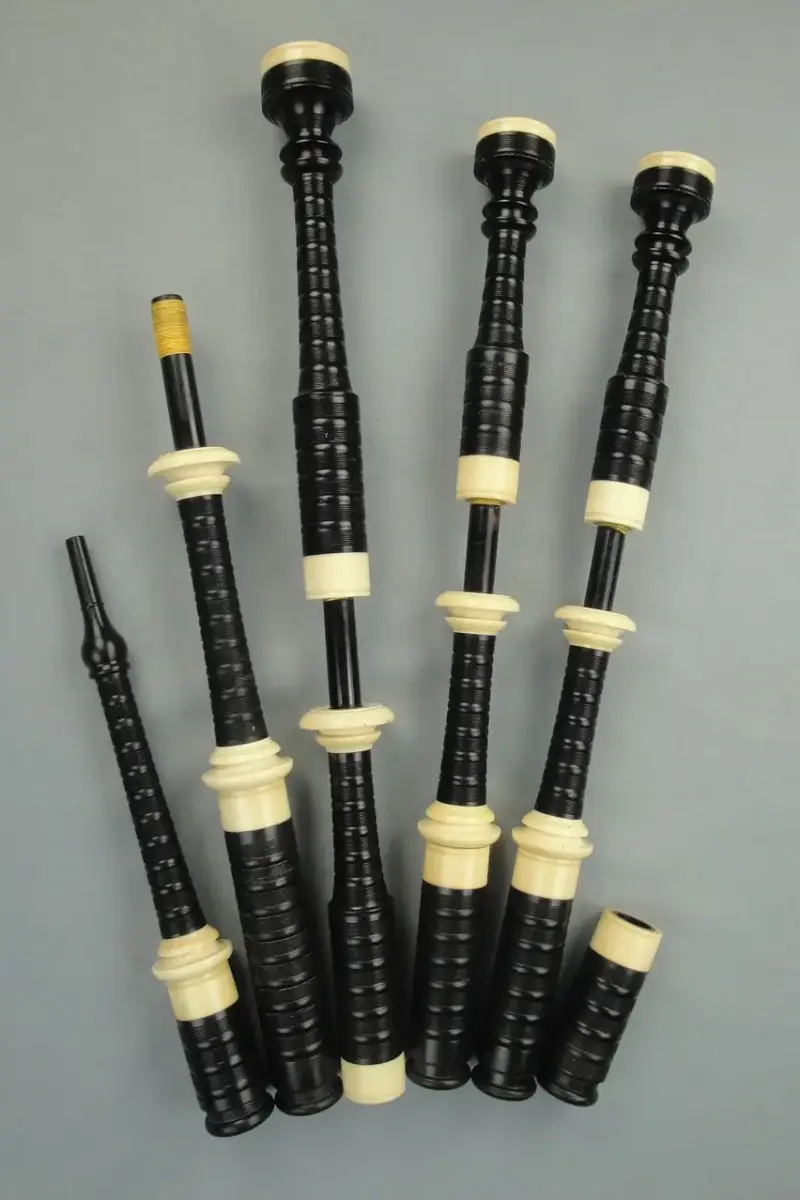
SOLD -Here is a rare and lovely David Glen set in ebony with full ivory mounts. The set is in great condition, having undergone a refurb in 2013 by Charlie Kron, who fixed two drone cracks and made a new replica blowpipe stock using the original mount.
The almost invisible remnants of a stamp on the bass drone stock revealed David Glen’s mark, so faint that the previous owner had to use a microscope to determine if there was and “& Sons” after “David Glen.” There wasn’t, confirming the set was made before 1912. I and my vintage colleagues believe the set was made within a few years of 1900. David Glen pipes can be difficult to date because David was so consistent in his manufacturing standards for long periods of time.
Each tuning chamber is fitted with a brass slide.
The set played as I would expect a David Glen set to play: not loud, but rich. Some people call the Glen sound “mellow,” a euphemism for “quiet.” To me “mellow” does not account for the richness of the Glen sound, especially in woods like ebony and cocus. The chanter blend is wonderful.The set comes with some history going back to the mid-1900s.
-
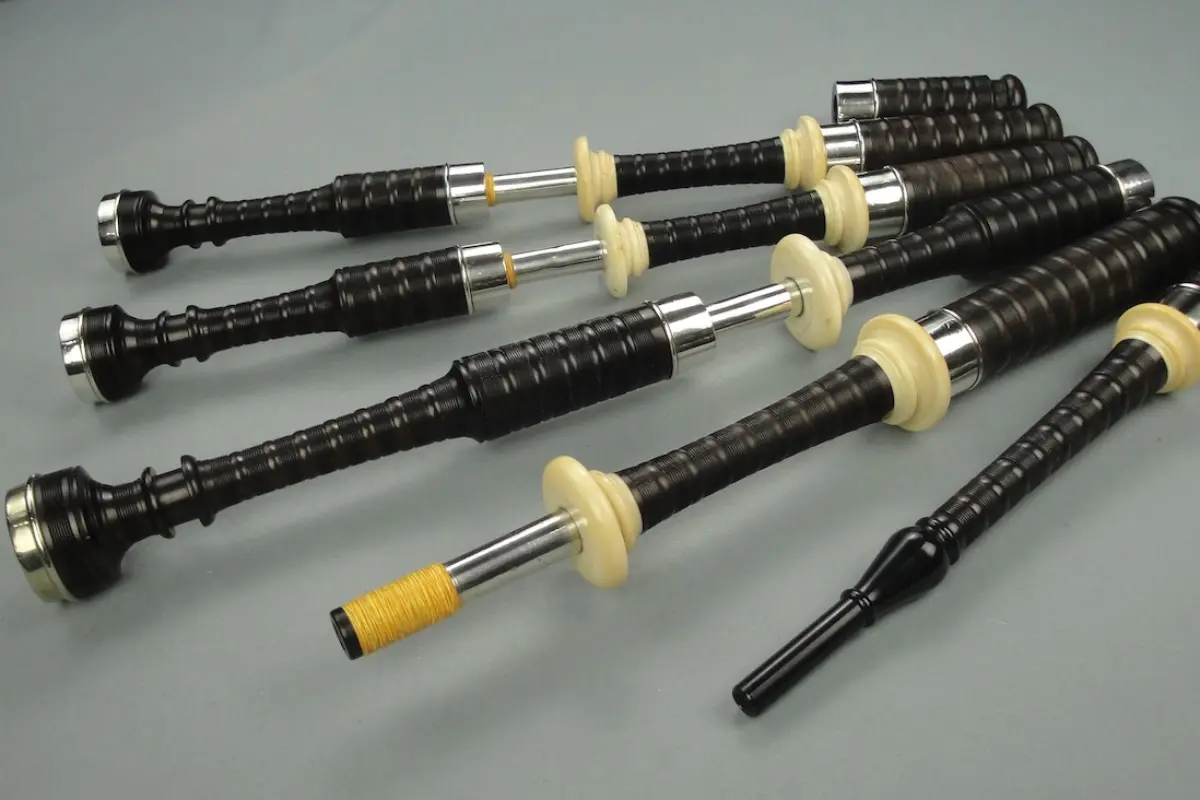
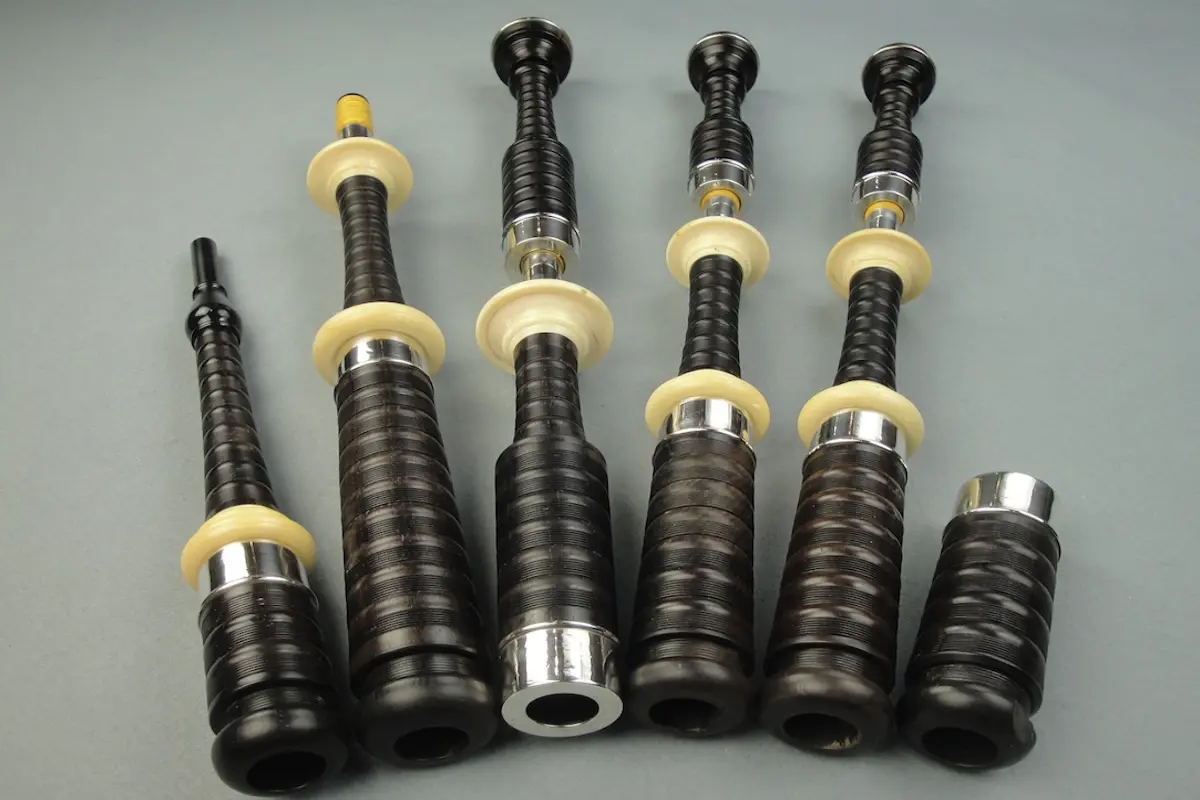
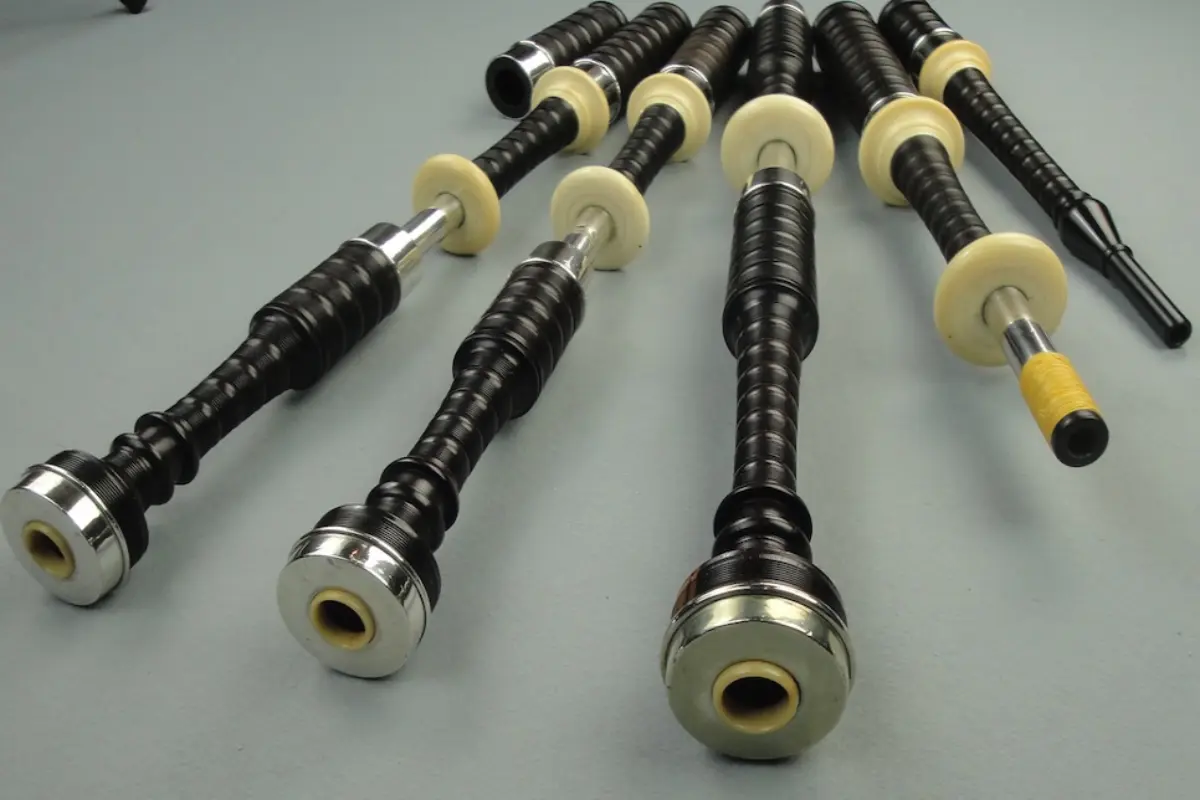
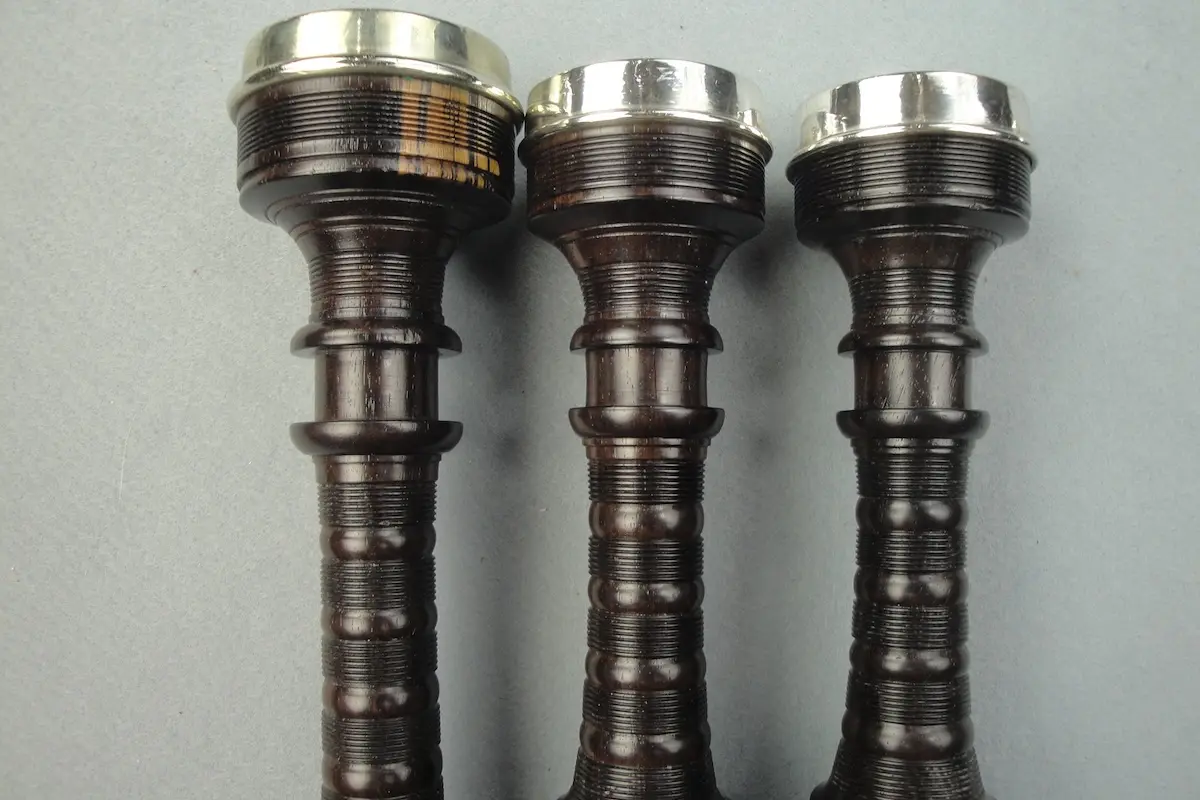
Duncan MacDougall, Circa 1890s, Brazilian Kingwood, Silver, Ivory
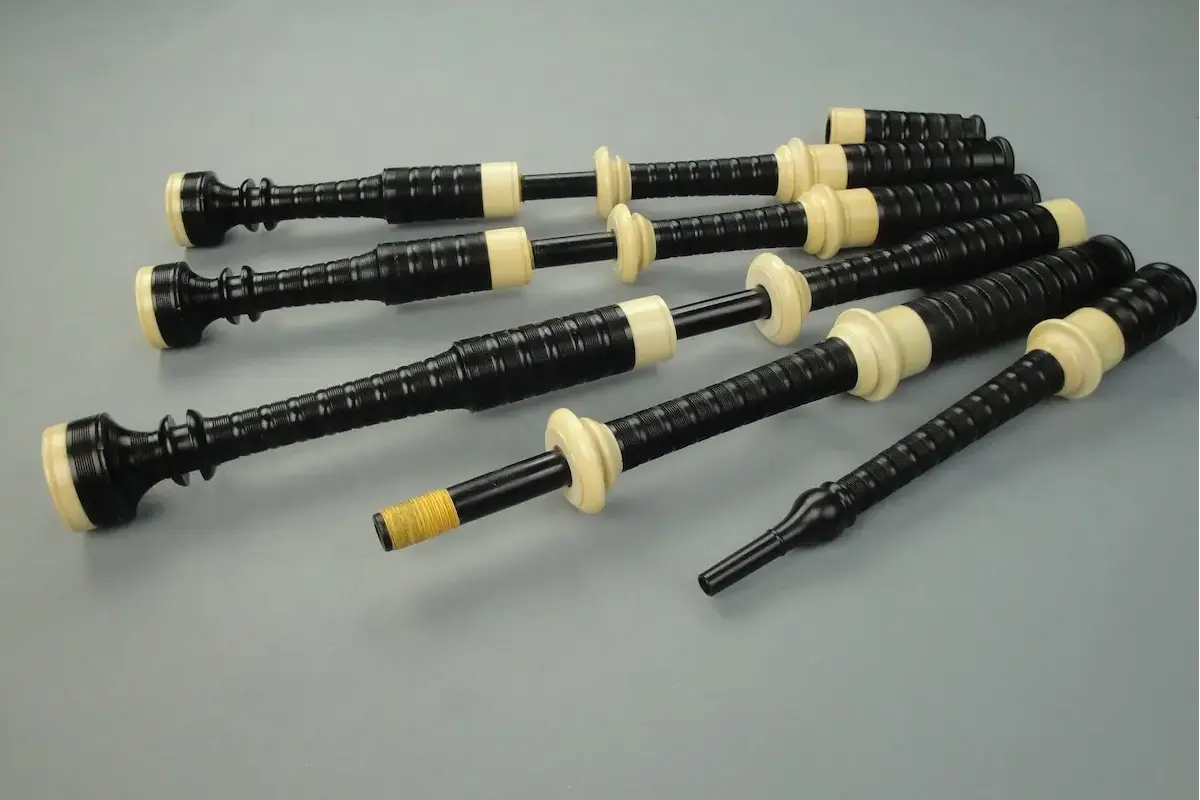
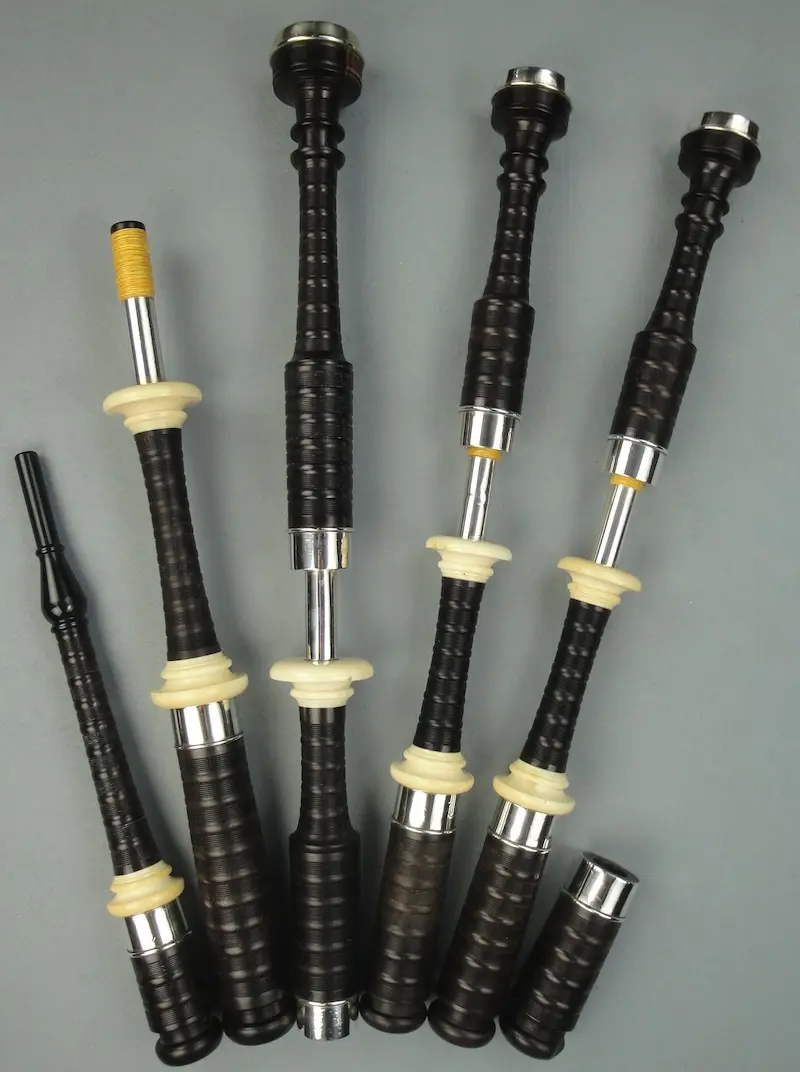
SOLD – This lovely and most desirable bagpipe spent its life in New Zealand, where Duncan and Gavin MacDougall had a solid market in the years around 1900.
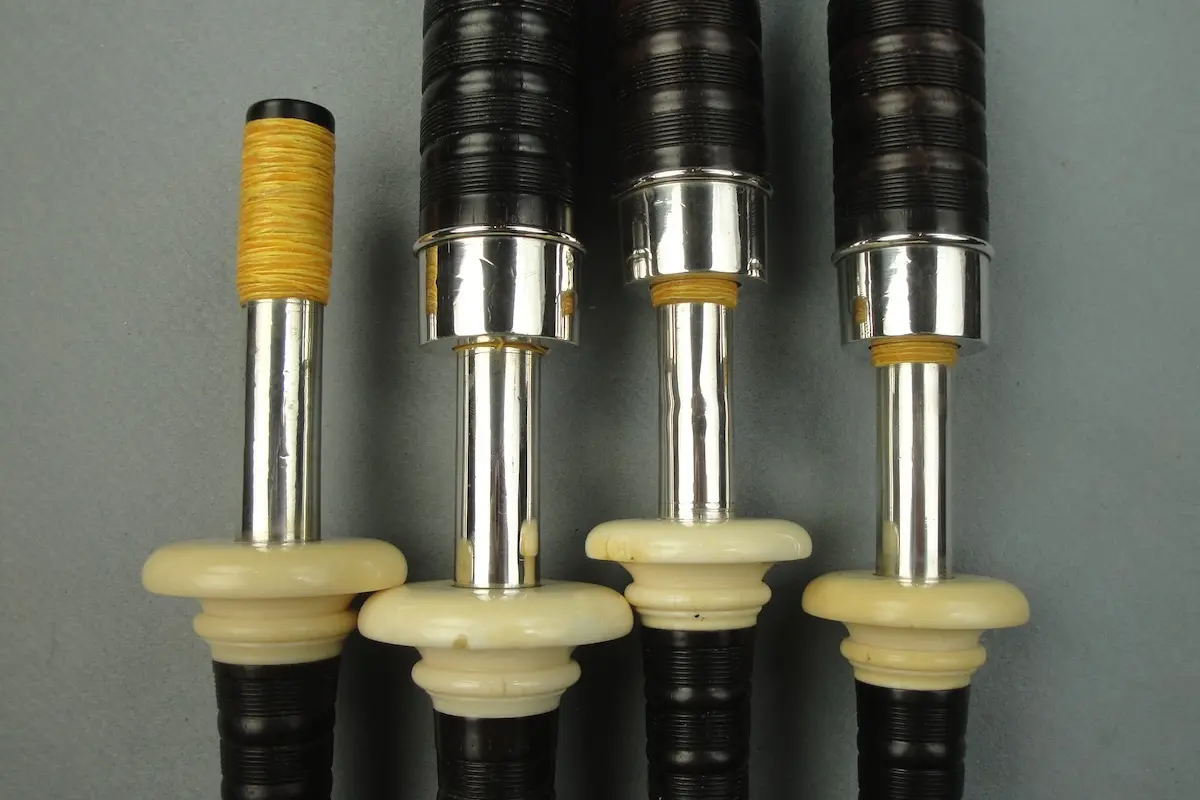
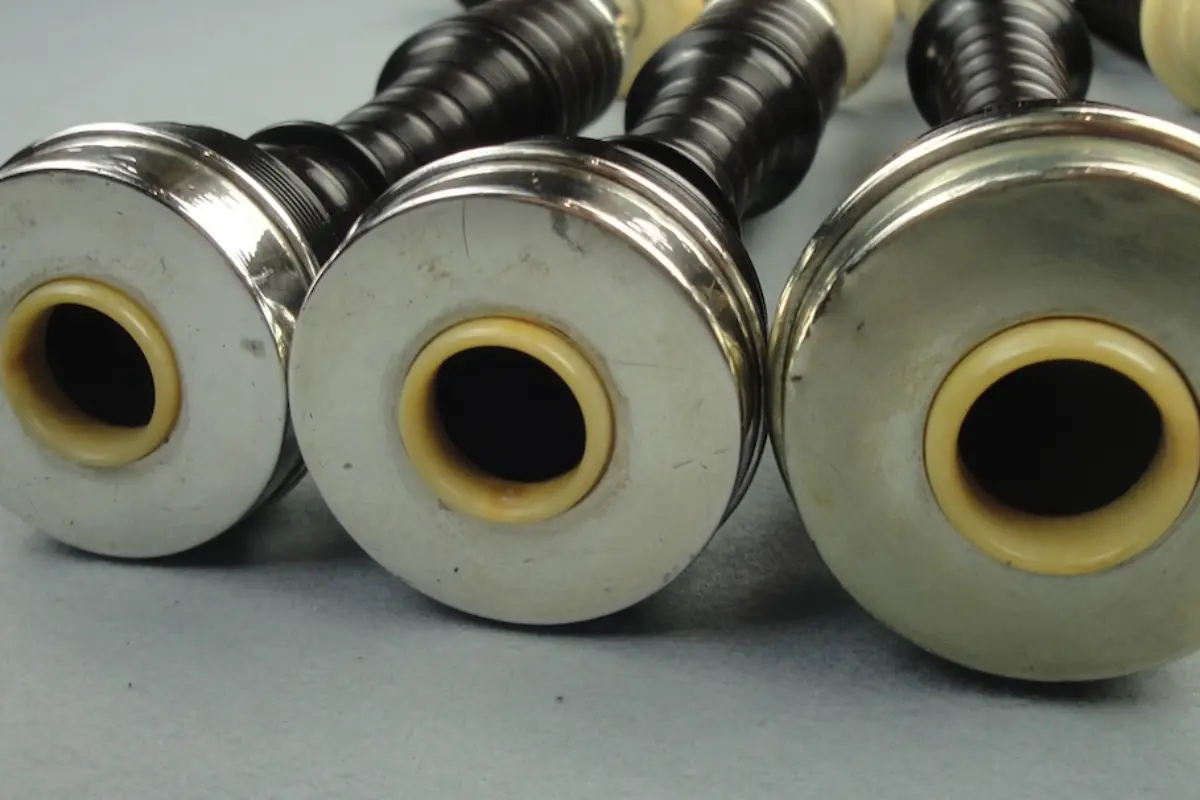
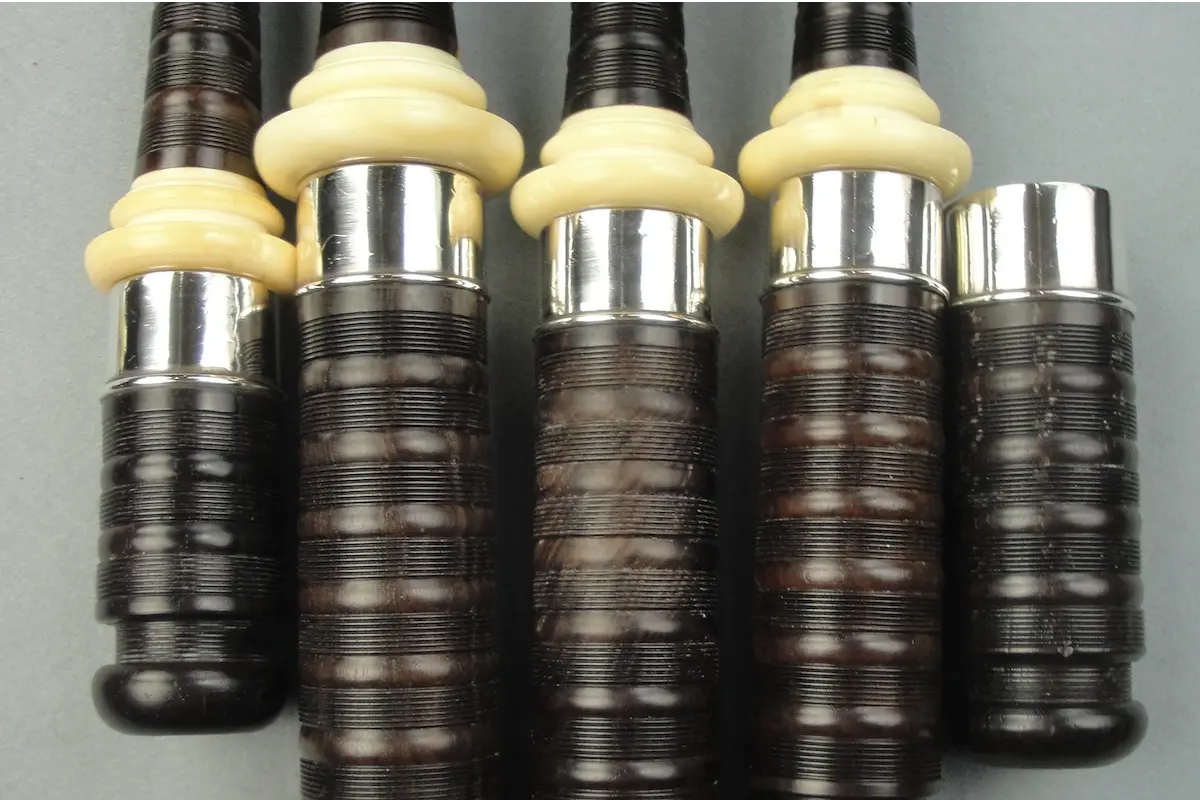
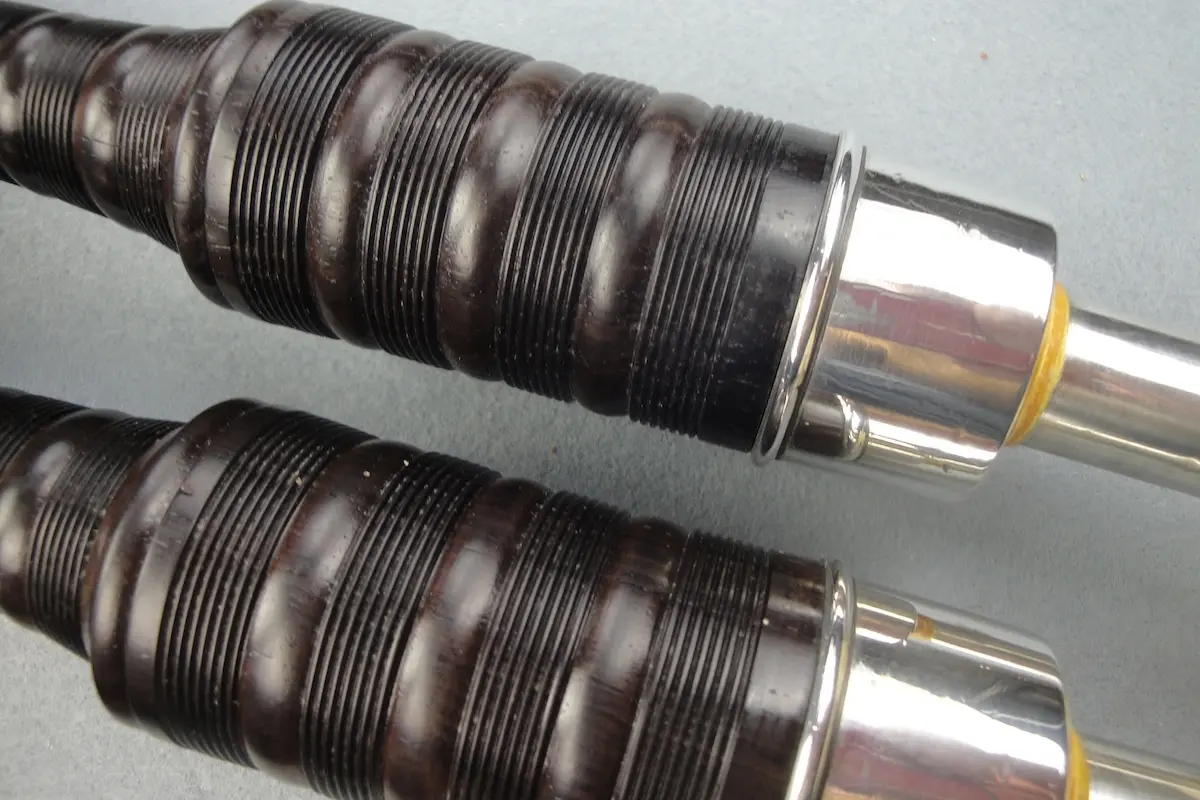
This Duncan MacDougall set was likely made in the 1890s. It appears to be Brazilian Kingwood, a musical hardwood similar to cocuswood and frequently used by makers at this time. Like cocuswood, it is more stable than ebony and less prone to cracking. The set is mounted in elephant ivory and plain silver.
The pipes were completely refurbished in 2023 when they were stripped, a couple of stock cracks invisible whipped, and then refinished. The silver slide on one of the tenor drones has some small dents in it, invisible from three feet away.The pipes played like a dream: full, seamless, steady and rich.
-
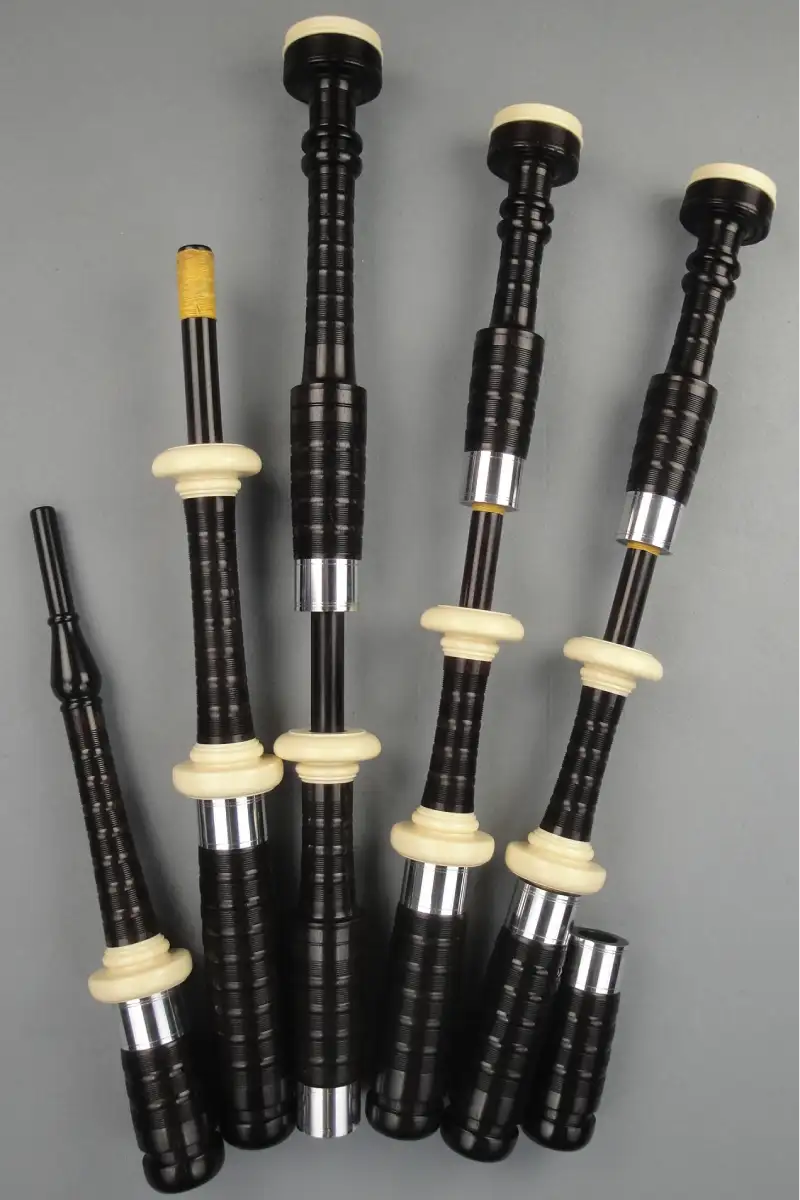
Robertson, Circa 1950s, Imitation Ivory, Nickel
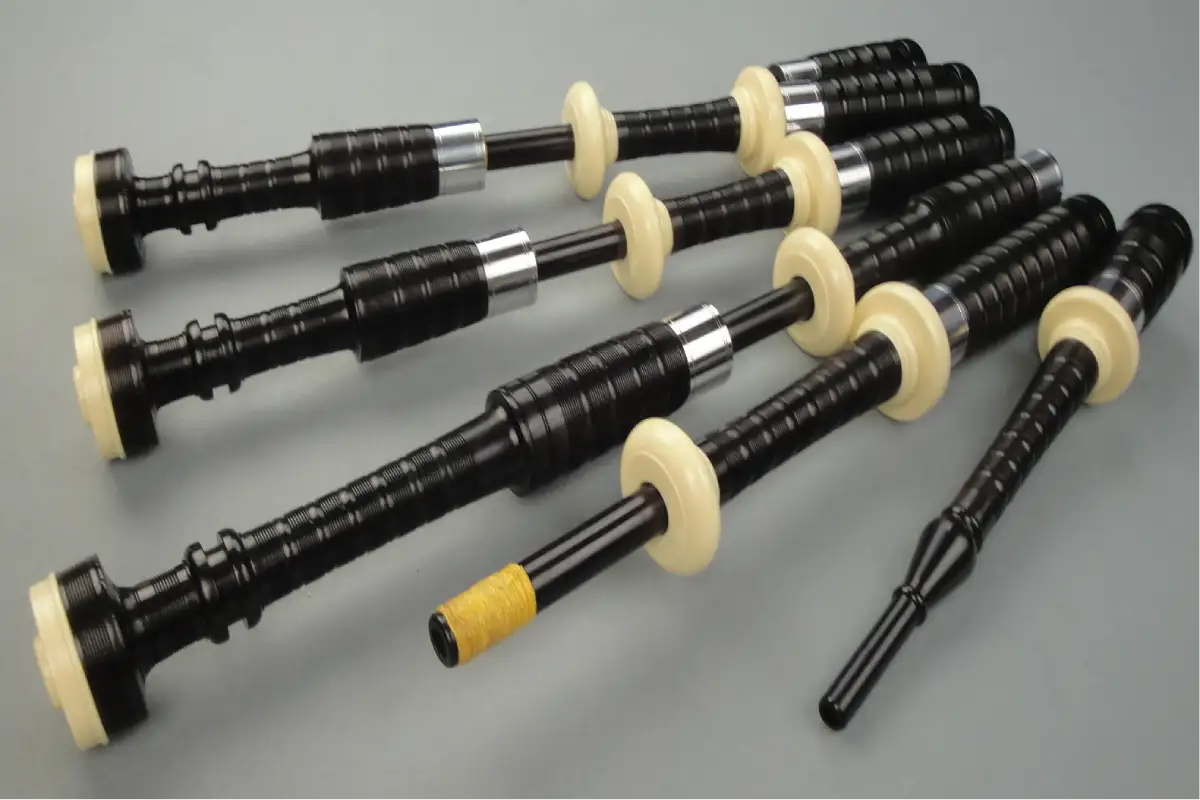
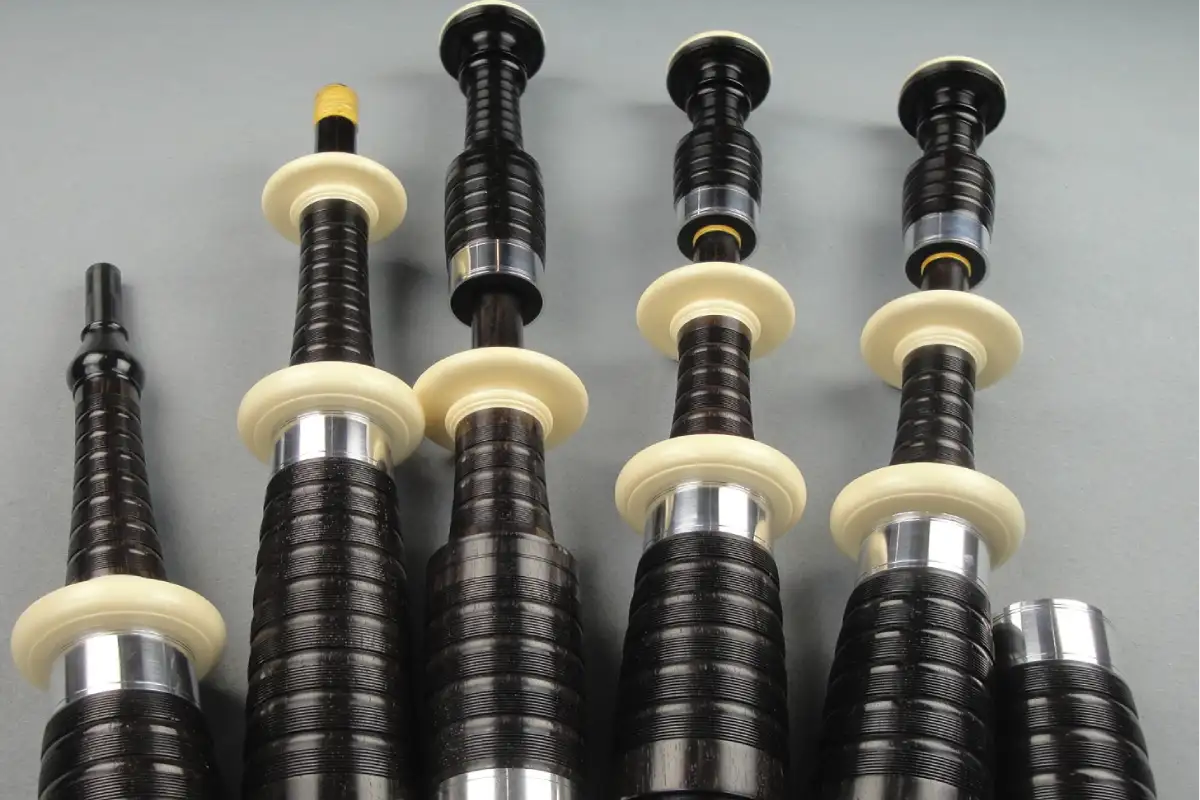
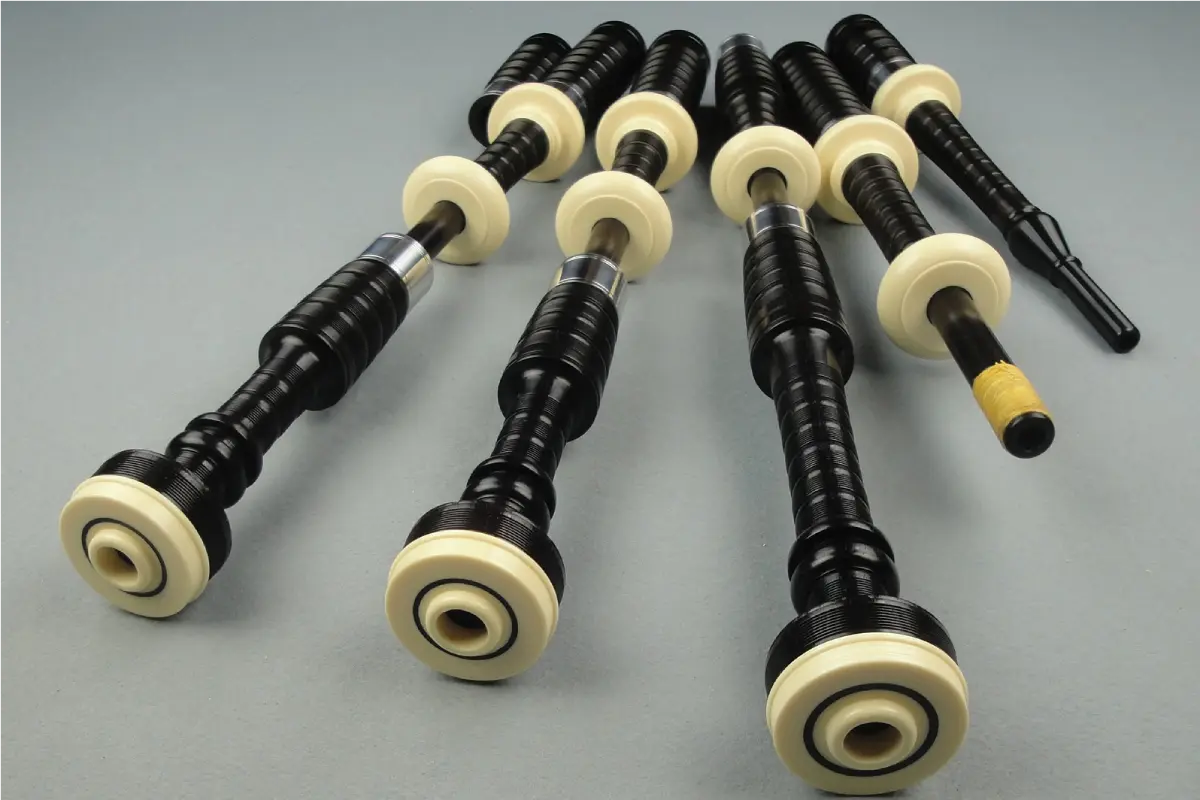
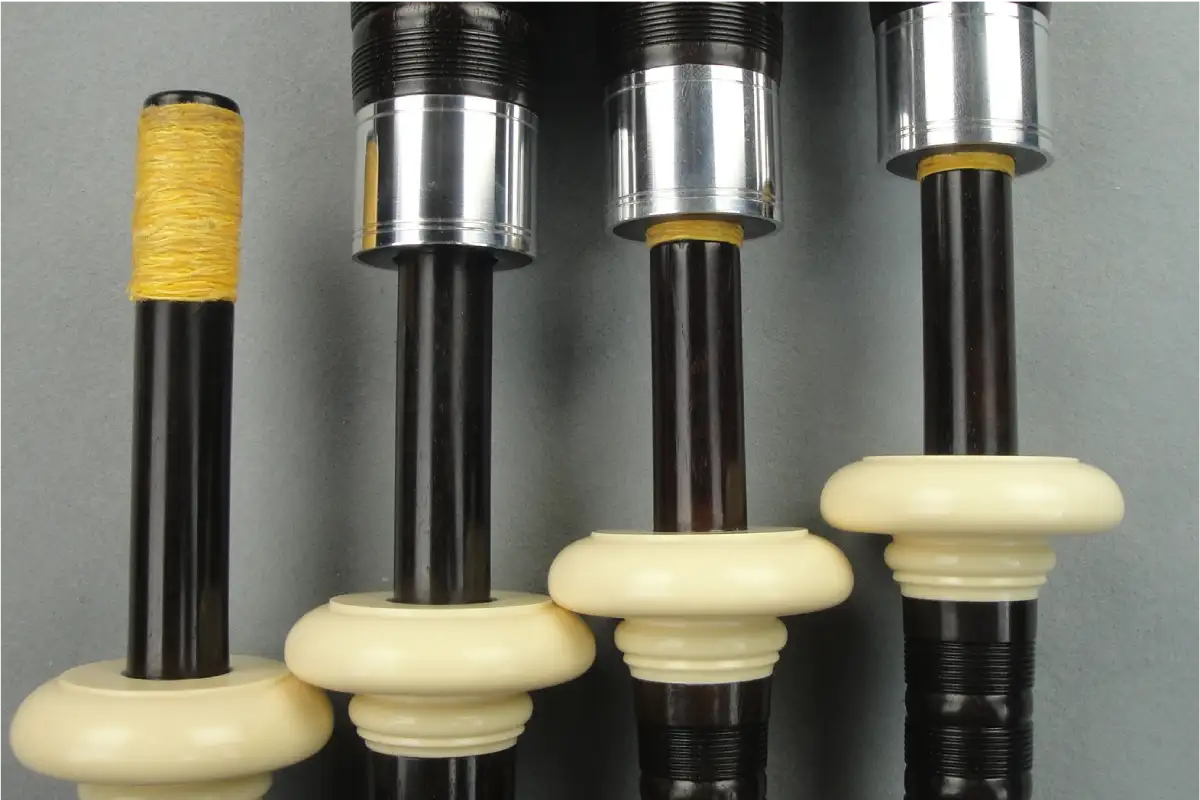
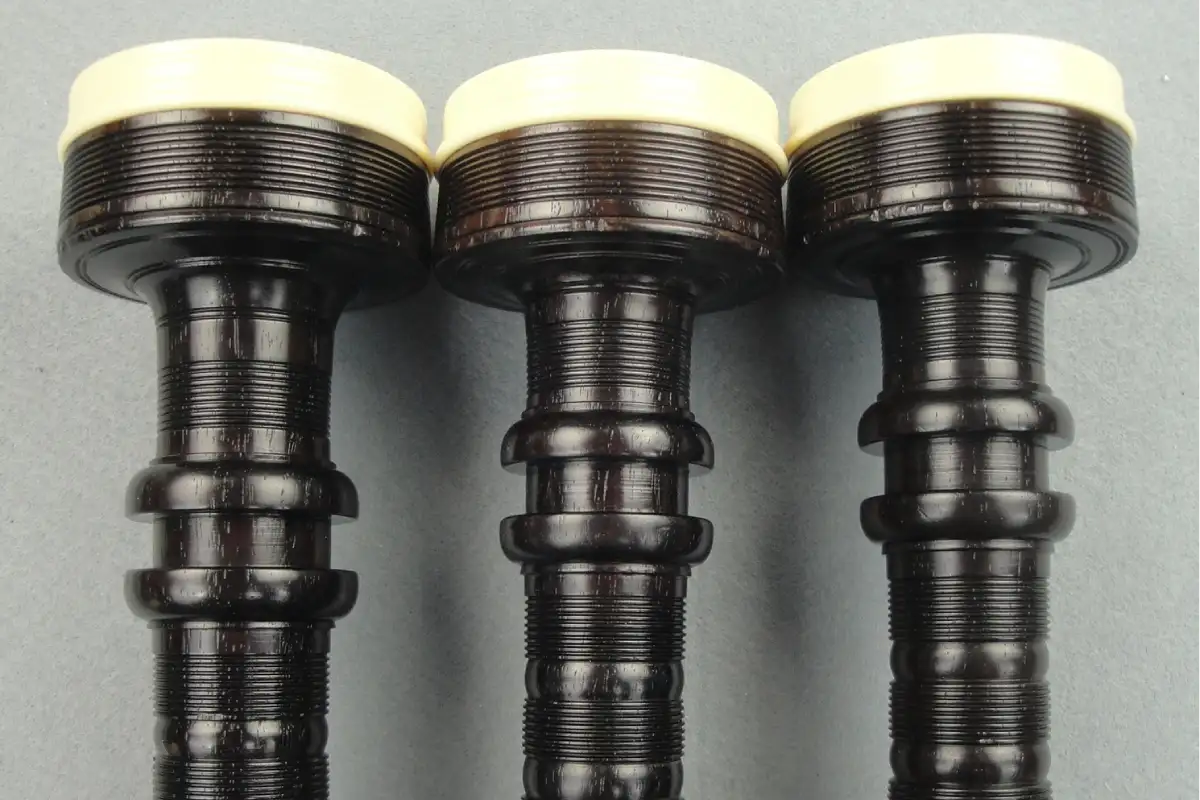
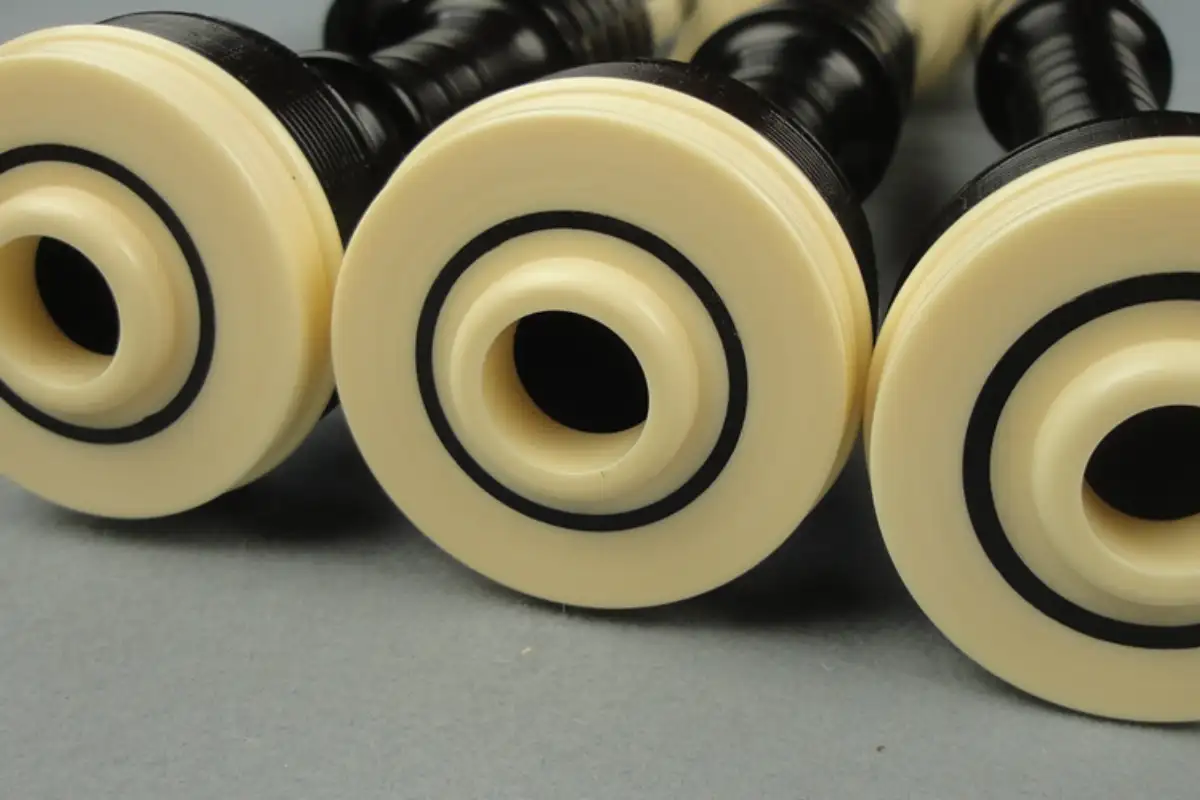
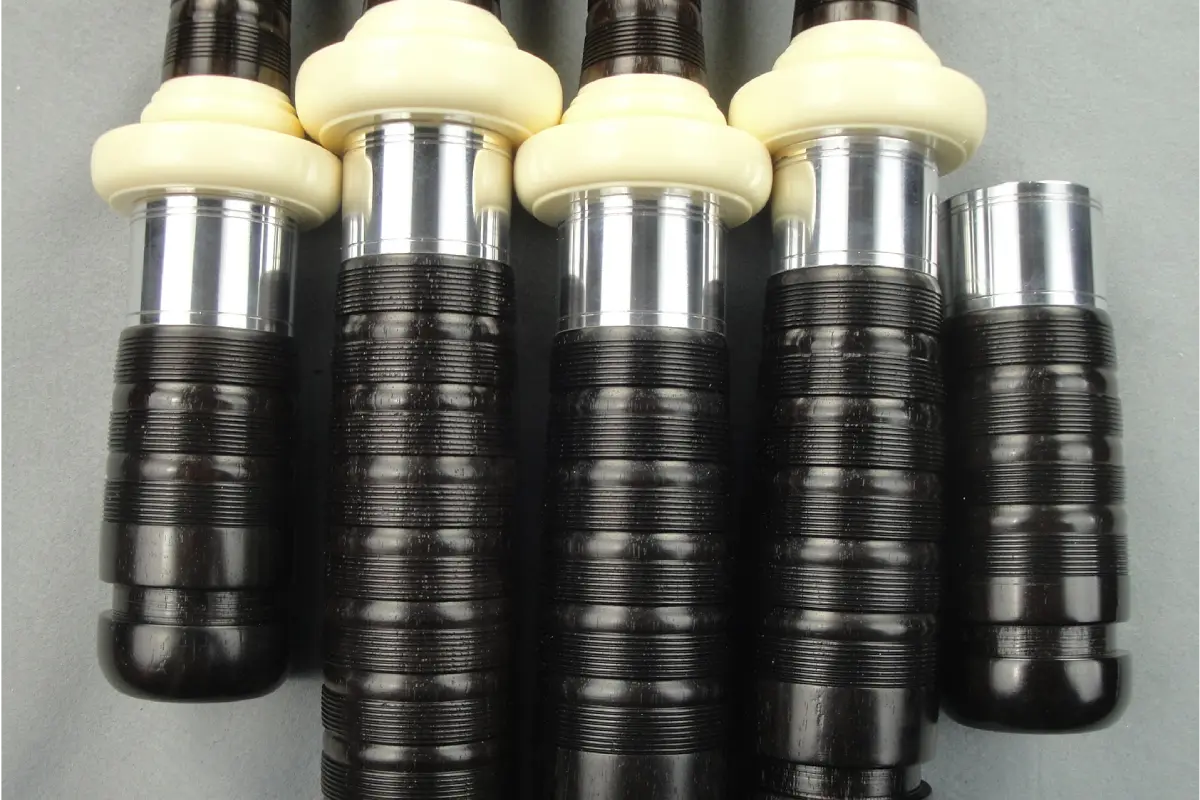
SOLD -This bagpipe came to me mounted in casein and nickel but with two mounts replaced with orange catalin and a couple of the nickel mounts missing. It was decided to replace all the projecting mounts with imitation ivory. All nickel ferrules were replaced as well.
Aside from this, the bagpipe was in good shape except the blowpipe was badly cracked. It has been replaced by a poly-lined blackwood replica. The pipes were stripped and refinished.
This set features tapered bores in the stocks, a feature of Robertson pipes during the late 1950s and 1960s, perhaps their greatest years.
The set played beautifully, like virtually any other Robertson pipe I have ever played – steady, full and vibrant.Here is a lovely and ivory-free vintage Robertson bagpipe that looks like new.
-
R. G. Lawrie, Circa 1920, Cocuswood, Nickel, Ivory
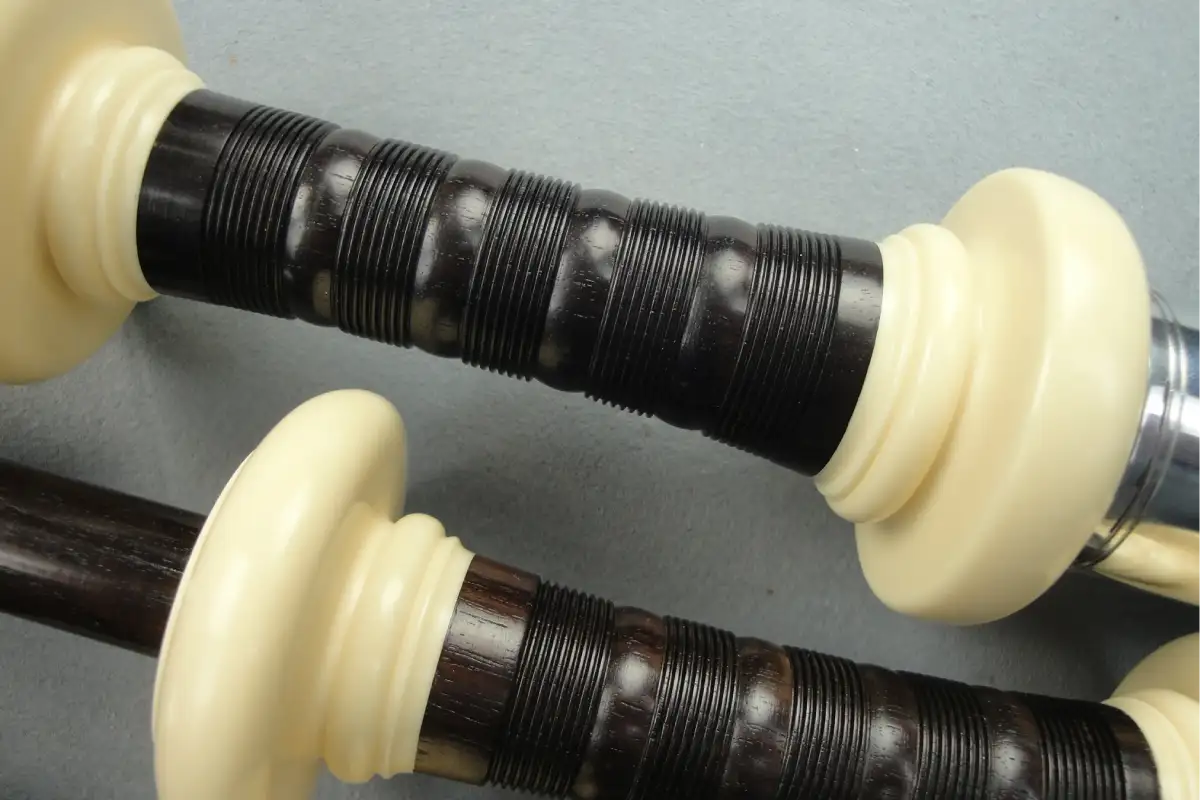
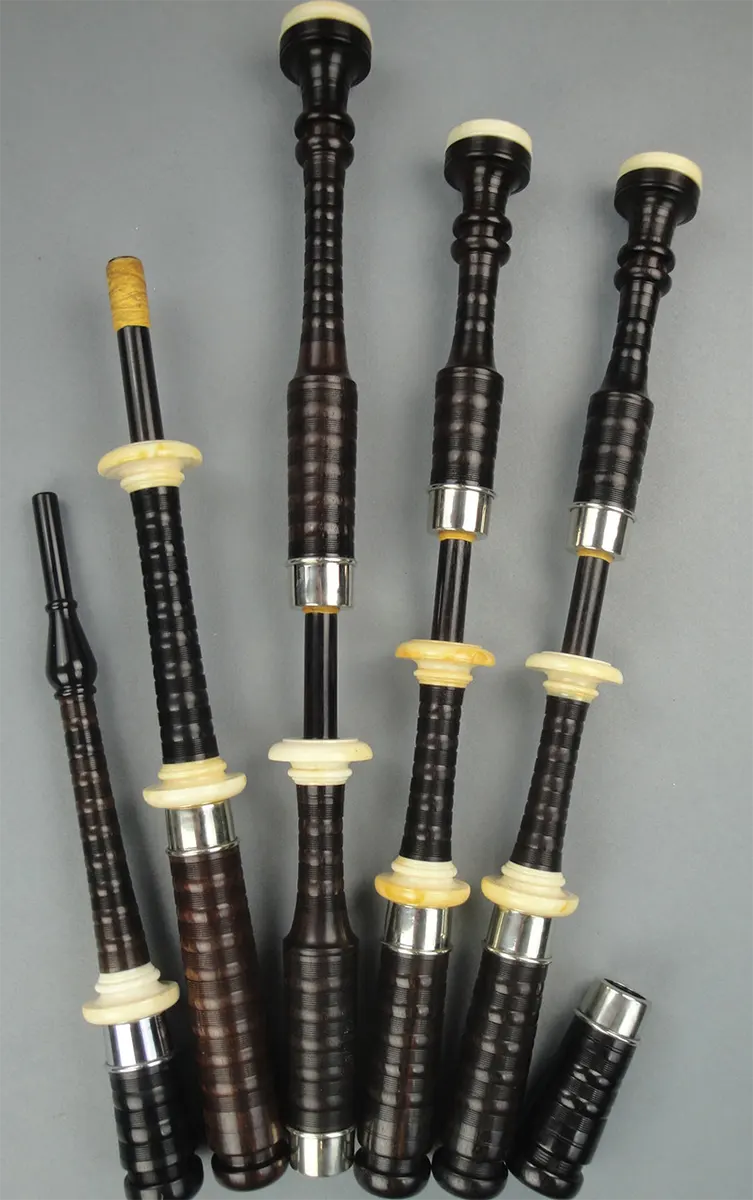
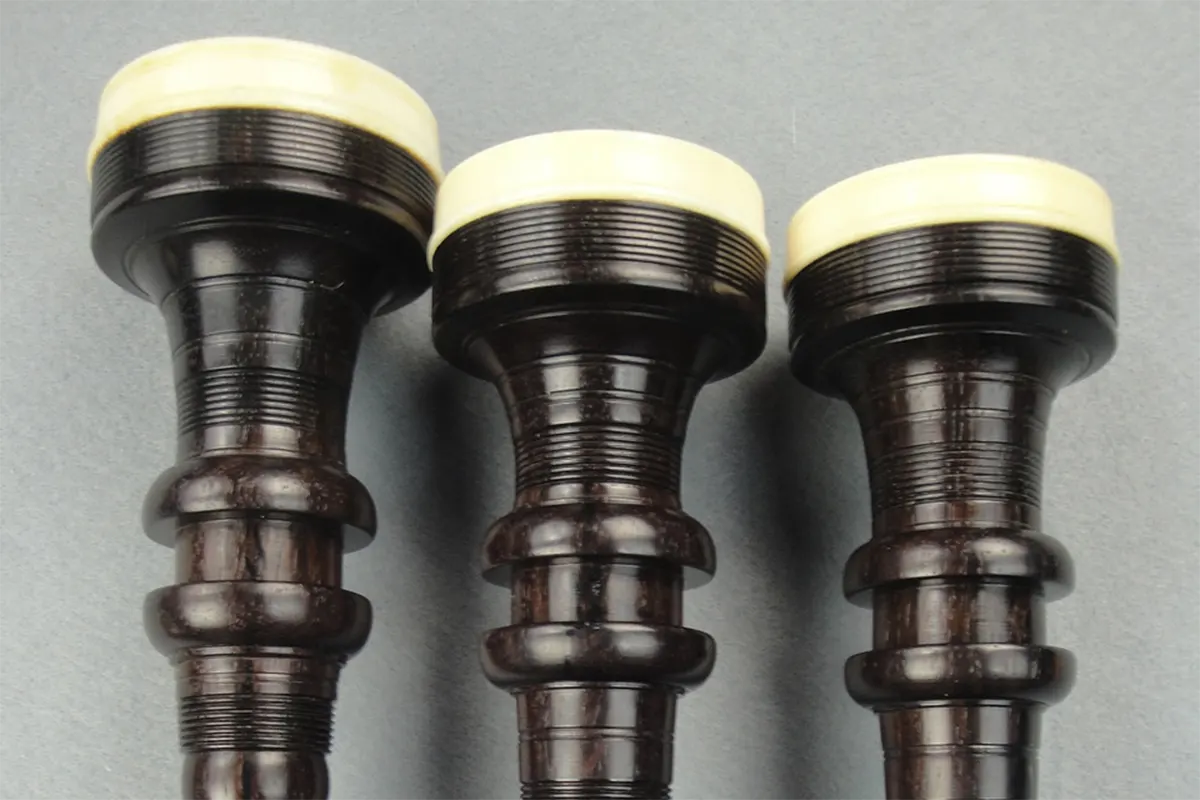
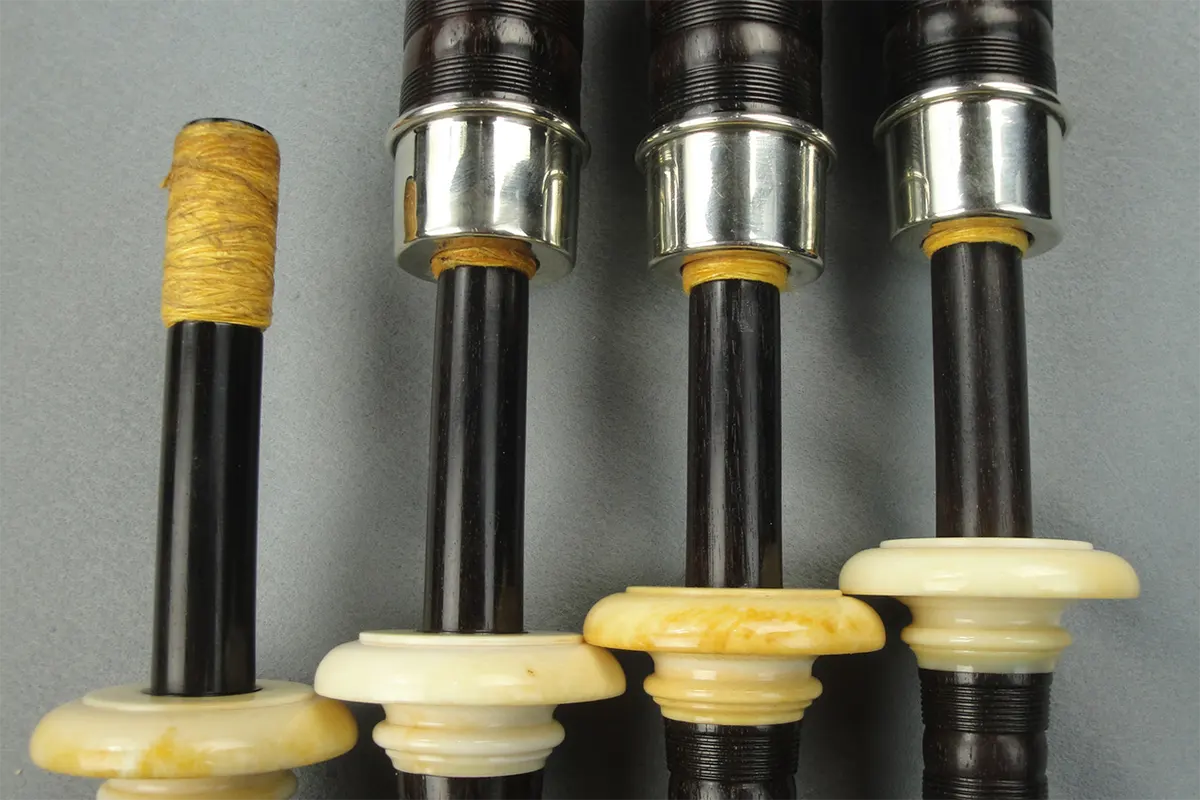
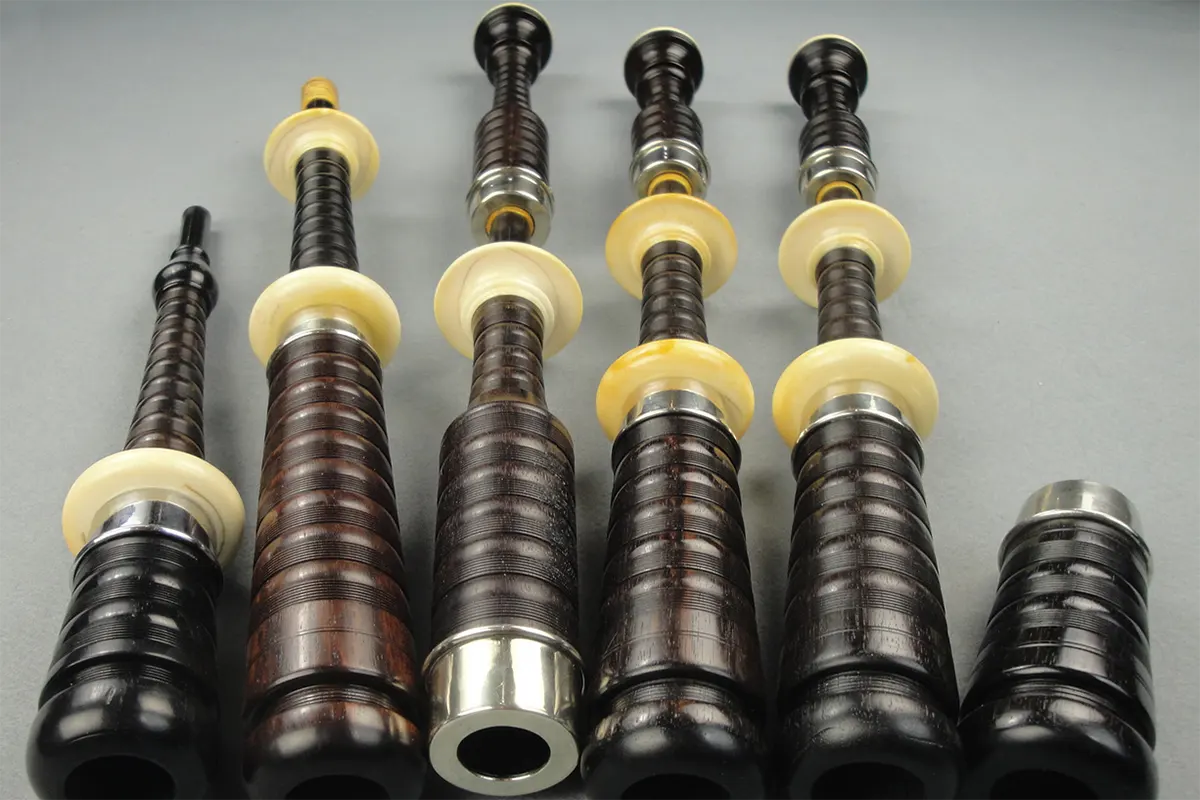
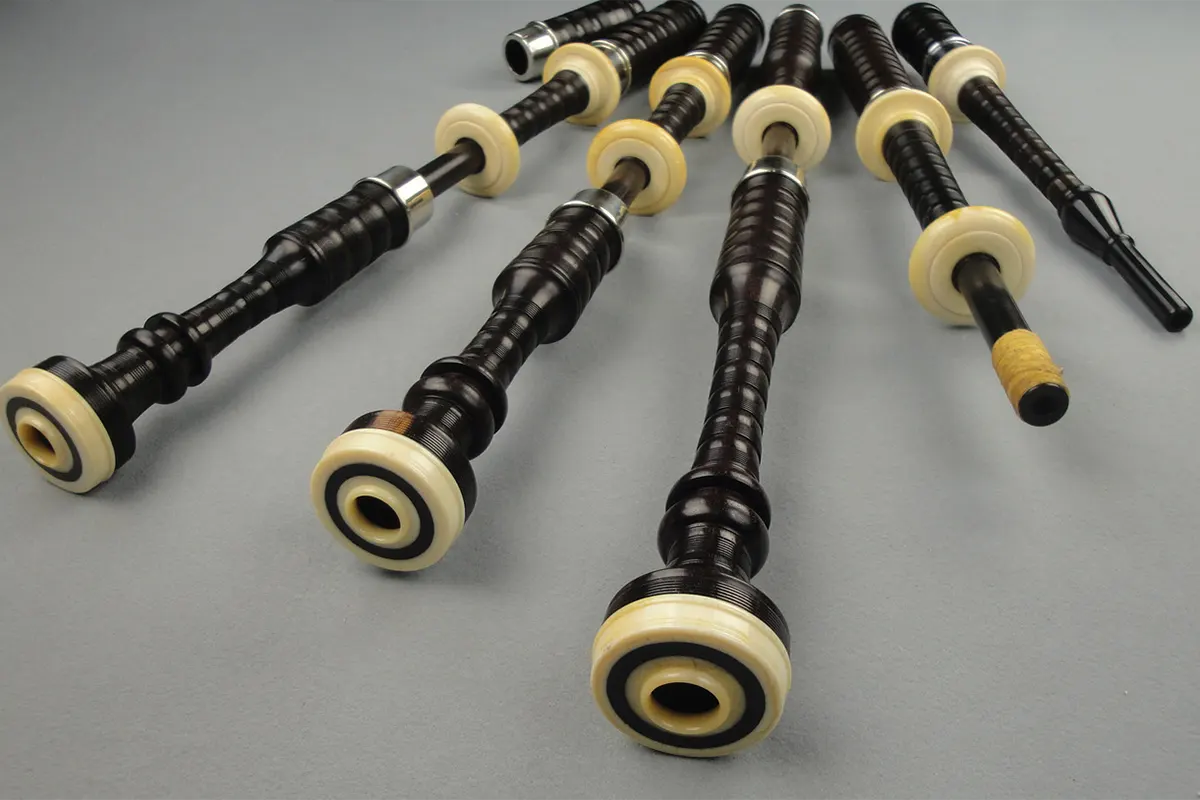
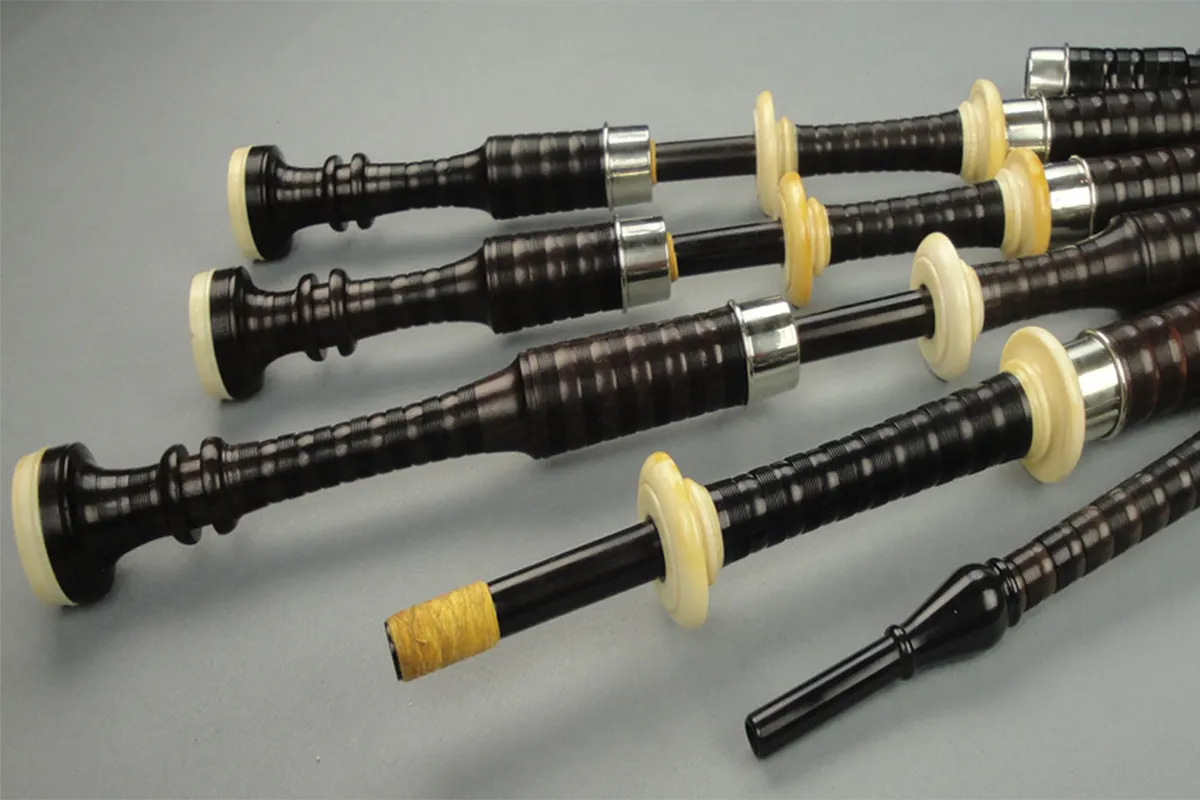
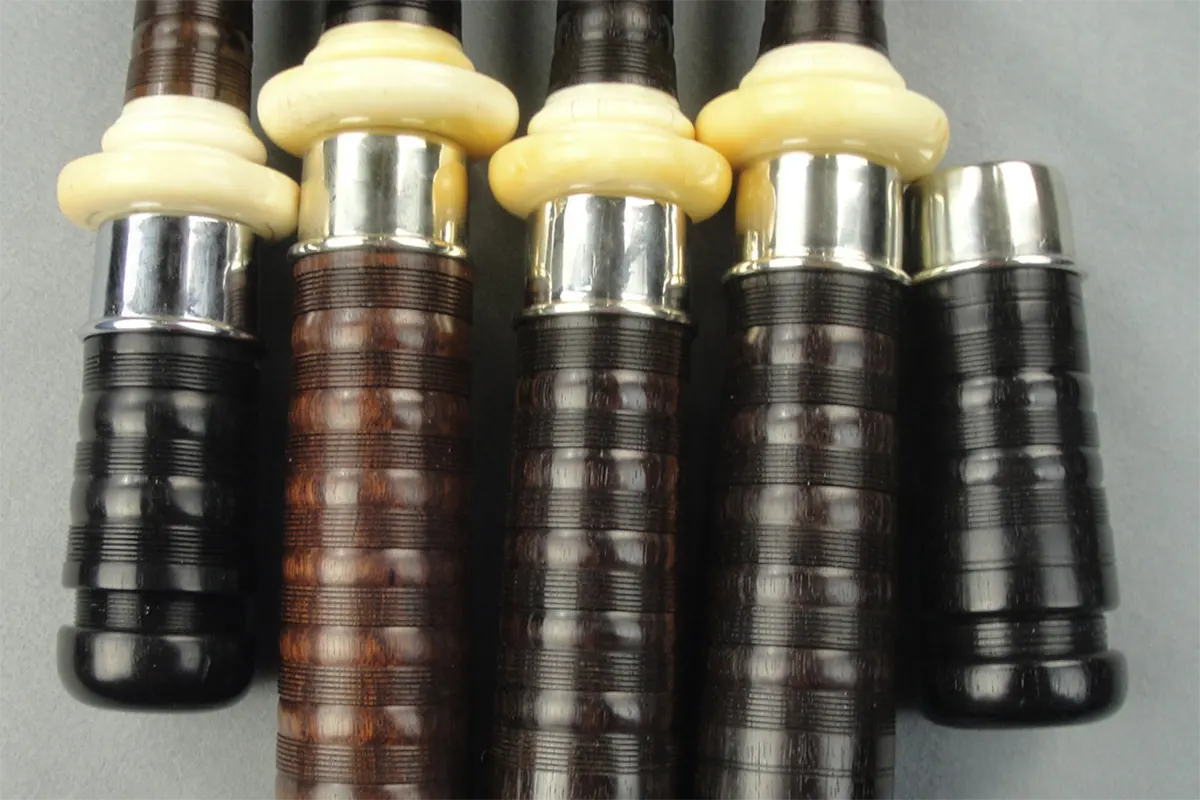
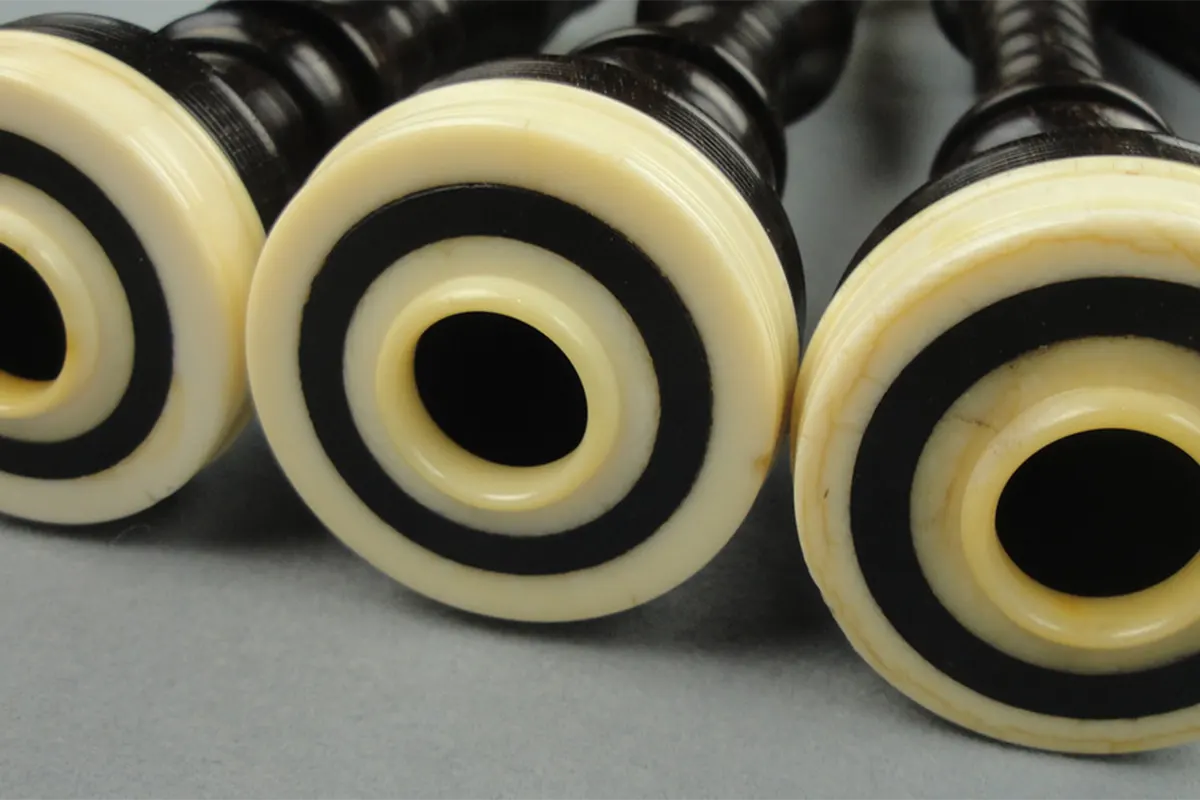
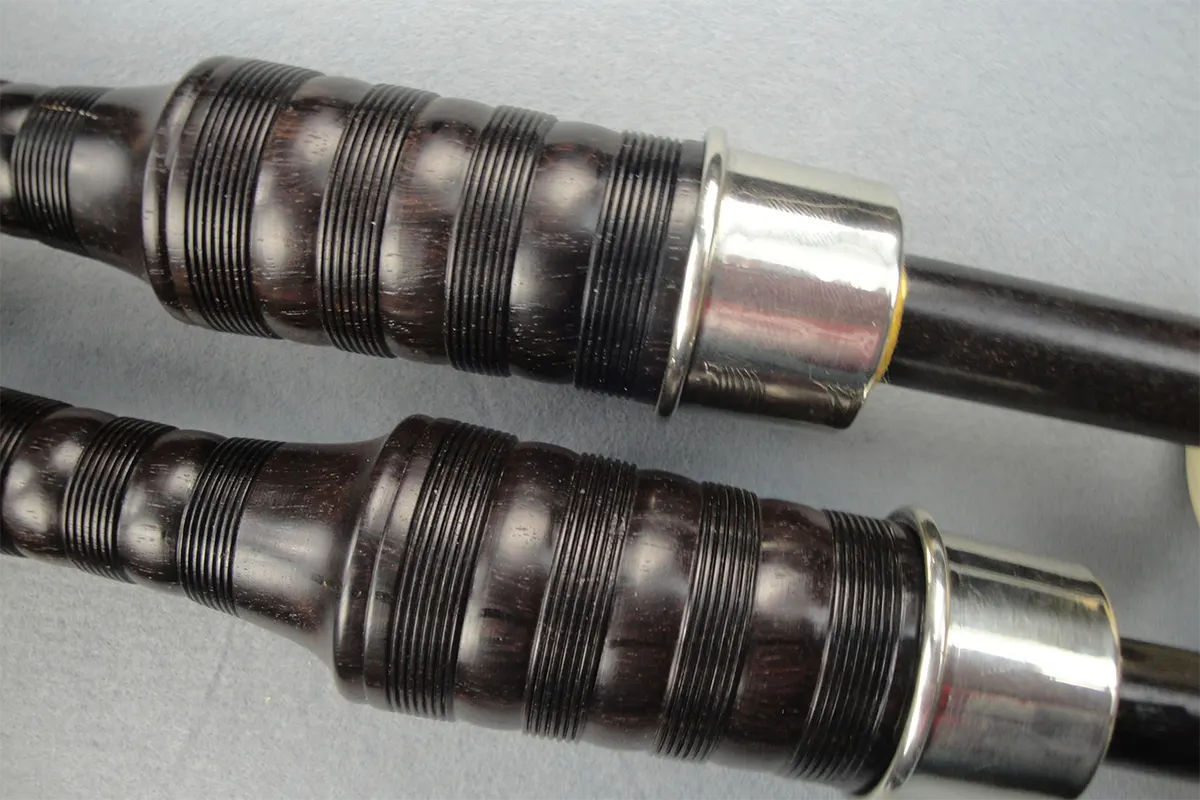
SOLD – This is a classic mid-level Lawrie bagpipe from around 1920 with classic spun, tapered nickel ferrules and ivory projecting mounts.
The wood appears to be cocuswood which was dwindling in supply around the time this bagpipe was made. It’s possible some pieces are ebony.
The set had a number of cracks that have been invisible whipped and should give no more trouble.
The tone was quite remarkable. These old Lawries are robust and vibrant, with a big bass sound, lovely chanter blend and lots of harmonics. A classic old model!
-
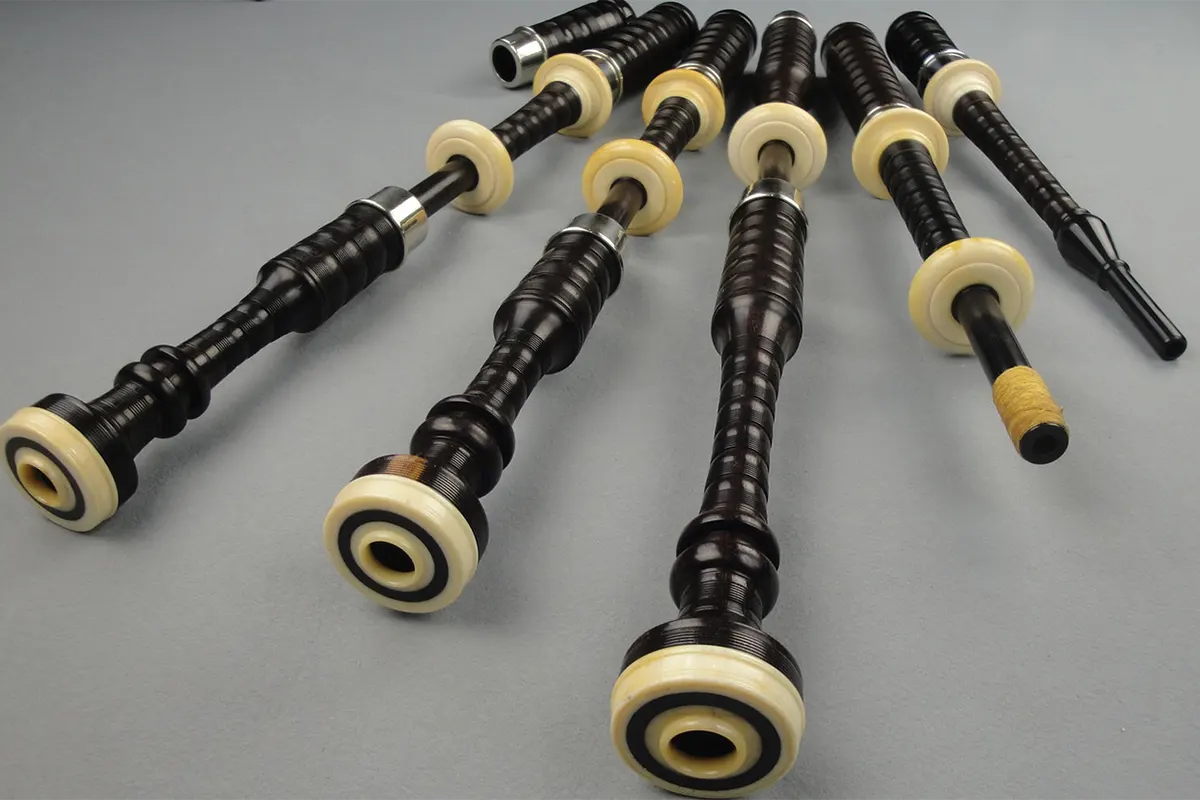
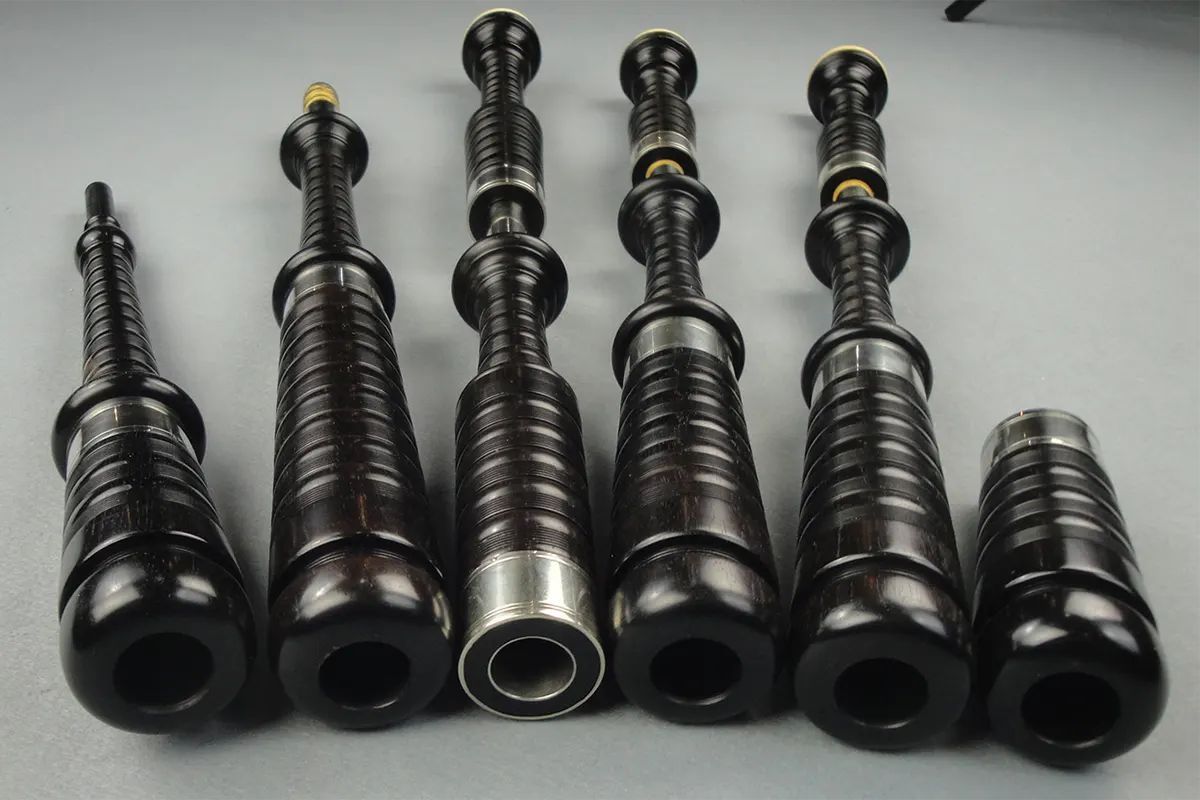
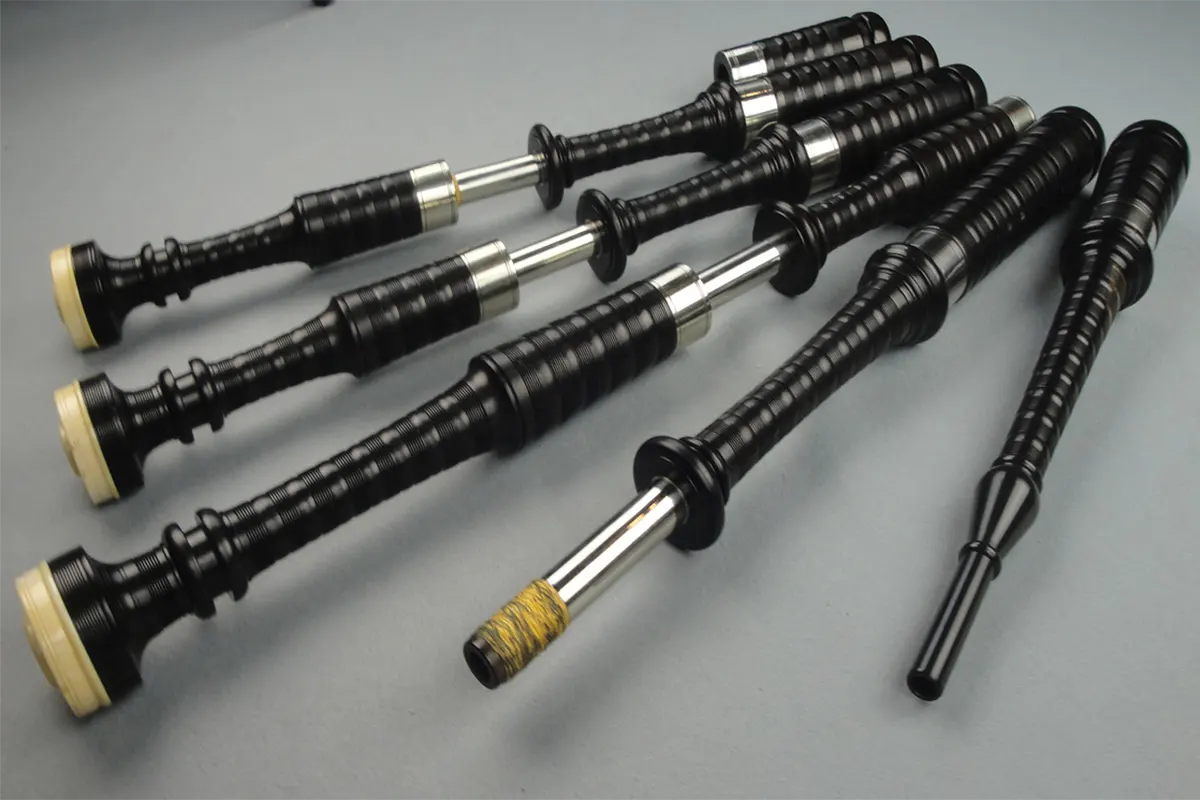
Duncan MacRae, Circa 1909, Nickel, Ivory
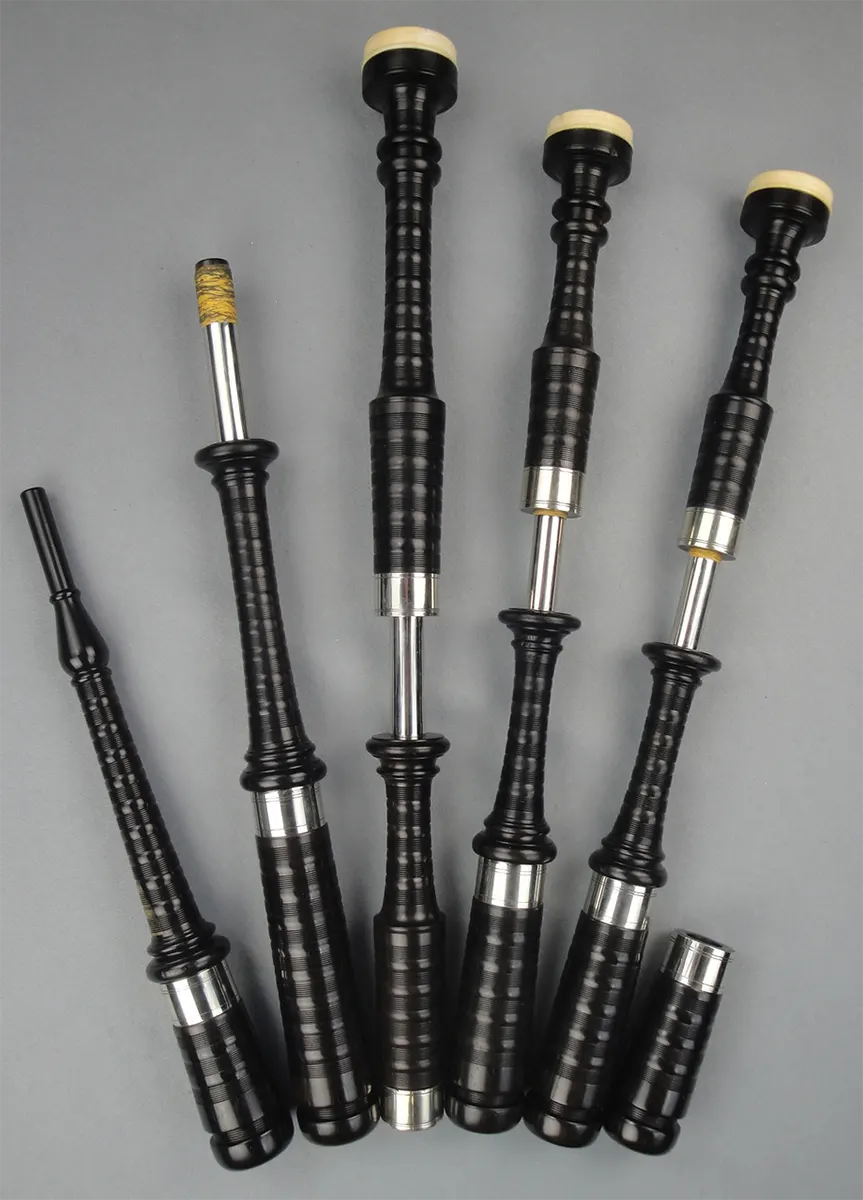
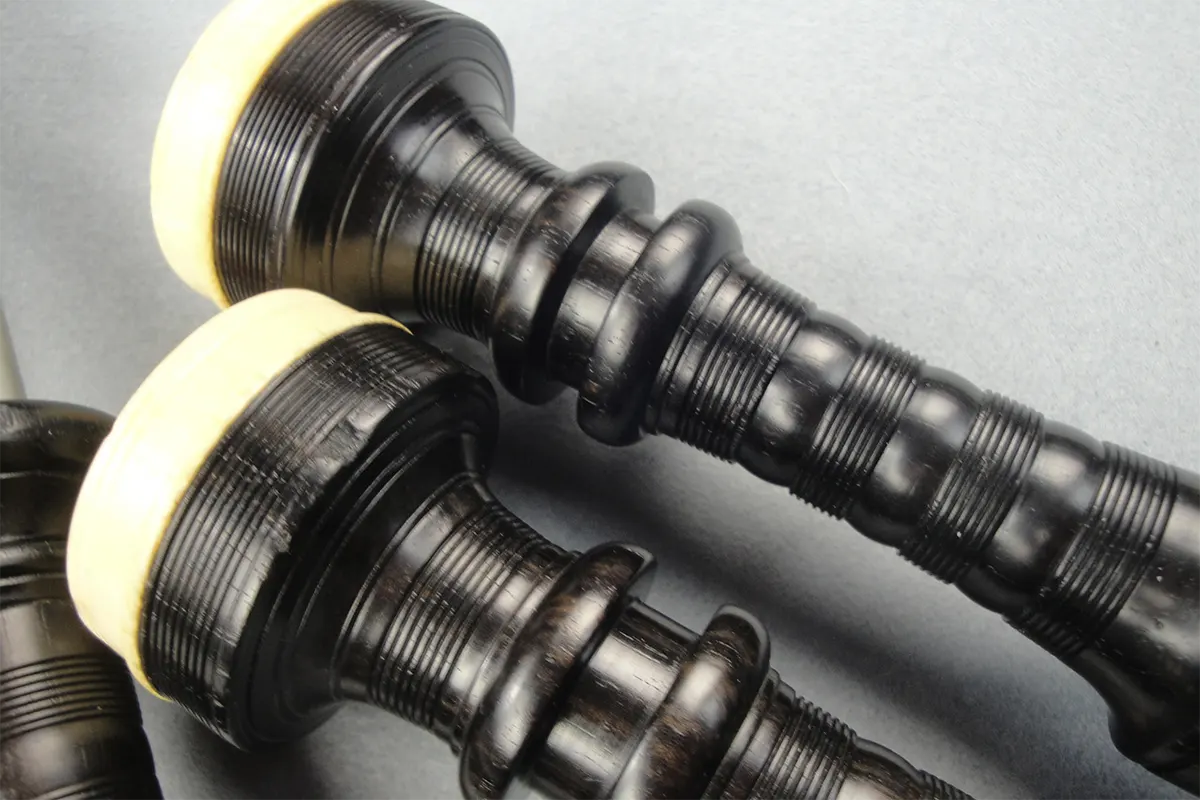
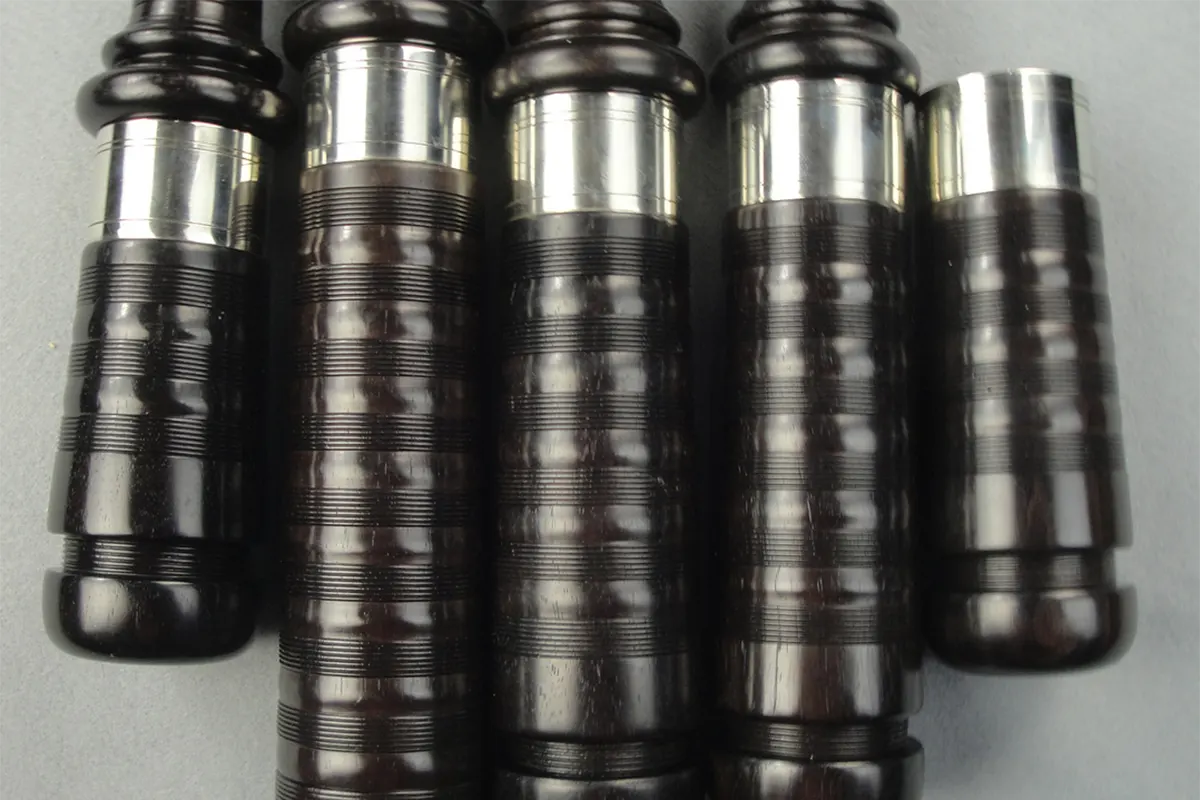
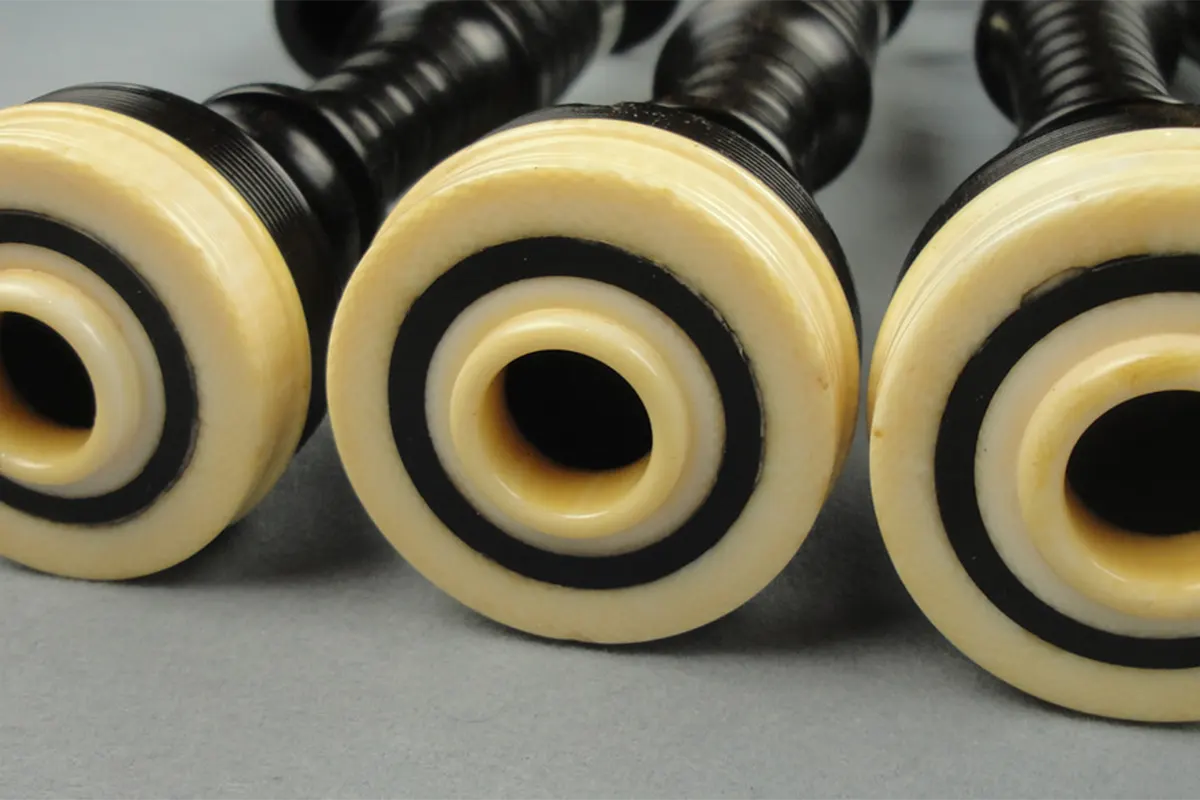
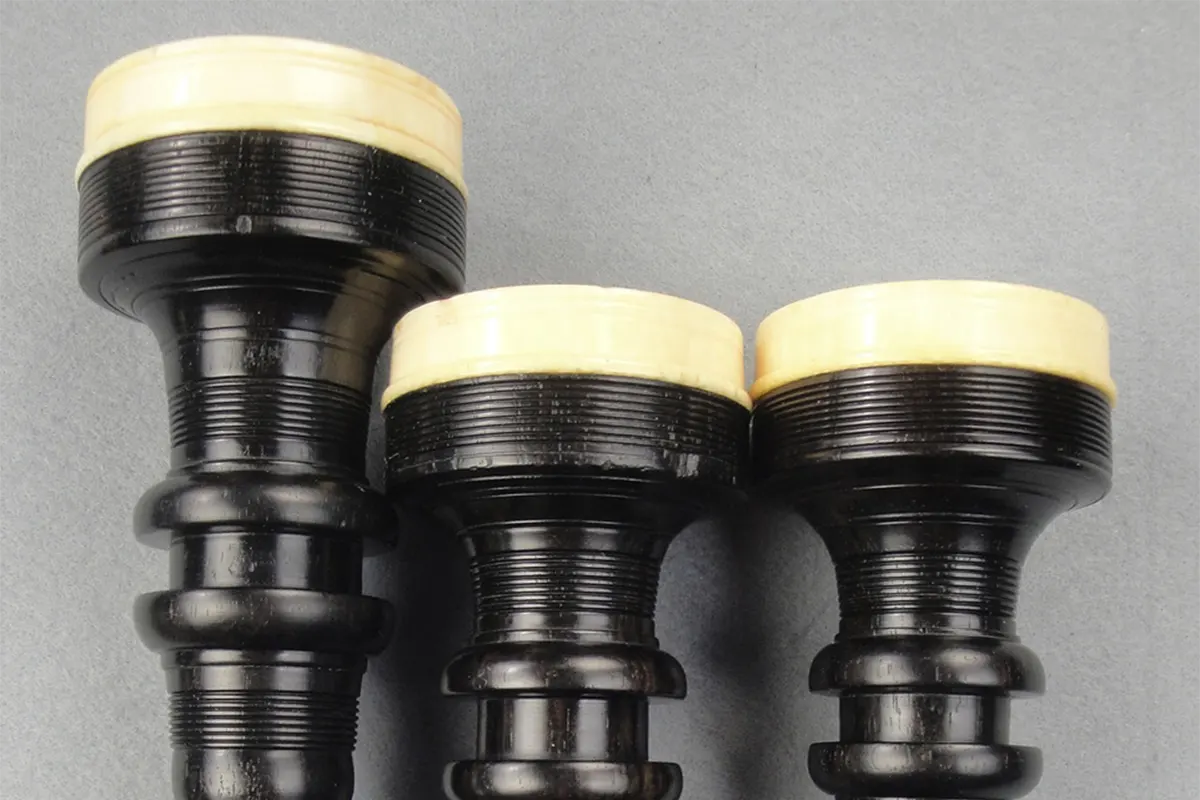
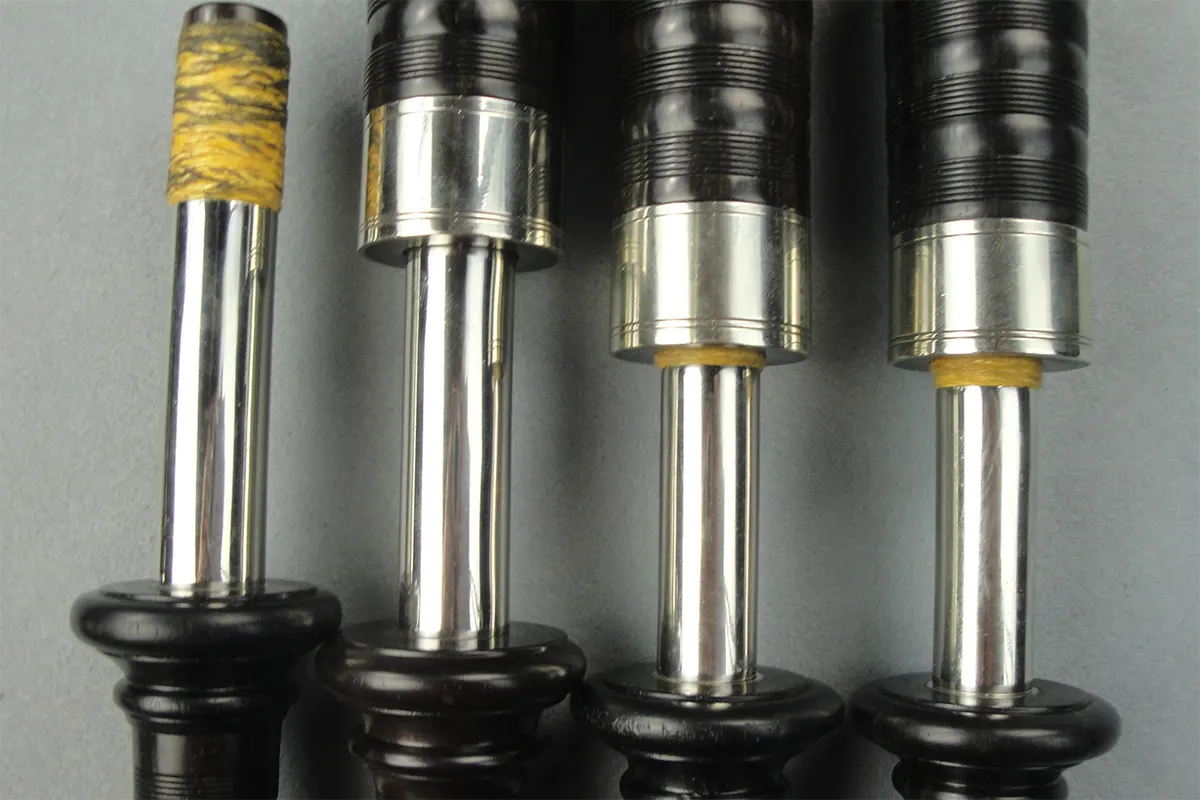
SOLD – This MacRae bagpipe came to me with the famous MacRae hempless slides. Two of the slides were usable, but two were not and were not repairable, so we removed them all and replaced them with hemped slides.
The hempless slides had no patent information stamped on them – normally they did, after the patent was acquired – so this dates the pipes to around 1909, around the time the patent was secured, and shortly after Duncan MacRae went into business as a pipemaker.
There were several cracks in the instrument. All have been invisible whipped and will give no further problems. The bass mid-joint is sleeved with brass, for reasons unknown.
This set played like other MacRae sets I’ve played: very, very bold and steady with a great chanter blend and a seamless mix of bass and tenor.
-
Robert Reid, Circa 1930s, Full Ivory
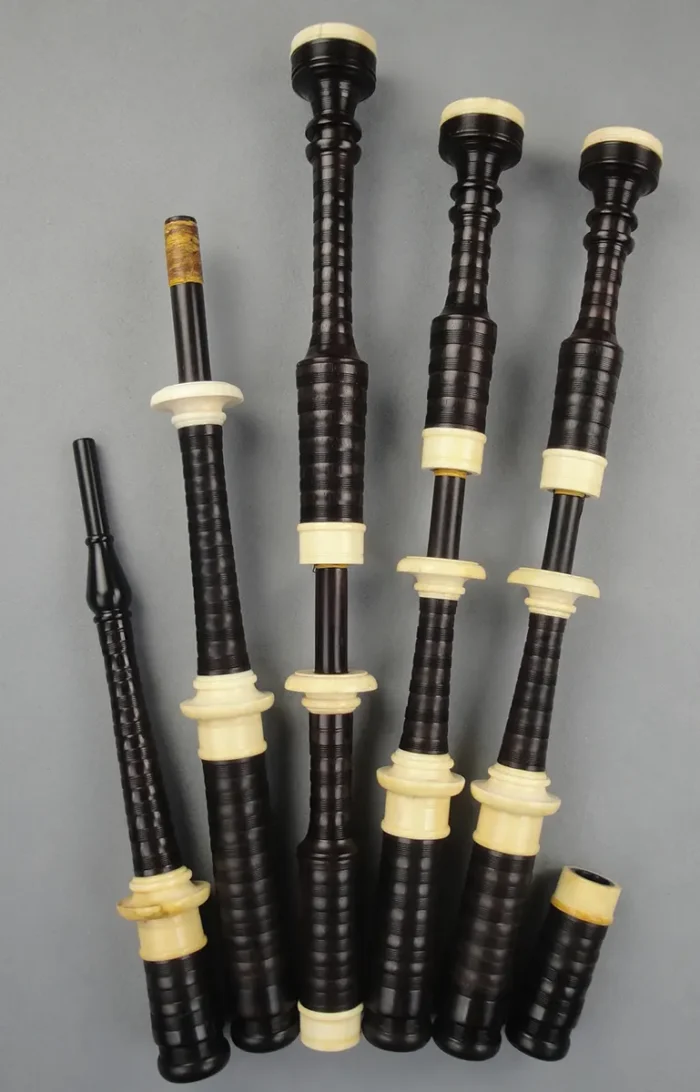
SOLD – Robert Reid was one of the greatest players of the 20th century. He operated a small pipemaking firm from 1932 until 1957 in Glasgow, so this bagpipe has a bit of history going for it in addition to a great sound.
The bagpipe is mounted in full ivory with projecting mounts in the Henderson tradition.
The pipes are in excellent condition but for a couple of ivory chips and a slightly stained blowpipe mount.
I’d never played a Robert Reid bagpipe before this and I was pleasantly surprised. I tested the pipes while I was testing four lovely sets of old Hendersons, and this bagpipe sounded right at home: very full and resonant, with great chanter blend and steadiness.